

Luke 22
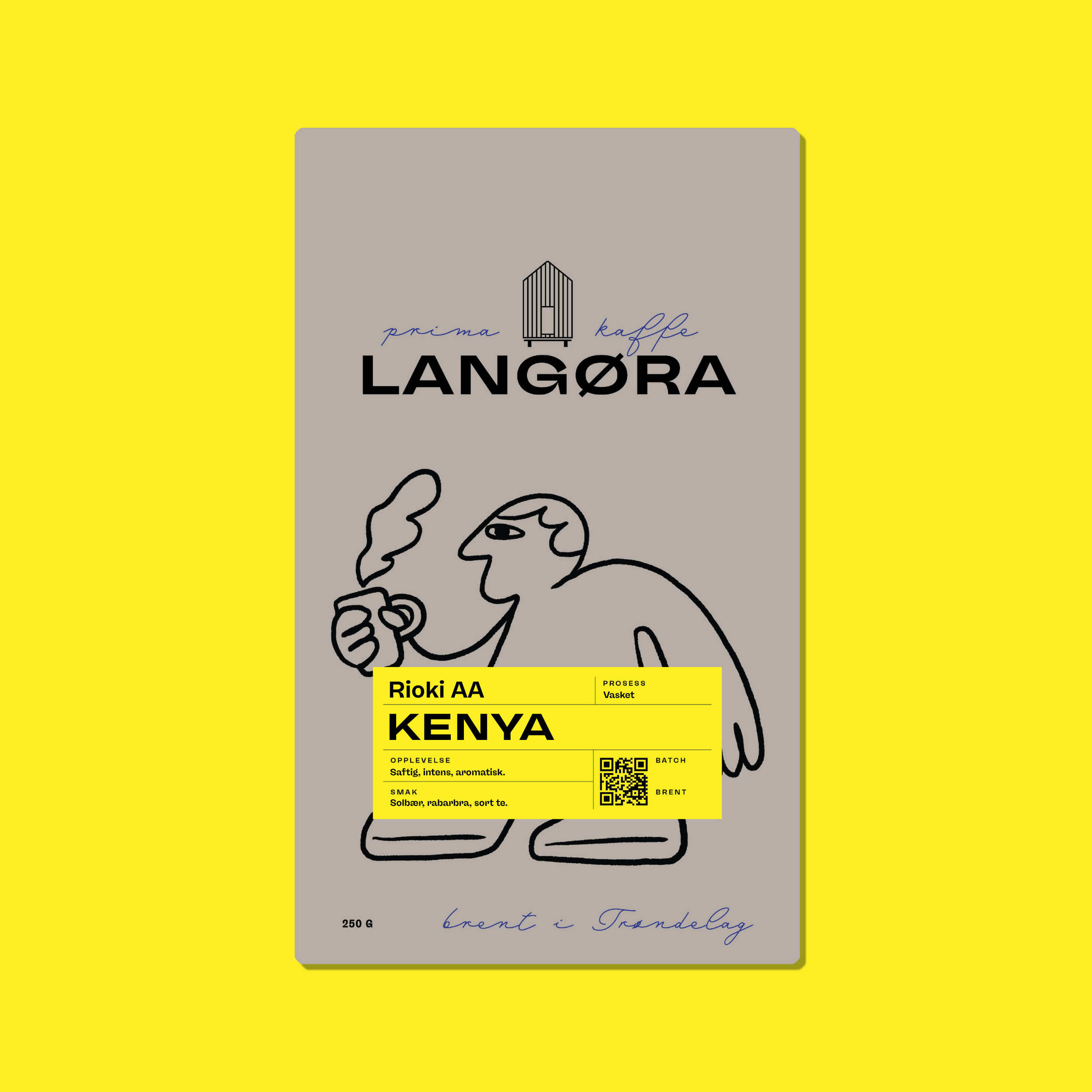
AA Inoi Ndimi
COUNTRY: Kenya
FARM/COOP/STATION: Ndimi Factory
VARIETAL: SL-28, SL-34, Ruiru 11, Batian
PROCESSING: Washed
ALTITUDE: 1650-1800 masl
OWNER: Inoi Farmers’ Cooperative Society
REGION: Kirinyaga
FLAVOUR NOTES: Green apple, redcurrant, gooseberry, slightly herbal
ABOUT THIS COFFEE
This coffee is processed at Ndimi Factory, which is managed by the Inoi Farmers’ Cooperative Society. There are 540 active farmer members of the cooperative. The factory was named after the locality in which the washing station is located.
Perched at 1650-1800 masl, the factory sits on the foothill of Mount Kenya, just outside of the town Kerugoya. Kirinyaga County is positioned approximately 192 kilometres northeast of Nairobi, sharing borders with the Nyeri and Embu Counties. The region offers favourable conditions for coffee cultivation, featuring mineral-rich red volcanic loam soils and the elevated altitudes characteristic of the area. This western part of Kirinyaga is known to have some of the most fertile soils in the country.
Harvest
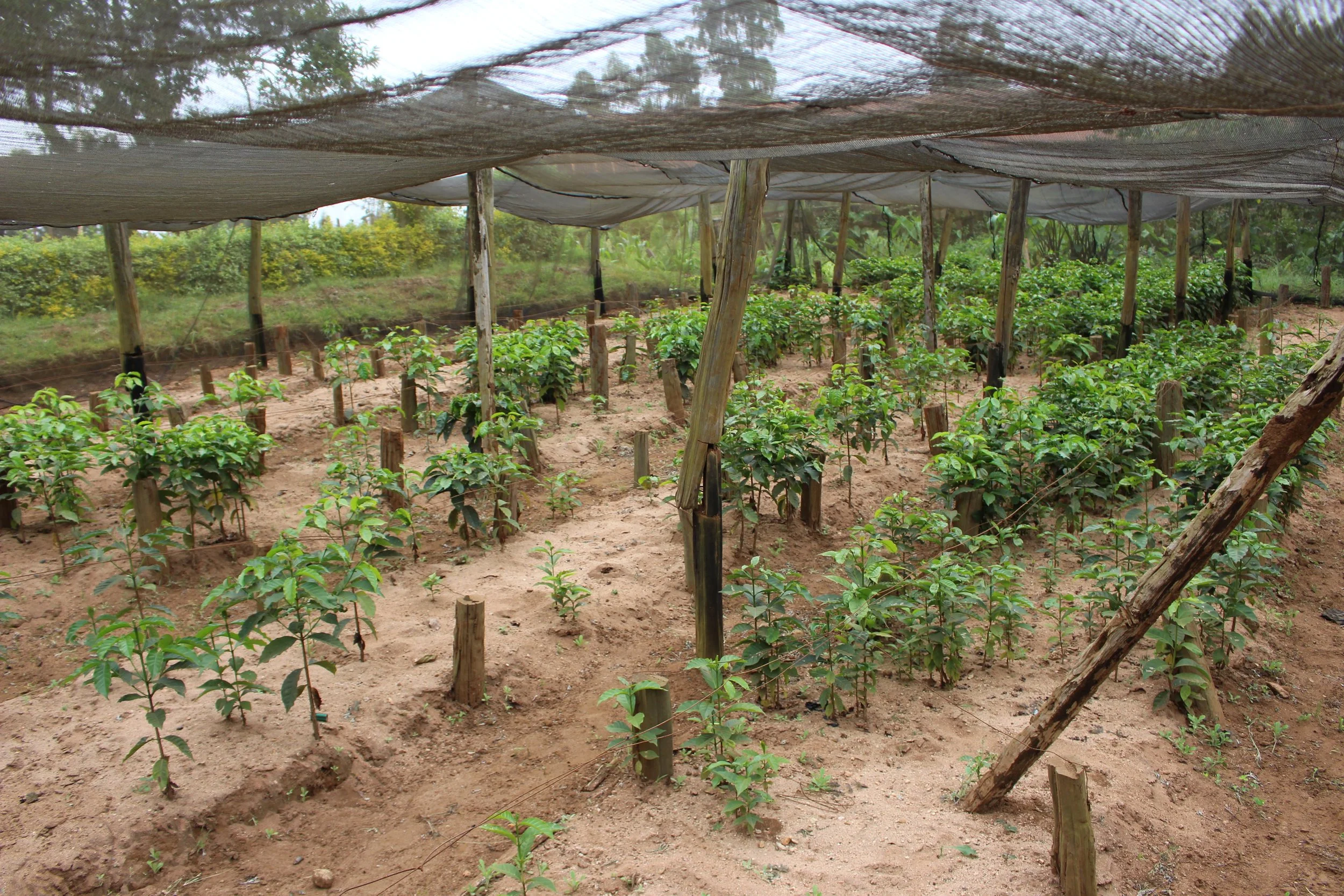
The farmers cultivate SL 28, SL 34, Batian, and Ruiru 11 varieties on clay loam soil. The coffee plants flower from February to April and are harvested from October to January. The region receives 1400 mm of annual rainfall, with an average temperature of 20.5°C.
Processing
Once the cherries have been delivered to the washing station, they are handsorted. The underripes, insect damaged, and other defective cherries are removed. The cherries are then pulped and the parchment is fermented overnight. Once the fermentation is completed, the parchment is washed and separated into P1, P2, P3, and P light. It is then dried for 10 to 20 days.
After processing, the farmers of this cooperative take the cherry pulp home and mix it with cow manure to use as fertiliser on their farms.

COFFEE IN KENYA
Despite sharing over 865 kilometers of border with Ethiopia, the birthplace of coffee, coffee had to circumnavigate the world before it set roots in Kenya. While the earliest credible reports place coffee in Ethiopia around 850 C.E., coffee was not first planted in Kenya until 1893 when French missionaries planted trees in Bura in the Taita Hills.
Under the rule of the British Empire coffee production geared for export expanded. Large, privately owned coffee growing estates were established and most harvests went to England in parchment, where it was sold to roasters prior to milling. Roasters often blended the bright flavors of Kenya with more chocolatey South American coffees.
Though large estates grew in hectarage and value, indigenous Kenyans did not benefit. In fact, European settlers took direct action to exclude indigenous people from growing coffee themselves.
In order to decrease competition, make labor accessible and inexpensive and continue the increase of demand for high-quality coffee, the Coffee Board was created to make regulations on coffee production and marketing. The Nairobi Coffee Exchange (NCE) (which continues to this day) was established in Nairobi to leave more of the value of green coffee at origin.
The Coffee Board tightly controlled licensing for coffee growing and processing. While the laws put in place did not explicitly state that indigenous people could not grow coffee, large estate owners made it functionally impossible for indigenous farmers to attain coffee growing licenses until the 1950s.
These laws protected the interests of the large landowners. Not only could more cultivation drive down the price of Kenyan coffee, but large farmers feared that if smallholder and indigenous farmers had their own coffee farms to tend, they would not work as paid laborers on settlers’ farms.
Kenya’s coffee system has been centered on a weekly auction since before independence. The Coffee Board of Kenya (now the Coffee Directorate) was established in 1933. By the following year, a government-run auction system had been established. The auction also created a pricing system that is designed to reward better quality with better prices.
Today, the auctions are widely recognized as the most-transparent mechanism for the price-discovery of fine green coffees and is considered one of the finest auction systems in the world. It even served as an inspiration for the Cup of Excellence auctions.
New legislations in 2006 and 2018 provided additional opportunities for farmers to sell their coffee. While before 2006, the auction system was mandatory, the 2006 legislation, created a “second window” made it possible for coffee growers to sell directly to international buyers.
SL-28 and SL-34 are well-known Kenyan coffee varieties. They were bred by Scott Agricultural Laboratories (SAL). SAL was founded in 1903 by the Kenyan Colonial government to function as a research institution studying agricultural products.
SL-28 and SL-34 quickly became the varieties of choice for most growers. Their deep root structures helped them acquire water in the dry environments present throughout much of Kenyan, even without irrigation. These varieties also had higher yields than the traditional French Bourbon rootstock and were considered somewhat more disease resistant.
Though both SL varieties spread across Kenya extremely quickly, the release of Ruiru-11 in 1985 by the Kenya Coffee Research Institute (CRI) brought a new kid to the block. Many farmers planted the new Ruiru-11 variety because it was far more resistant to Coffee Berry Disease (CBD), a fungal disease attacking ripening coffee cherry, and Coffee Leaf Rust (CLR), a fungal disease that targets the leaves of coffee trees. It could also be planted at a higher density than the SL varieties, allowing farmers to maximize yields on small plots of land.
One downside to Ruiru-11 was that its shallower root structure made is more susceptible to drought and required more fertilizer. Farmers found that that by grafting Ruiru-11 to SL variety trees, they could have the best of both worlds. Trees where Ruiru-11 was grafted onto an SL variety plant had deeper root structures for drought-times (thanks to the SL variety) and higher immunity to disease and larger yields (thanks to the Ruiru-11).
Other farmers are experimenting with Batian, as well, a relatively new variety introduced by Coffee Research Institute (CRI) in 2010. Batian is named after the highest peak on Mt. Kenya and is resistant to both CBD and CLR. The variety has the added benefit of early maturity and begins bearing fruit after only two years. Some challenges (such as vegetative structure) have prevented it from becoming widespread so far, but its popularity is certainly growing.
While most farms in Kenya still have the traditional SL varieties, most also have Ruiru-11 and, increasingly, Batian. Most farms are far too small to be able to handle lot separation by variety. This means that most lots coming out of Kenya—whether single estate or smallholder group—are a blend of SL, Ruiru-11 and (sometimes) Batian.
Today, more than 600,000 smallholders farming fewer than 5 acres compose 99% of the coffee farming population of Kenya. Their farms cover more than 75% of total coffee growing land and produce nearly 70% of the country’s coffee. These farmers are organized into hundreds of Farmer Cooperative Societies (FCS), all of which operate at least one factory. The remainder of annual production is grown and processed by small, medium and large land estates. Most of the larger estates have their own washing stations.
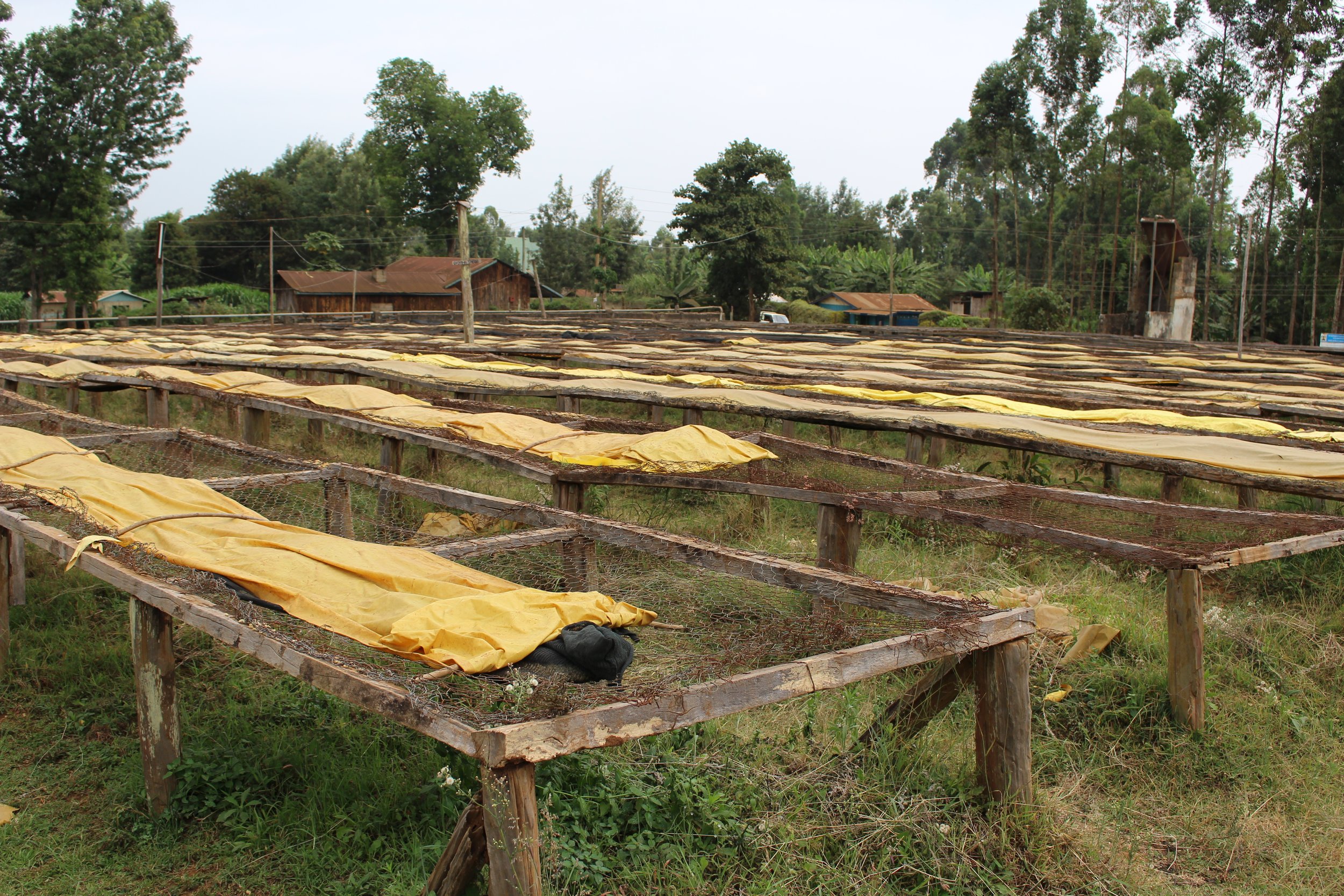
Most Kenyan coffees are fully washed and dried on raised beds. The country still upholds its reputation for high quality and attention to detail at its many washing stations. The best factories employ stringent sorting practices at cherry intake, and many of them have had the same management staff in place for years.



Lett, leskende, fruktig.
Bjørnebær, aprikos, bergamot.