
Luke 5
Misterio de La Piramide
COUNTRY: Peru
FARM/COOP/STATION: Finca Cascadas de Cueva
VARIETAL: Bourbon / Borbón / Catimor / Caturra / Pache / Tipica
PROCESSING: Anaerobic / experimental
ALTITUDE: 1520 m.a.s.l.
OWNER : Don Martin & Jimmy Rojas
REGION: Moyobamba
FLAVOUR NOTES: Pear, rosehip, white peach, cocoa nibs, raspberry
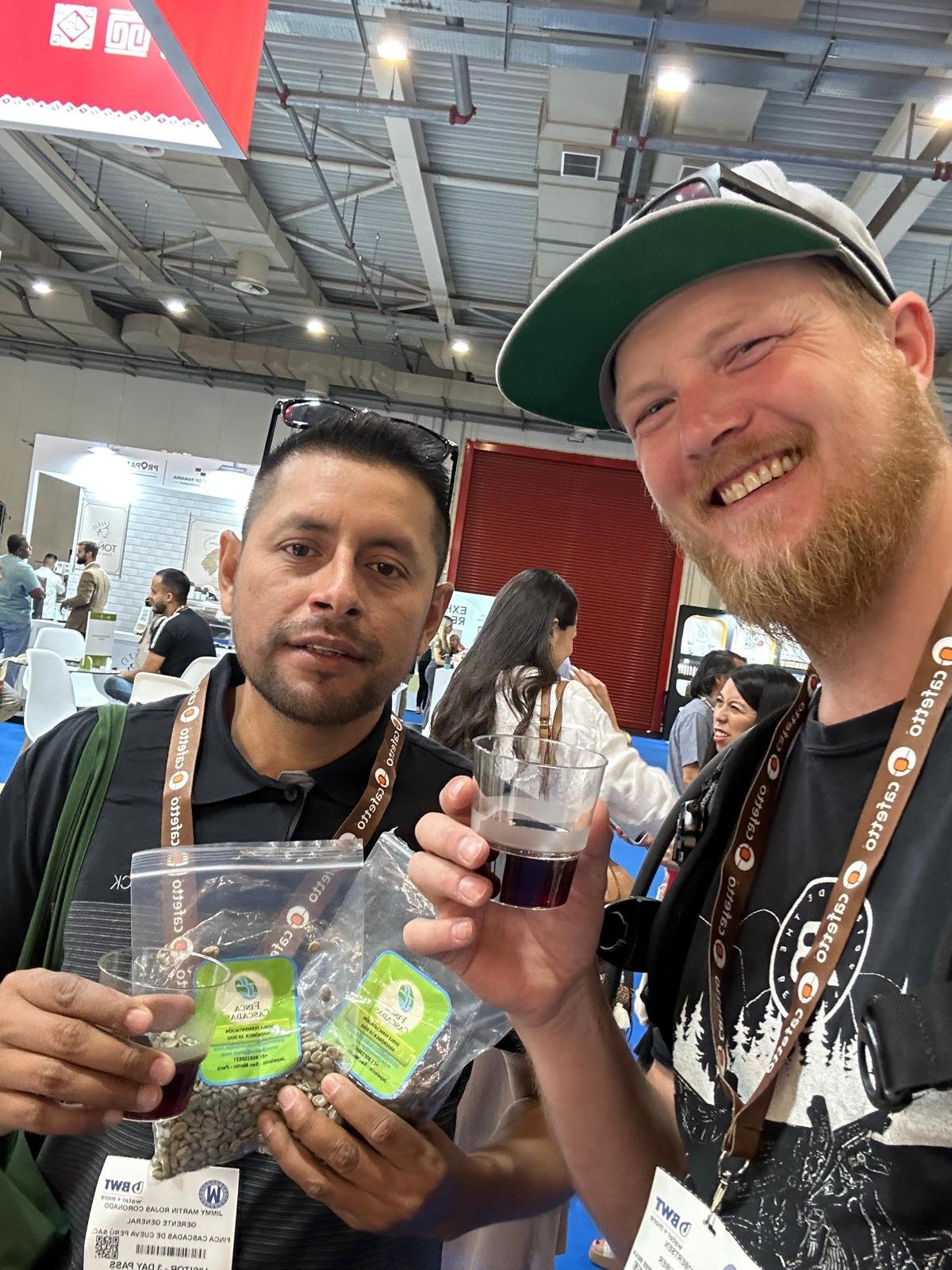
We met Jimmy a few years ago and have stayed in touch since then. When he heard that we were using his coffee in our calendar he wanted to tell you about his farm in his own words:
“My grandparents were the first coffee growers, but they lived in the mountains in the Cajamarca region. My father is the second generation of coffee growers in the family. My father emigrated from the mountains to the jungle in 1993, settling on these lands. Since then, he has dedicated himself to producing coffee, first in the traditional way with washed coffees, and since 2018, we began experimenting with post-harvest processes, sticking with anaerobic fermentations because they give us better results in the cup. Since then, we have been working to improve our facilities and processing modules in order to guarantee a quality, consistent, and replicable product.”
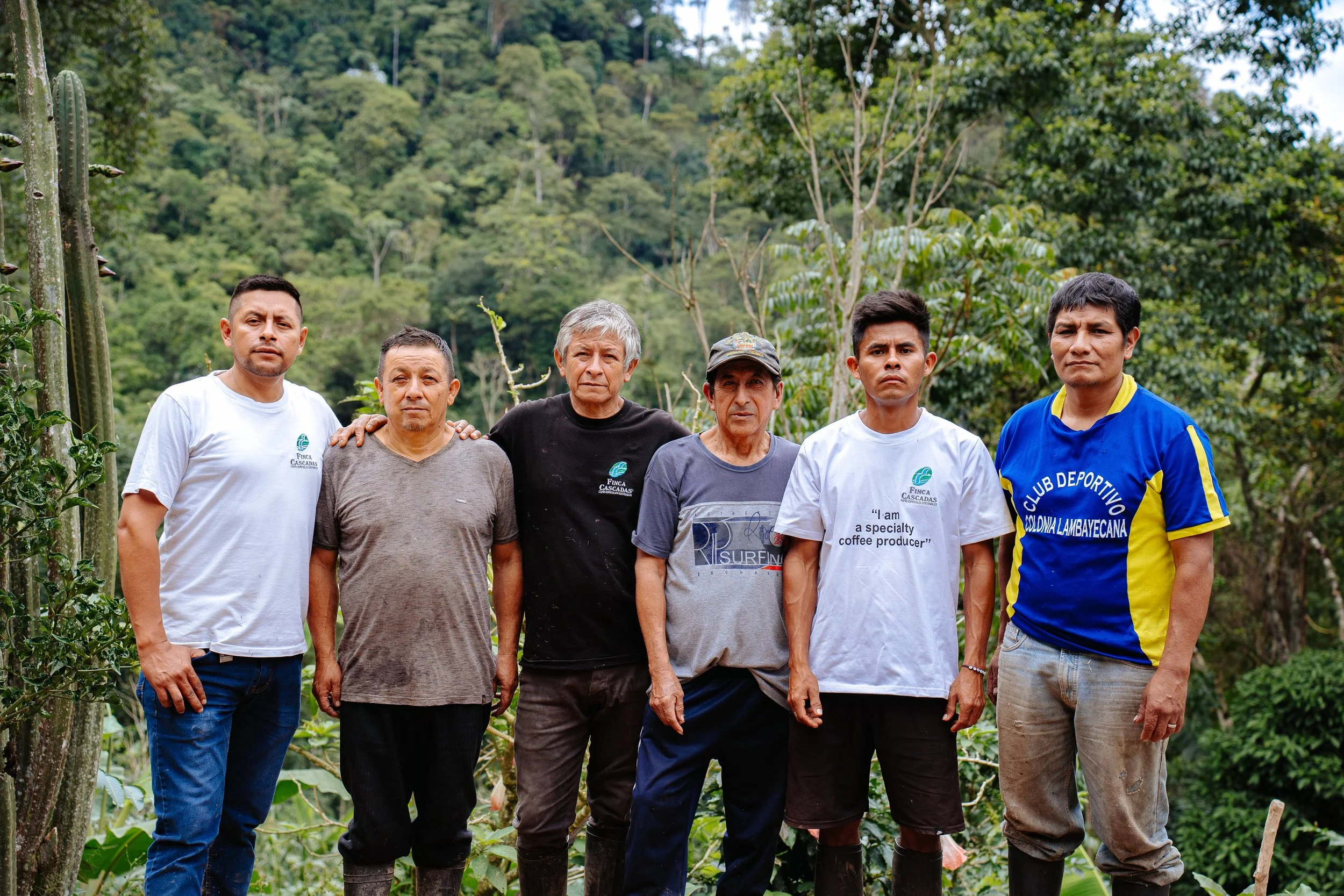
A greeting from The farmers
ABOUT THIS FARM
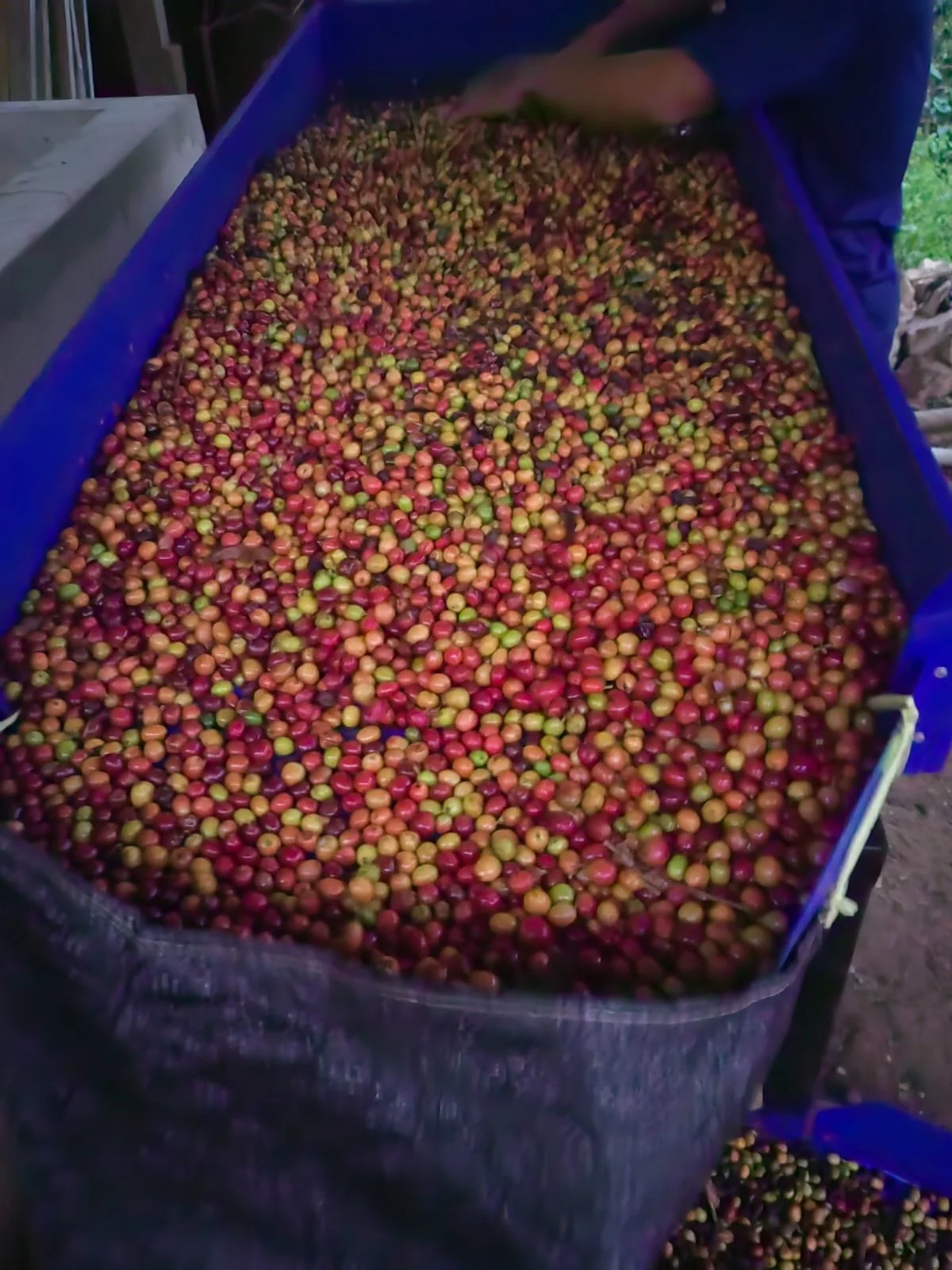
The family finca, named after the waterfall, has been a model project in the region since at least 2018. The family buys coffee cherries from neighbors* and processes them here in a centralized way. All are invited to come and talk with Gover, who is happy to share his extensive knowledge.
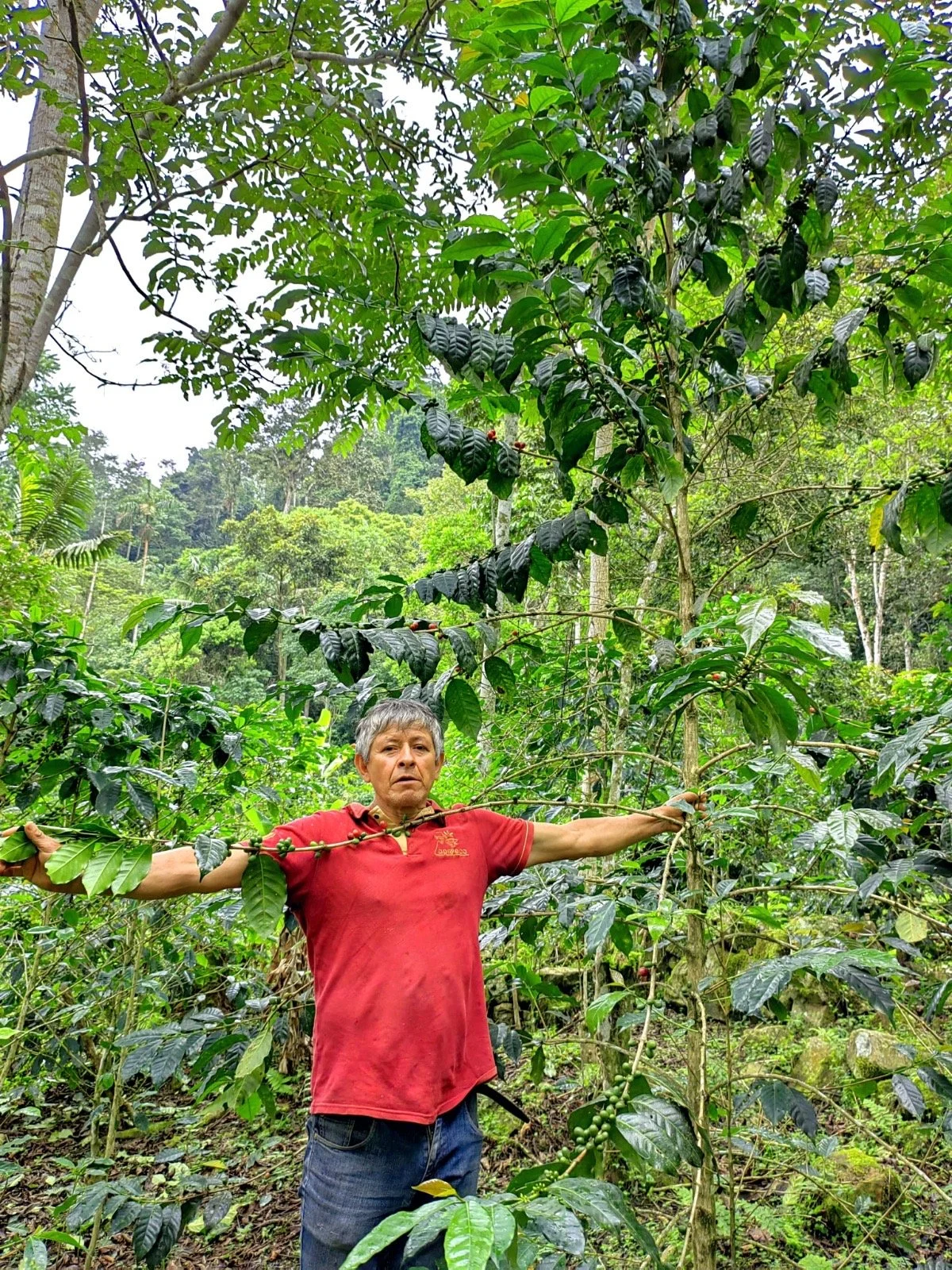
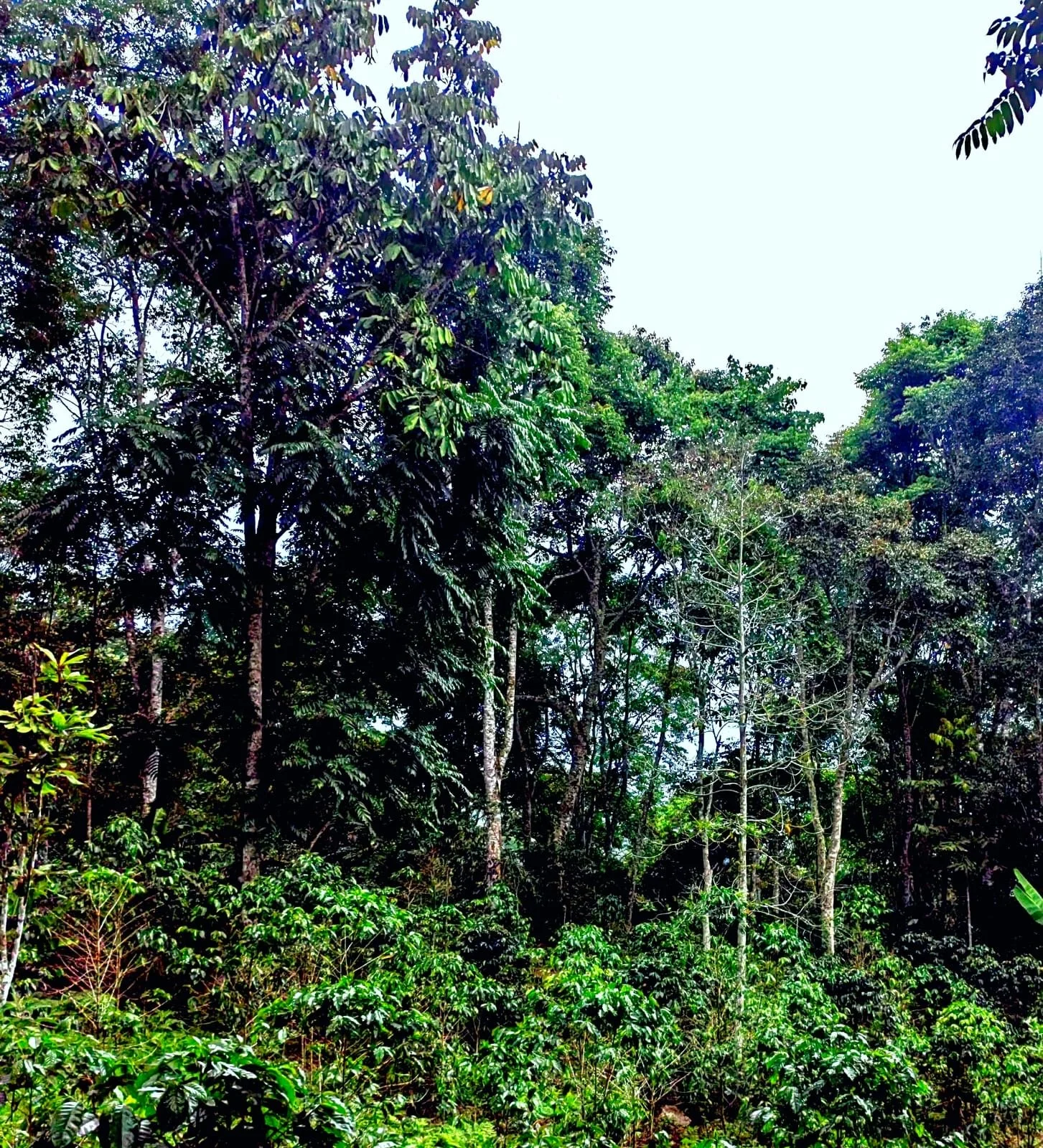
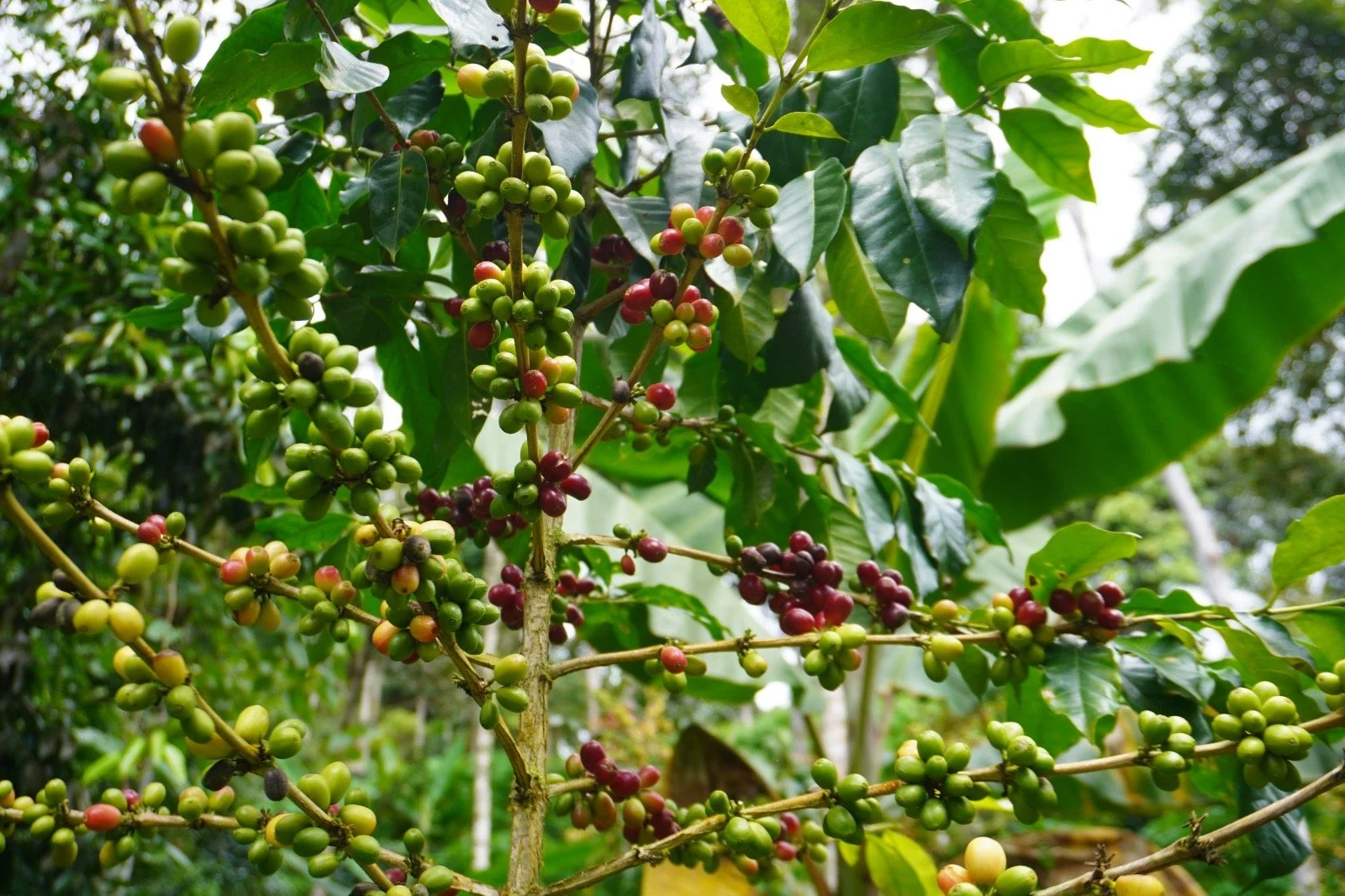
Gover’s view of coffee farming is unique and aligns with permaculture values. As you walk around the finca, it feels like a Garden of Eden. You see dozens of plant and animal species, all of which Gover knows. The humus layer is a good 30cm thick, which is why your feet sink into the loose soil with every step.
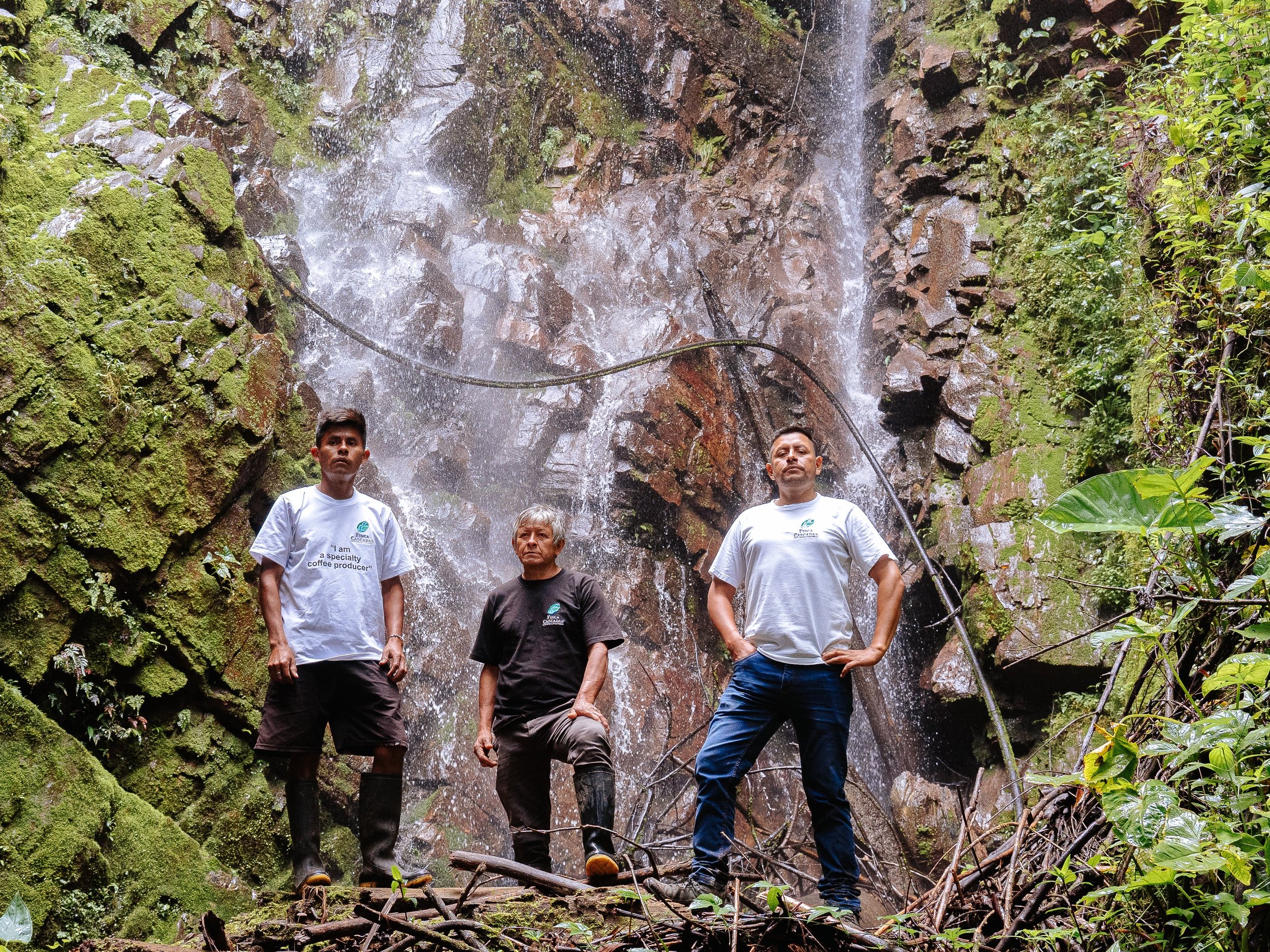
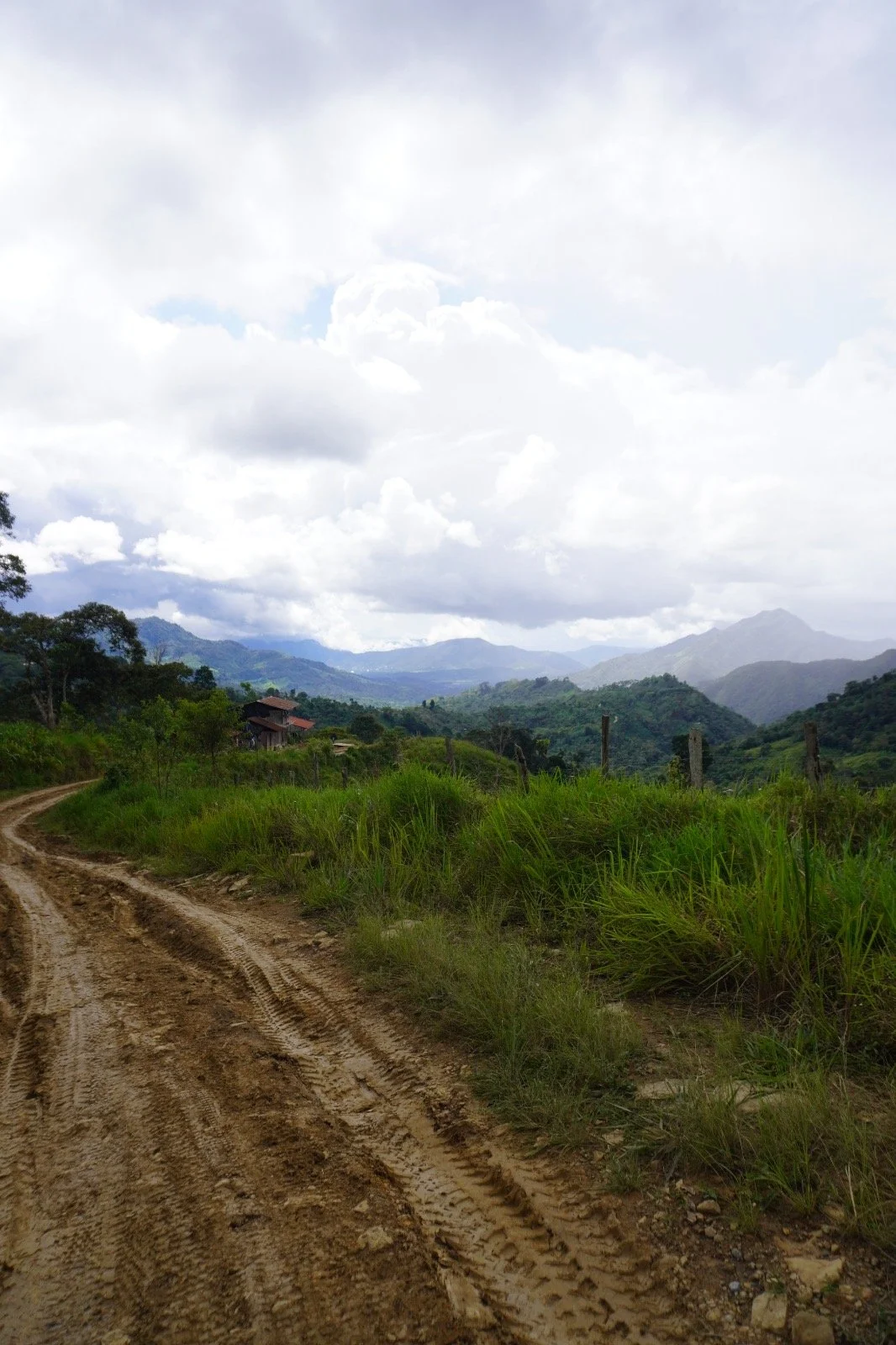
“The farm is located in the hamlet of Nuevo Lambayeque, in the district of Jepelacio, Moyobamba province, San Martin Region, Peru. The farm is located at an altitude of 1,520 meters above sea level. The coffee is anaerobically processed, and the varieties are a mix of Tipica, Caturra, Pache, Rosé Bourbon, Marsellesa, and Catimor.”
“The one in the black polo shirt is my father, his name is Martin Rojas”

THE COFFEE
This coffee comes from the mysterious Finca La Piramide, where Don Martin produces amidst ancient ruins and jungle. Our relationship goes back to 2016. Before Don Martin visits us in Germany in July 2025, we’re launching another microlot from him. Since he began experimenting with various coffee kombuchas, his coffees have become even fruitier and juicier.
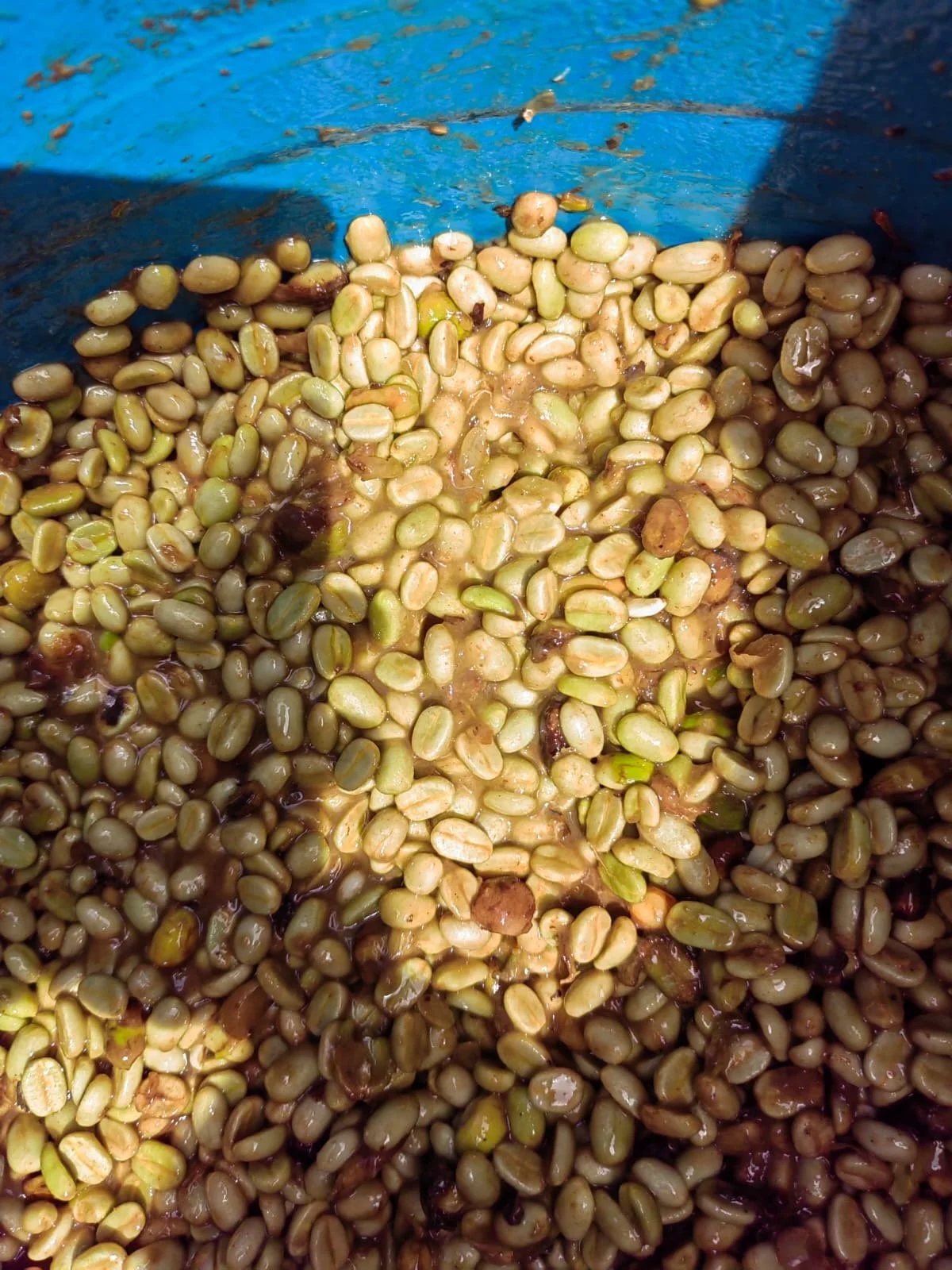
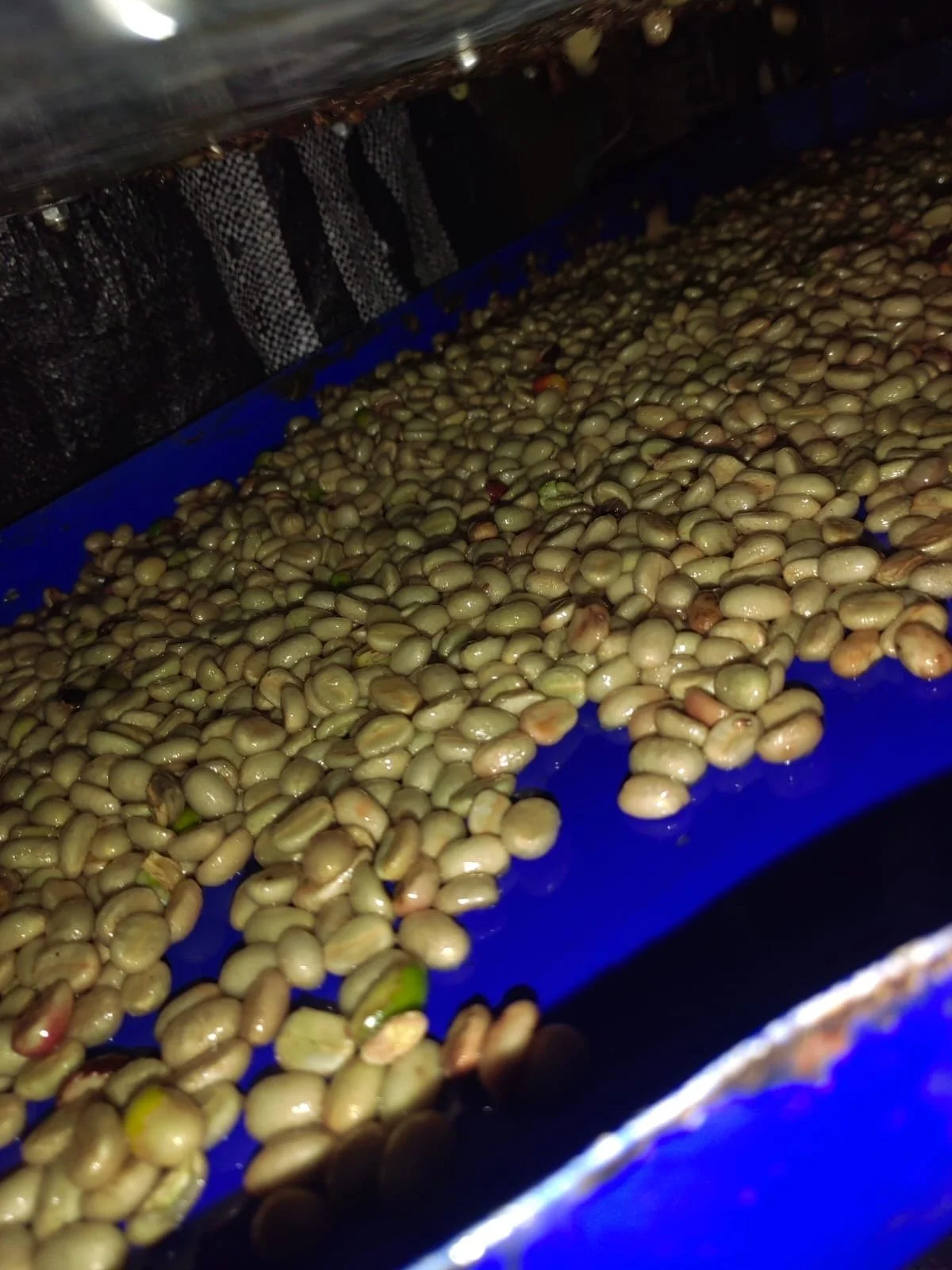
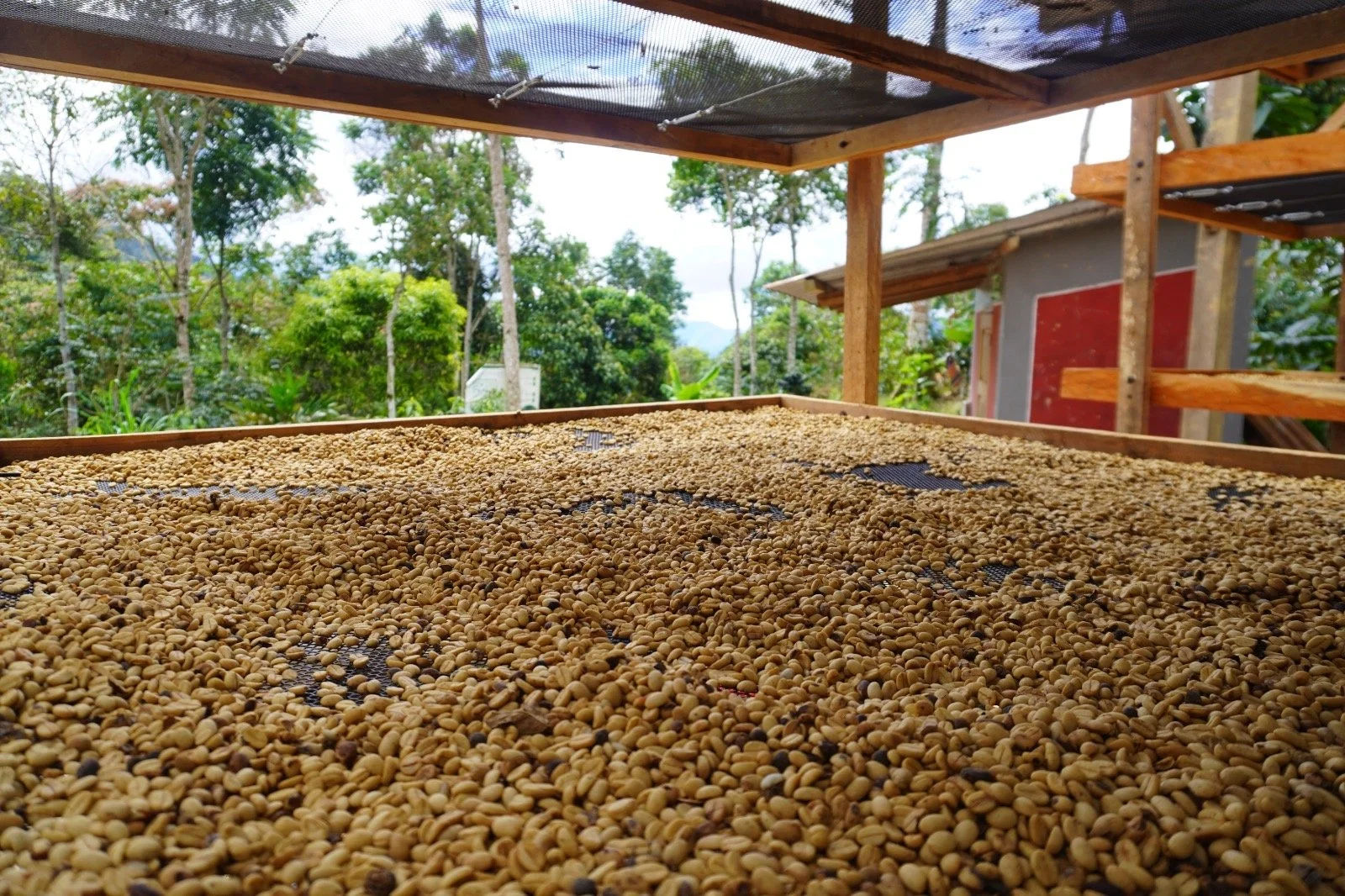
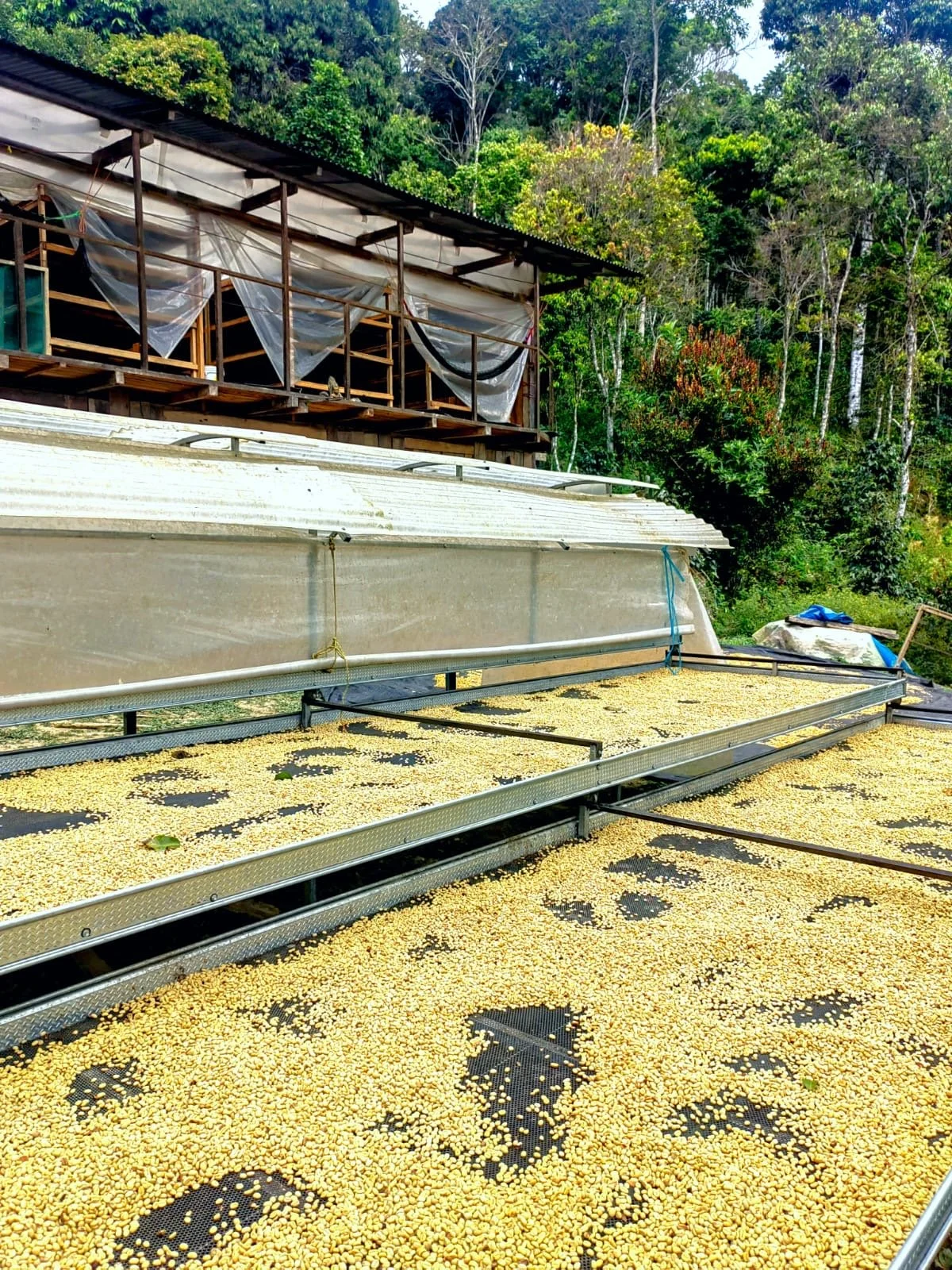
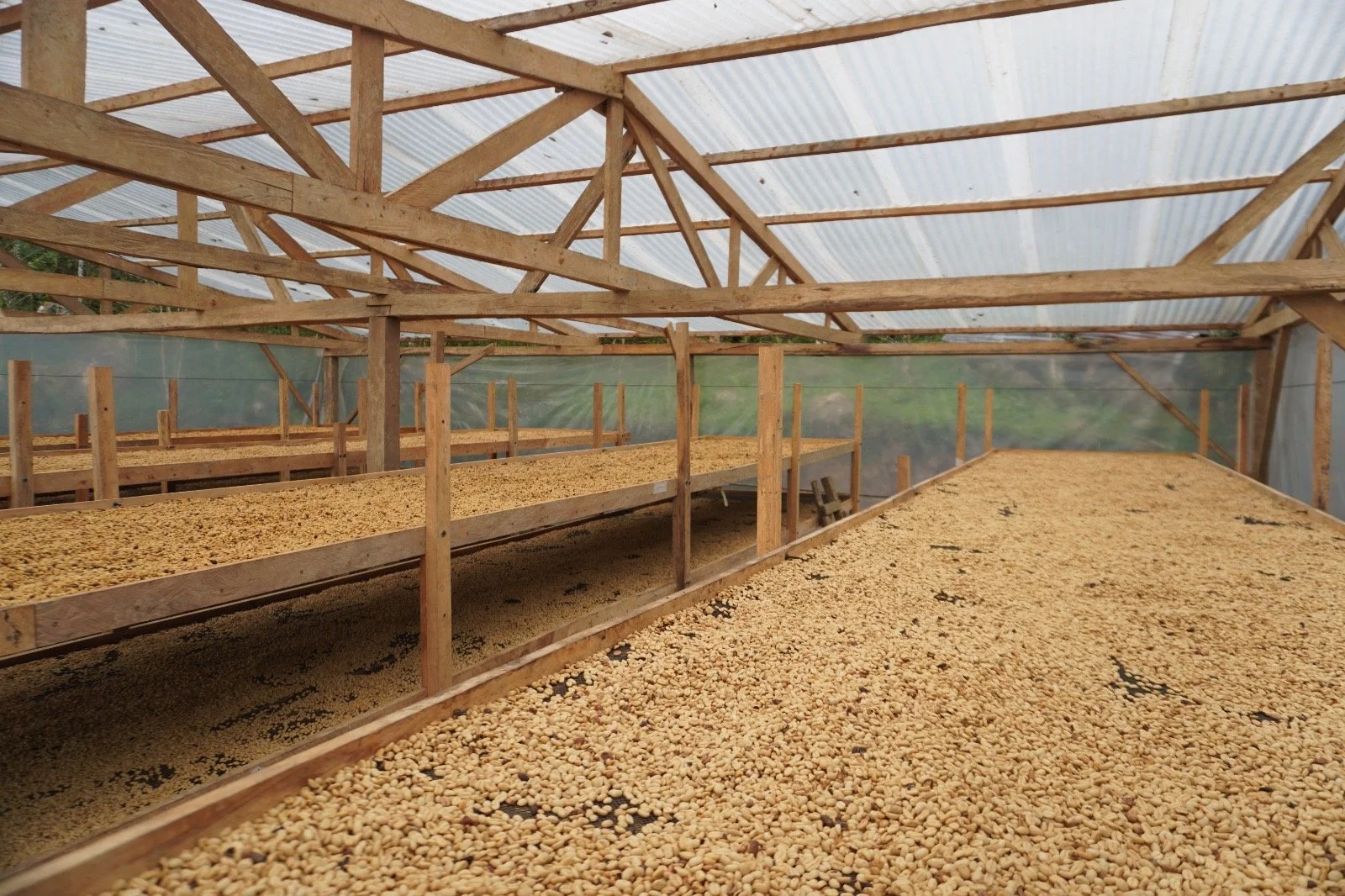
The secret in the process of this lot is anaerobic fermentation using different kombuchas made from fermented coffee juice. After successful fermentation, the parchment was washed and then gently dried on shaded beds. This results in a complex process that’s not easy to define. We think “anaerobic kombucha fermentation washed” describes it fairly accurately. However, it sounds more exotic than what you’ll actually taste in the cup. In the microlot “Misterio de La Piramide,” we find lots of ripe fruit, subtle floral notes, and a creamy texture. Cheers!
Everything from one source
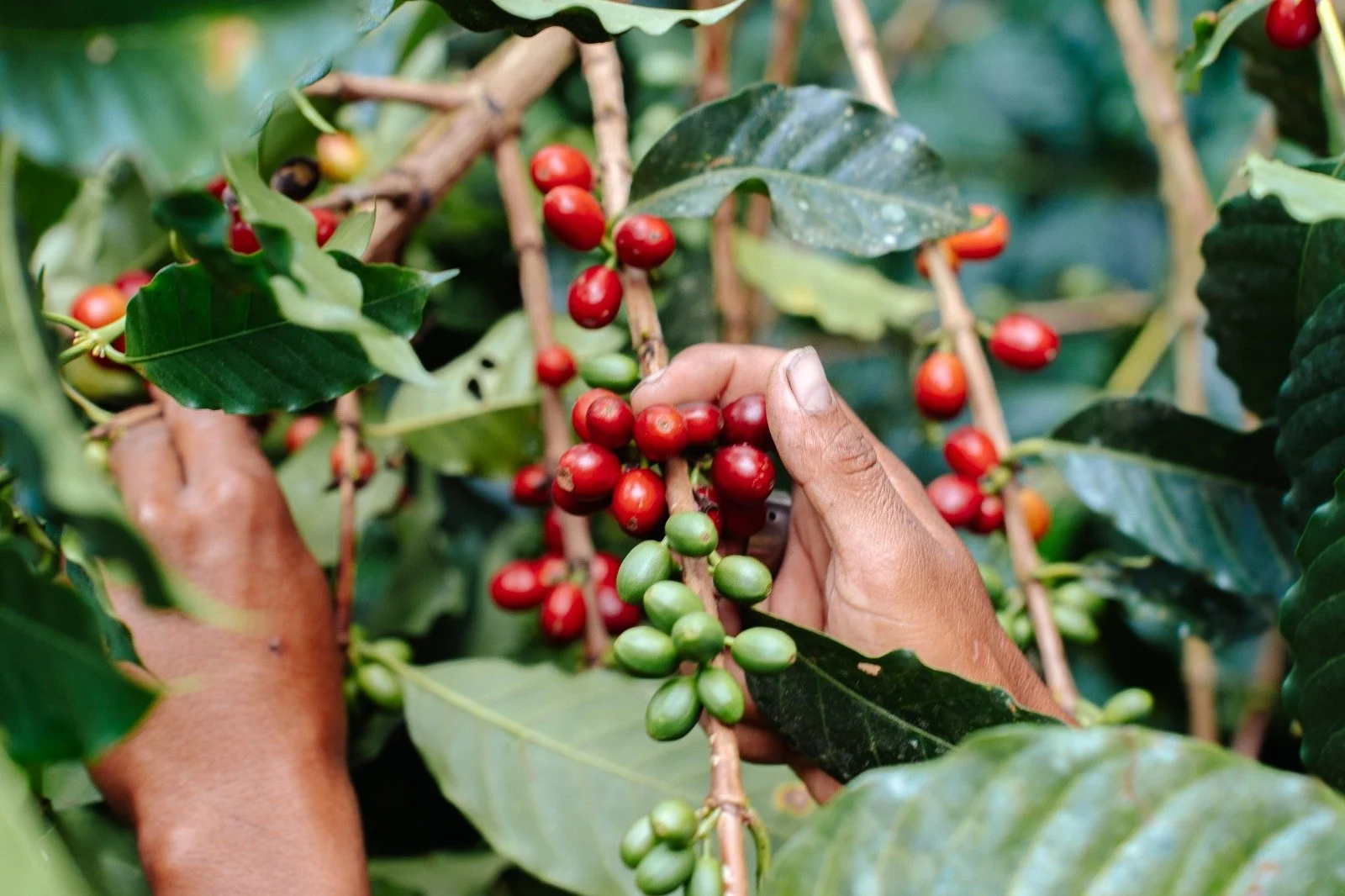
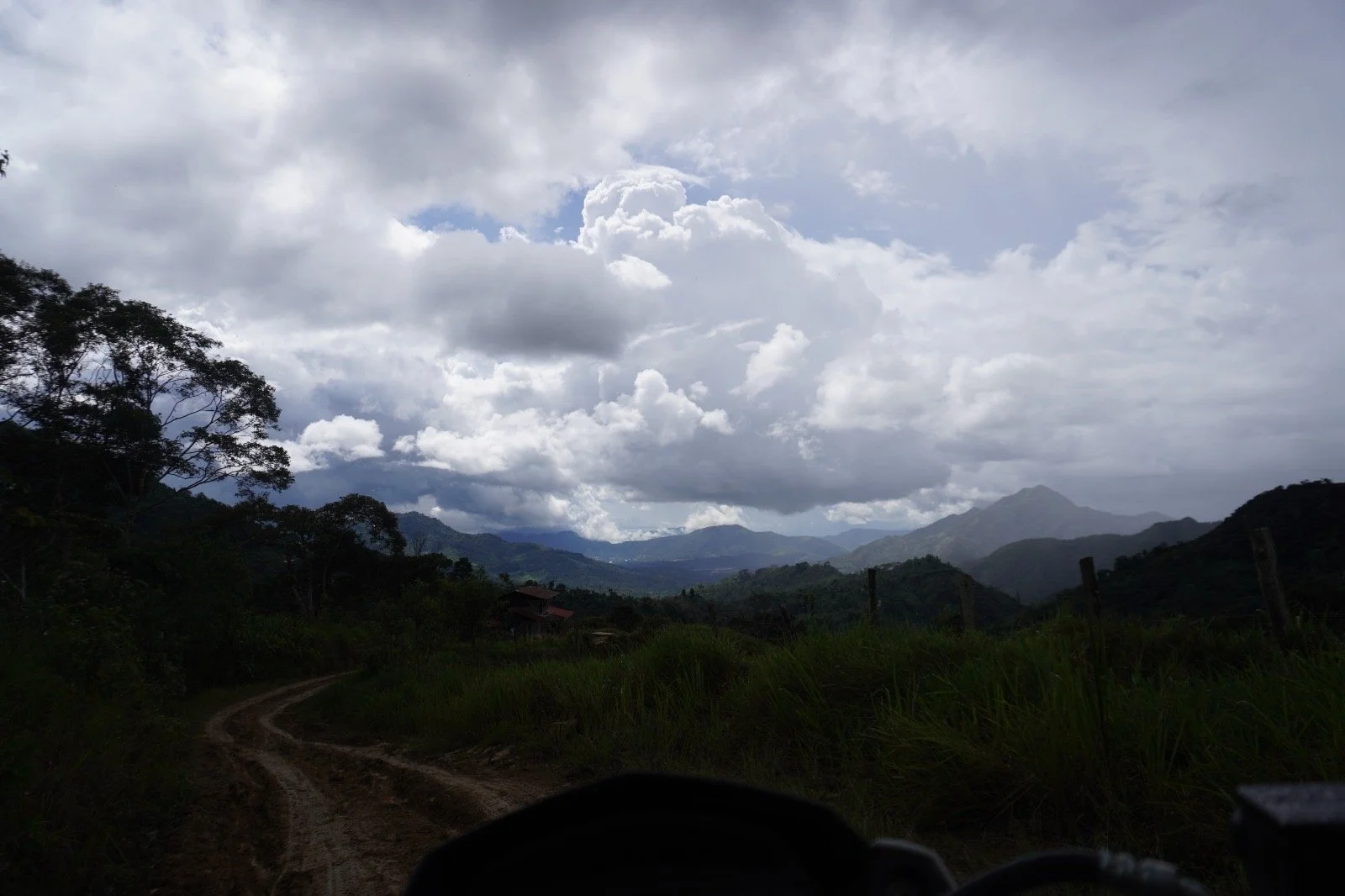
The culture of Peruvian coffee production has historically evolved in such a way that most coffee farmers today cultivate their coffee themselves, harvesting it by hand, depulping it on the spot, fermenting it and drying it. The dry parchment is easier to transport to the buying points, which are located in the next village or town, as the case may be. The journey is arduous and often can only be accomplished by mules. Motor vehicles cannot manage the unpaved, muddy and stony, steep roads.
» Hide
Jimmy Rojas was the managing director of the Aproeco cooperative in Moyobamba for many years and tells us that the transport price from the finca to the cooperative is proportionately more expensive per kilogram of green coffee than the transport price of green coffee from Peru to Germany. But Peru is changing. Infrastructure is seen by the government as the key to better competitiveness and quality of life, which can help especially the most vulnerable part of the population.
A region in transition
The Cueva family migrated from the mountains of Cajamarca to the mountain rainforest of Moyobamba in the 1990s. There were many reasons: Escape from the terror and violence in the mountains, the disappearing natural resources in the wake of mining, and the positive incentives from politics to settle in the rainforest. In San Martin State, nearly 400,000 hectares of forest fell between 2001 and 2015 to make way for migrant populations and their supplies. Like most others, the Cuevas planted coffee to support their livelihoods.
» Hide
With the new pioneers, a new mixed culture emerged, combining mountain characteristics with rainforest traditions. The process of urban development of the settlements continues to this day. There is still a lack of basic services such as water, sewage, education, electricity and sanitary facilities. In the green paradise, people suffer from malnutrition and contaminated water. The isolated communities, often only accessible on foot, are self-governed to ensure a certain degree of democracy and security in the jungle.
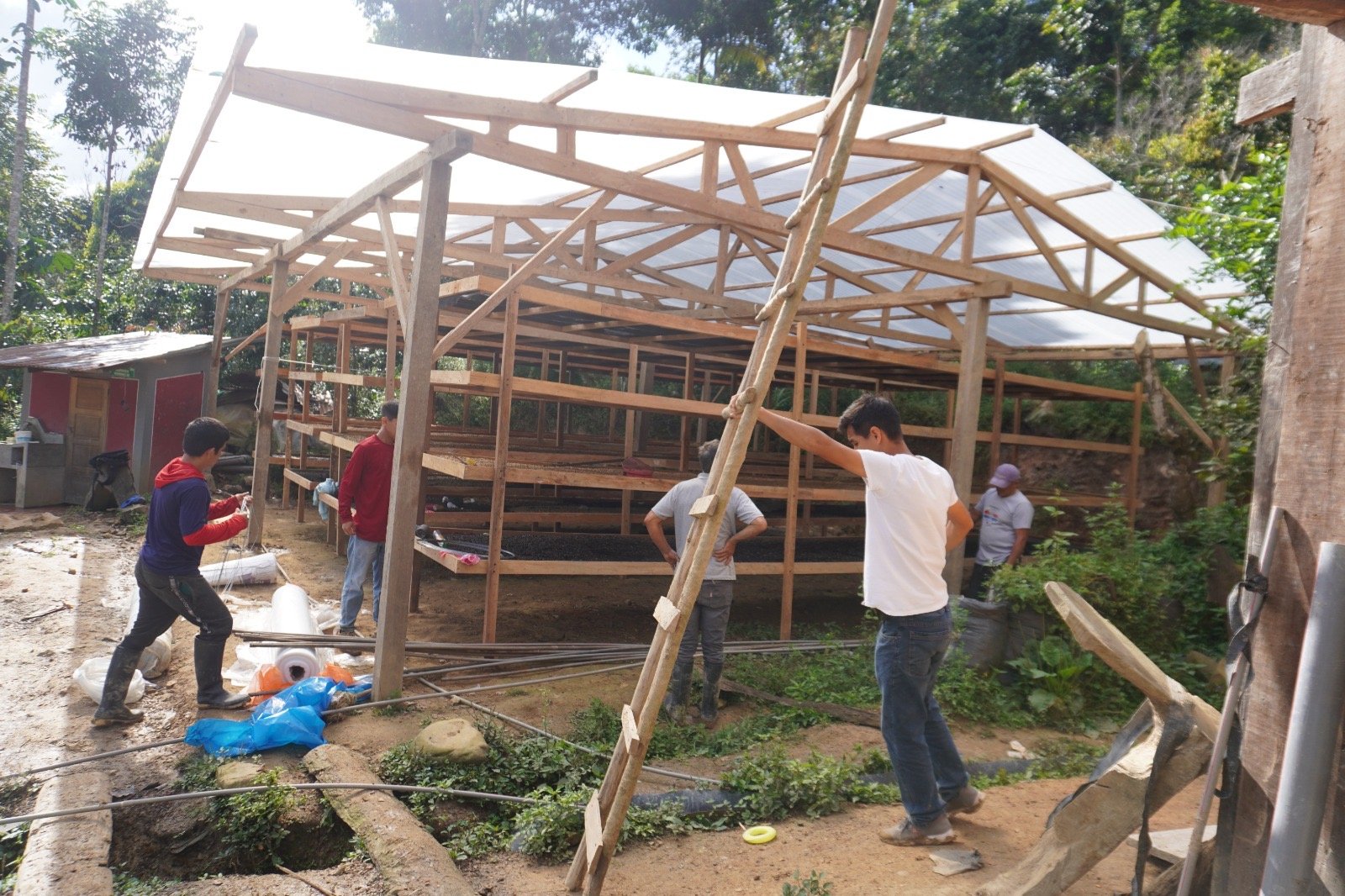
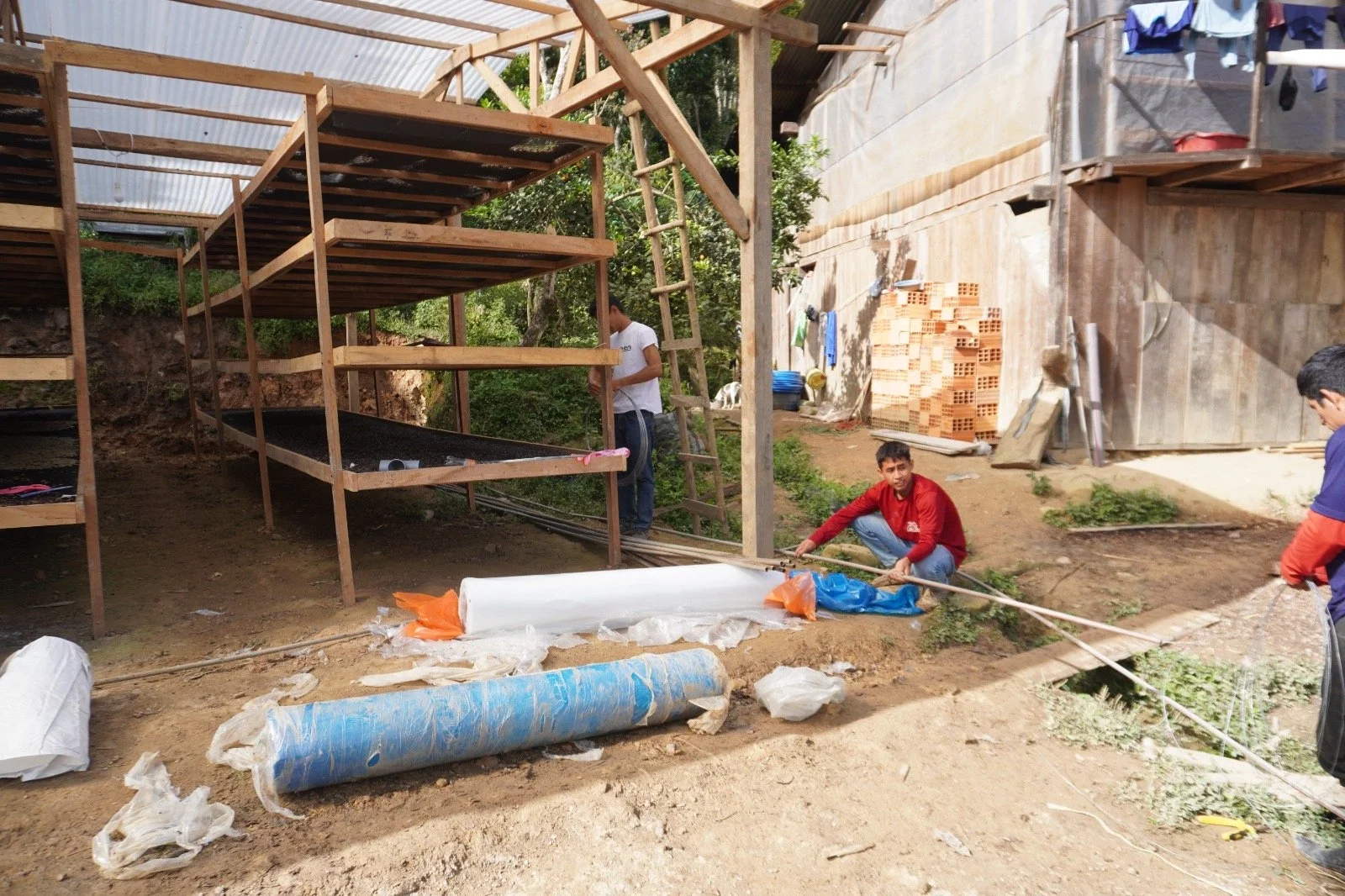
The Cueva Castañeda family settled in Carrizales, at the far end of the Gera River valley above Moyobamba. Initially, they grew ordinary coffee, with little knowledge, little control, and at low selling prices. When several family members joined the Aproeco cooperative in the late 2010s, much changed. With technical assistance in cultivation and processing, higher prices could be achieved. With additional help from Qoffee Qulture e.V., the family built advanced drying beds for complex fermentation and drying processes. Gover Cueva began working for the cooperative, first in the warehouse, then in technical assistance, and finally as quality manager. All of the cooperative’s coffees are couped by Gover.
COFFEE IN PERU
Peru holds exceptional promise as a producer of high-quality coffees. The country is the largest exporter of organic Arabica coffee globally. With extremely high altitudes and fertile soils, the country’s smallholder farmers also produce some stunning specialty coffees.
Though coffee arrived in Peru in the 1700s, very little coffee was exported until the late 1800s. Until that point, most coffee produced in Peru was consumed locally. When coffee leaf rust hit Indonesia in the late 1800s, a country central to European coffee imports at the time, Europeans began searching elsewhere for their fix. Peru was a perfect option.
Between the late 1800s and the first World War, European interests invested significant resources into coffee production in Peru. However, with the advent of the two World Wars, England and other European powers became weakened and took a less colonialist perspective. When the British and other European land owners left, their land was purchased by the government and redistributed to locals. The Peruvian government repurchased the 2 million hectares previously granted to England and distributed the lands to thousands of local farmers. Many of these farmers later grew coffee on the lands they received.
Today, Peruvian coffee growers are overwhelmingly small scale. Farmers in Peru usually process their coffee on their own farms. Most coffee is Fully washed. Cherry is usually pulped, fermented and dried in the sun on raised beds or drying sheds. Drying greenhouses and parabolic beds are becoming more common as farmers pivot towards specialty markets.
After drying, coffee will then be sold in parchment to the cooperative. Producers who are not members of a cooperative will usually sell to a middleman.
The remoteness of farms combined with their small size means that producers need either middlemen or cooperatives to help get their coffee to market. Cooperative membership protects farmers greatly from exploitation and can make a huge difference to income from coffee. Nonetheless, currently only around 15-25% of smallholder farmers have joined a coop group.