

Luke 10
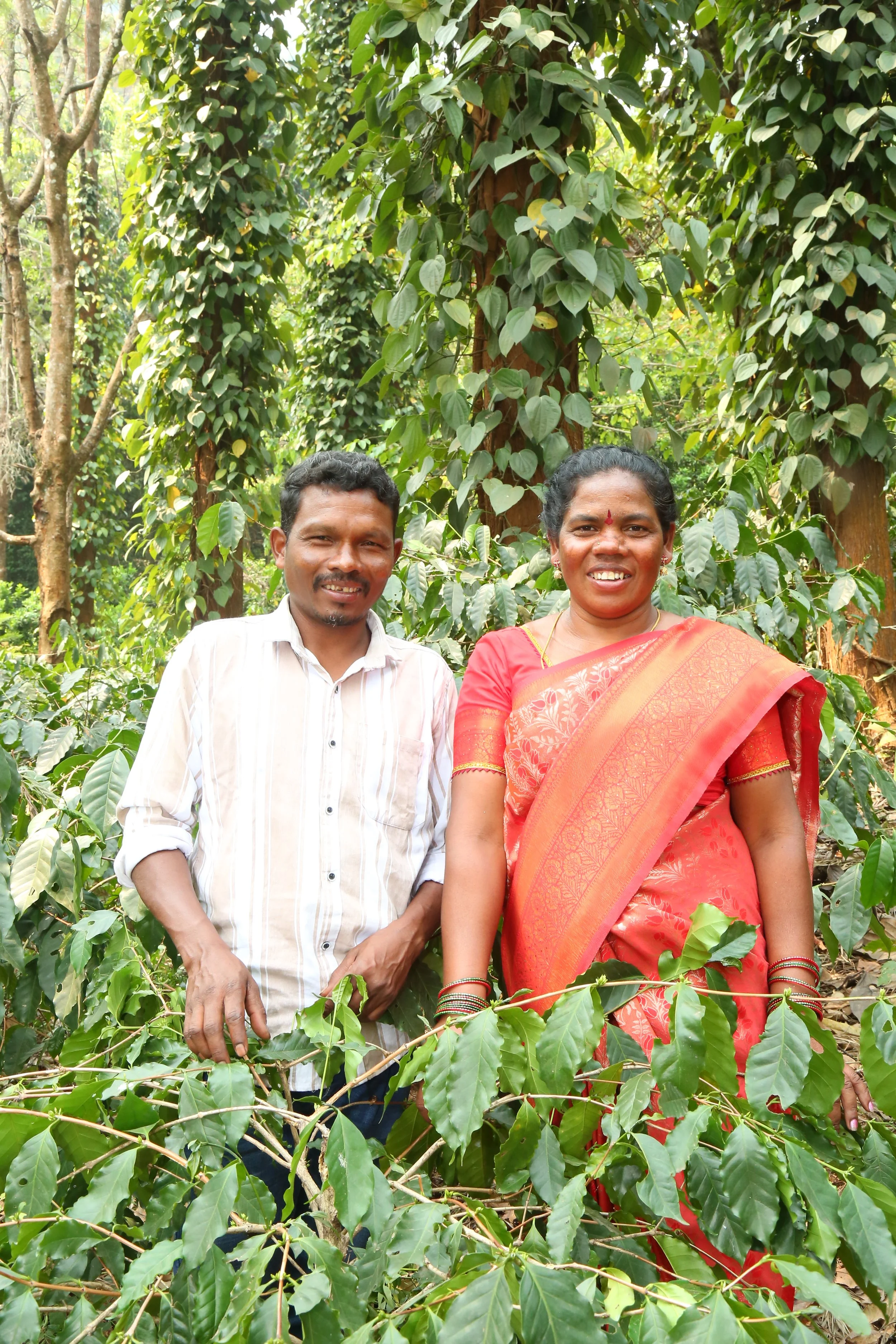
Korra Mathyaraju
COUNTRY: India
VARIETAL: S9
PROCESSING: Natural
ALTITUDE: 925 meters above sea level
PRODUCER: Korra Mathyaraju
REGION: Araku
FLAVOUR NOTES: Red berries, winegums, sweet orange, black tea, pleasant yoghurt-like acidity, slightly alcoholic aftertaste
ABOUT THIS COFFEE
Seventeen years ago, Korra Mathyaraju and his wife began cultivating coffee on five acres of land. Like many smallholder farmers in the region, they were trapped in a cycle of exploitation by middlemen who dictated prices while pocketing most of the profits. The couple watched helplessly as their dreams of prosperity slipped further away. Partnering with Naandi six years ago brought in a significant shift. The quality of their produce improved, and Naandi's grade-specific allocation of fair prices adequately reflected the value of their efforts on the ground. The profits enabled this farmer couple to invest in their children's education, meet daily household needs, and most importantly, reinvest in their farm's future. "The grade-specific prices and transparent procurement system gave us the freedom we never thought was possible," the couple shares contently.
PROCESSING
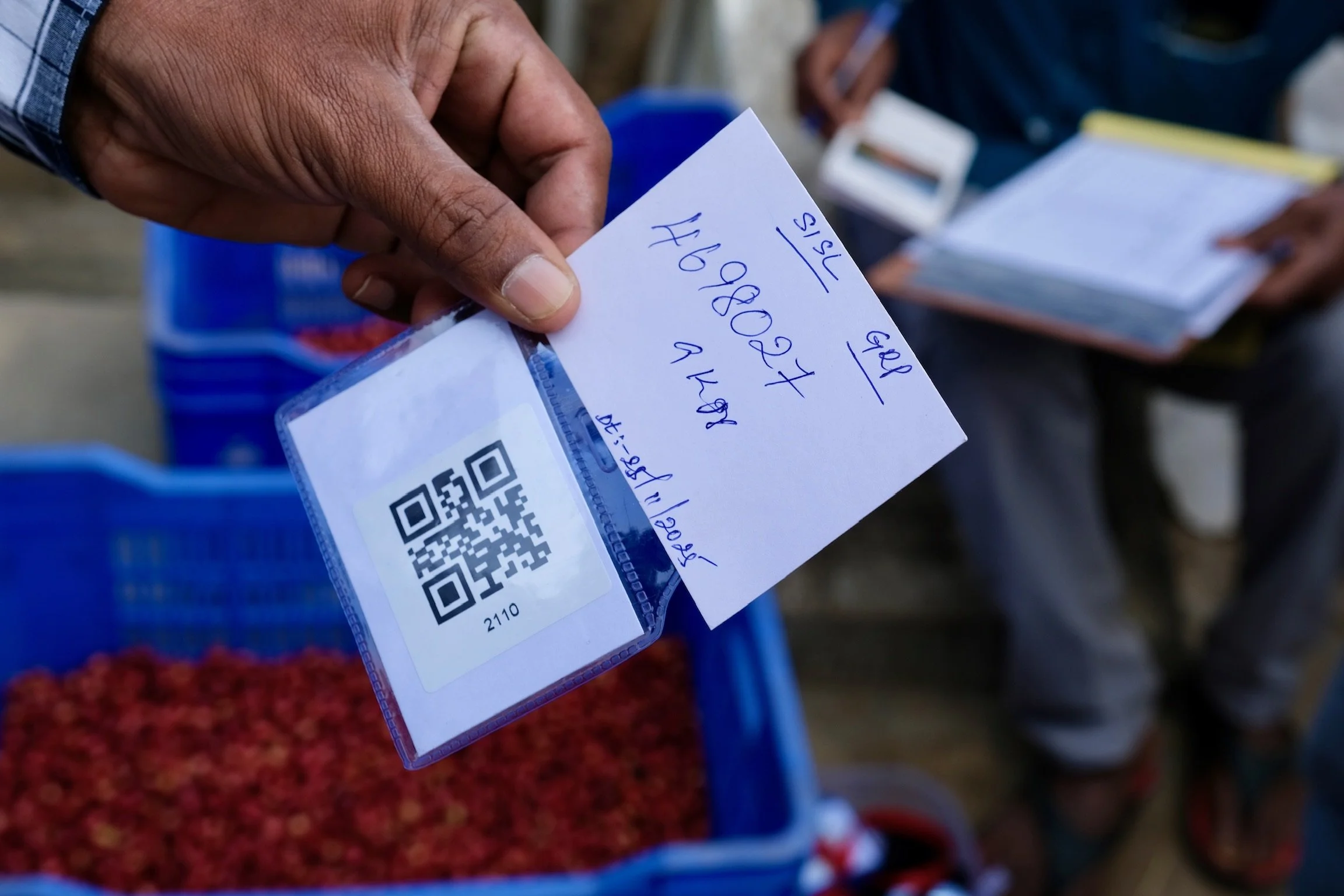
Each day during harvest, the red trucks make their rounds through the valley, collecting freshly picked cherries from smallholder clusters.
Only fully ripe cherries — uniform in size, color, and Brix — are accepted at the collection points. Farmers are trained to pick selectively, often over multiple passes per tree, a practice uncommon in commodity coffee but now standard under SAMTFMACS guidelines. At the processing unit, cherries undergo floatation sorting in clean water tanks. Floaters (underripes, insect-damaged, or overfermented cherries) are removed immediately to ensure only top-grade fruit enters the pulping or fermentation stage.
2. Depending on the lot’s intended profile, cherries are either processed as:
- Fully washed
- Honey
- Natural
For washed coffees, cherries are pulped within hours of delivery using eco-pulpers that minimize water consumption. The mucilage-coated parchment is then fermented in concrete or tiled tanks for 12–24 hours, depending on temperature and altitude. Afterfermentation, parchment is thoroughly washed in clean spring water to remove all mucilage before drying. For honey process lots, Vinod’s team controls mucilage retention — typically 50–70% — and extends drying time for enhanced sweetness and body. Natural lots are carefully laid out whole, with cherries undergoing anaerobic rest periods before drying. Vinod Kumar’s philosophy is simple yet profound: “Process should never overpower the bean — it should reveal its origin.” He and his team maintain strict process documentation, enabling continuous refinement. Data on temperature, pH, moisture, and sensory evaluation is recorded digitally for every lot.
COFFEE IN INDIA
Coffee arrived in India in the 1600s during the height of the Mughal Empire. The 17th century was a time of affluence and expansion for the empire. At the time, the Mughals were responsible for nearly a quarter of global economic and industrial production. In fact, this prodigious economic expansion made India the richest country in the world in 1700.
Throughout India, and much of Mughal territory, Islam was the predominate religion. Islam played a significant role in spreading coffee throughout the world, as Sufi Muslims were some of the first widespread users of the beverage. Sufis found that a drink composed of ground green coffee beans and boiling water helped them to stay awake and focus during nighttime prayers. Later, traders from the Arabian Peninsula, where coffee first became a popular, widespread drink, spread coffee throughout the Middle East and then into Western Europe.
Islam was a driving force that helped bring coffee to India. A Muslim man named Baba Budan journeyed to Mecca, a holy city for Muslims. In Mecca, where coffeehouses and the drink itself were overwhelmingly popular, Baba Budan discovered the delights and benefits of coffee. Unable to leave behind this great pleasure, Baba Budan defied the decrees that made it illegal to leave Arabia with viable coffee seeds and smuggled seven coffee beans back to India. He then planted the seeds in the Chandragiri hills of Karnataka, India.
The Dutch, who had a trading presence in India during Baba Budan’s time, helped spread coffee cultivation across the country. However, it was the rapacity of the British, and their intention to export more coffee to Europe, that spread coffee cultivation across India.
British colonists established the first Indian coffee plantations in the 1840s. At that point, most coffee plants were Arabica. However, less than 20 years later, coffee leaf rust (CLR) spread to India from Indonesia and Sri Lanka, where the disease had first become epidemic. Once CLR arrived in India, it wreaked havoc on the Arabica plants. Many farms quickly switched to Robusta or Arabica-Robusta hybrids, which are both more resistant to CLR.
In 1942, the twin specters of CLR ravaging crops and World War II affecting the supply chain led the Indian parliament to pass the Coffee Market Expansion Act. The Act established the Coffee Board of India (CBI), which oversaw regulation for the coffee industry. The hope was that CBI would regulate the price and supply of coffee throughout India and increase profits for people all along the supply chain.
Arabica beans from India were initially sold on the European market as “Mysore” coffee. However, the turmoil of WWII cut India off from European sales. This break, which also fueled the passage of the Coffee Market Expansion Act of 1942, caused public awareness or desire for the “Mysore” brand to diminish. By the time trade lines were reestablished, the name “Mysore” no longer held the weight it once did and the term was used much more sparingly than before. Today, Indian coffee is largely marketed as “from India”.
The government liberalized the Indian coffee industry in 1995 in an attempt to increase profits for farmers during a major market crash, at which time the CBI lost much of its power. Nonetheless, coffee remains an important agricultural product in the country, and high-quality coffee production (and consumption) is on the rise.
Between 70 and 99% of all coffee in India is grown on plots of land smaller than 10 hectares. The majority of production is still centered on the traditional growing regions in Karnataka, Kerala and Tamil Nadu in the south. As recently at 2014/2015, 90% of coffee produced in India was still coming from these three states.
However, coffee cultivation is now slowly spreading across Northern areas. Coffee is increasingly grown in Andra Pradesh and Odisha in the Eastern Ghats and in the northeastern ‘Seven Sister’ states of Assam, Manipur, Meghalaya, Mizoram, Tripura, Nagaland and Arunachal Pradesh.
Coffee farms are typically situated between 700 and 1,200 meters above sea level. Most coffee cultivation is ‘traditional’ and two-tier shade canopies are mixed with leguminous, nitrogen-fixing trees. In this method, it is very common for coffee trees to be intercropped with spices (like vanilla or pepper) and fruit trees.
After harvest, which is most often done by hand by family members or hired laborers, cherry is usually processed as Natural or Fully washed. Most farms dry coffee on patios or tables, though some of the larger estates also have mechanical dryers.
Today, approximately 30% of coffee production is consumed internally. The other 70% is prepared for export.
India is particularly well known for Monsoon Malabar, a unique coffee that was extremely popular in Europe from the eighteenth to early-twentieth centuries. The flavors of Monsoon Malabar were originally unintentional and were simply a byproduct of transporting green coffee beans to Europe.
Before the advent of modern technology, the journey from India to Europe took approximately 6 months. The coffee, which sat in the hull of the ship, would absorb moisture from the sea and the humid winds, which led the beans to swell to a larger size and turn a pale brown color. The taste of the coffee became smoother, softer and fuller.
Monsoon Malabar coffee was the result of the trip from India to Europe. From the establishment of coffee supply lines to the early or mid-twentieth century, all Indian coffee consumed in Europe was Monsoon Malabar. There was no other profitable way to get coffee to Europe from India. Due to its ubiquity, these coffees were typically marketed as “Mysore” the well-known name in Britain that was associated with India at the time.
Monsoon Malabar only received its current name when, though shipping technology advanced and allowed the control of moisture in hulls, this coffee was still so desired that producers invented a way to recreate the conditions of this particular coffee using special setups. The humidity and moisture necessary for the process comes from the passage of the annual monsoon winds, hence the name: Monsoon(ed) Malabar.
Domestic consumption in India is expanding rapidly. Rising incomes have sent the youth of a growing middle and upper class into urban centers across the world for both education and work. These affluent youth are in turn consuming more and more coffee, which functions simultaneously as an aid to productivity, a status marker and a linchpin for socializing and courting.
This change is reflected in the numbers. Between 2010 and 2019, total coffee consumption, measured through total revenue from roasted coffee, more than doubled. Since then, consumption in India has continued to increase by about 5 to 6 percent annually.
And consumption will only continue to grow. The middle class in India was estimated to be about 50 million people in 2011. Models predict that the number of middle-class Indians will swell to 547 million people (nearly 41% of the population) by 2025. And, as the middle class grows, more people will also continue to adopt coffee drinking habits and, simultaneously, increase national coffee demand and consumption.




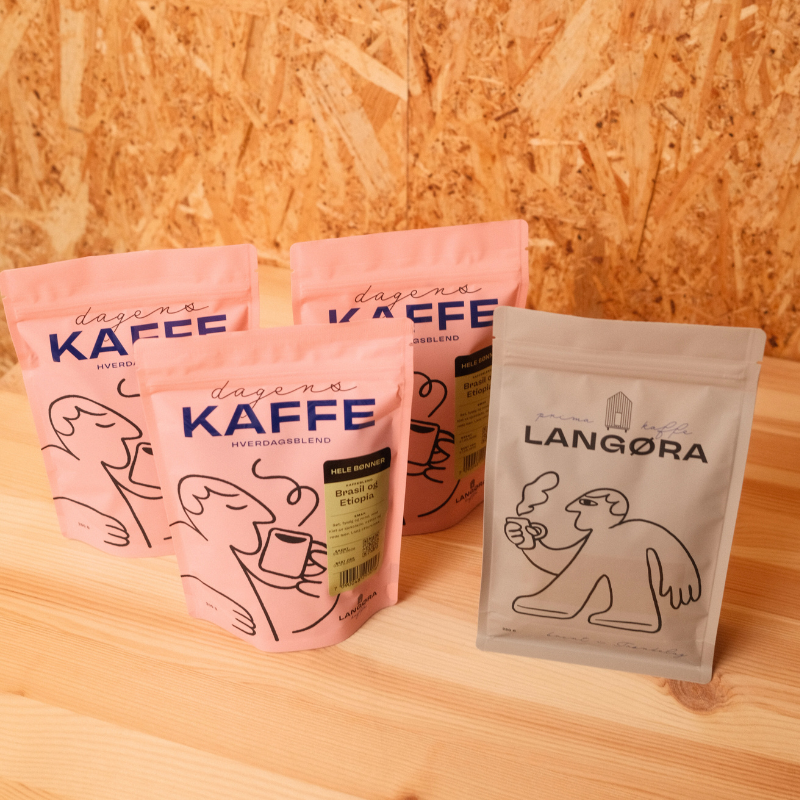


Lett, leskende, fruktig.
Bjørnebær, aprikos, bergamot.