

Luke 14
Las Palmas
COUNTRY: Colombia
FARM/COOP/STATION: Las Palmas
VARIETAL: Striped Bourbon
PROCESSING: Anaerobic Natural
ALTITUDE: 1,650 masl
OWNER: Efren Echeverry
SUBREGION/TOWN: Palestina
REGION: Huila
FLAVOUR NOTES: Funky pineapple, red grape, bittersweet chocolate, cranberry
ABOUT THE FARMER
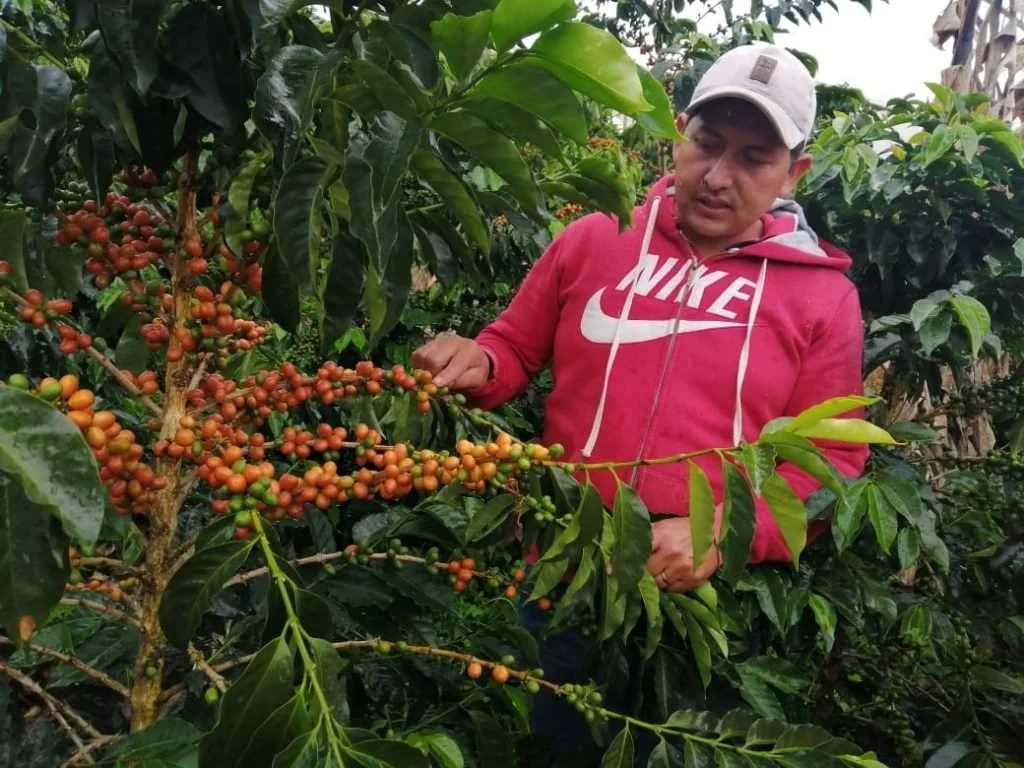
Efren Echeverry is a third-generation coffee producer and current steward of Las Palmas, a family-owned farm located in Sinai, Palestina, Huila. Established 20 years ago, the farm sits at 1,650 masl and spans 7 hectares dedicated to coffee, with 5,000 trees planted.
Alongside coffee, Efren and his family grow plantain, yuca, and garden crops, taking full advantage of the area’s excellent geographic and climatic conditions.
Since taking over management four years ago, Efren has introduced meaningful changes aimed at enhancing quality, such as planting new varieties and refining post-harvest processes. For Efren and his family, Las Palmas is more than a farm; it’s a legacy and their primary source of livelihood. Today, it supports nine employees, including two permanent workers and seven seasonal pickers during harvest.
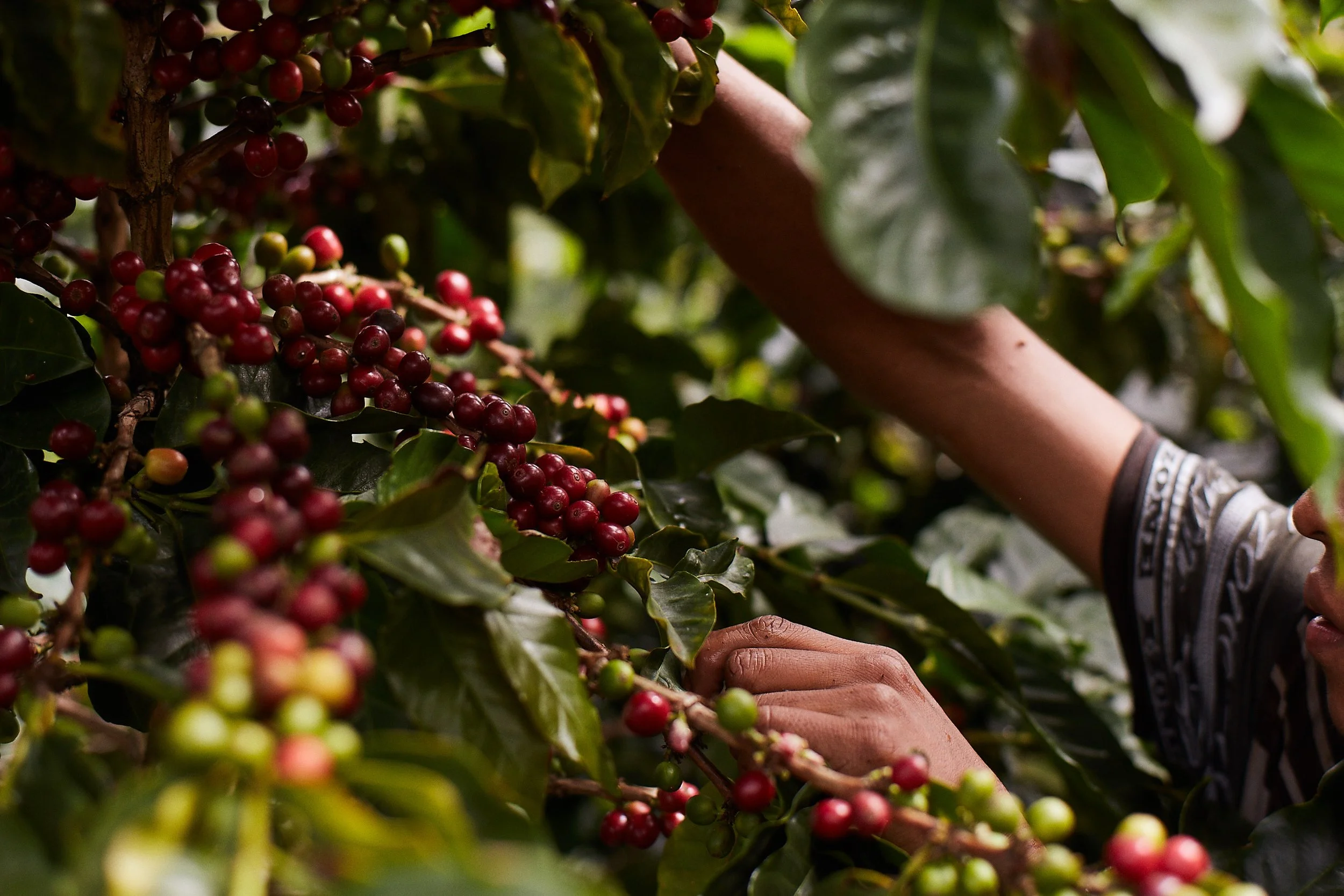
The main harvest runs from October to December, with exports taking place between May and July. Every cherry is handpicked at peak ripeness, floated to remove defects, and processed with care to ensure consistency and excellence.
HARVEST AND PROCESS
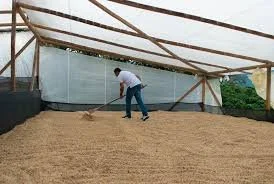
Cherries were selectively handpicked and then floated in tinas. Cherries are then anaerobically fermented for 120 hours in sealed tanks. After fermentation, cherries are dried under marquesinas (covered drying structures) for 20 to 30 days, depending on weather conditions.
Cuatro Vientos
Cuatro Vientos is a family-owned business, offering microlots and regional blends. Founded in 2018, the company was named after the first farm owned by the Gonzalez family, and therefore, holds a special meaning for them. Yonatan Gonzalez, the company’s General Manager, grew up on that farm, and is a third-generation producer with a background in logistics. His father used to commercialise coffee, as a classic, Colombian parchment buyer.
The company operates in different parts of Huila, which gives them access to coffee for 6 months per year. They have 3 purchasing points, located in each region they work in: Acevedo, Santa Maria, and Algeciras. They do not own a private drying mill, and therefore use infrastructure located in Acevedo.
The Area
Huila, along with Narino, is one of the main areas in Colombia where we can find characteristic, diverse and distinctive flavour profiles in coffee. Our partners from Cuatro Vientos work in Northern Huila (Santa Maria & Algeciras), as well as Southern Huila (Acevedo).
COFFEE IN COLOMBIA
Although coffee production in Colombia did not become a large commercial industry until the 19th century, it is likely that coffee was introduced to Colombia about a century earlier by Jesuit priests.
Once commercial production started, it spread quickly. The first commercial coffee plantations were established in the northeast, near the border with Venezuela. Today, coffee is widespread and grown commercially in 20 of Colombia’s 32 Departments.
Historically, Colombia’s most renowned coffee-growing region has been the Eje Cafetero (Coffee Axis), also known as the ‘Coffee Triangle’. This region includes the departments of Caldas, Quindío and Risaralda. With a combined total area of 13,873 km² (5356 mi²), the region covers about 1.2% of the Colombian territory and composes 15% of the total land planted under coffee in the country. The region has also been declared a UNESCO World Heritage site.
While the Eje Cafetero is still a coffee-producing powerhouse, coffee production in Colombia now extends far beyond this zone. In recent years, the departments of Huila, Tolima, Cauca and Nariño have become sought after and well-known coffee-growing regions. Today, they are the largest producers of coffee in Colombia by volume.
Today, there are an estimated 540,000 coffee producers in the country; around 95% of these are smallholder farmers with landholdings that are under 5 hectares. These farmers collectively contribute around 16% of the country’s annual agricultural GDP.
Colombia boasts a wide range of microclimates and geographic conditions that produce the unique flavors so loved in Colombian coffees. While there are many sub-regions and progressively smaller geographical designations — all the way down to individual farms — broadly speaking, coffees in Colombia can be separated into three major regions whose climate, soils and altitudes affect tastes.
Coffees grown in the north (Magdalena, Santander and Norte de Santander) are usually planted at lower altitudes where temperatures are higher. As such, these coffees tend to have deeper, earthier tastes with a medium acidity, more body and notes of nuts and chocolate.
Coffees coming from the central regions (Caldas, Quindío, Risaralda, North of Valle, Antioquia, Cundinamarca and North of Tolima) are celebrated for their overall balance and their fruity, herbal notes. Flavor variations highlight the specific characteristics of each micro-region.
The southern regions (Cauca, Nariño, Huila and South of Tolima) are prized for producing smooth coffees with high sweetness and citrus notes. They are also known for their medium body and more pronounced acidity.
Another distinguishing feature of Colombian coffee production is the mitaca crop – a second harvest that occurs roughly 6 months after the main crop in most regions. The mitaca crop is a result of moist ocean air rising from both the Pacific and the Caribbean, and the north-to-south orientation of the central cordilleras (mountain ranges).
Colombia’s wide range of climates also means that harvest times can vary significantly. Due to these varying harvest times — and the mitaca crop — fresh crop Colombian coffee is available nearly year-round.
Colombia’s coffee industry has been incredibly successful at building a brand that continues to help increase interest and demand for Colombian coffee. Beyond simply increasing demand, the industry’s branding made advertising history. Their iconic coffee farmer, Juan Valdez and his donkey, Conchita, were extremely recognizable.
Juan was initially created in 1958 for Colombia’s Federación Nacional de Cafeteros (FNC) (the Federation of Colombian Coffee Growers) and his visage graces the FNC logo – along with countless of bags of Colombian coffee – to this day.
The story of Juan Valdez is just one example of the ways FNC has been a strong force in creating continuity for the reputation of Colombian coffee. Since its creation in 1927, the FNC has represented the interests of Colombia’s coffee growers. Their continued presence is almost unique in the coffee world and is, in part, one of the reasons that Colombia is such a successful coffee-producing country.
Though originally a non-profit organization, today the FNC is collectively owned and controlled by approximately 540,000 producers across Colombia. In addition to cooking up genius marketing icons, the FNC works to ensure adequate infrastructure for growers, provides technical support and funds research. Their research division, Cenicafé (founded in 1938), is renowned for its focus on developing new genetic varieties and conducting research on improved farming practices.
The FNC also seeks price stabilization and ensures minimum pricing for Colombia’s coffee farmers. Despite this, labor shortages are a growing problem in the country, as young people move out of rural coffee-growing areas into the city. This situation is the ‘new normal’ for Colombian producers and the high cost of labor is one that is a risk for many and for the industry as a whole.



Lett, leskende, fruktig.
Bjørnebær, aprikos, bergamot.