

Luke 15 (Gjest)

Aya is the founder — and currently sole employee — of Hibi Kaffe.
Originally from Japan, she moved to Norway with her husband in 2013. That’s when she discovered her love for coffee and developed a deep interest in roasting.
"Hibi" means "daily" in Japanese — a reminder to better appreciate coffee in your everyday moments. Starting this journey has been an incredible experience, and I’m so excited to share my passion and craft with you.
Website: hibikaffe.no
instagram: @hibikaffe
PB Gatomboya
COUNTRY: Kenya
FARM/COOP/STATION: Gatomboya factory
VARIETAL: SL-28, SL-34, Ruiru 11, Batian
PROCESSING: Washed
ALTITUDE: 1770 masl
OWNER: 700 smallholder farmers
REGION: Nyeri
Bright citrus and herbal notes with raisin-like dried fruit. Long, tea-like finish and great fruit–herbal balance.
ABOUT THIS COFFEE
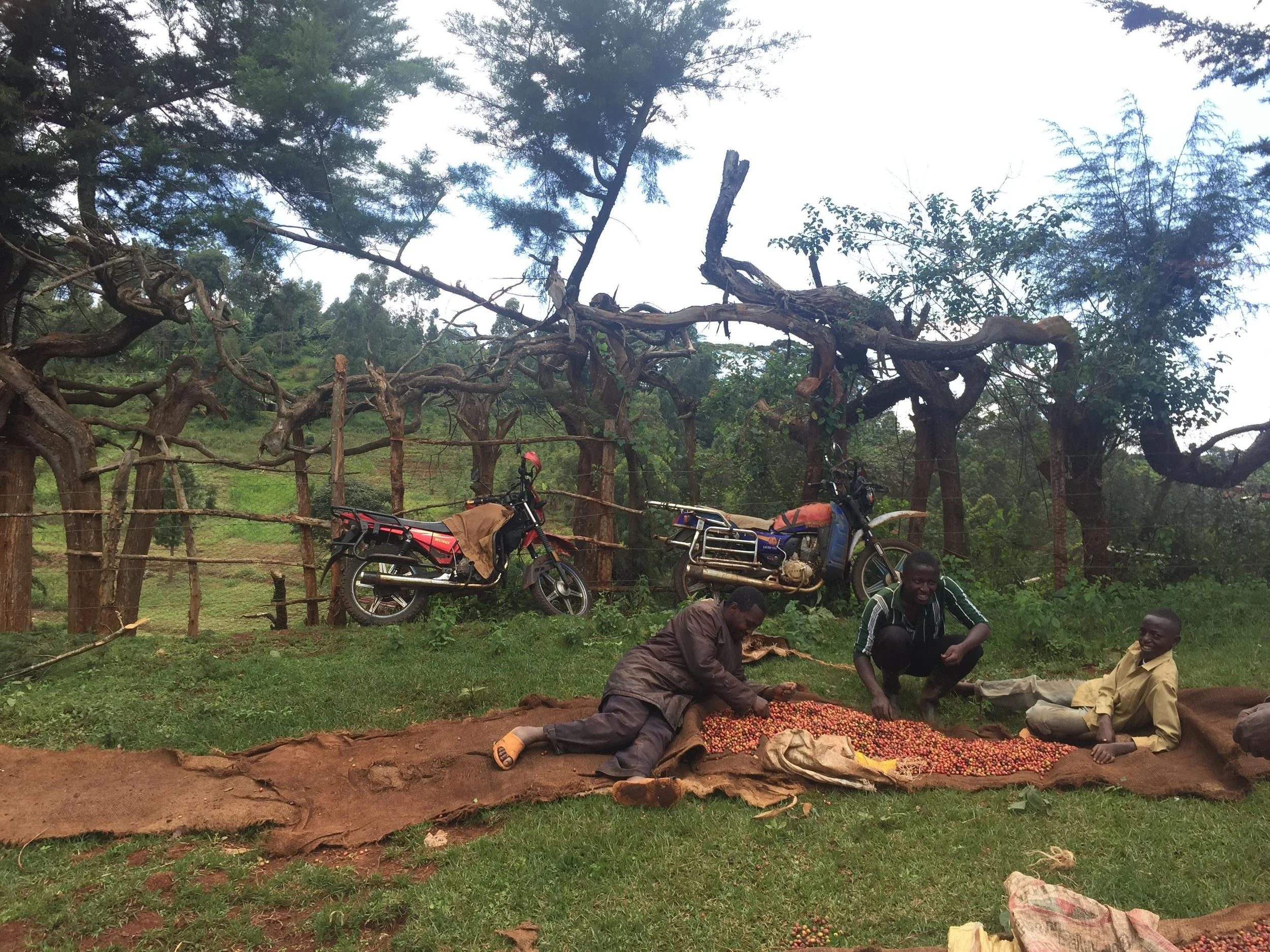
The Gatomboya factory is located in Konyu, Nyeri, within the Mathira division, at an elevation of 1770 metres above sea level. Established in 1987 under the Mathira FCS, it became part of Barichu FCS in 1996. The factory processes cherries from about 700 smallholders, each averaging 0.4 hectares.
The name "Gatomboya," a Kikuyu word meaning "swamp," refers to the area's swampy terrain, ideal for cultivating arrowroots. Farmers primarily grow SL 28 and SL 34 coffee varieties on rich volcanic soils, alongside other crops like tea, maize, and bananas. Shade trees such as Gravellea, Macadamia, and Eucalyptus are also planted.
HARVEST AND PROCESS
Harvest
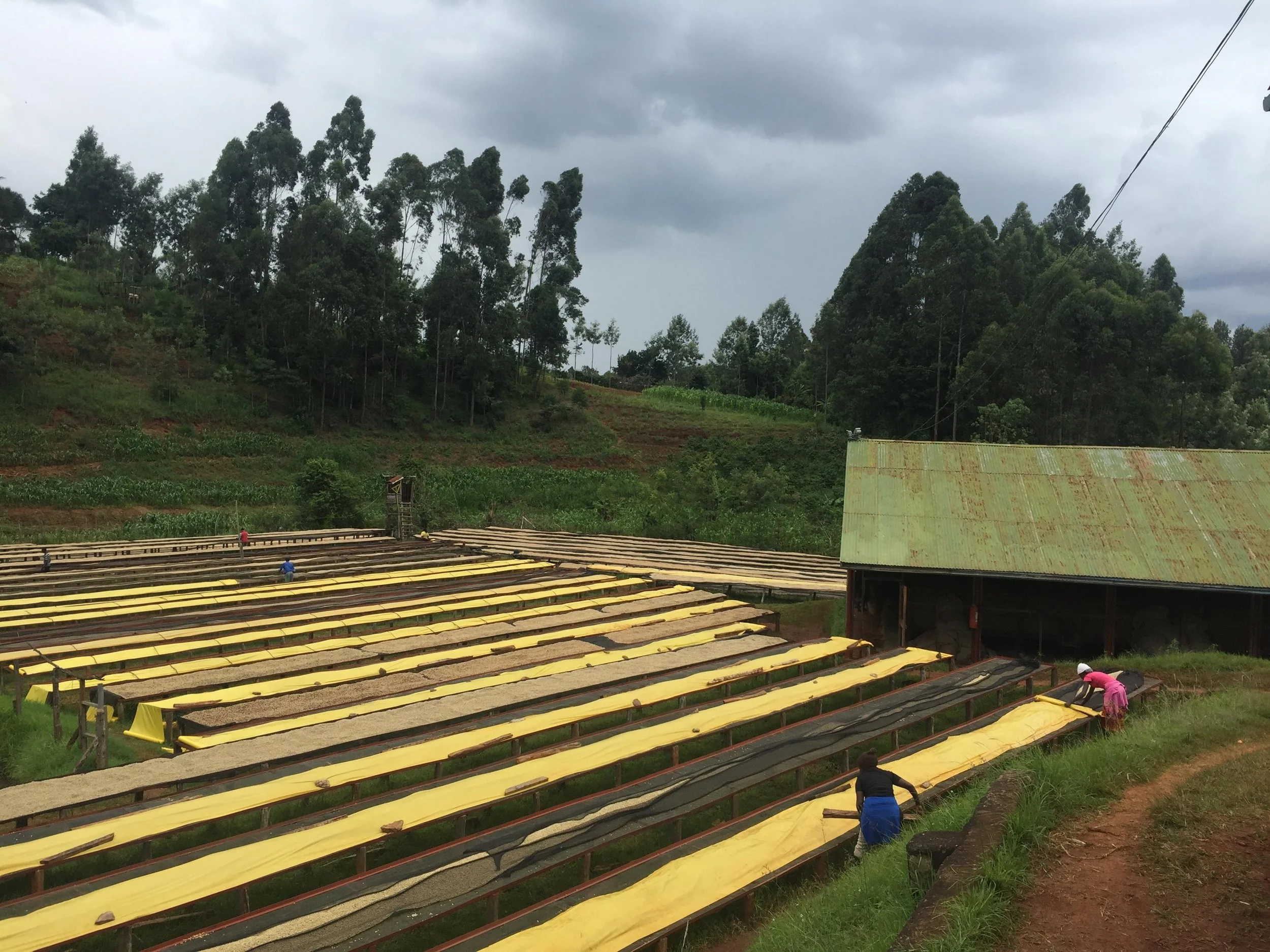
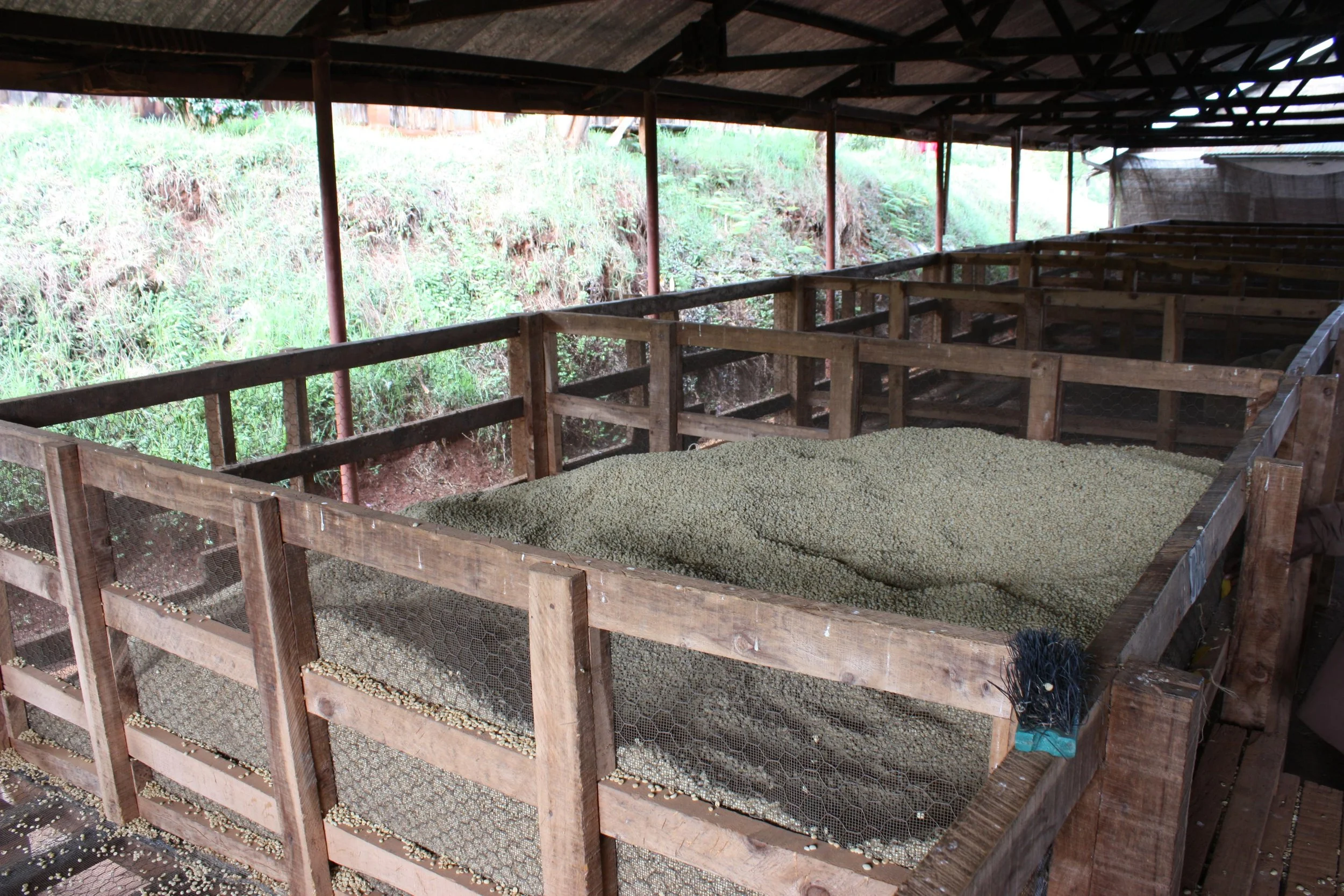
Cherries are handpicked during the main harvest season from October to January. The water source for processing these coffees is the Kirigu River, with water being recirculated and six soak pits used for wastewater management. The cherries are sun-dried on African raised beds.
The annual average rainfall in the area is 1500 mm. The temperatures are mainly between 14 and 25 Celcius.
Processing
Farmers sort their cherries by ripeness before they go into production. They are then placed directly in the hopper that is connected to the pulping machine. The coffee flows from the hopper down to the pulper, and the pulper removes the skin and pulp (usually an Agaarde disc pulping machine). The machine is designed to conduct grading of high and low quality (1st and 2nd). Grade 1 and 2 are fermented separately, while Grade 3 is considered to be of lower quality.
The coffee is fermented for 16-24 hours under closed shade. After fermentation, the coffee is washed and graded again in channels, so that the cherries of lower quality (with lower density) will float. They are removed, leaving the denser, higher quality beans to be separated as higher-grade lots. The cherries are then soaked under clean water from the Gatomboya stream for approximately 16-18 hours.
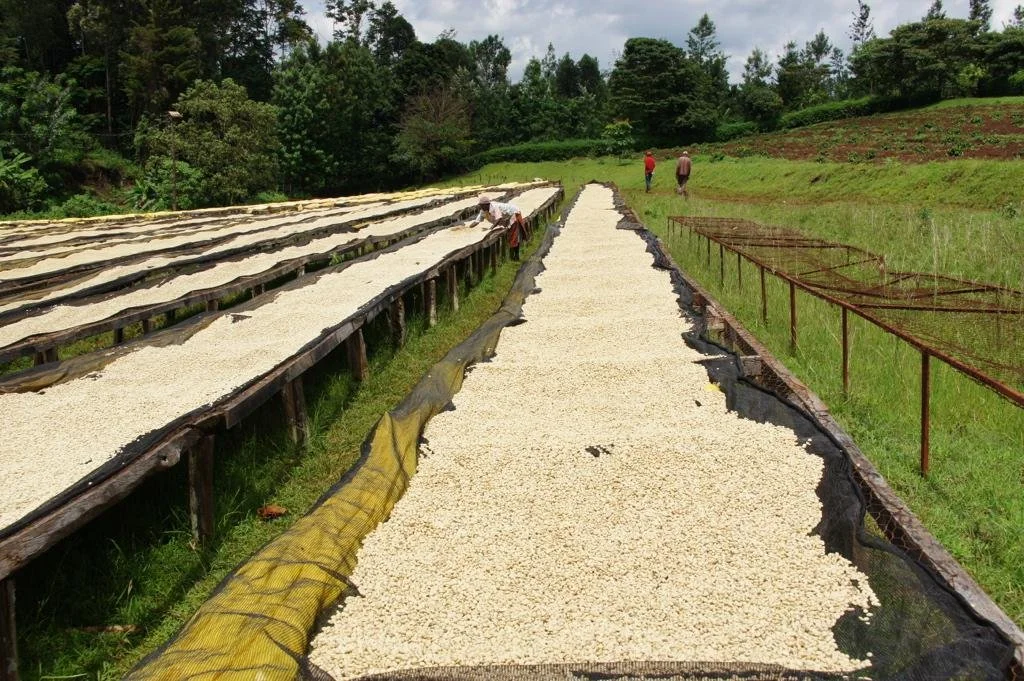
The coffee is sun-dried for up to 21 days on African drying beds, and is covered in plastic during midday and at night.
IMPACT
The Gatomboya factory provides its members with access to credit for school fees, farm inputs, and emergencies. Its primary goal is to share information with farmers about crop management and other essential agricultural practices for coffee cultivation.
Additionally, the factory manager receives training every two years.
COFFEE IN KENYA
Despite sharing over 865 kilometers of border with Ethiopia, the birthplace of coffee, coffee had to circumnavigate the world before it set roots in Kenya. While the earliest credible reports place coffee in Ethiopia around 850 C.E., coffee was not first planted in Kenya until 1893 when French missionaries planted trees in Bura in the Taita Hills.
Under the rule of the British Empire coffee production geared for export expanded. Large, privately owned coffee growing estates were established and most harvests went to England in parchment, where it was sold to roasters prior to milling. Roasters often blended the bright flavors of Kenya with more chocolatey South American coffees.
Though large estates grew in hectarage and value, indigenous Kenyans did not benefit. In fact, European settlers took direct action to exclude indigenous people from growing coffee themselves.
In order to decrease competition, make labor accessible and inexpensive and continue the increase of demand for high-quality coffee, the Coffee Board was created to make regulations on coffee production and marketing. The Nairobi Coffee Exchange (NCE) (which continues to this day) was established in Nairobi to leave more of the value of green coffee at origin.
The Coffee Board tightly controlled licensing for coffee growing and processing. While the laws put in place did not explicitly state that indigenous people could not grow coffee, large estate owners made it functionally impossible for indigenous farmers to attain coffee growing licenses until the 1950s.
These laws protected the interests of the large landowners. Not only could more cultivation drive down the price of Kenyan coffee, but large farmers feared that if smallholder and indigenous farmers had their own coffee farms to tend, they would not work as paid laborers on settlers’ farms.
SL-28 and SL-34 are well-known Kenyan coffee varieties. They were bred by Scott Agricultural Laboratories (SAL). SAL was founded in 1903 by the Kenyan Colonial government to function as a research institution studying agricultural products.
SL-28 and SL-34 quickly became the varieties of choice for most growers. Their deep root structures helped them acquire water in the dry environments present throughout much of Kenyan, even without irrigation. These varieties also had higher yields than the traditional French Bourbon rootstock and were considered somewhat more disease resistant.
Though both SL varieties spread across Kenya extremely quickly, the release of Ruiru-11 in 1985 by the Kenya Coffee Research Institute (CRI) brought a new kid to the block. Many farmers planted the new Ruiru-11 variety because it was far more resistant to Coffee Berry Disease (CBD), a fungal disease attacking ripening coffee cherry, and Coffee Leaf Rust (CLR), a fungal disease that targets the leaves of coffee trees. It could also be planted at a higher density than the SL varieties, allowing farmers to maximize yields on small plots of land.
One downside to Ruiru-11 was that its shallower root structure made is more susceptible to drought and required more fertilizer. Farmers found that that by grafting Ruiru-11 to SL variety trees, they could have the best of both worlds. Trees where Ruiru-11 was grafted onto an SL variety plant had deeper root structures for drought-times (thanks to the SL variety) and higher immunity to disease and larger yields (thanks to the Ruiru-11).
Other farmers are experimenting with Batian, as well, a relatively new variety introduced by Coffee Research Institute (CRI) in 2010. Batian is named after the highest peak on Mt. Kenya and is resistant to both CBD and CLR. The variety has the added benefit of early maturity and begins bearing fruit after only two years. Some challenges (such as vegetative structure) have prevented it from becoming widespread so far, but its popularity is certainly growing.
While most farms in Kenya still have the traditional SL varieties, most also have Ruiru-11 and, increasingly, Batian. Most farms are far too small to be able to handle lot separation by variety. This means that most lots coming out of Kenya—whether single estate or smallholder group—are a blend of SL, Ruiru-11 and (sometimes) Batian.

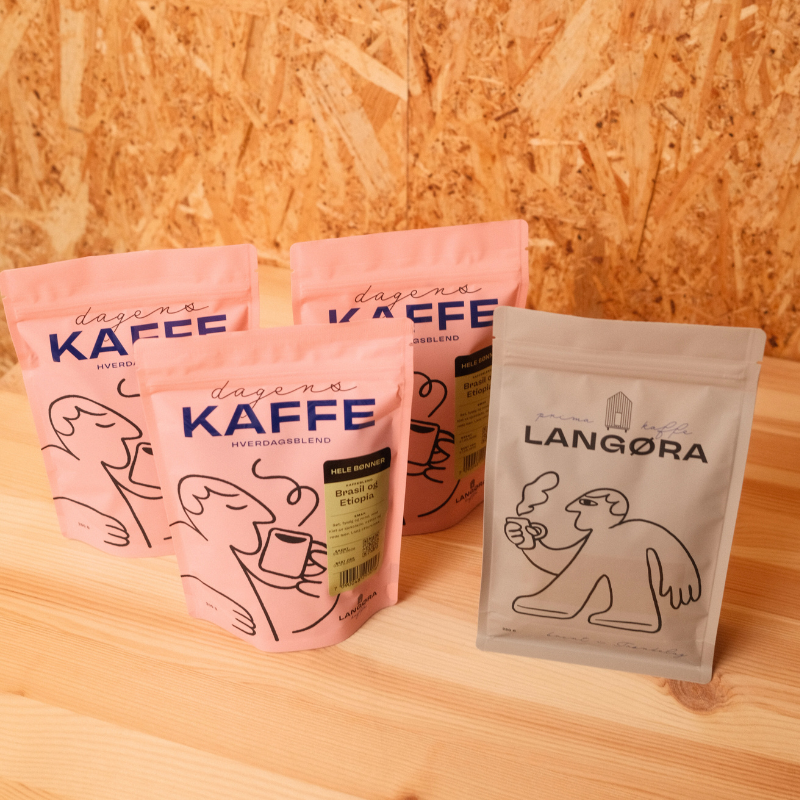
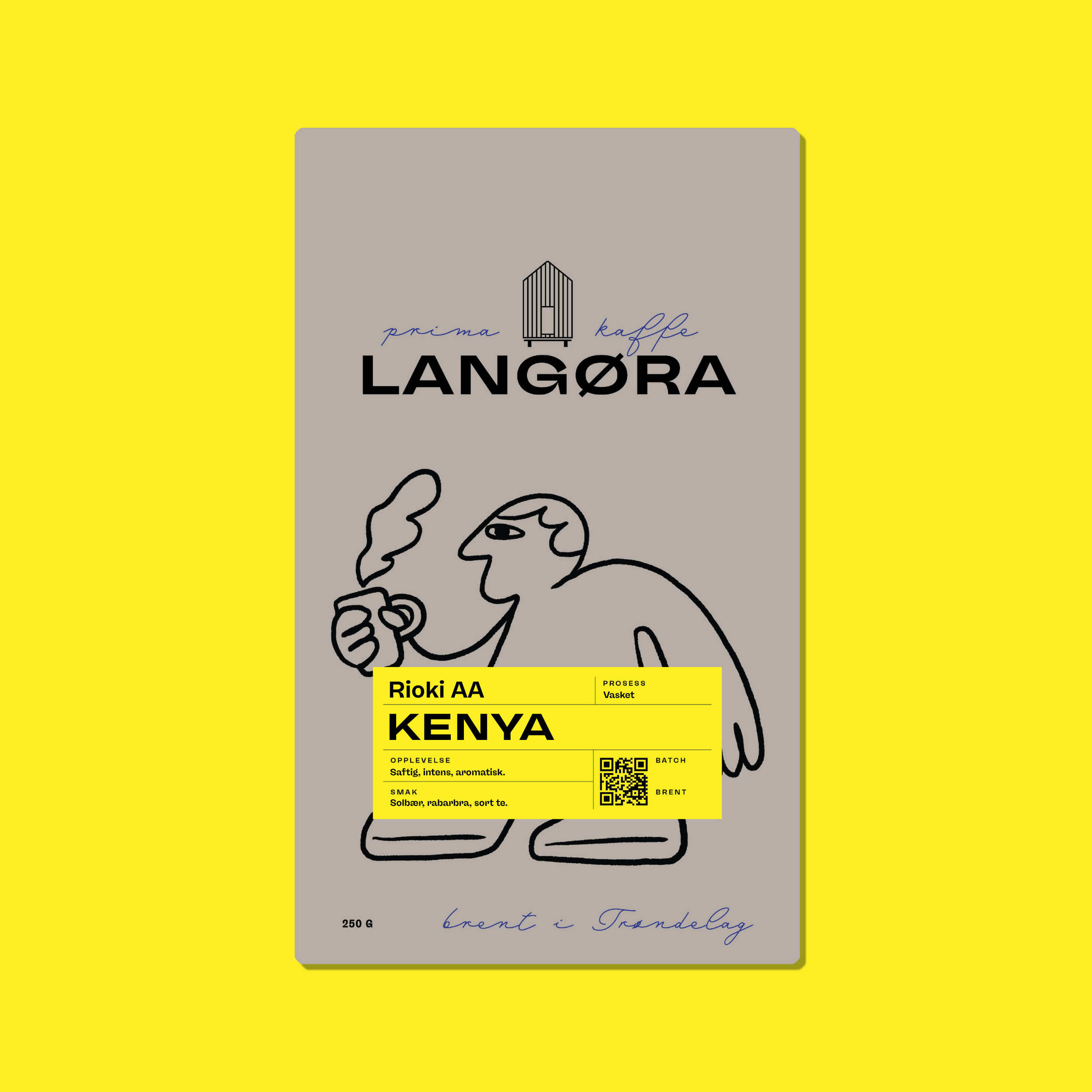


Lett, leskende, fruktig.
Bjørnebær, aprikos, bergamot.