

Luke 16
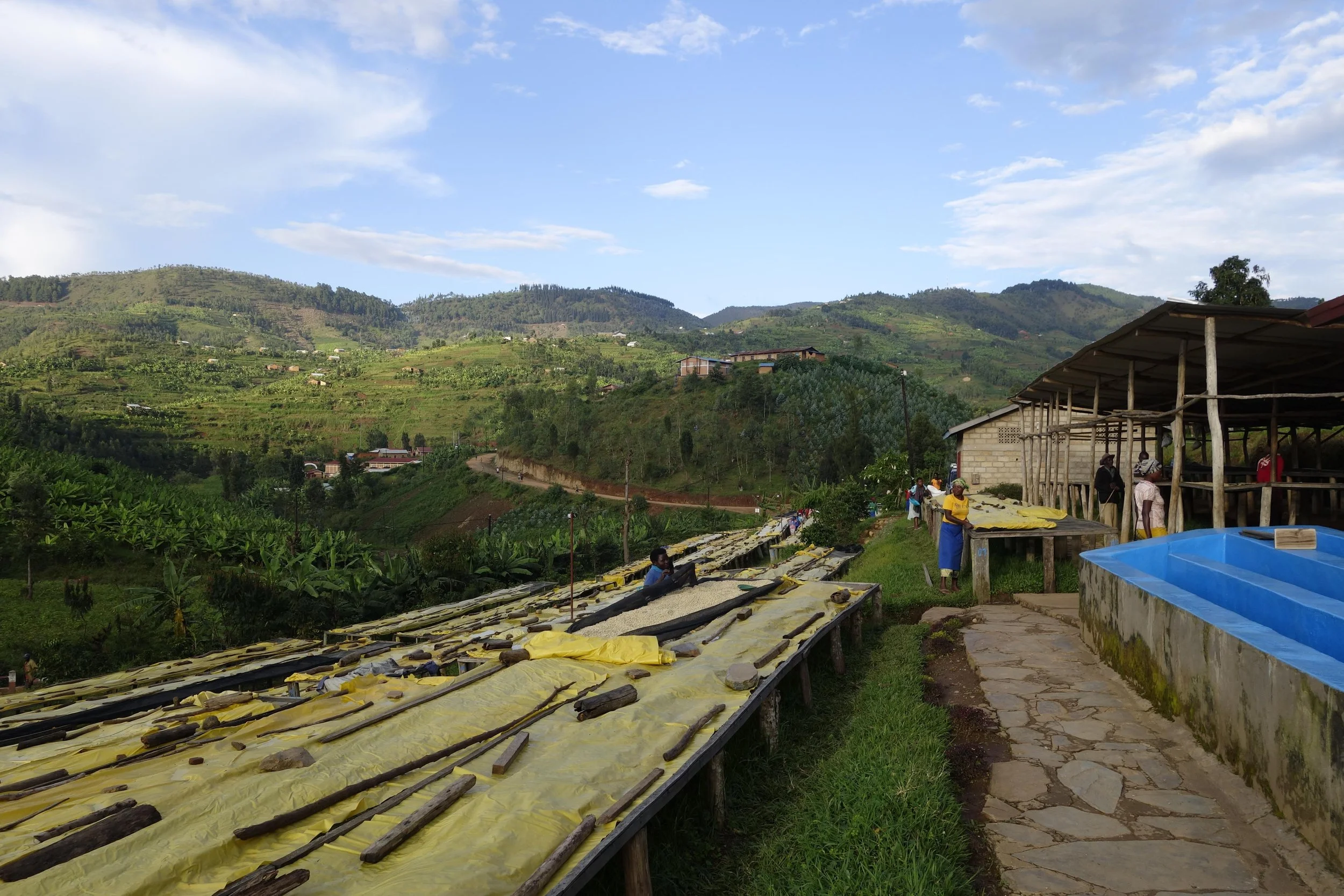
Gitesi
COUNTRY: Rwanda
FARM/COOP/STATION: Gitesi Washing Station
VARIETAL: Red Bourbon
PROCESSING: Washed
ALTITUDE: 1750-1800 m.a.s.l.
OWNER: Alexis and Aime Gahizi
REGION: Gitesi
FLAVOUR NOTES: Sweet and clean, brown sugar, citrus, black tea
ABOUT THIS COFFEE
Gitesi is a private washing station, owned and run by father and son: Alexis and Aime Gahizi. It was built in 2005, and began processing coffee a year later. It is located in the Gitesi sector of Rwanda’s Western Province. The dynamic duo struggled to keep it operating during its launch and fought hard to turn it into a profitable business. In 2010, they finally managed to turn a profit, and have since built a sustainable company.
Alexis (Aime’s father), is originally from the Karongi District, where the washing station is located. His family has been growing coffee in this region for generations. Aime has a degree in engineering. He has created a water purification system for the washing station (wastewater management), which is being used as a model throughout the country’s coffee production industry.
With more than 1,800 local farmers delivering their cherries to Gitesi, it is important for the washing station to maintain strong relationships with the local community. Competing for cherries can be pretty tough, as farmers can deliver their lots to whichever washing station they choose. They therefore maintain a sufficient supply of cherries, and offer competitive pricing to the farmers.
Aime and his staff are very competent. They are extensively trained in managing the delivery of cherries from farmers. They have implemented strict protocols for cherry reception and sorting, as the farmers must sort out their lots themselves. If this isn’t properly conducted, the washing station has staff who can complete the task. The cherries are placed in a tank prior to pulping where floaters are removed and processed separately as lower grade coffee.
HARVEST AND PROCESS
Even though most of our selections come from cherries picked between May and July, Rwanda’s harvest can run from March until August. This isn’t always consistent, as it can shift depending on the weather and the altitude the coffee grows on.
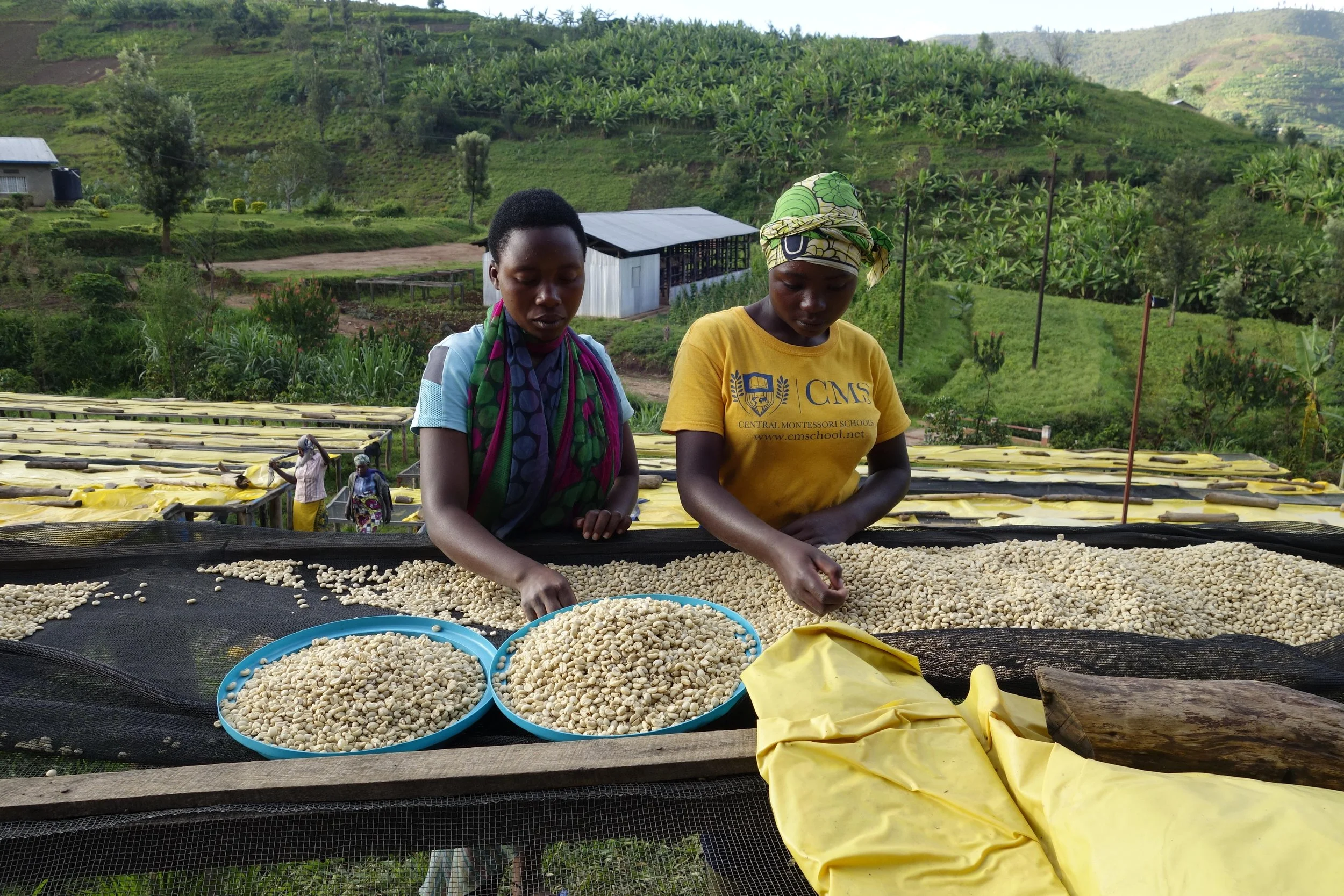
The season’s climate in this region is generally quite cool, and can therefore control the fermentation process. A Penagos 800 Eco Pulper removes the skin of cherries, the pulp and 70% of the mucilage. The coffee is then dry fermented for 10-12 hours, graded and washed in channels. It is separated into two grades based on density, before being soaked in tanks of clean water for 16 hours.
The parchment is initially taken to pre-drying tables underneath the shade. At this stage, while the parchment is still wet, a lot of hand sorting is conducted as it is easier to detect potential defects. The parchment is then dried on African drying beds for up to 15 days. It is covered with a shade net during the hottest hours of the day, throughout the night, and anytime it rains.
GENDEER EQUALITY
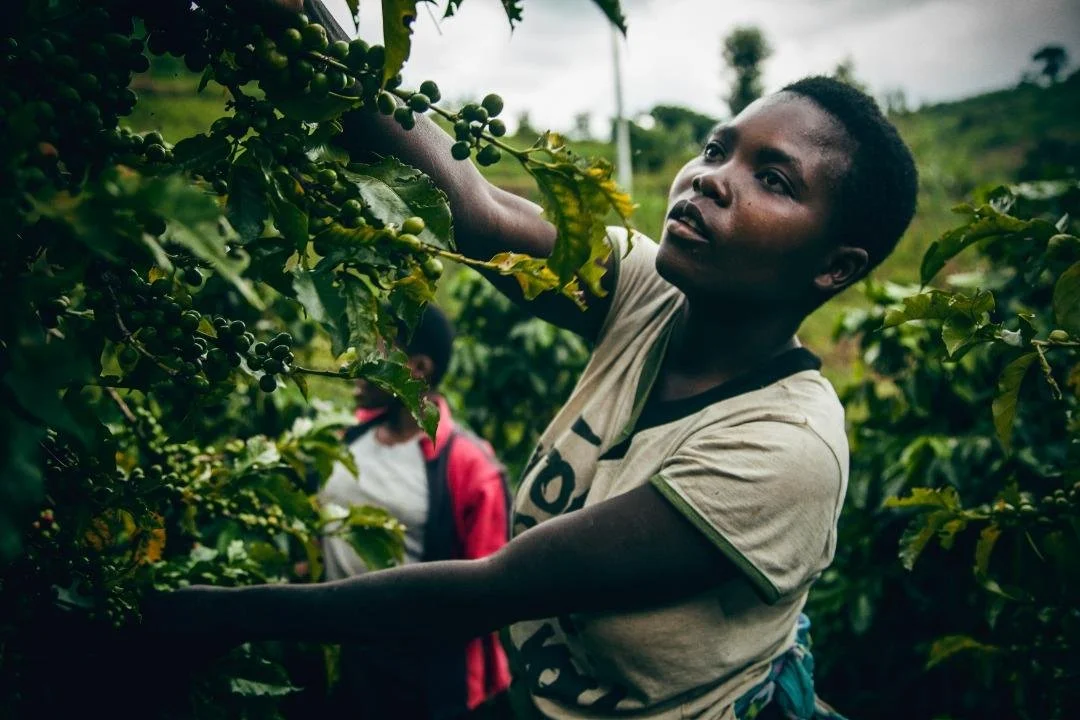
Rwanda has seen significant developments in gender equity and coffee has played a role in these advancements. While women previously lost their control over agriculture during colonial rule due to gender-assumptions made by European rulers, they are starting to regain some autonomy in agriculture. New initiatives that cater to women and focus on helping them equip themselves with the tools and knowledge for farming have been changing the way women view themselves and interact with the world around them.A significant barrier to Rwanda’s expanding coffee industry is transportation. Since Rwanda is landlocked, coffee must first travel 1,500 kilometers by land to either Mombasa, in Kenya, or Dar-es-Salaam, in Tanzania. This is a lengthy and expensive process that usually costs more than it does to ship the same container of coffee from those ports to the US or Europe.
Despite the expense of transportation, Rwandan farmers are doing well. Many farmers who deliver cherry and participate in washing station programs have seen their income more than double. Additionally, the first Rwandan Cup of Excellence was held in 2008 and has since then only continued to gather traction and interest for the country’s exceptional Bourbon coffees.
COFFEE IN RWANDA
Although Rwanda’s colonial past is central to the introduction of coffee in the country, due to Rwanda’s landlocked position close to the center of Africa, few Europeans actually set foot in the country until well into the mid-1890s. Even after the 1885 “Conference of Berlin” when Germany declared control over the areas of modern Burundi and Rwanda, the first documented European traveler to ever set foot in Rwanda did not arrive until 1894.
German missionaries and settlers brought coffee to Rwanda in the early 1900s. Largescale coffee production was established during the 1930 & 1940s by the Belgian colonial government, who officially controlled the Belgian Congo from 1908 to 1960 and the twin territory of Ruanda-Urundi (that later became the countries of Rwanda and Burundi) from 1922 until independence in 1962.
The Belgian government made coffee growing mandatory during their rule. The Belgians forced native Rwandans to grow coffee in order to produce cheap, plentiful, low-quality coffee for export. Most of the profits from coffee production left Rwanda, along with the coffee itself.
When the Belgian government withdrew, many stopped tending their trees because it was no longer compulsory. For some, coffee was seen as a symbol of colonial oppression. However, many also saw the economic advantages of continuing to grow coffee, and the industry quickly became important to Rwanda’s national economy.
Coffee production continued after the Belgian colonists left. By 1970, coffee had become the single largest export in Rwanda and accounted for 70% of total export revenue. Coffee was considered so valuable that, beginning in 1973, it was illegal to tear coffee trees out of the ground.
Between 1989 and 1993, the breakdown of the International Coffee Agreement (ICA) caused the global price to plummet. Considering the massive role that coffee played in Rwanda’s income, the government and economy took a hard hit from low global coffee prices. The 1994 genocide and its aftermath led to a complete collapse of coffee exports and vital USD revenue. But the incredible resilience of the Rwandan people is evident is the way that the economy and stability have recovered since then.
Modern Rwanda is considered one of the most stable countries in the region. Since 2003, its economy has grown by 7-8% per year and coffee production has played a key role in this economic growth.
This incredible recovery is due in part to the strong government support for the coffee sector as well as trade rules helping exports and international investment into the coffee sector. About ten years after the end of the civil war, the government instituted the National Coffee Strategy that helped improve and expand the coffee industry. The strategy encourages high-quality production for the specialty coffee market. Funding comes from the Rwandan government, other nations and private investors. Economic outcomes for farmers are now much better than they once were.
Previously, Rwandan coffee farmers processed their cherry at home. They would roughly de-pulp the cherry, wash it, maybe ferment it and probably dry it on the floor. This created a very low-quality commodity coffee called semi-washed. To improve the quality of coffee, the government incentivized the creation of new Central Washing Stations (CWSs) in coffee-producing areas. The first CWS was established in 2001. Today, more than 300 washing stations operate across Rwanda.
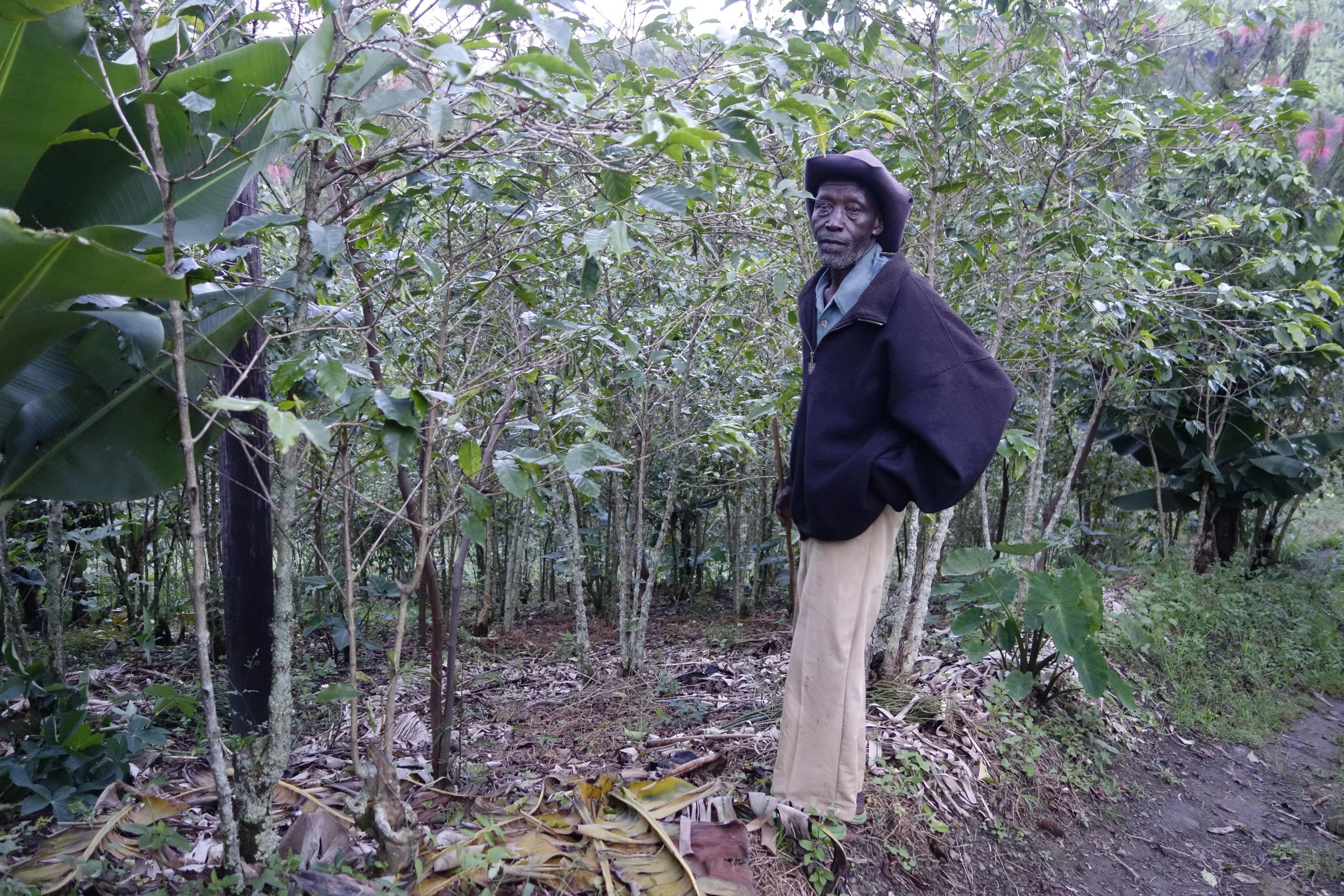
The growth of washing stations and the improvement in processing for Rwandan coffees has added at least a 40% premium to Rwandan coffee’s export value.Today, smallholders propel the industry in Rwanda forward. The country doesn’t have any large estates. Most coffee is grown by the 400,000+ smallholders, who own less than a quarter of a hectare. The majority of Rwanda’s coffee production is Arabica. Bourbon variety plants comprise 95% of all coffee trees cultivated in Rwanda.
A significant barrier to Rwanda’s expanding coffee industry is transportation. Since Rwanda is landlocked, coffee must first travel 1,500 kilometers by land to either Mombasa, in Kenya, or Dar-es-Salaam, in Tanzania. This is a lengthy and expensive process that usually costs more than it does to ship the same container of coffee from those ports to the US or Europe.
Despite the expense of transportation, Rwandan farmers are doing well. Many farmers who deliver cherry and participate in washing station programs have seen their income more than double. Additionally, the first Rwandan Cup of Excellence was held in 2008 and has since then only continued to gather traction and interest for the country’s exceptional Bourbon coffees.




Lett, leskende, fruktig.
Bjørnebær, aprikos, bergamot.