


Luke 24
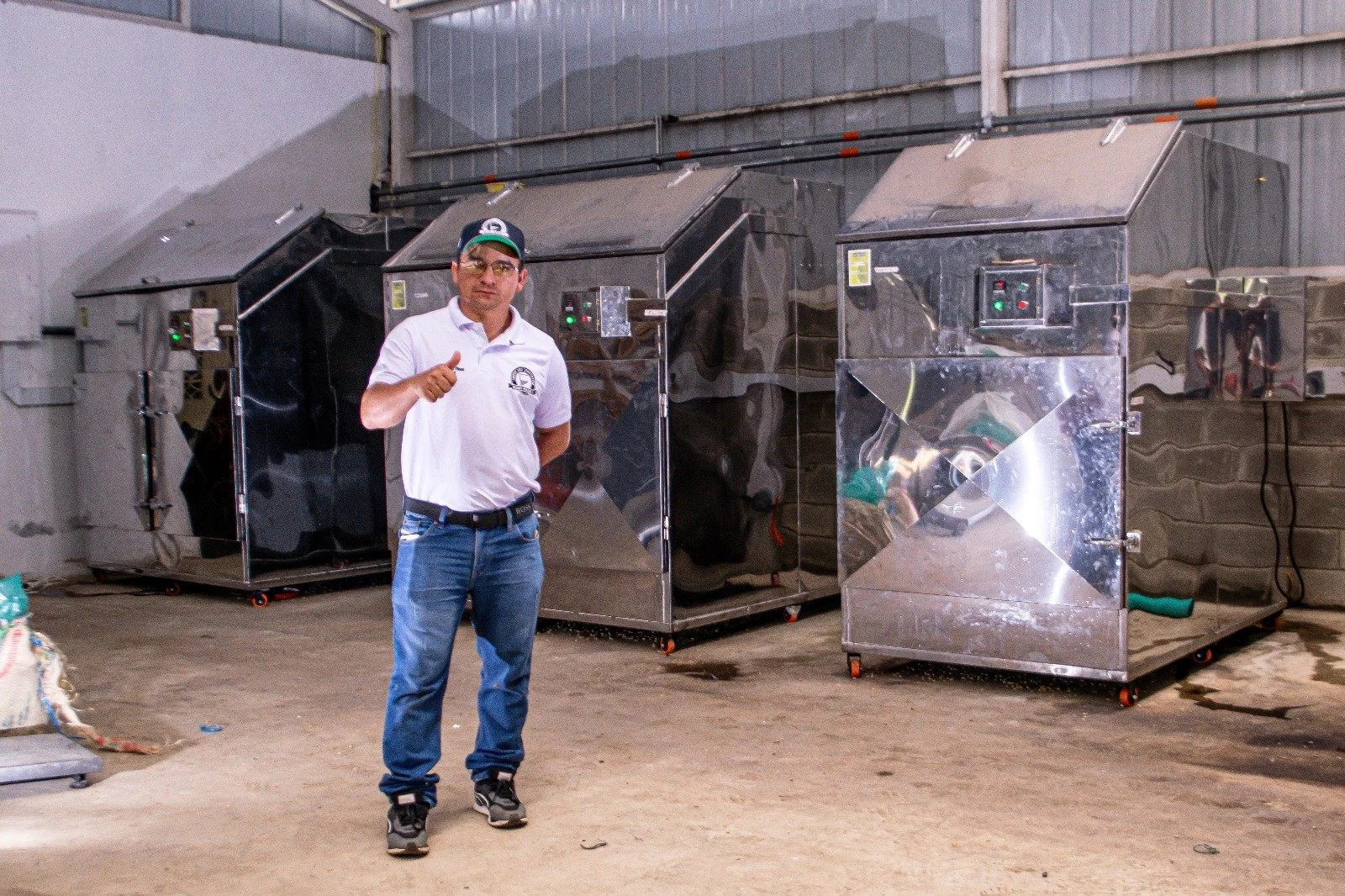
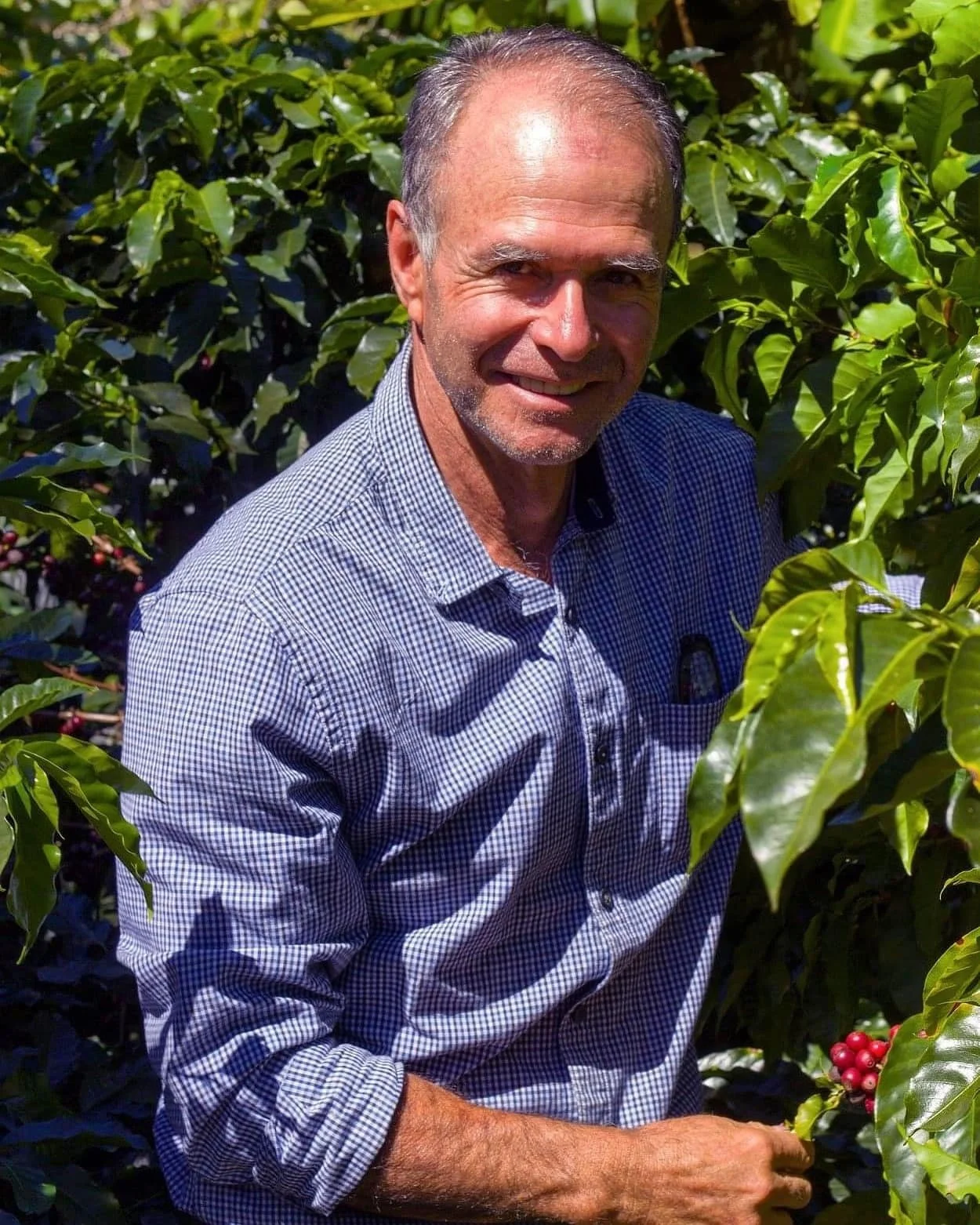
Wilton Benitez Geisha
COUNTRY: Colombia
FARM/COOP/STATION: La Macarena
VARIETAL: Geisha
PROCESSING: Anaerobic fermentation + thermoshock.
ALTITUDE: 1900 meters
OWNER: Wilton Benitez
REGION: Huila
FARM SIZE: 14 hectares
FLAVOUR NOTES: Jasmine, citrus peel, light honey, mandarin, black tea, malt
ABOUT THE FARMER
The family farm of Wilton Benítez has established itself as a benchmark in the production of high quality coffees, standing out for its dedication to excellence and innovation. Growing exceptional varieties such as Java, Pink Bourbon, Geisha, SL-28 and Caturra, the farm offers beans with sensory profiles that surprise coffee lovers. The combination of traditional techniques with modern systems, such as terraces and drip irrigation, allows for optimal crop management. In addition, a nutritional approach based on laboratory analysis ensures that each stage of the process is rigorously controlled, culminating in the production of coffees that not only win international awards, but also provide a unique experience in every cup. These efforts reflect the farm's commitment to maintaining its reputation and continuing to surprise the coffee world.
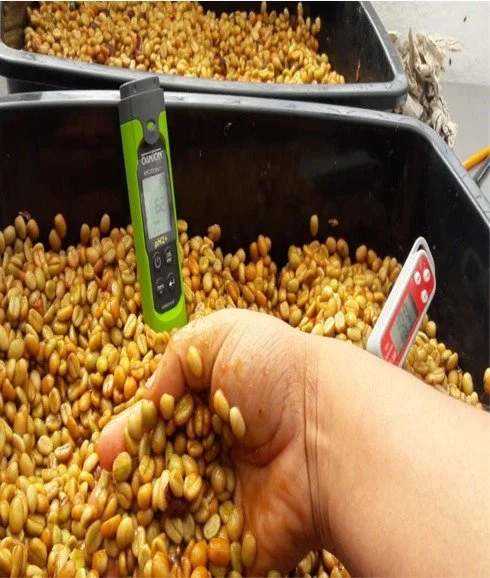
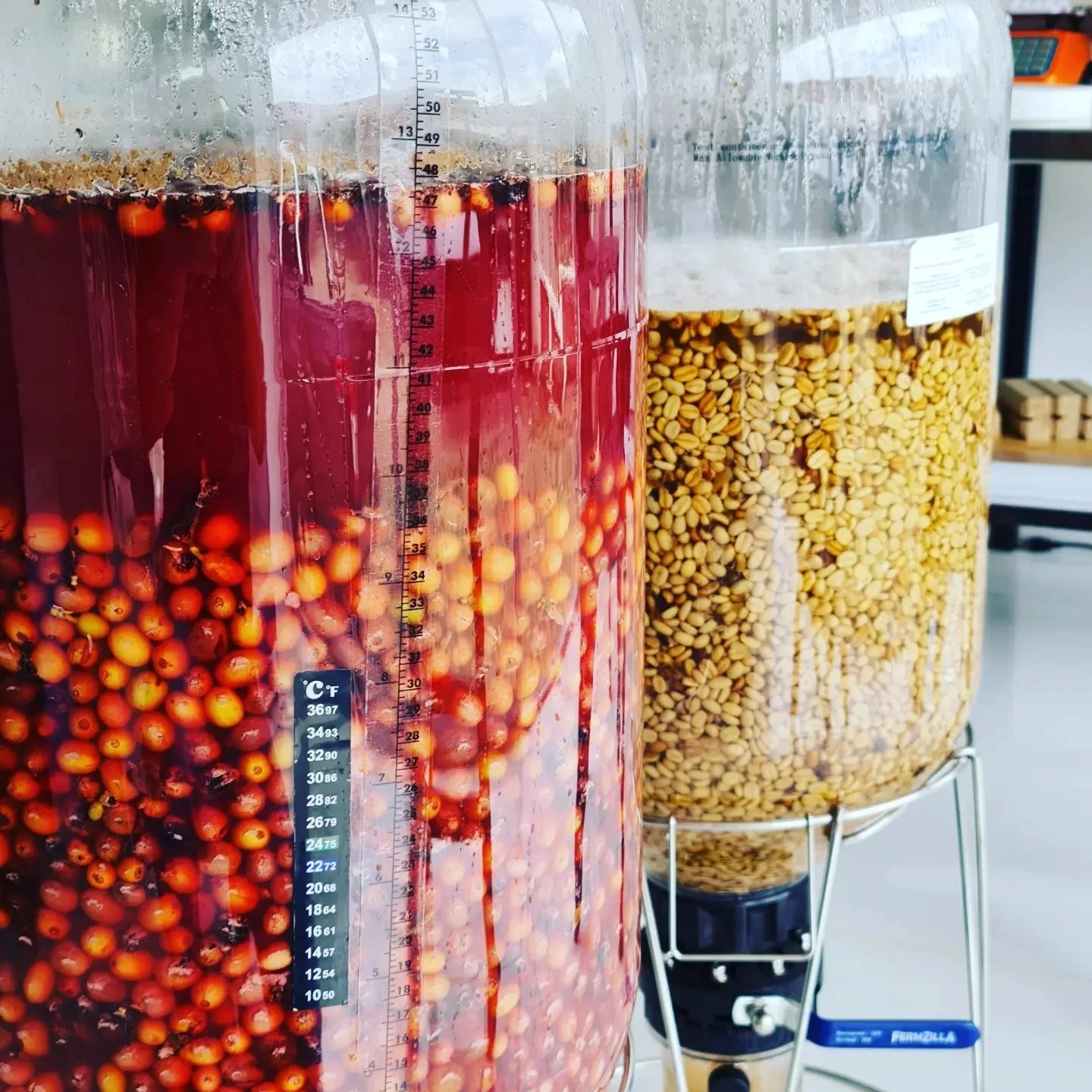
Anaerobic fermentation and thermal shock
When the fruits are ripe, they are harvested by hand at their optimal point of ripeness. The coffee fruit is then sorted by quality, both by size and density.
It is then subjected to two sterilisation processes:
* First, the fruit is washed with ozonated water.
* The second, the same fruit is exposed to ultraviolet rays.
The coffee cherries then undergo two stages of fermentation:
* The first is 50 to 60 hours of anaerobic fermentation at a temperature of no less than 18 °C, during which time yeast selected for the varietal or micro-batch of coffee is added. All this takes place in stainless steel fermentation tanks (bioreactors), which allow the pressure generated by fermentation to be controlled in order to bring the Brix to 6 and the pH to 3.8.
During this first fermentation phase, the mucilage is recovered and reincorporated into the fermentation environment in the next phase.
The cherries are pulped or skinned before moving on to the second phase:
*Second phase: They are returned to the bioreactors, where anaerobic fermentation in mucilage begins for 50 to 60 hours at a temperature above 21 °C.
They are then washed using a thermal shock method: first with water between 38 and 40 °C and then with cold water at approximately 12 °C. The temperature difference helps to fix the aromas produced by fermentation and to sterilise according to the temperature.
Finally, the cherries are dried in an ecological machine that allows for temperature control and recovery of the water released by the dehydration of the bean. Drying usually takes 36 hours at a variable temperature (40 °C for the first 12 hours and 35 °C for the following 24 hours).
Once the seeds from the micro-batches have a moisture content of between 11% and 10%, they are taken to the storage warehouse where they are sorted electronically and manually to meet the required physical quality standards.
Once they have the desired physical characteristics, samples are taken to the laboratory for quality verification and tasting.
The use of bioreactors, innovative drying systems, specific microorganisms developed on the farm , and constant monitoring and control of factors such as temperature, pH, Brix degrees and electrical conductivity allow for the development of more balanced coffees, with abundant tropical fruits (passion fruit, lychee, pineapple, tamarind, coconut...), providing exceptional micro-batches now available to roasters.
COFFEE IN COLOMBIA
Although coffee production in Colombia did not become a large commercial industry until the 19th century, it is likely that coffee was introduced to Colombia about a century earlier by Jesuit priests.
Once commercial production started, it spread quickly. The first commercial coffee plantations were established in the northeast, near the border with Venezuela. Today, coffee is widespread and grown commercially in 20 of Colombia’s 32 Departments.
Historically, Colombia’s most renowned coffee-growing region has been the Eje Cafetero (Coffee Axis), also known as the ‘Coffee Triangle’. This region includes the departments of Caldas, Quindío and Risaralda. With a combined total area of 13,873 km² (5356 mi²), the region covers about 1.2% of the Colombian territory and composes 15% of the total land planted under coffee in the country. The region has also been declared a UNESCO World Heritage site.
While the Eje Cafetero is still a coffee-producing powerhouse, coffee production in Colombia now extends far beyond this zone. In recent years, the departments of Huila, Tolima, Cauca and Nariño have become sought after and well-known coffee-growing regions. Today, they are the largest producers of coffee in Colombia by volume.
Today, there are an estimated 540,000 coffee producers in the country; around 95% of these are smallholder farmers with landholdings that are under 5 hectares. These farmers collectively contribute around 16% of the country’s annual agricultural GDP.

Check out more coffees in our store:
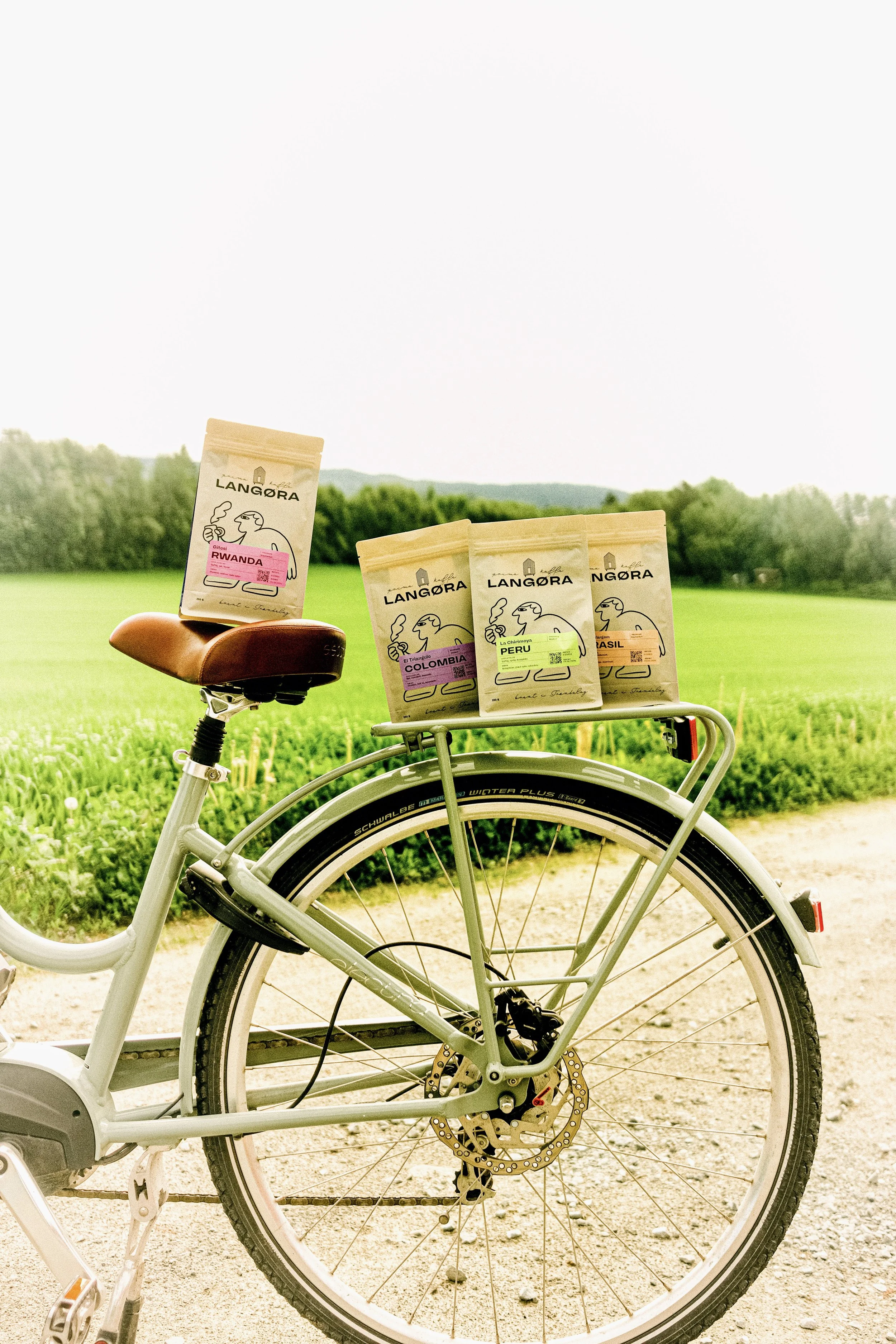


Luke 23
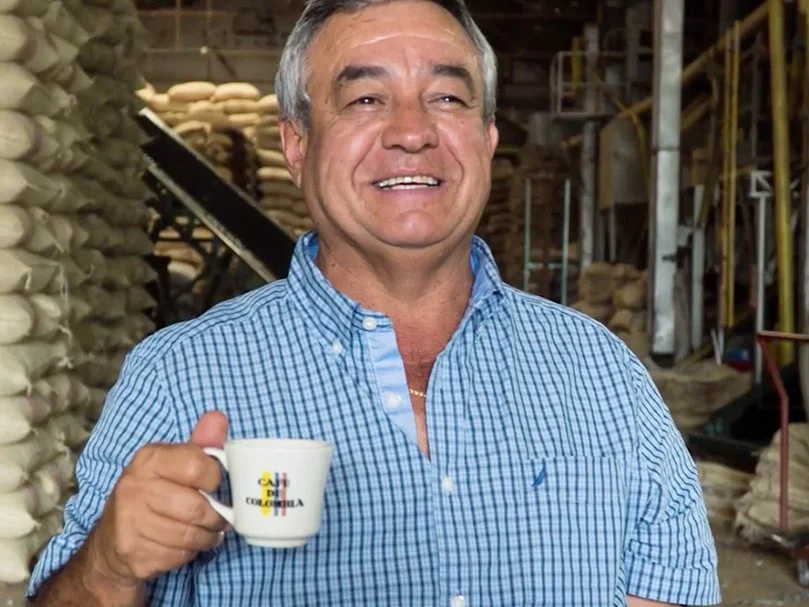
Jairo Arcila Passionfruit
COUNTRY: Colombia
FARM/COOP/STATION: Santa Mónica
VARIETAL: Castillo
PROCESSING: Washed Wine Yeast / Passionfrui
OWNER: Jairo Arcila
REGION: Quindio
FLAVOUR NOTES: Passionfruit, lemon verbena, orange blossom, apricot
ABOUT THIS FARMER
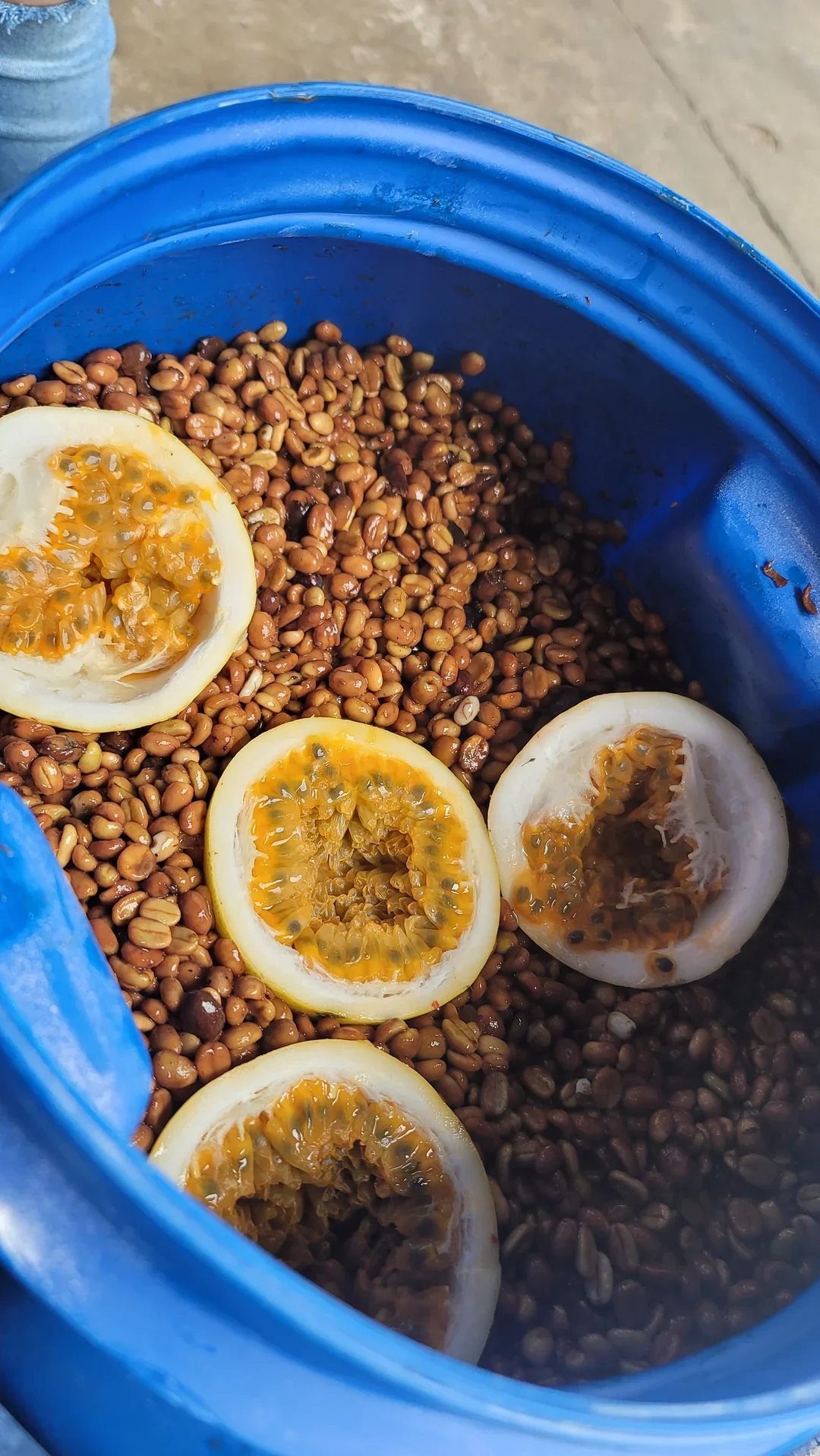
Jairo Arcila is a third-generation coffee grower from Quindio, Colombia. He is married to Luz Helena Salazar and they have two children together, Carlos and Felipe Arcila. Jairo’s first job was at Colombia’s second-largest exporter, working as their Mill Manager for over 40 years until his retirement in 2019.
Jairo has received great advice and guidance from his sons who are now experts in producing Specialty Coffee. With their help, Jairo has greatly improved the picking, sorting, and processing of his coffees. His sons have also guided Jairo in the production of exotic varieties. He now grows varieties like Pink Bourbon, Java, Papayo ,and Gesha growing across his farms. The guidance from his sons has empowered Jairo and given him the tools needed to produce fantastic coffees with amazing flavour profiles.
Besides coffee, Jairo also grows other agricultural products on his farms such as mandarin, orange, plantain, and banana. Jairo enjoys starting the day with a really good breakfast! But most importantly, he enjoys spending time with his family.
COFFEE IN COLOMBIA
Although coffee production in Colombia did not become a large commercial industry until the 19th century, it is likely that coffee was introduced to Colombia about a century earlier by Jesuit priests.
Once commercial production started, it spread quickly. The first commercial coffee plantations were established in the northeast, near the border with Venezuela. Today, coffee is widespread and grown commercially in 20 of Colombia’s 32 Departments.
Historically, Colombia’s most renowned coffee-growing region has been the Eje Cafetero (Coffee Axis), also known as the ‘Coffee Triangle’. This region includes the departments of Caldas, Quindío and Risaralda. With a combined total area of 13,873 km² (5356 mi²), the region covers about 1.2% of the Colombian territory and composes 15% of the total land planted under coffee in the country. The region has also been declared a UNESCO World Heritage site.
While the Eje Cafetero is still a coffee-producing powerhouse, coffee production in Colombia now extends far beyond this zone. In recent years, the departments of Huila, Tolima, Cauca and Nariño have become sought after and well-known coffee-growing regions. Today, they are the largest producers of coffee in Colombia by volume.
Today, there are an estimated 540,000 coffee producers in the country; around 95% of these are smallholder farmers with landholdings that are under 5 hectares. These farmers collectively contribute around 16% of the country’s annual agricultural GDP.

Check out more coffees in our store:

Luke 22
AA Inoi Ndimi
COUNTRY: Kenya
FARM/COOP/STATION: Ndimi Factory
VARIETAL: SL-28, SL-34, Ruiru 11, Batian
PROCESSING: Washed
ALTITUDE: 1650-1800 masl
OWNER: Inoi Farmers’ Cooperative Society
REGION: Kirinyaga
FLAVOUR NOTES: Green apple, redcurrant, gooseberry, slightly herbal
ABOUT THIS COFFEE
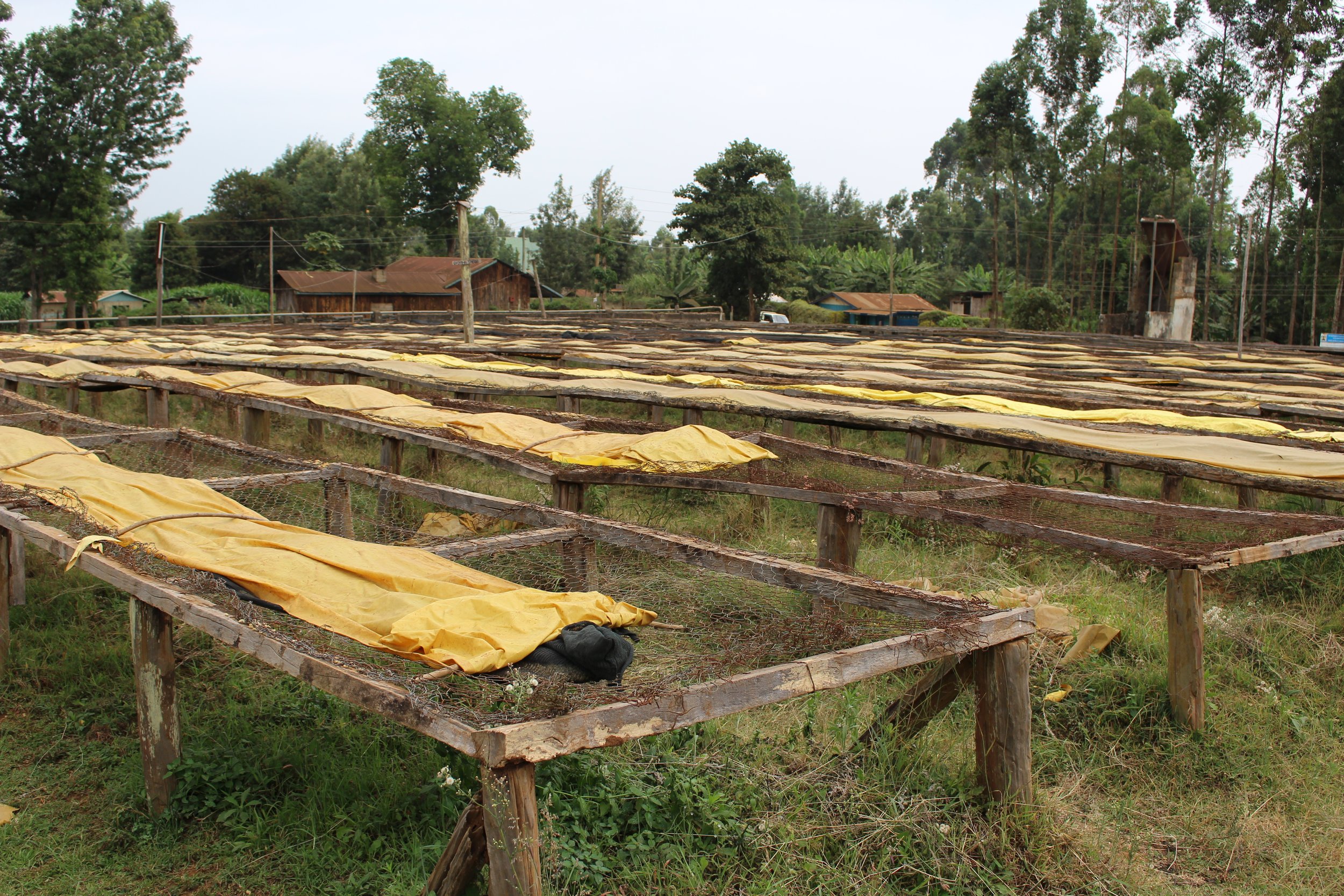
This coffee is processed at Ndimi Factory, which is managed by the Inoi Farmers’ Cooperative Society. There are 540 active farmer members of the cooperative. The factory was named after the locality in which the washing station is located.
Perched at 1650-1800 masl, the factory sits on the foothill of Mount Kenya, just outside of the town Kerugoya. Kirinyaga County is positioned approximately 192 kilometres northeast of Nairobi, sharing borders with the Nyeri and Embu Counties. The region offers favourable conditions for coffee cultivation, featuring mineral-rich red volcanic loam soils and the elevated altitudes characteristic of the area. This western part of Kirinyaga is known to have some of the most fertile soils in the country.
Harvest
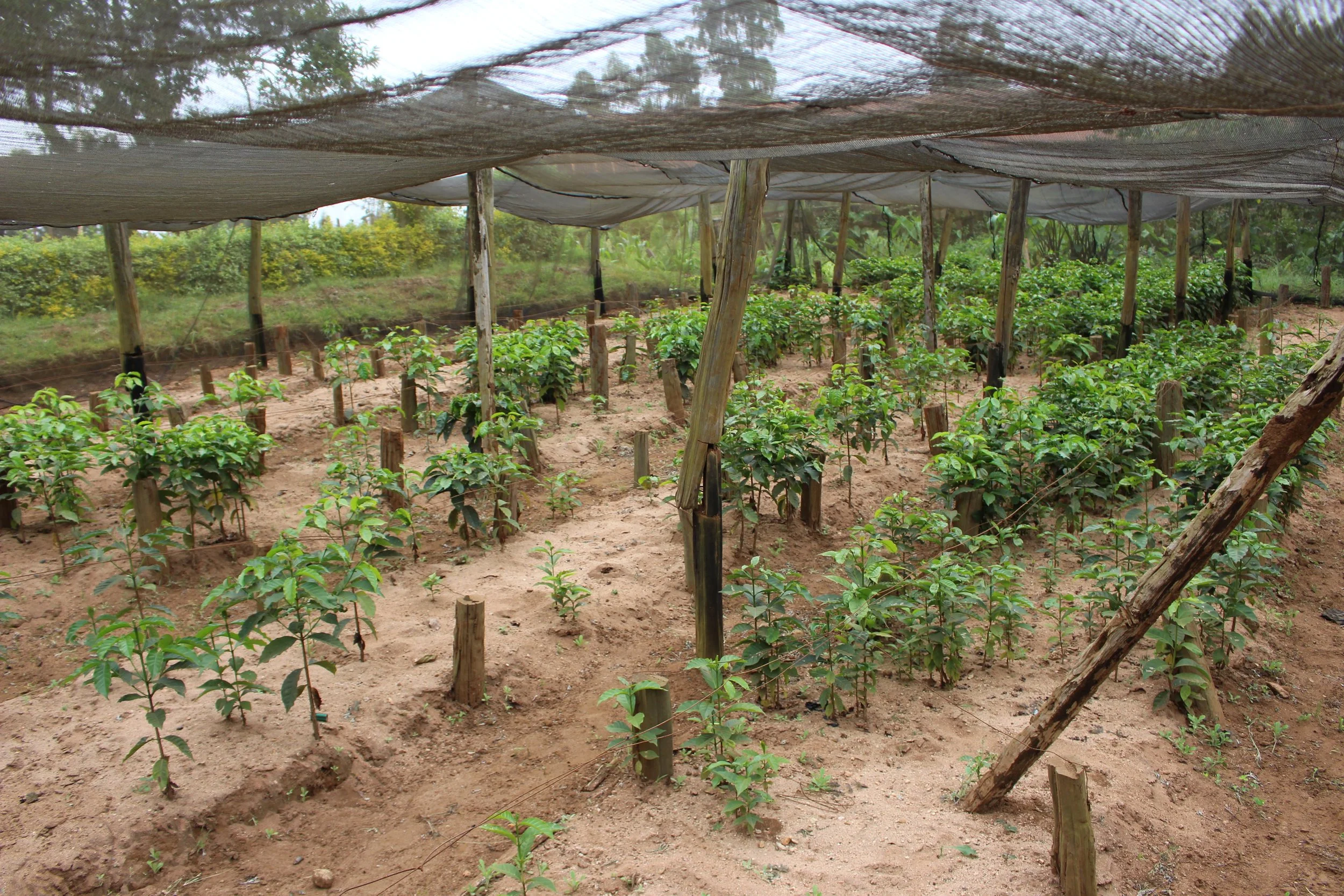
The farmers cultivate SL 28, SL 34, Batian, and Ruiru 11 varieties on clay loam soil. The coffee plants flower from February to April and are harvested from October to January. The region receives 1400 mm of annual rainfall, with an average temperature of 20.5°C.
Processing
Once the cherries have been delivered to the washing station, they are handsorted. The underripes, insect damaged, and other defective cherries are removed. The cherries are then pulped and the parchment is fermented overnight. Once the fermentation is completed, the parchment is washed and separated into P1, P2, P3, and P light. It is then dried for 10 to 20 days.
After processing, the farmers of this cooperative take the cherry pulp home and mix it with cow manure to use as fertiliser on their farms.

COFFEE IN KENYA
Despite sharing over 865 kilometers of border with Ethiopia, the birthplace of coffee, coffee had to circumnavigate the world before it set roots in Kenya. While the earliest credible reports place coffee in Ethiopia around 850 C.E., coffee was not first planted in Kenya until 1893 when French missionaries planted trees in Bura in the Taita Hills.
Under the rule of the British Empire coffee production geared for export expanded. Large, privately owned coffee growing estates were established and most harvests went to England in parchment, where it was sold to roasters prior to milling. Roasters often blended the bright flavors of Kenya with more chocolatey South American coffees.
Though large estates grew in hectarage and value, indigenous Kenyans did not benefit. In fact, European settlers took direct action to exclude indigenous people from growing coffee themselves.
In order to decrease competition, make labor accessible and inexpensive and continue the increase of demand for high-quality coffee, the Coffee Board was created to make regulations on coffee production and marketing. The Nairobi Coffee Exchange (NCE) (which continues to this day) was established in Nairobi to leave more of the value of green coffee at origin.
The Coffee Board tightly controlled licensing for coffee growing and processing. While the laws put in place did not explicitly state that indigenous people could not grow coffee, large estate owners made it functionally impossible for indigenous farmers to attain coffee growing licenses until the 1950s.
These laws protected the interests of the large landowners. Not only could more cultivation drive down the price of Kenyan coffee, but large farmers feared that if smallholder and indigenous farmers had their own coffee farms to tend, they would not work as paid laborers on settlers’ farms.
Kenya’s coffee system has been centered on a weekly auction since before independence. The Coffee Board of Kenya (now the Coffee Directorate) was established in 1933. By the following year, a government-run auction system had been established. The auction also created a pricing system that is designed to reward better quality with better prices.
Today, the auctions are widely recognized as the most-transparent mechanism for the price-discovery of fine green coffees and is considered one of the finest auction systems in the world. It even served as an inspiration for the Cup of Excellence auctions.
New legislations in 2006 and 2018 provided additional opportunities for farmers to sell their coffee. While before 2006, the auction system was mandatory, the 2006 legislation, created a “second window” made it possible for coffee growers to sell directly to international buyers.
SL-28 and SL-34 are well-known Kenyan coffee varieties. They were bred by Scott Agricultural Laboratories (SAL). SAL was founded in 1903 by the Kenyan Colonial government to function as a research institution studying agricultural products.
SL-28 and SL-34 quickly became the varieties of choice for most growers. Their deep root structures helped them acquire water in the dry environments present throughout much of Kenyan, even without irrigation. These varieties also had higher yields than the traditional French Bourbon rootstock and were considered somewhat more disease resistant.
Though both SL varieties spread across Kenya extremely quickly, the release of Ruiru-11 in 1985 by the Kenya Coffee Research Institute (CRI) brought a new kid to the block. Many farmers planted the new Ruiru-11 variety because it was far more resistant to Coffee Berry Disease (CBD), a fungal disease attacking ripening coffee cherry, and Coffee Leaf Rust (CLR), a fungal disease that targets the leaves of coffee trees. It could also be planted at a higher density than the SL varieties, allowing farmers to maximize yields on small plots of land.
One downside to Ruiru-11 was that its shallower root structure made is more susceptible to drought and required more fertilizer. Farmers found that that by grafting Ruiru-11 to SL variety trees, they could have the best of both worlds. Trees where Ruiru-11 was grafted onto an SL variety plant had deeper root structures for drought-times (thanks to the SL variety) and higher immunity to disease and larger yields (thanks to the Ruiru-11).
Other farmers are experimenting with Batian, as well, a relatively new variety introduced by Coffee Research Institute (CRI) in 2010. Batian is named after the highest peak on Mt. Kenya and is resistant to both CBD and CLR. The variety has the added benefit of early maturity and begins bearing fruit after only two years. Some challenges (such as vegetative structure) have prevented it from becoming widespread so far, but its popularity is certainly growing.
While most farms in Kenya still have the traditional SL varieties, most also have Ruiru-11 and, increasingly, Batian. Most farms are far too small to be able to handle lot separation by variety. This means that most lots coming out of Kenya—whether single estate or smallholder group—are a blend of SL, Ruiru-11 and (sometimes) Batian.
Today, more than 600,000 smallholders farming fewer than 5 acres compose 99% of the coffee farming population of Kenya. Their farms cover more than 75% of total coffee growing land and produce nearly 70% of the country’s coffee. These farmers are organized into hundreds of Farmer Cooperative Societies (FCS), all of which operate at least one factory. The remainder of annual production is grown and processed by small, medium and large land estates. Most of the larger estates have their own washing stations.
Most Kenyan coffees are fully washed and dried on raised beds. The country still upholds its reputation for high quality and attention to detail at its many washing stations. The best factories employ stringent sorting practices at cherry intake, and many of them have had the same management staff in place for years.

Check out more coffees in our store:

Luke 21
Yetera Tulu - Lalisaa
COUNTRY: Etiopia
FARM/COOP/STATION: Yetera Tulu’s farm
VARIETAL: Local Landraces
PROCESSING: Natural
ALTITUDE: 2,242 meters above sea level
OWNER: Yetera Tulu
REGION: Sidamo
SUBREGION: Bona Zuria, Bare Kebele
FLAVOUR NOTES: Red berry jam, green grapes, purple flowers, black tea, creamy vanilla
ABOUT THIS COFFEE
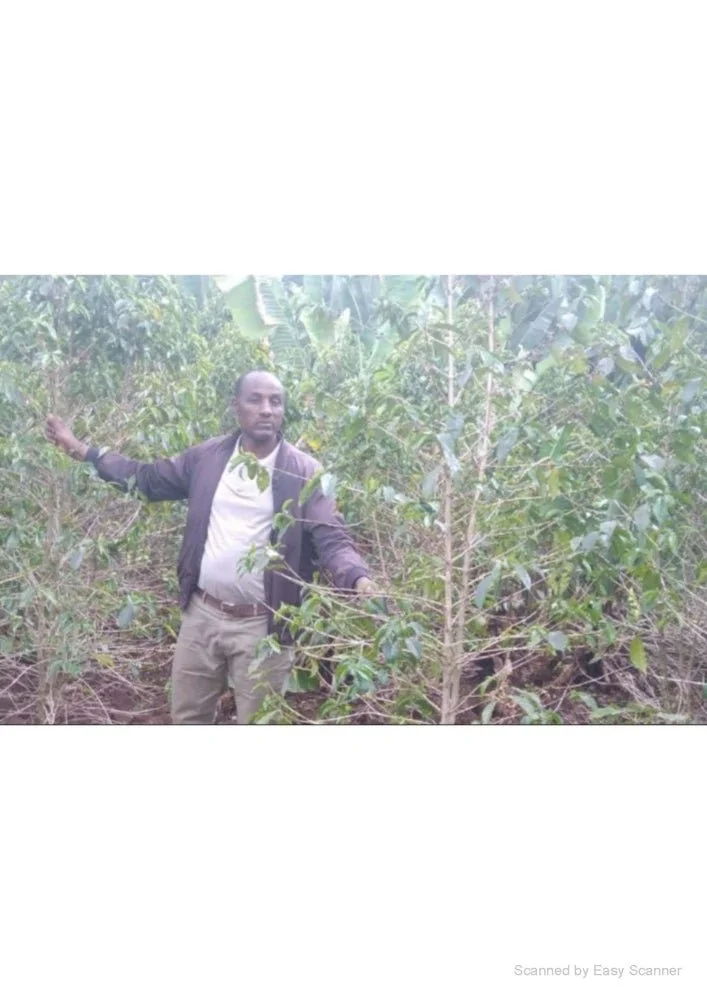
Yetera Tulu inherited the farm from his family has been devoted to coffee for over 15 year. His commitment to improving his farm and delivering high-quality coffee has been continuously refined over the years. He implements best farming practices, including pruning, stumping, and planting new coffee seedlings. In the future he’s planning to expand his land and planting new coffee plants.
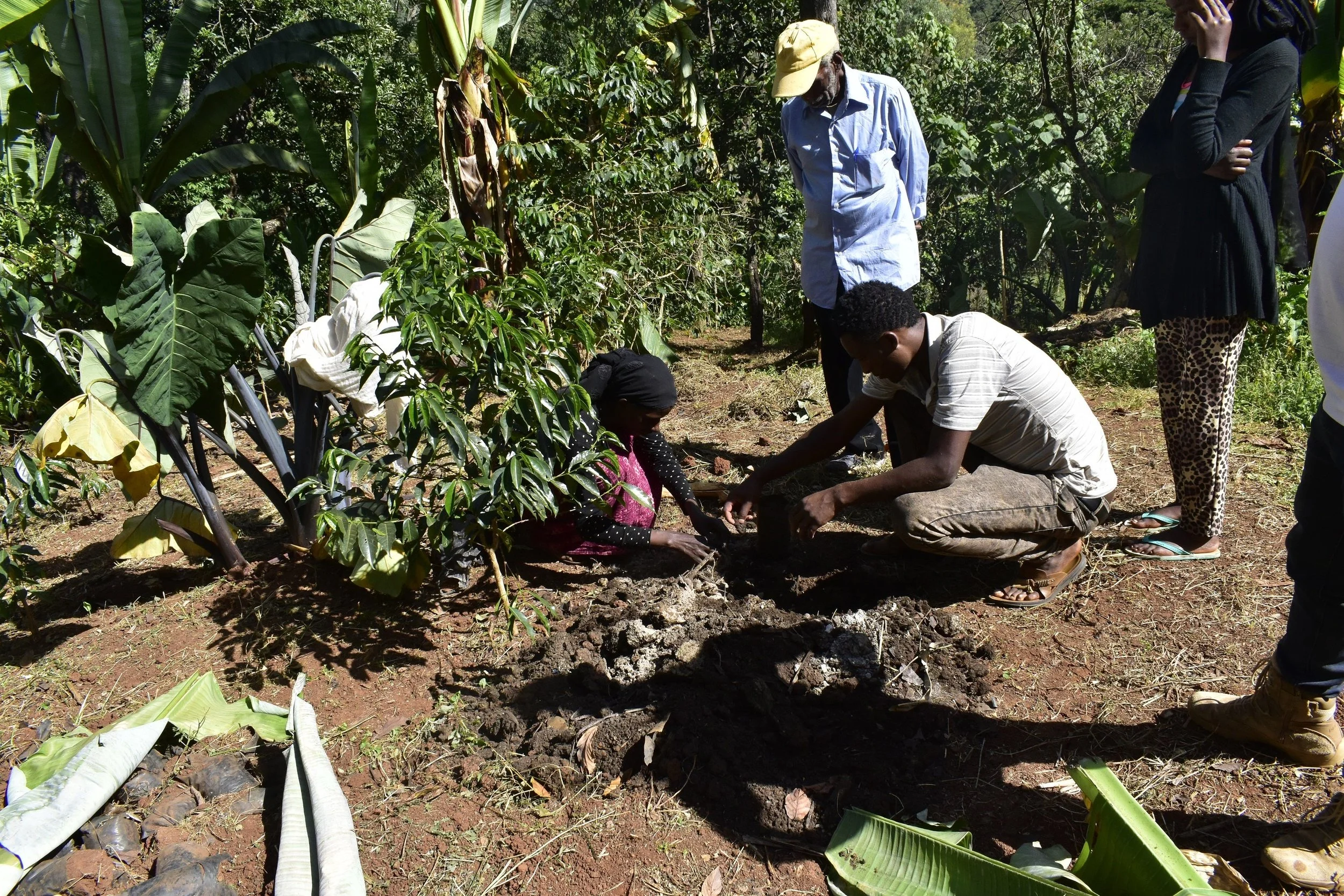
The combination of high altitude and nutrient-rich soil provides an ideal foundation for Samuel’s coffee to thrive. However, it is his passion and dedication that truly set his coffee apart. By cultivating shade-grown coffee and producing his own compost, he eliminates the need for chemical fertilizers, ensuring a more sustainable and environmentally friendly approach to farming.
As part of the Lalisaa Project, Yetera receives agronomy support from Sucafina Ethiopia, gaining access to training sessions that enhance his skills in cultivation, harvesting, and processing. His commitment to high-quality production and participation in the Lalisaa Project enable him to access better markets and improve his earnings. Designed to empower smallholder farmers, the Lalisaa Project shortens the supply chain, enhances quality, and increases yields.
HARVEST
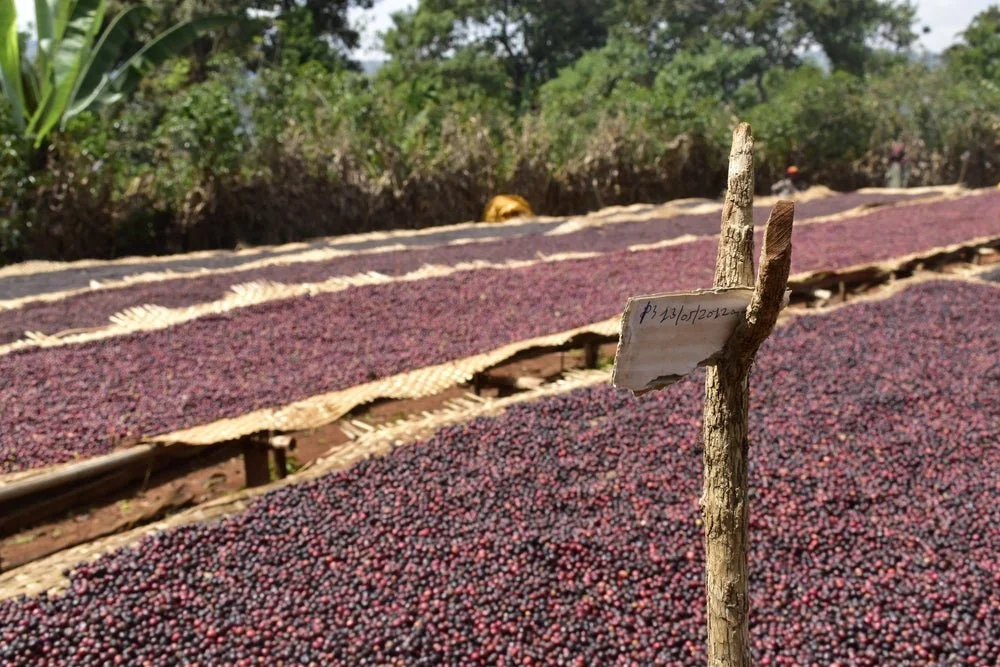
Yetera, his family and additional seasonal workers carefully handpick only the ripest, red cherry. Cherry is sorted and then dry on raised beds, turning it frequently to ensure even drying. This meticulous process takes approximately 25 to 30 days, preserving the coffee’s vibrant flavors and complexity.
CULTIVATION
On his 4.5-hectare farm, Yetera embraces the principles of regenerative farming. The natural shade from intercropped plants fosters an ideal microclimate for his coffee trees. He grows a mixture of local landrace varieties—historically referred to as Ethiopian heirloom—ensuring genetic diversity and resilience. This holistic approach not only enriches the soil but also enhances biodiversity, benefiting the entire farm.
MORE ABOUT THE PROJECT: https://sucafina.com/emea/sustainability/lalisaa-project
COFFEE IN ETHIOPIA
While Ethiopia is famous as coffee’s birthplace, today it remains a specialty coffee industry darling for its incredible variety of flavors. While full traceability has been difficult in recent history, new regulations have made direct purchasing possible. We’re partnering directly with farmers to help them produce top quality specialty lots that are now completely traceable, adding value for farmers and roasters, alike.
The exceptional quality of Ethiopian coffee is due to a combination of factors. The genetic diversity of coffee varieties means that we find a diversity of flavor, even between (or within) farms with similar growing conditions and processing. In addition to varieties, processing methods also contribute to end quality. The final key ingredients for excellent coffee in Ethiopia are the producing traditions that have created the genetic diversity, processing infrastructure and great coffee we enjoy today.
Most producers in Ethiopia are smallholders, and the majority continue to cultivate coffee using traditional methods. As a result, most coffee is grown with no chemical fertilizer or pesticide use. Coffee is almost entirely cultivated, harvested and dried using manual systems.
Genetic Diversity Expands Possibilities
Exporters and importers frequently use the term “heirloom” to describe Ethiopian coffee varieties. However, this catchall-term often hides that impressive array of varieties that are unique to certain regions.
Varieties in Ethiopia can be classified into two main groups: Jimma Agricultural Research Centre (JARC) varieties or regional and local landraces.
The JARC is responsible for developing many of the varieties that flourish across Ethiopia today. JARC was established in 1967 and has been developing and sharing new coffee varieties ever since. The center also provides agricultural extension training to help farmers learn the correct cultivation methods for these newer varieties.
Landraces are plant varieties that have evolved over generations of selective breeding to be best suited to their local conditions. There are at least 130 widely cultivated regional or local landraces.
In Ethiopia, the genetic diversity of landrace coffee trees means that we find a diversity of flavor, even between (or within) farms with similar growing conditions and processing.
Processing Infrastructure Protects Quality
In addition to varieties, processing methods also contribute to end quality. Most coffee produced in Ethiopia is grown by smallholders, but they often do not have their own processing infrastructure. Instead, most smallholders deliver cherry to a wet mill. Wet mills are owned by either cooperatives or private companies.
Wet mills purchase cherry from the farmers and oversee processing. Most washing stations will specialize in both Fully washed and Natural processing methods. While the efforts of each farmer—from selecting and nurturing trees to picking on ripe cherry—are essential determinants of coffee quality, the wet mill’s practices are crucial. Wet mill staff and management are of the utmost importance, and the best washing stations employ stringent quality control measures. They only accept red, ripe cherry and have exacting drying practices. Nearly all washing stations sort drying coffee several times.
While smallholder farmer do not usually have their own pulpers, some do process coffee at their own homes using the Natural method. In these cases, coffee will be selectively picked and laid to dry on small raised beds. This coffee will usually be sold to a wet mill or collection center at the end of the season.
Preserving Coffee Producing Traditions
The final key ingredients for excellent coffee in Ethiopia are the producing traditions that have created the genetic diversity, processing infrastructure and great coffee we enjoy today.
Most producers in Ethiopia are smallholders, and the majority continue to cultivate coffee using traditional methods. As a result, most coffee is grown with no chemical fertilizer or pesticide use. Coffee is almost entirely cultivated, harvested and dried using manual systems.

Check out more coffees in our store:

Luke 20


Kaffi is a small coffee roaster in Os in Østerdalen, which was founded in 2020 by Kaffi was founded in the spring of 2020 by two-time Norwegian Barista Champion Adrian Berg, and Barista Trainer and Certified Judge Silje Arnevik. Our aim was to provide education and consultancy in the field of coffee, but we needed a roastery at the core to have access to raw materials. It ended with the roasting business growing bigger and bigger and suddenly we became a full-fledged coffee roaster that in 2023 came second in the Norwegian championship of Coffee Roasting. We have also recently opened a showroom in Trondheim at Erling Skakkes Gate 39, where we open the doors almost every Friday and invite people in to taste exciting and varied types of coffee.
Sebastián Gómez
COUNTRY: Colombia
FARM/COOP/STATION: La Divisa
VARIETAL: Castillo
PROCESSING: Natural
ALTITUDE: 1200– 1800 m.a.s.l.
OWNER: Sebastián Gómez
REGION: Circacia, Quindio
FLAVOUR NOTES: plums, figs, red fruits, cacao nibs.
ABOUT THIS COFFEE
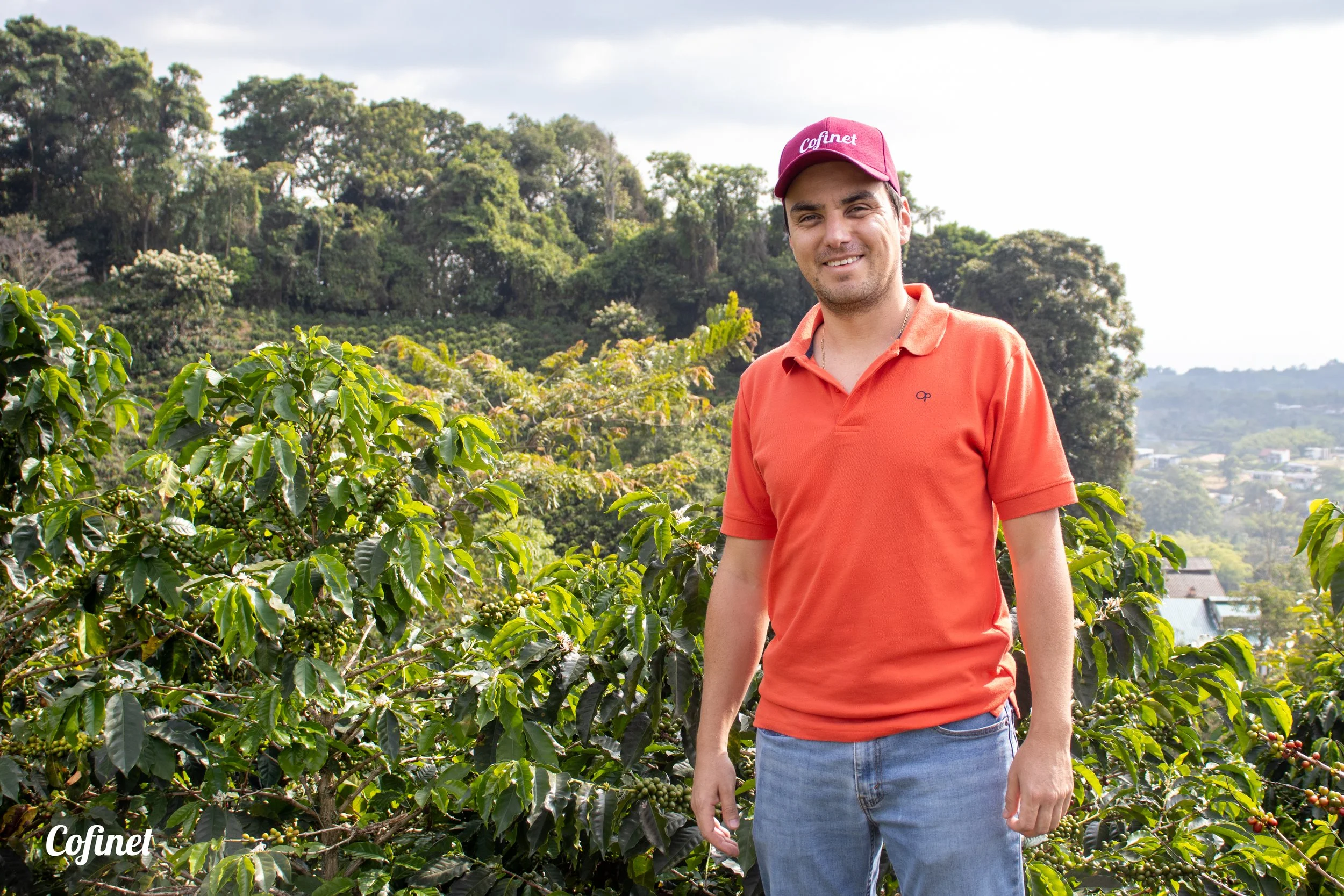
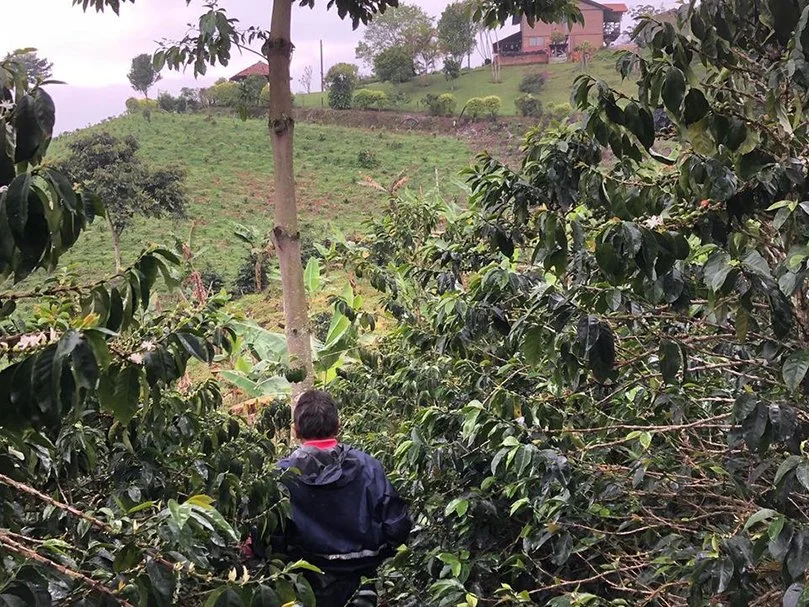
Sebastian Gomez comes from a traditional coffee family. He along with his father owns La Divisa Farm, a 13-hectare farm, located at 1.700, in Circasia, Quindío. On the farm, they have some beautiful shade trees such as Guamo, Guayacan, Gualandai, and Nogal. Sebastian is a young farmer and along with his wife both work on the coffee duties and administrative matters. His father, John, has been working in coffee for more than 30 years and has been taking care of the coffee farm since he bought the farm in 1995. Sebastian started to be more involved in coffee in 2014 when he came back To Colombia. Sebastian could witness the specialty movement in other countries, so he decided to be more involved in coffee and it was when they decided to focus on specialty coffee. They planted varieties such as Geisha and Pink Bourbon. Sebastian shared that they knew they were about to wait and just let their hard work speak out. It was three years after they could see the marvelous result. Sebastian tells us that 10 years later, quantity was the focus, but now they see a radical change since now the focus in the coffee industry is quality.Sebastian enjoys passing time with his baby and wife. He loves skating, and the best moment for him is when he goes skating while he walks around with his baby in the park.
COFFEE IN COLOMBIA
Although coffee production in Colombia did not become a large commercial industry until the 19th century, it is likely that coffee was introduced to Colombia about a century earlier by Jesuit priests.
Once commercial production started, it spread quickly. The first commercial coffee plantations were established in the northeast, near the border with Venezuela. Today, coffee is widespread and grown commercially in 20 of Colombia’s 32 Departments.
Historically, Colombia’s most renowned coffee-growing region has been the Eje Cafetero (Coffee Axis), also known as the ‘Coffee Triangle’. This region includes the departments of Caldas, Quindío and Risaralda. With a combined total area of 13,873 km² (5356 mi²), the region covers about 1.2% of the Colombian territory and composes 15% of the total land planted under coffee in the country. The region has also been declared a UNESCO World Heritage site.
While the Eje Cafetero is still a coffee-producing powerhouse, coffee production in Colombia now extends far beyond this zone. In recent years, the departments of Huila, Tolima, Cauca and Nariño have become sought after and well-known coffee-growing regions. Today, they are the largest producers of coffee in Colombia by volume.
Today, there are an estimated 540,000 coffee producers in the country; around 95% of these are smallholder farmers with landholdings that are under 5 hectares. These farmers collectively contribute around 16% of the country’s annual agricultural GDP.

Check out more coffees in our store:

Luke 19
Sítio Vargem Grande
COUNTRY: Brazil
FARM/COOP/STATION: Sitio Vargem Grande
VARIETY: Yellow Catuai
PROCESSING: Natural
ALTITUDE: 1,100–1,400 masl,
OWNER: Rosimeire Aparecida Guerra
REGION: Minas Gerais
FLAVOR NOTES: Milk chocolate, yellow stonefruit, almond, red grape
Winey red fruit with plum, marzipan, and brown sugar sweetness. Coating and creamy texture with milk chocolate and black tea notes. Clean and long finish.
ABOUT THIS COFFEE
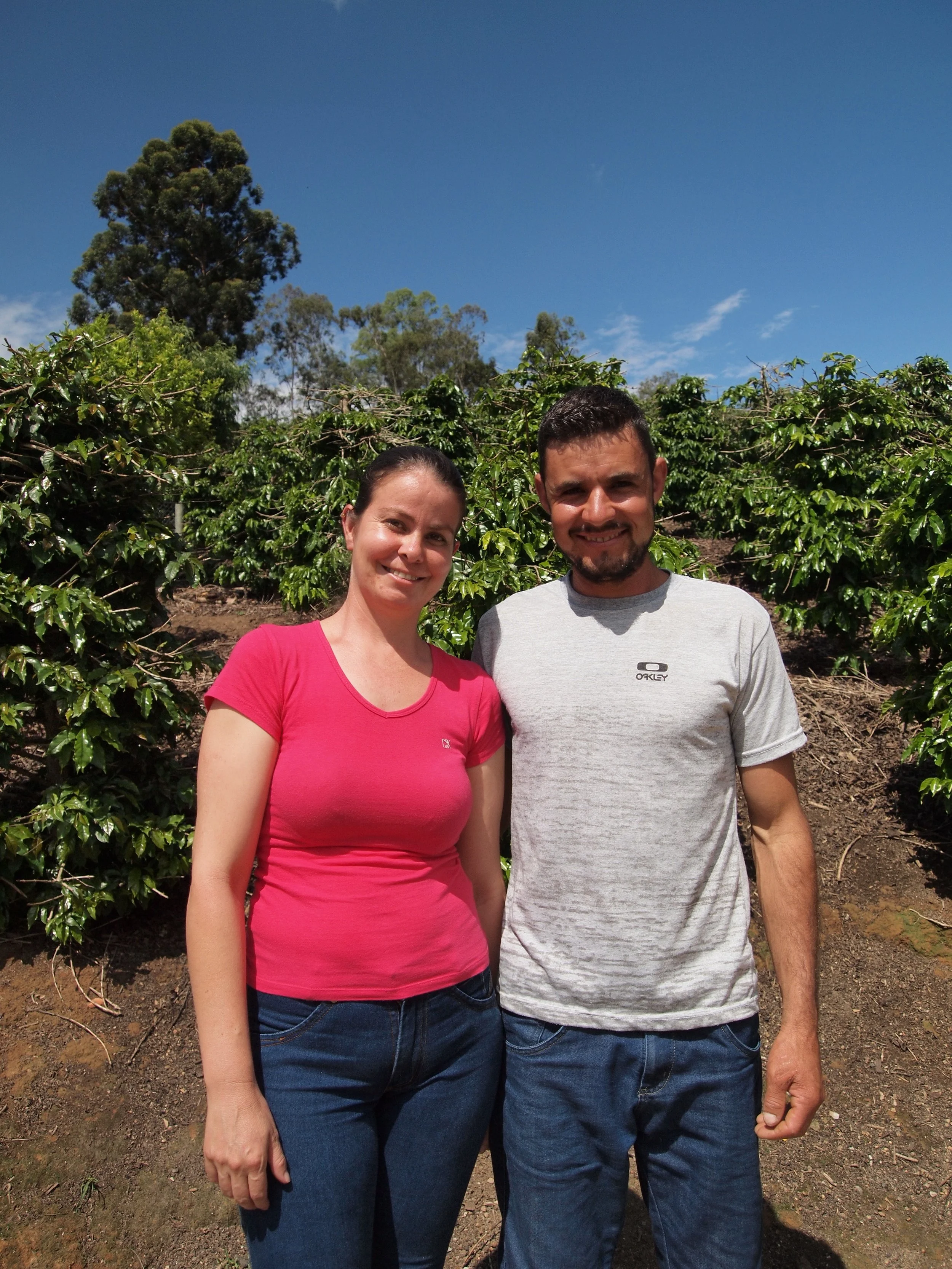
This coffee was produced by Rosimeire Aparecida Guerra on her farm, Sitio Vargem Grande in the Brazilian region of Mantiqueira, Minas Gerais.
Rosimeire and her husband Carlos were raised in families deeply immersed in coffee production, inheriting extensive knowledge and a profound passion for coffee. Carlos is the son of another coffee producer we work with, Lourdes Fatima. His brother Tiago supports him and their mother with a range of processing experiments.
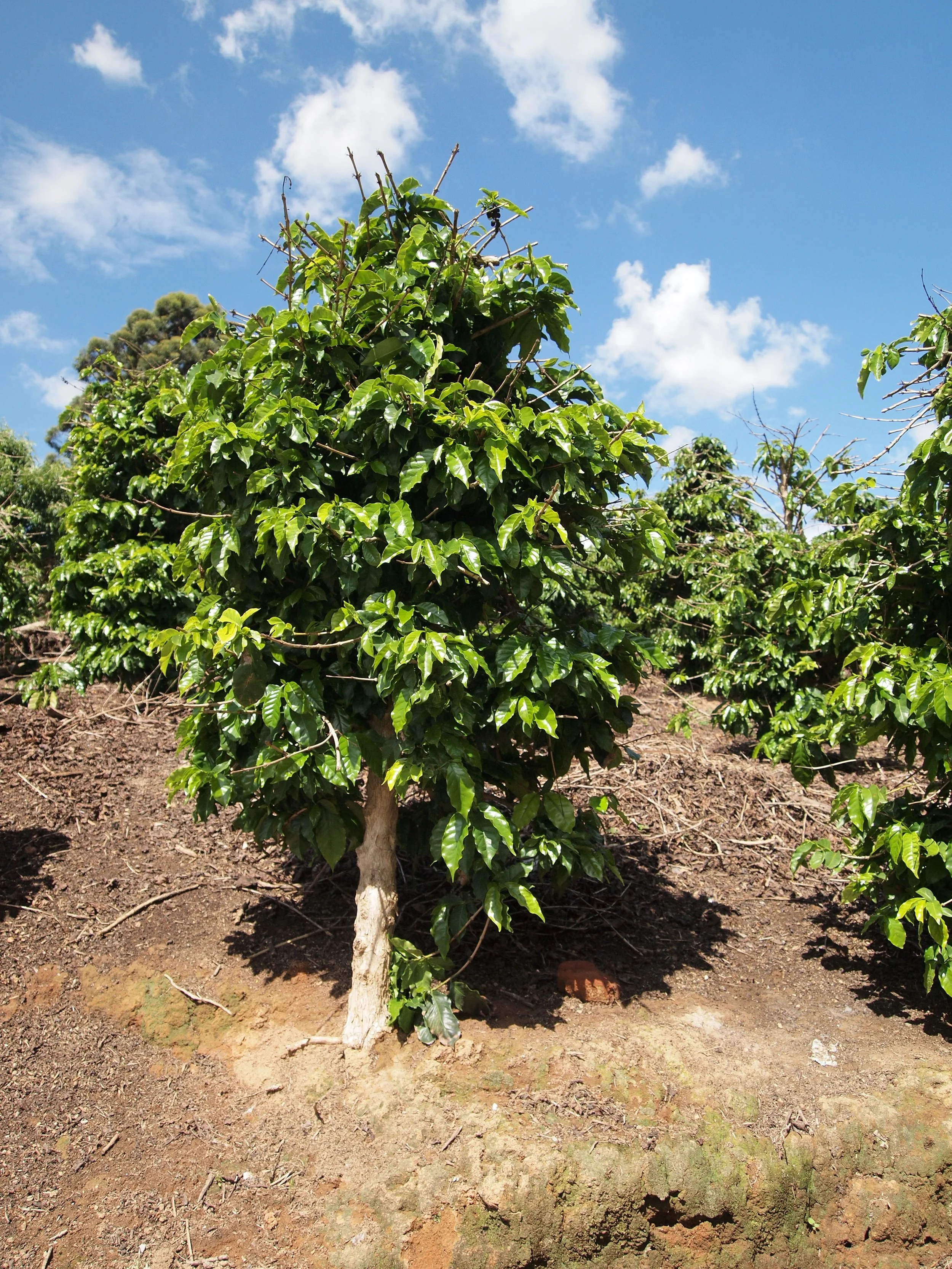
Rosimeire and Carlos acquired Sitio Vargem Grande in 2009 when they got married. They selected this piece of land due to its strategic position. It sits between 1,100 and 1,400 metres above sea level, a high altitude for coffee cultivation in Brazil. The farm is 3 hectares in size, growing red and yellow Catuai which they planted in 2010. We started our collaboration with them in 2019.
Coffee holds immense significance for the entire family, serving as the cornerstone for a better future. They take pride in both their family's accomplishments and the exceptional quality of their coffee. However, their ongoing challenge lies in finding a market for their coffees while inspiring younger generations to embrace coffee production in Brazil.
HARVEST AND PROCESS
Picking
They use both mechanical and manual picking methods, depending on the harvest and ripening of the cherries. In cases where they want to increase the cup quality or create a special lot, they use selective picking.
The harvest usually takes place from June to September with the peak being in July.
Processing
Rosimeire processes her coffees as washed, as well as naturals with aerobic fermentation.
During the fermentation process they monitor the sugar content of the cherries (Brics), the temperature (which should not exceed 38 degrees), and the PH levels.
Drying
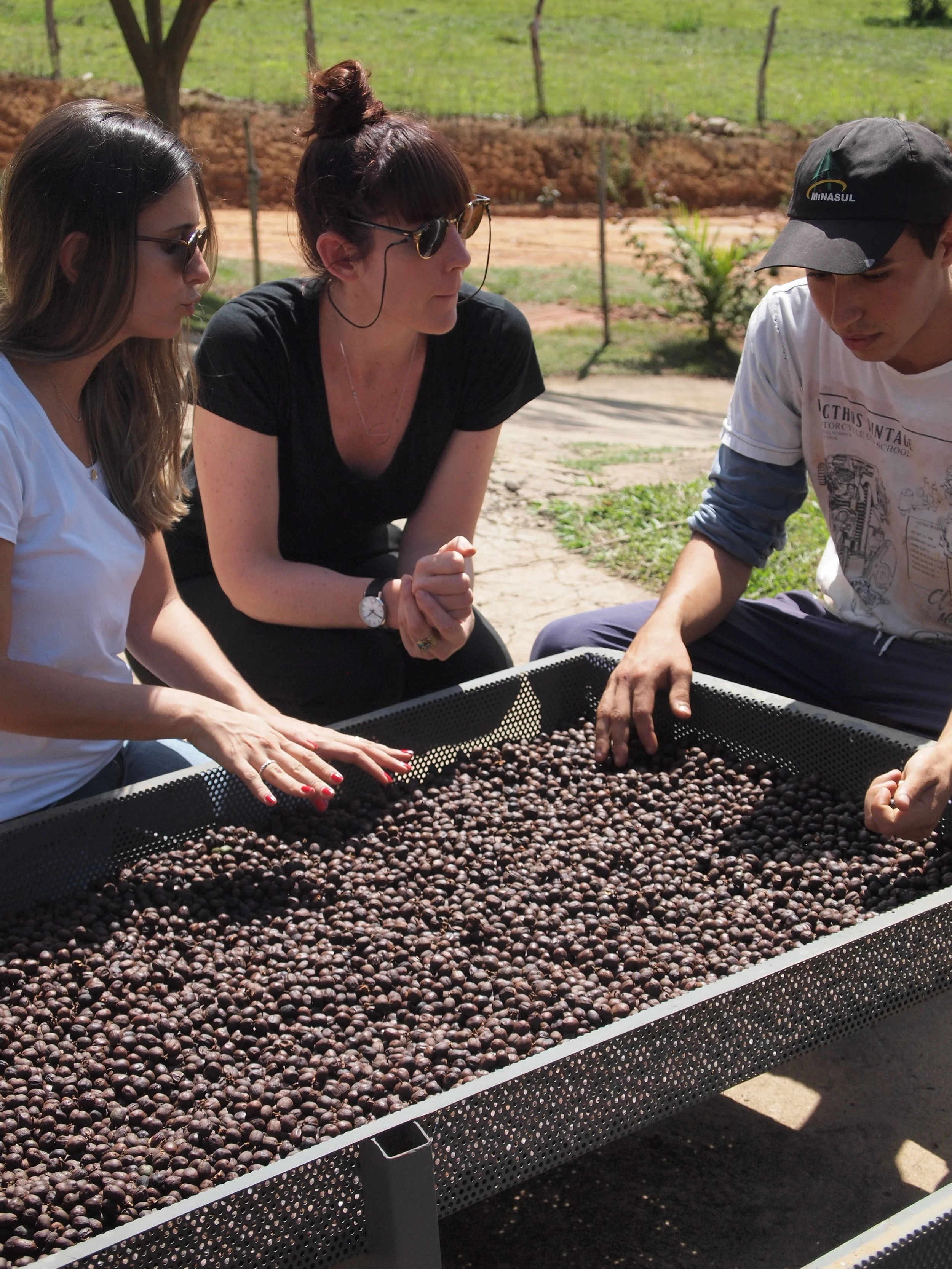
They dry coffee in a mechanical dryer, on the patio, and on raised beds. The mechanical dryer is very helpful for finishing off the drying when they need more space for new coffee coming in, or when the weather has not been adequate.
COFFEE IN BRAZIL
The story of how coffee was first introduced to Brazil is one of subterfuge, seduction and intrigue. In 1727, Francisco de Melo Palheta, a Lieutenant-Colonel in the Brazilian army, was commissioned by the Portuguese government (who ruled Brazil at the time) to steal coffee from the French, who had several nearby colonized-countries growing coffee (and had refused to share). When Brazil was asked to intervene in a border dispute in French Guiana, a country that borders the northern Brazilian state of Amapa, Palheta was sent to deal with the dispute….and steal a viable coffee seed!
After Palheta successfully arbitrated the dispute, he asked the colonial Governor of Cayenne for a sample of the governor’s coveted coffee plant. The governor refused, seeking to maintain the monopoly France had on coffee plants in the Americas. Palheta, according to legend, skirted this problem by seducing the governor’s wife. When Palheta was set to depart French Guiana for Brazil, his paramour gifted him a bouquet of flowers that had coffee beans hidden within it. The rest, as they say, is history.
In just a century, Brazil established itself as the largest producer of coffee in the world. In the 1830s, coffee became Brazil’s largest export and accounted for 30% of global production. Within a decade, Brazil had become the largest coffee producer in the world and produced 40% of total coffee grown worldwide.
Another ‘boom’ in coffee production volumes occurred from the 1880s to 1930s. At this time, Brazilian politics were controlled mainly by the agrarian oligarchs in São Paulo and Minas Gerais. This political period was called café com leite (coffee with milk) because the major money-makers in São Paulo and Minas Gerais at that time were coffee and dairy, respectively. During the café com leite period, the people who owned the large plantations in these two regions had a lot of political clout and were able to institute laws that made production and export faster, cheaper and easier.
As in so many other coffee growing countries, early coffee production in Brazil (and many other countries) was dependent on slave labor. When slavery was finally abolished in 1888, landowners finally had to pay the piper.
During the latter half of the 19th century, the lure of jobs and wealth from coffee plantations attracted millions of immigrants to coffee growing areas. During this time, São Paulo’s population grew from 30,000 people in the 1850s to 240,000 people by 1900.
Especially in São Paulo, which was the largest and wealthiest coffee-growing region in Brazil at the time, many of the jobs these immigrants found were as laborers on coffee plantations. Fueled, in part, by this labor influx, Brazil was producing 80% of the global coffee supply by the 1920s and had close to monopolistic control over the international coffee market.
Over time, as other countries began increasing coffee production, quality and export, Brazil’s market share fell. However, today, Brazil is still the largest producer of coffee and accounts for approximately 40% of global production. It’s closest competitor, Vietnam, produces a harvest that’s barely half the size of Brazil’s.
Today, the most prolific coffee growing regions of Brazil are Espirito Santo, São Paulo, Minas Gerais, and Bahia. Most Brazilian coffee is grown on large farms that are built and equipped for maximizing production output through mechanical harvesting and processing. The relatively flat landscape across many of Brazil’s coffee regions combined with high minimum wages has led most farms to opt for this type of mechanical harvesting over selective hand-picking.
In the past, mechanization meant that strip-picking was the norm; however, today’s mechanical harvesters are increasingly sensitive, meaning that farms can harvest only fully ripe cherries at each pass, which is good news for specialty-oriented producers.
In many cases and on less level sections of farms, a mixed form of ‘manual mechanized’ harvesting may be used, where ripe coffee is picked using a derriçadeira – a sort of mechanized rake that uses vibration to harvest ripe cherry. A tarp is spanned between coffee trees to capture the cherry as it falls.
With the aid of these newer, more selective technologies, there’s a growing number of farms who are increasingly concerned with – and able to deliver - cup quality.
Early coffee production was focused mainly in Pará, Rio de Janeiro, Minas Gerais and São Paulo. Since these regions experience significant water scarcity, most coffee in Brazil in the 19th and 20th centuries was processed using the Natural method.
In more recent times, growing interest in new flavors and a more competitive market has led many producers to offer other processes including Honeys, Fully washed and newer, experimental processes like Anaerobic fermentation. Some estates have found a new niche by processing the same harvest using several different processes. The appeal of a single harvest processed in different ways is that it allows consumers to experience the effect of processing on flavor more clearly.
Due to Brazil’s significant share in global production, any changes in annual harvest size can drastically impact world coffee prices. When Brazil produces a large harvest, oversupply can drive coffee prices down. Similarly, when Brazilian harvests are unusually low—such as in years when severe frosts kill many coffee trees—global prices can increase due to a lack of supply to match global consumption.
Amongst the major coffee producers, Brazil is the only country currently vulnerable to severe frosts. Historically, severe frosts have affected harvests every 5 to 6 years.
Less severe frosts, commonly called white frosts, can impact a year’s harvest by killing the flower buds that later grow cherry. But the impacts of severe frosts resonate across several years because these frosts kill the entire tree. After a severe frost, farmers must replant most of their trees with new saplings. Young trees take 3 to 4 years to reach commercial production, so areas hit by severe frosts often have extremely small harvests for as long as 5 years following the event.
Economic events in Brazil can impact the global coffee market as well. Because of Brazil’s predominance as a coffee producing nation, fluctuations in the value of the Brazilian Real can significantly influence coffee prices.
As mentioned previously, the early coffee economy of Brazil was in some ways reliant upon exploitative working conditions. Though true for many coffee producing nations, Brazil has been visited by ghosts of its laboring past, perhaps more than others. Child and slave labor remain a concern.
Brazil has made great strides in recent years to move as far as possible from its previous labor history. Over the past 30 years, the country has implemented some of the most progressive and strict labor laws of any coffee-producing country. They have also raised a comprehensive campaign, across sectors, to eradicate modern slavery. Great efforts that have been made to make the supply chain in Brazil fairer and more equitable.
Solving this problem also relies upon every stakeholder in the coffee industry remaining vigilant. We fully support the Swiss commodity sector guidance on implementing the UN Guiding Principles on Business and Human Rights. To this end, we work closely with suppliers who share our values and who are able to prove that they follow all national labor laws.

Check out more coffees in our store:

Luke 18
Wilton Benitez Typica Amarillo
COUNTRY: Colombia
FARM/COOP/STATION: La Macarena
VARIETAL: Typica Amarillo
PROCESSING: Anaerobic fermentation + thermoshock.
ALTITUDE:1900 meters
PRODUCER: Wildan Mustofa
REGION: Weninggalih
FLAVOUR NOTES: Peach candy, lemongrass, lime zest, earl grey, mild licorice root, jasmine
ABUT THE FARM
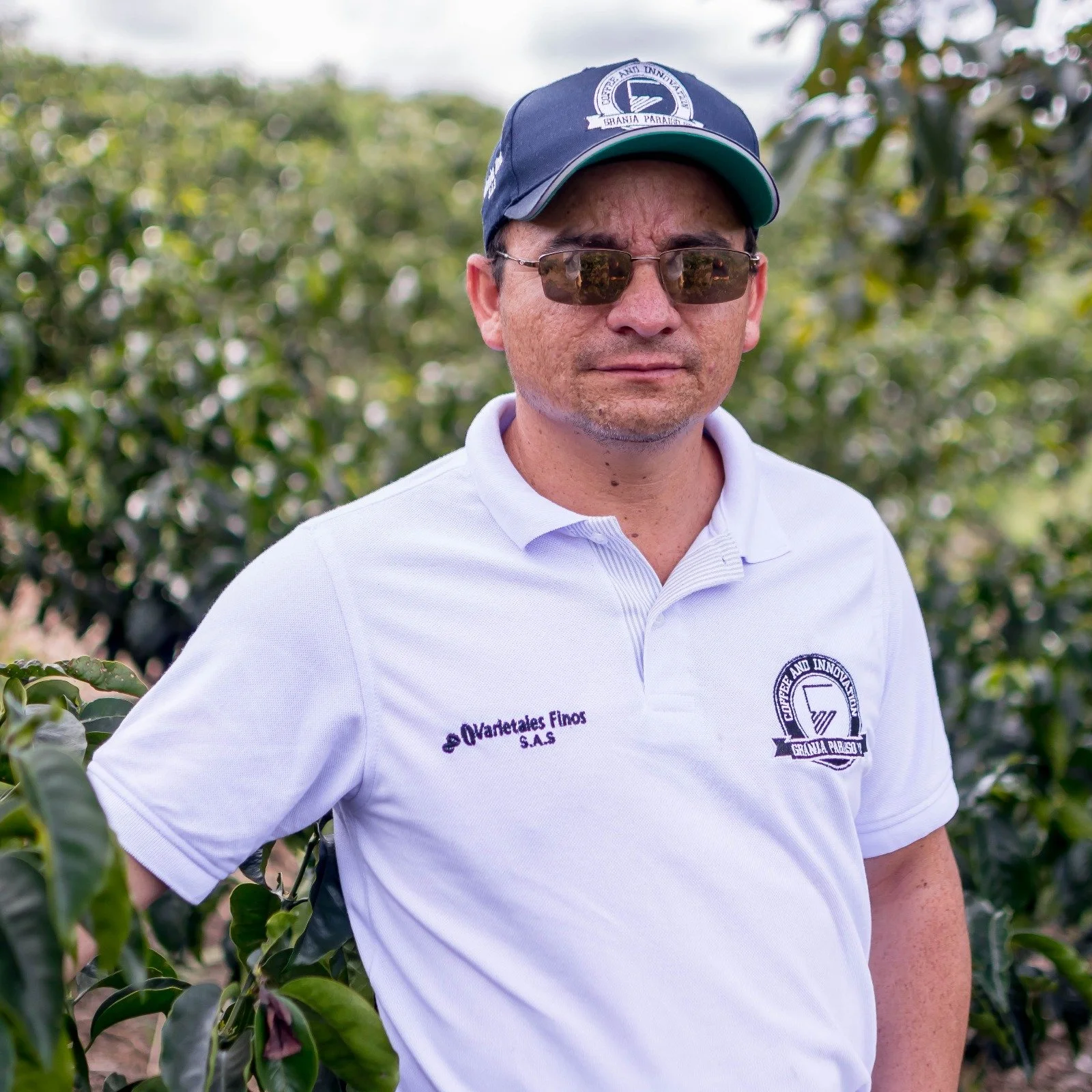
The farm of Wilton Benítez, located in the heart of Piendamó, Cauca, is an outstanding example of the Colombian coffee legacy. This privileged location benefits from a stable climate, where Pacific winds and low night temperatures favour the growth of high quality coffee cherries. These climatic conditions allow for a higher concentration of sugars and acidity in the cherries, resulting in cup profiles that stand out for their sweet and fruity notes. In addition, the farm's diverse terrain is ideal for the production of exceptional microlots and nanolots, each with unique characteristics that reveal the richness and complexity of southern Colombian coffee. Thus, this estate not only preserves the legacy of its founder, but also positions itself as a benchmark of coffee excellence in the region.
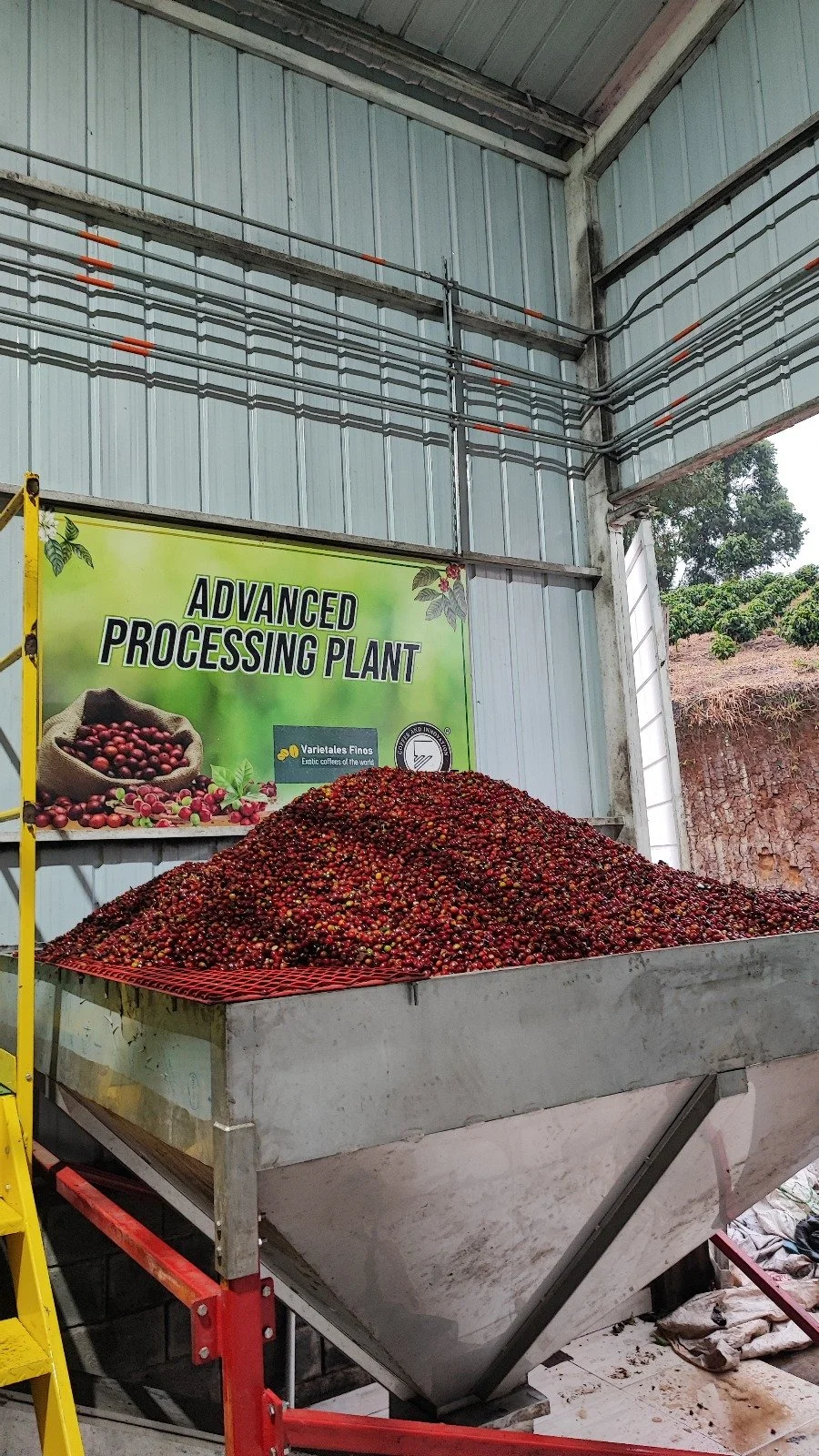
Innovative Process:
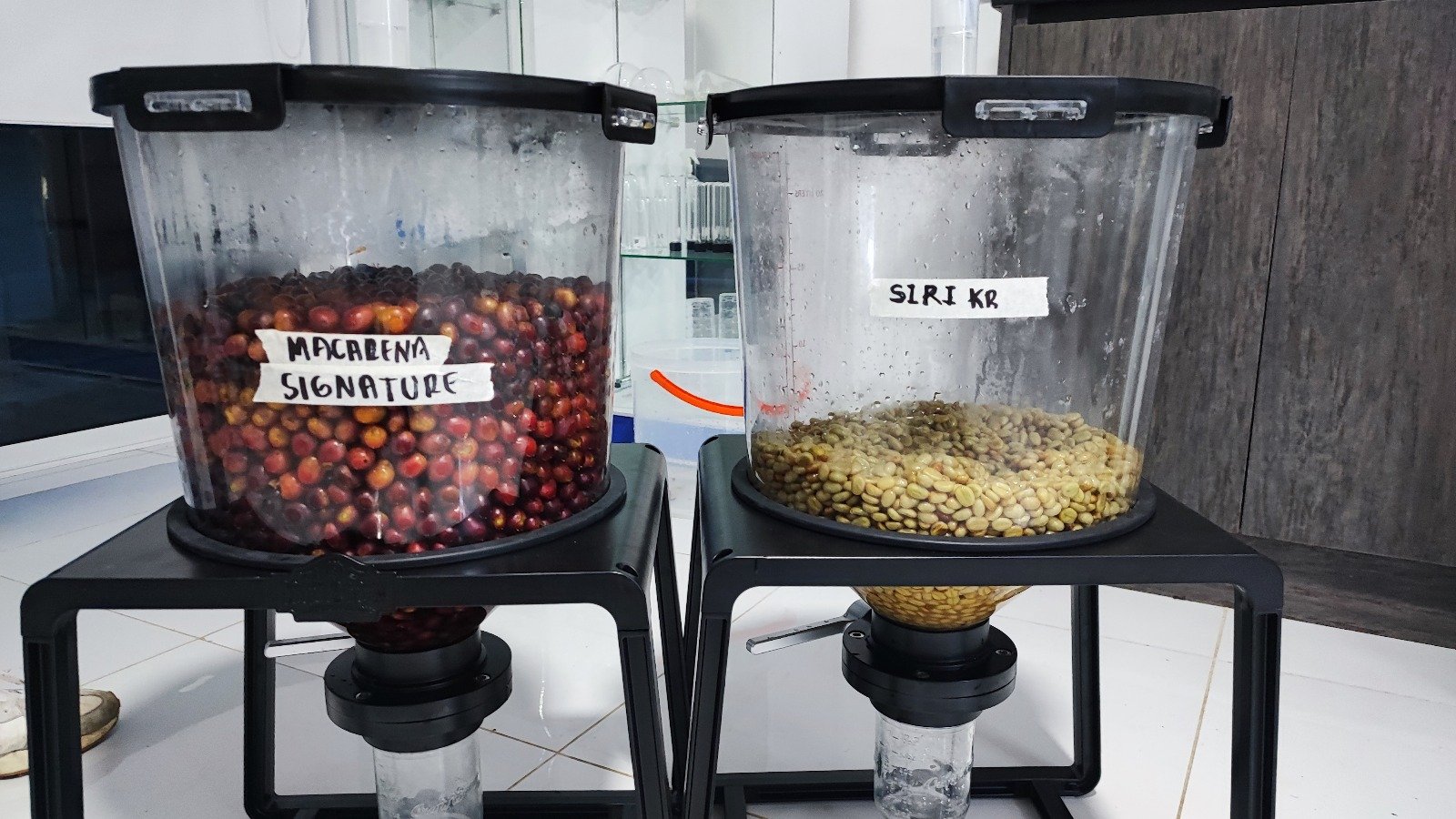
Anaerobic fermentation and thermal shock
When the fruits are ripe, they are harvested by hand at their optimal point of ripeness. The coffee fruit is then sorted by quality, both by size and density.
It is then subjected to two sterilisation processes:
* First, the fruit is washed with ozonated water.
* The second, the same fruit is exposed to ultraviolet rays.
The coffee cherries then undergo two stages of fermentation:
* The first is 50 to 60 hours of anaerobic fermentation at a temperature of no less than 18 °C, during which time yeast selected for the varietal or micro-batch of coffee is added. All this takes place in stainless steel fermentation tanks (bioreactors), which allow the pressure generated by fermentation to be controlled in order to bring the Brix to 6 and the pH to 3.8.
During this first fermentation phase, the mucilage is recovered and reincorporated into the fermentation environment in the next phase.
The cherries are pulped or skinned before moving on to the second phase:
*Second phase: They are returned to the bioreactors, where anaerobic fermentation in mucilage begins for 50 to 60 hours at a temperature above 21 °C.
They are then washed using a thermal shock method: first with water between 38 and 40 °C and then with cold water at approximately 12 °C. The temperature difference helps to fix the aromas produced by fermentation and to sterilise according to the temperature.
Finally, the cherries are dried in an ecological machine that allows for temperature control and recovery of the water released by the dehydration of the bean. Drying usually takes 36 hours at a variable temperature (40 °C for the first 12 hours and 35 °C for the following 24 hours).
Once the seeds from the micro-batches have a moisture content of between 11% and 10%, they are taken to the storage warehouse where they are sorted electronically and manually to meet the required physical quality standards.
Once they have the desired physical characteristics, samples are taken to the laboratory for quality verification and tasting.
The use of bioreactors, innovative drying systems, specific microorganisms developed on the farm , and constant monitoring and control of factors such as temperature, pH, Brix degrees and electrical conductivity allow for the development of more balanced coffees, with abundant tropical fruits (passion fruit, lychee, pineapple, tamarind, coconut...), providing exceptional micro-batches now available to roasters.
COFFEE IN COLOMBIA
Although coffee production in Colombia did not become a large commercial industry until the 19th century, it is likely that coffee was introduced to Colombia about a century earlier by Jesuit priests.
Once commercial production started, it spread quickly. The first commercial coffee plantations were established in the northeast, near the border with Venezuela. Today, coffee is widespread and grown commercially in 20 of Colombia’s 32 Departments.
Historically, Colombia’s most renowned coffee-growing region has been the Eje Cafetero (Coffee Axis), also known as the ‘Coffee Triangle’. This region includes the departments of Caldas, Quindío and Risaralda. With a combined total area of 13,873 km² (5356 mi²), the region covers about 1.2% of the Colombian territory and composes 15% of the total land planted under coffee in the country. The region has also been declared a UNESCO World Heritage site.
While the Eje Cafetero is still a coffee-producing powerhouse, coffee production in Colombia now extends far beyond this zone. In recent years, the departments of Huila, Tolima, Cauca and Nariño have become sought after and well-known coffee-growing regions. Today, they are the largest producers of coffee in Colombia by volume.
Today, there are an estimated 540,000 coffee producers in the country; around 95% of these are smallholder farmers with landholdings that are under 5 hectares. These farmers collectively contribute around 16% of the country’s annual agricultural GDP.
Colombia boasts a wide range of microclimates and geographic conditions that produce the unique flavors so loved in Colombian coffees. While there are many sub-regions and progressively smaller geographical designations — all the way down to individual farms — broadly speaking, coffees in Colombia can be separated into three major regions whose climate, soils and altitudes affect tastes.
Coffees grown in the north (Magdalena, Santander and Norte de Santander) are usually planted at lower altitudes where temperatures are higher. As such, these coffees tend to have deeper, earthier tastes with a medium acidity, more body and notes of nuts and chocolate.
Coffees coming from the central regions (Caldas, Quindío, Risaralda, North of Valle, Antioquia, Cundinamarca and North of Tolima) are celebrated for their overall balance and their fruity, herbal notes. Flavor variations highlight the specific characteristics of each micro-region.
The southern regions (Cauca, Nariño, Huila and South of Tolima) are prized for producing smooth coffees with high sweetness and citrus notes. They are also known for their medium body and more pronounced acidity.
Another distinguishing feature of Colombian coffee production is the mitaca crop – a second harvest that occurs roughly 6 months after the main crop in most regions. The mitaca crop is a result of moist ocean air rising from both the Pacific and the Caribbean, and the north-to-south orientation of the central cordilleras (mountain ranges).
Colombia’s wide range of climates also means that harvest times can vary significantly. Due to these varying harvest times — and the mitaca crop — fresh crop Colombian coffee is available nearly year-round.
Most farmers conduct primary processing (up to and including drying) on their own farms. Processing infrastructure varies widely but there are noticeable similarities between farms of similar sizes or regions. Broadly speaking, most farms have traditionally used the Fully washed method and utilized dry pulping to minimize water usage.
Drying processes in Colombia are innovative and varied. Farmers may spread their parchment across the flat roofs (elvas) of their houses to dry slowly – sometimes in the shade but more often in the sun.
In parts of Antioquia, drying ‘drawers’ are used. These are sets of moveable drying screens that can be pulled out from under the house or storage sheds when the weather is warm and pushed back under shelter when it rains.
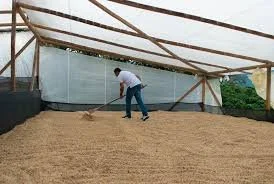
Polytunnels and parabolic beds, also called marquesinas in Colombia, are also commonly used, particularly in high altitude and cooler temperatures zones. These structures are usually raised beds constructed similarly to mini-greenhouses with plastic sheeting stretched over an arched frame and openings at both ends to ensure airflow. These structures protect parchment from wet weather conditions while the even airflow allows for drying even in humid conditions.
As Colombian farmers are increasingly accessing specialty markets, they are experimenting with processing methods beyond the traditional Fully washed method. Producers are experimenting with all kinds of new methods and with adjustments to existing processing including changing fermentation times, adding yeasts or other products to fermenting coffee and more. They’re also producing more Naturals and Honeys of exceptional quality. And these processes are not limited to a select few. Along with Naturals and Honeys, experimentally processed coffees are now coming from a variety of regions.
Colombia’s coffee industry has been incredibly successful at building a brand that continues to help increase interest and demand for Colombian coffee. Beyond simply increasing demand, the industry’s branding made advertising history. Their iconic coffee farmer, Juan Valdez and his donkey, Conchita, were extremely recognizable.
Juan was initially created in 1958 for Colombia’s Federación Nacional de Cafeteros (FNC) (the Federation of Colombian Coffee Growers) and his visage graces the FNC logo – along with countless of bags of Colombian coffee – to this day.
The story of Juan Valdez is just one example of the ways FNC has been a strong force in creating continuity for the reputation of Colombian coffee. Since its creation in 1927, the FNC has represented the interests of Colombia’s coffee growers. Their continued presence is almost unique in the coffee world and is, in part, one of the reasons that Colombia is such a successful coffee-producing country.
Though originally a non-profit organization, today the FNC is collectively owned and controlled by approximately 540,000 producers across Colombia. In addition to cooking up genius marketing icons, the FNC works to ensure adequate infrastructure for growers, provides technical support and funds research. Their research division, Cenicafé (founded in 1938), is renowned for its focus on developing new genetic varieties and conducting research on improved farming practices.
The FNC also seeks price stabilization and ensures minimum pricing for Colombia’s coffee farmers. Despite this, labor shortages are a growing problem in the country, as young people move out of rural coffee-growing areas into the city. This situation is the ‘new normal’ for Colombian producers and the high cost of labor is one that is a risk for many and for the industry as a whole.
In addition to its wide variety of cup profiles, the popularity of certified coffee in Colombia has grown very quickly over the past decade. The most common certifications are Fairtrade, Rainforest Alliance (RFA), UTZ, and Organic. Company certifications such as Starbucks C.A.F.E. Practices are also becoming more widespread.
The increasing focus on the specialty industry is changing the way traders and farmers do business. It is becoming more common for farmers to reserve their highest quality beans in order to market them separately, at higher prices. Often, they can sell these lots with more traceability information that will reach all the way to the end customers. For farmers, having their name and life story connected to their coffee, which is then purchased and seen by the end user, brings many benefits. It means that they can nurture long-term relationships with roasters and increase the value of their product. For roasters, connecting farmers’ stories to the coffees they grew can create a stronger customer interest for specific coffees, added value and demand, and help finance successful long-term relationships with farmers.

Check out more coffees in our store:

Luke 17
Las Nubes Lactic
COUNTRY: Costa Rica
FARM/COOP/STATION: Las Nubes Farm
VARIETAL: Caturra
PROCESSING: LACTIC NATURAL
ALTITUDE: 1800m
OWNER : Roberto Mata Naranjo
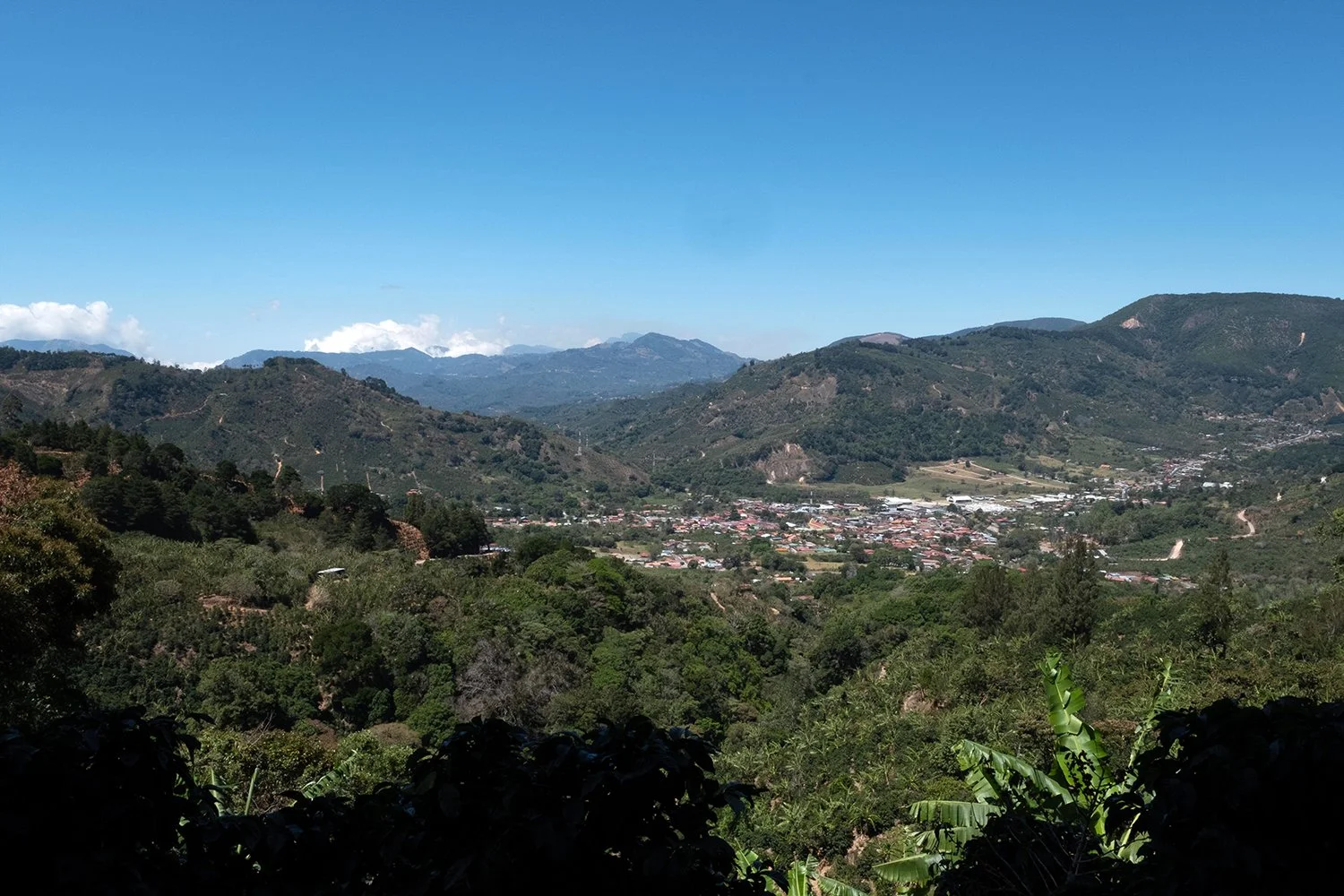
REGION: Valle de Dota
FLAVOUR NOTES: Punchy lactic acidity, cereal, overripe mango and pineapple
ABOUT THIS COFFEE
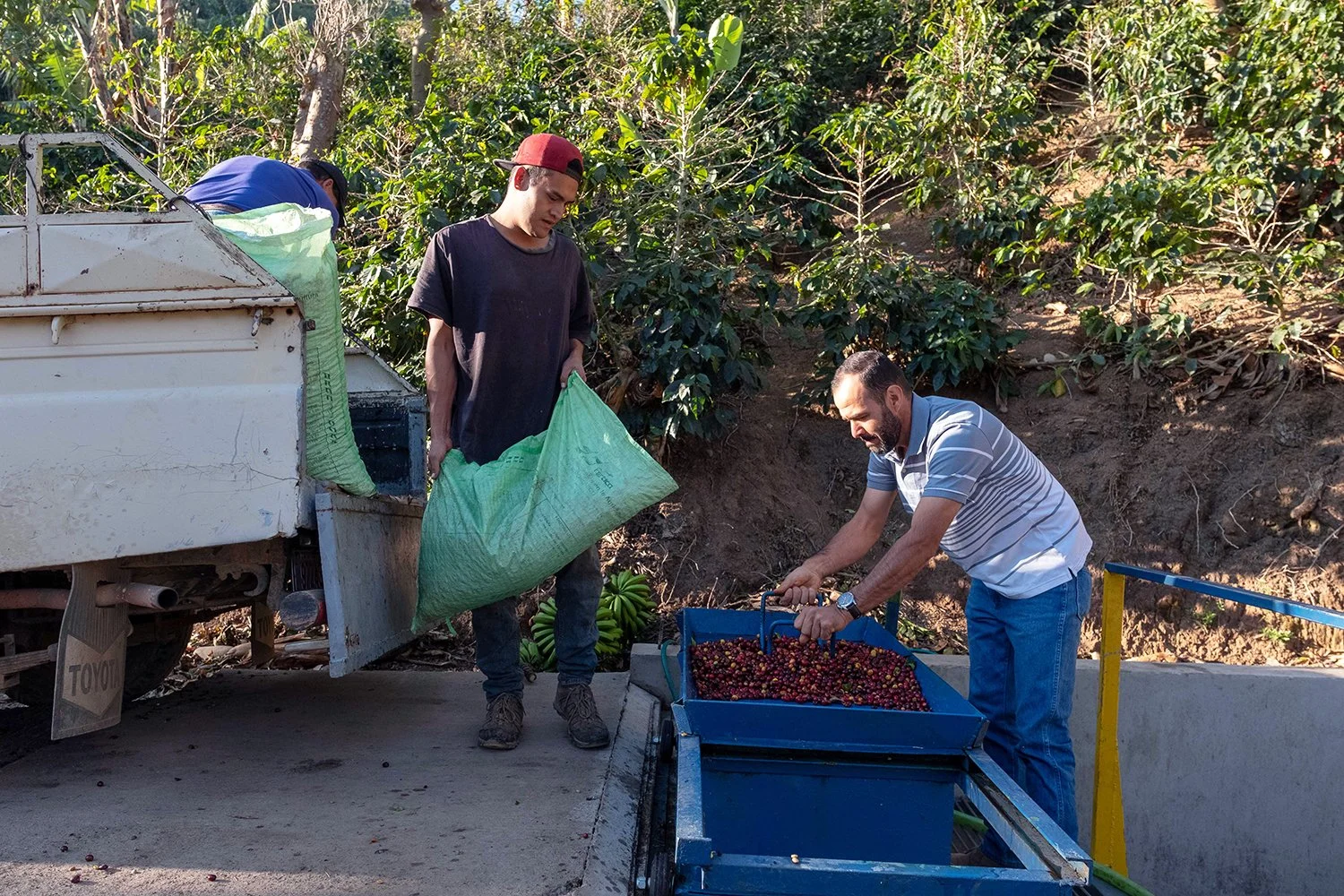
With a coffee background of almost 50 years, Roberto is a walking coffee encyclopaedia - he simply knows everything about the cultivation and preparation of coffee. Due to his experience, his closeness to nature and his love for his homeland, Roberto has been a pioneer in the sustainable cultivation of coffee in harmony with nature for decades. Three years ago, he founded a small family business together with his wife Doris and their five children. Directly behind his home, he now prepares his own coffees in his own micromill with a water-saving Ecopulper. All processes are measured, and efficiently organized, leaving nothing open to chance. Just behind their processing facility they have a small cupping space and beautifully organized sample cabinet. All of the lots are processed on raised beds, focussing purely on honey and natural lots. The metal tables and shadow nets provide the cover needed during the hottest period of the day. To create perfection in humidity, they use mechanical dryers to lower the last percentages of humidity to the correct level for export.
HARVEST AND PROCESS
All cherries are hand-picked at peak ripeness on Las Rubes Farm and meticulously sorted to remove underripe or damaged fruit. To initiate fermentation, Roberto adds a measured amount of juice from previous pre-fermented cherries to the freshly harvested whole cherries. This inoculates the batch with an active community of lactic acid bacteria and yeasts, accelerating fermentation and enhancing flavor complexity. The cherries and juice are sealed inside stainless steel tanks to create an oxygen-free environment. Over the next 72 hours, lactic acid bacteria convert natural sugars into lactic acid, lowering the pH and producing creamy, fruit-forward notes. Once the ideal pH is reached, the cherries are removed and dried in thin layers on raised African beds, turned regularly for even drying until the moisture content reaches 10–12%. The result is an intensely sweet, vibrant coffee with tropical fruit character, a silky mouthfeel, and a clean lactic finish — a signature of Roberto Mata’s lactic fermentation style.
COFFEE IN COSTA RICA
PLACE IN WORLD PRODUCTION: #14
AVERAGE ANNUAL PRODUCTION:
1,230,000 (in 60kg bags)
COMMON ARABICA VARIETIES:
Typica, Caturra, Catuai, Villa Sarchi, Bourbon, Geisha,
KEY REGIONS:
Tarrazú | Central Valley | Western Valley | Tres Rios | Brunca | Guanacaste | Orosi | Turrialba
HARVEST MONTHS:
October - March
Coffee has been a central part of the Costa Rican experience since the country’s independence from Spain in 1821. At that time, the new government led a campaign to distribute free coffee seeds to citizens in order to promote coffee production as a cash crop. Costa Rica was soon exporting green coffee beans all over Central and South America.
Just two decades later, in 1843, Costa Rica sent its first shipment of green coffee beans to England. By 1860, Costa Rica was also supplying coffee to the United States. Coffee played such a big role in Costa Rican production that coffee was Costa Rica’s only export for the years starting from independence until 1890.Costa Rican coffee farmers experience significant barriers to production. Production costs in the country tend to be very high in comparison to neighboring countries. The persistent growth of the tourist industry, combined with the influx of foreign businesses bringing more money into Costa Rica, has created inflation. While inflation and the rising quality of life have had many positive benefits for Costa Ricans, rural areas have struggled to keep up with increasing land and input prices and the associated higher labor costs. As a result, Costa Rican coffee tends to be on the expensive side.
Especially because costs are higher, Costa Rican coffee producers must find other ways to stand out from all the other producing countries in the Americas. Luckily for the specialty coffee industry, Costa Rica has had great success becoming a frontrunner in quality specialty coffees and processing methods.
In areas like Tarrazú, where conditions are ideal for coffee growing, competition is even higher. In such areas, the competitive atmosphere leads many producers to invest in private micro mills, growing exotic varieties and alternative processing.
The focus Costa Rican farmers place on increased coffee quality is beneficial to both themselves and the specialty industry as whole. An atmosphere that encourages experimentation and innovation can breed any number of new or better varieties, growing techniques, processing methods, storage protocols and more.

Check out more coffees in our store:

Luke 16
Gitesi
COUNTRY: Rwanda
FARM/COOP/STATION: Gitesi Washing Station
VARIETAL: Red Bourbon
PROCESSING: Washed
ALTITUDE: 1750-1800 m.a.s.l.
OWNER: Alexis and Aime Gahizi
REGION: Gitesi
FLAVOUR NOTES: Sweet and clean, brown sugar, citrus, black tea
ABOUT THIS COFFEE
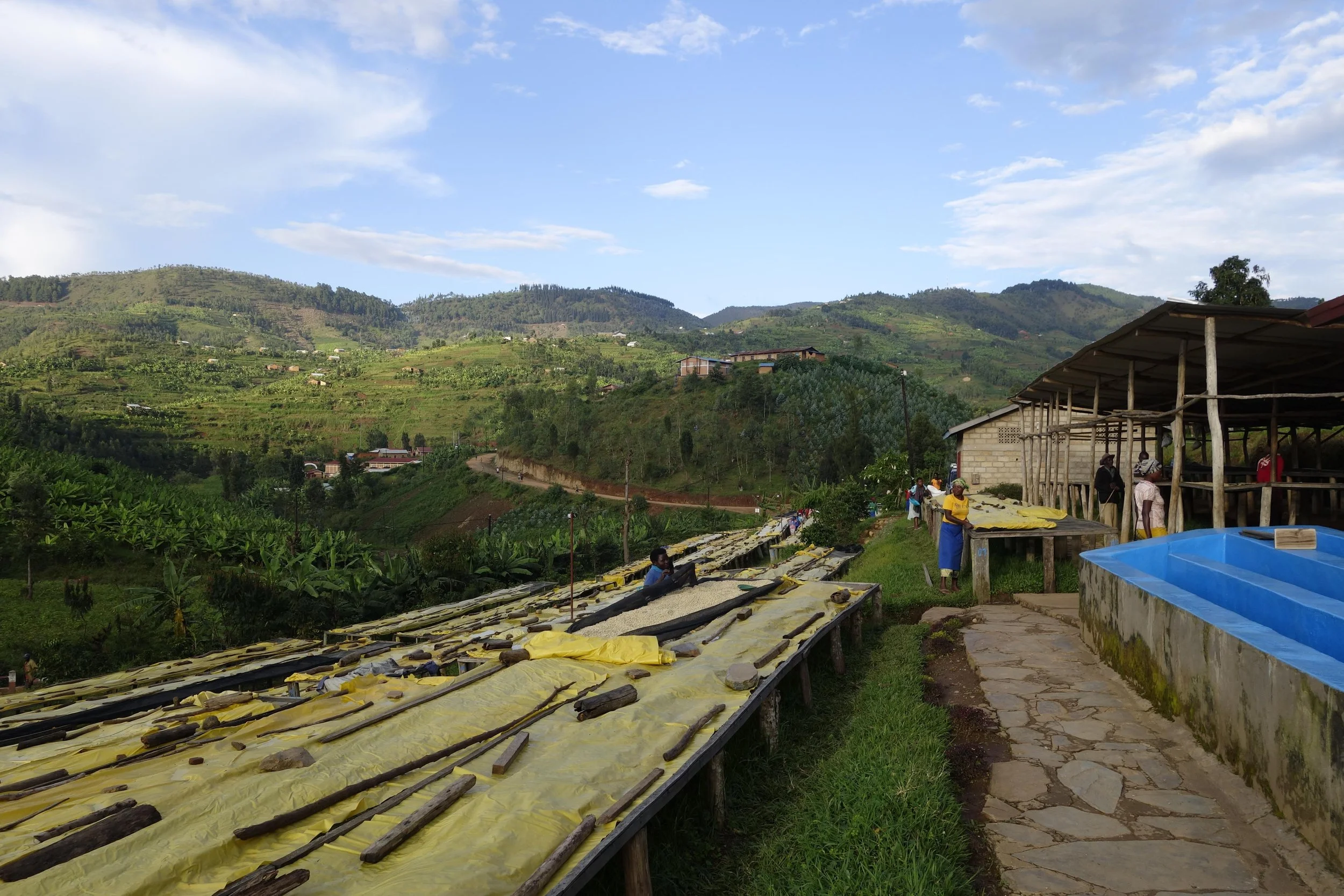
Gitesi is a private washing station, owned and run by father and son: Alexis and Aime Gahizi. It was built in 2005, and began processing coffee a year later. It is located in the Gitesi sector of Rwanda’s Western Province. The dynamic duo struggled to keep it operating during its launch and fought hard to turn it into a profitable business. In 2010, they finally managed to turn a profit, and have since built a sustainable company.
Alexis (Aime’s father), is originally from the Karongi District, where the washing station is located. His family has been growing coffee in this region for generations. Aime has a degree in engineering. He has created a water purification system for the washing station (wastewater management), which is being used as a model throughout the country’s coffee production industry.
With more than 1,800 local farmers delivering their cherries to Gitesi, it is important for the washing station to maintain strong relationships with the local community. Competing for cherries can be pretty tough, as farmers can deliver their lots to whichever washing station they choose. They therefore maintain a sufficient supply of cherries, and offer competitive pricing to the farmers.
Aime and his staff are very competent. They are extensively trained in managing the delivery of cherries from farmers. They have implemented strict protocols for cherry reception and sorting, as the farmers must sort out their lots themselves. If this isn’t properly conducted, the washing station has staff who can complete the task. The cherries are placed in a tank prior to pulping where floaters are removed and processed separately as lower grade coffee.
HARVEST AND PROCESS
Even though most of our selections come from cherries picked between May and July, Rwanda’s harvest can run from March until August. This isn’t always consistent, as it can shift depending on the weather and the altitude the coffee grows on.
The season’s climate in this region is generally quite cool, and can therefore control the fermentation process. A Penagos 800 Eco Pulper removes the skin of cherries, the pulp and 70% of the mucilage. The coffee is then dry fermented for 10-12 hours, graded and washed in channels. It is separated into two grades based on density, before being soaked in tanks of clean water for 16 hours.
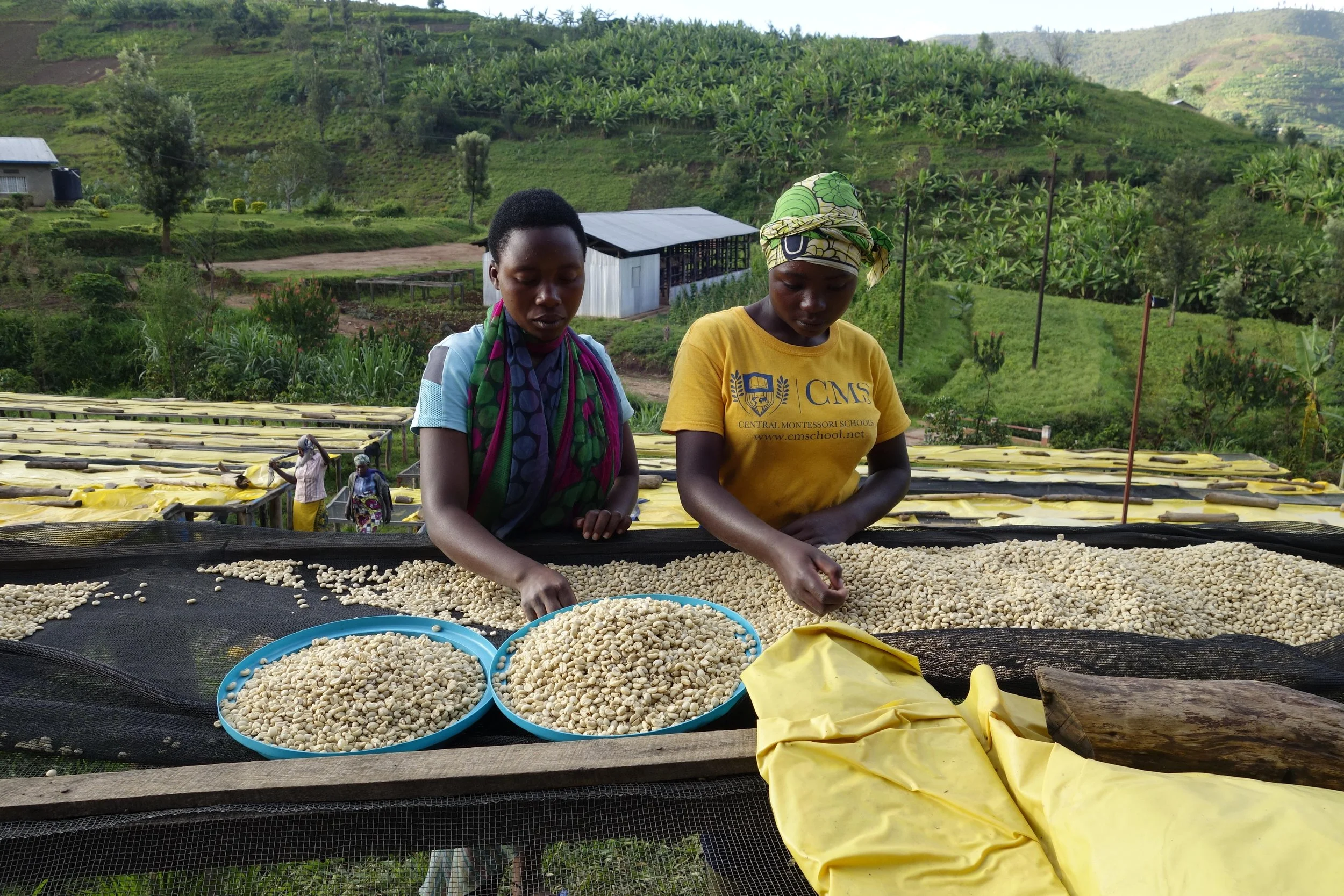
The parchment is initially taken to pre-drying tables underneath the shade. At this stage, while the parchment is still wet, a lot of hand sorting is conducted as it is easier to detect potential defects. The parchment is then dried on African drying beds for up to 15 days. It is covered with a shade net during the hottest hours of the day, throughout the night, and anytime it rains.
GENDEER EQUALITY
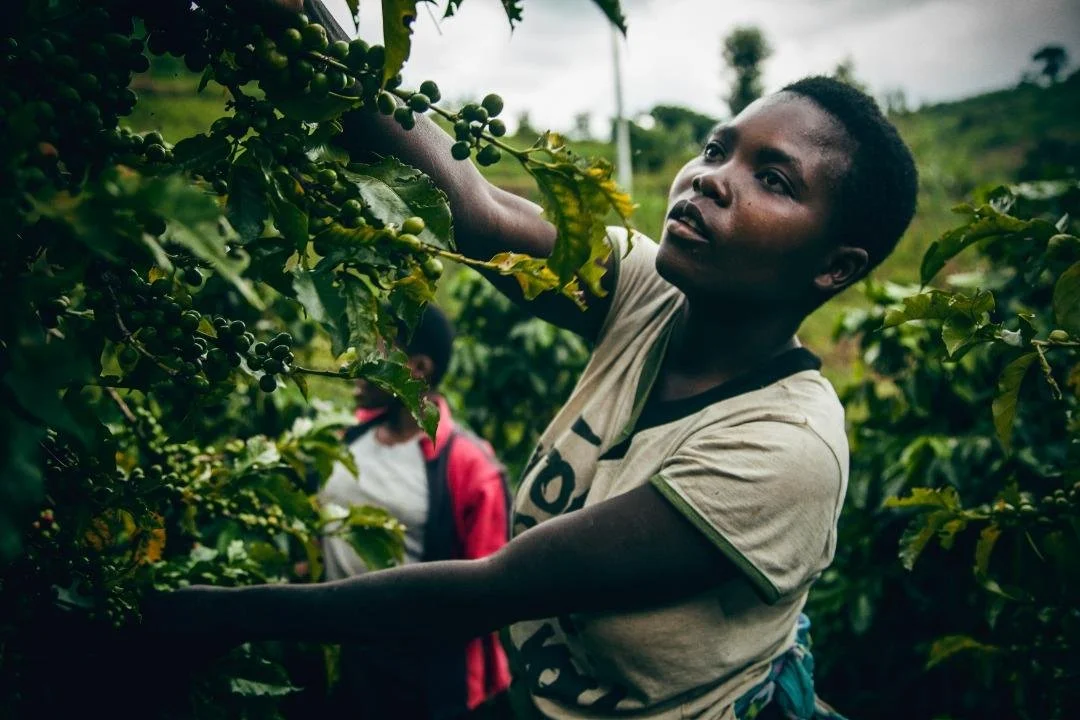
Rwanda has seen significant developments in gender equity and coffee has played a role in these advancements. While women previously lost their control over agriculture during colonial rule due to gender-assumptions made by European rulers, they are starting to regain some autonomy in agriculture. New initiatives that cater to women and focus on helping them equip themselves with the tools and knowledge for farming have been changing the way women view themselves and interact with the world around them.A significant barrier to Rwanda’s expanding coffee industry is transportation. Since Rwanda is landlocked, coffee must first travel 1,500 kilometers by land to either Mombasa, in Kenya, or Dar-es-Salaam, in Tanzania. This is a lengthy and expensive process that usually costs more than it does to ship the same container of coffee from those ports to the US or Europe.
Despite the expense of transportation, Rwandan farmers are doing well. Many farmers who deliver cherry and participate in washing station programs have seen their income more than double. Additionally, the first Rwandan Cup of Excellence was held in 2008 and has since then only continued to gather traction and interest for the country’s exceptional Bourbon coffees.
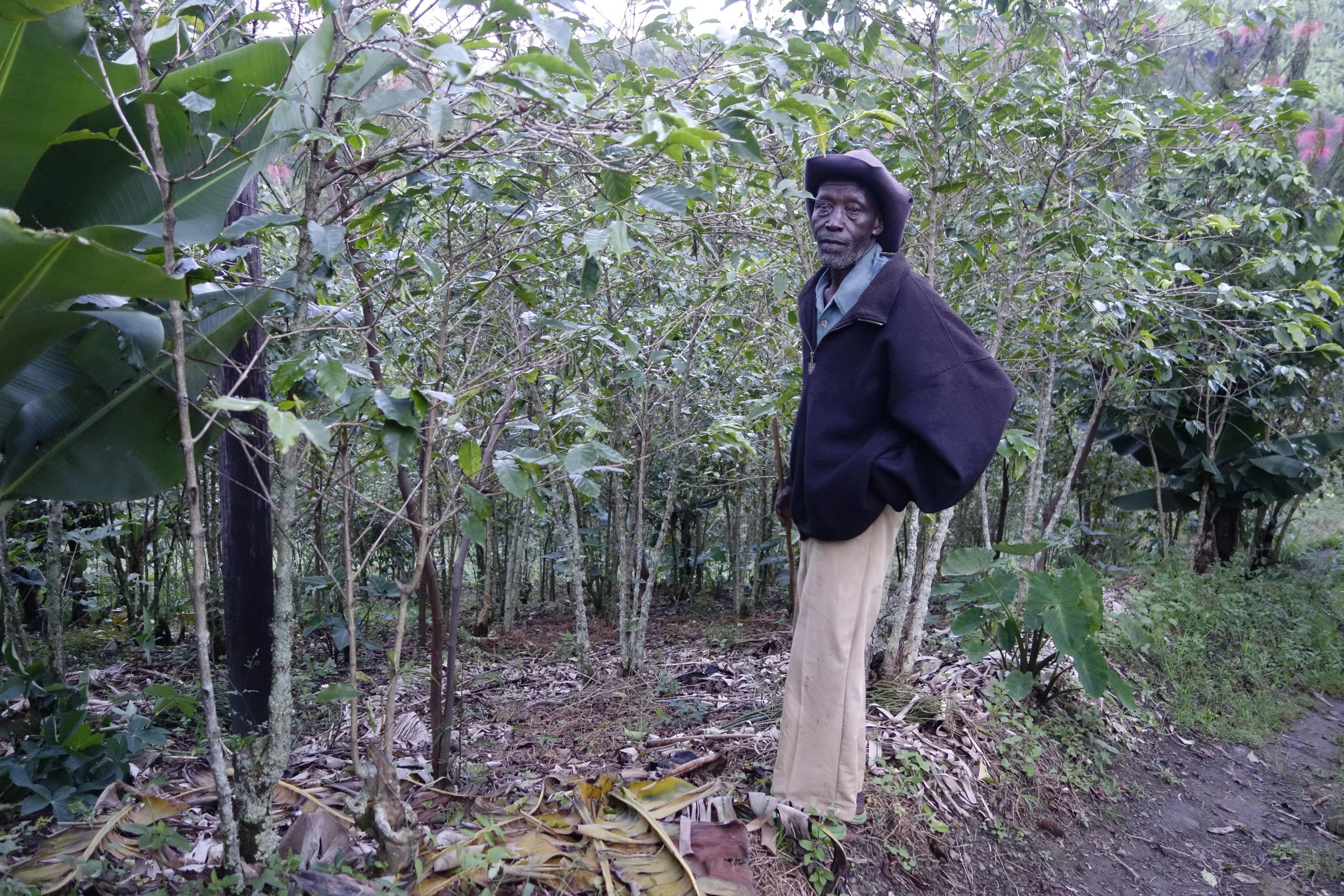
COFFEE IN RWANDA
Although Rwanda’s colonial past is central to the introduction of coffee in the country, due to Rwanda’s landlocked position close to the center of Africa, few Europeans actually set foot in the country until well into the mid-1890s. Even after the 1885 “Conference of Berlin” when Germany declared control over the areas of modern Burundi and Rwanda, the first documented European traveler to ever set foot in Rwanda did not arrive until 1894.
German missionaries and settlers brought coffee to Rwanda in the early 1900s. Largescale coffee production was established during the 1930 & 1940s by the Belgian colonial government, who officially controlled the Belgian Congo from 1908 to 1960 and the twin territory of Ruanda-Urundi (that later became the countries of Rwanda and Burundi) from 1922 until independence in 1962.
The Belgian government made coffee growing mandatory during their rule. The Belgians forced native Rwandans to grow coffee in order to produce cheap, plentiful, low-quality coffee for export. Most of the profits from coffee production left Rwanda, along with the coffee itself.
When the Belgian government withdrew, many stopped tending their trees because it was no longer compulsory. For some, coffee was seen as a symbol of colonial oppression. However, many also saw the economic advantages of continuing to grow coffee, and the industry quickly became important to Rwanda’s national economy.
Coffee production continued after the Belgian colonists left. By 1970, coffee had become the single largest export in Rwanda and accounted for 70% of total export revenue. Coffee was considered so valuable that, beginning in 1973, it was illegal to tear coffee trees out of the ground.
Between 1989 and 1993, the breakdown of the International Coffee Agreement (ICA) caused the global price to plummet. Considering the massive role that coffee played in Rwanda’s income, the government and economy took a hard hit from low global coffee prices. The 1994 genocide and its aftermath led to a complete collapse of coffee exports and vital USD revenue. But the incredible resilience of the Rwandan people is evident is the way that the economy and stability have recovered since then.
Modern Rwanda is considered one of the most stable countries in the region. Since 2003, its economy has grown by 7-8% per year and coffee production has played a key role in this economic growth.
This incredible recovery is due in part to the strong government support for the coffee sector as well as trade rules helping exports and international investment into the coffee sector. About ten years after the end of the civil war, the government instituted the National Coffee Strategy that helped improve and expand the coffee industry. The strategy encourages high-quality production for the specialty coffee market. Funding comes from the Rwandan government, other nations and private investors. Economic outcomes for farmers are now much better than they once were.
Previously, Rwandan coffee farmers processed their cherry at home. They would roughly de-pulp the cherry, wash it, maybe ferment it and probably dry it on the floor. This created a very low-quality commodity coffee called semi-washed. To improve the quality of coffee, the government incentivized the creation of new Central Washing Stations (CWSs) in coffee-producing areas. The first CWS was established in 2001. Today, more than 300 washing stations operate across Rwanda.
The growth of washing stations and the improvement in processing for Rwandan coffees has added at least a 40% premium to Rwandan coffee’s export value.Today, smallholders propel the industry in Rwanda forward. The country doesn’t have any large estates. Most coffee is grown by the 400,000+ smallholders, who own less than a quarter of a hectare. The majority of Rwanda’s coffee production is Arabica. Bourbon variety plants comprise 95% of all coffee trees cultivated in Rwanda.
A significant barrier to Rwanda’s expanding coffee industry is transportation. Since Rwanda is landlocked, coffee must first travel 1,500 kilometers by land to either Mombasa, in Kenya, or Dar-es-Salaam, in Tanzania. This is a lengthy and expensive process that usually costs more than it does to ship the same container of coffee from those ports to the US or Europe.
Despite the expense of transportation, Rwandan farmers are doing well. Many farmers who deliver cherry and participate in washing station programs have seen their income more than double. Additionally, the first Rwandan Cup of Excellence was held in 2008 and has since then only continued to gather traction and interest for the country’s exceptional Bourbon coffees.

Check out more coffees in our store:

Luke 15 (Gjest)


Aya is the founder — and currently sole employee — of Hibi Kaffe.
Originally from Japan, she moved to Norway with her husband in 2013. That’s when she discovered her love for coffee and developed a deep interest in roasting.
"Hibi" means "daily" in Japanese — a reminder to better appreciate coffee in your everyday moments. Starting this journey has been an incredible experience, and I’m so excited to share my passion and craft with you.
Website: hibikaffe.no
instagram: @hibikaffe
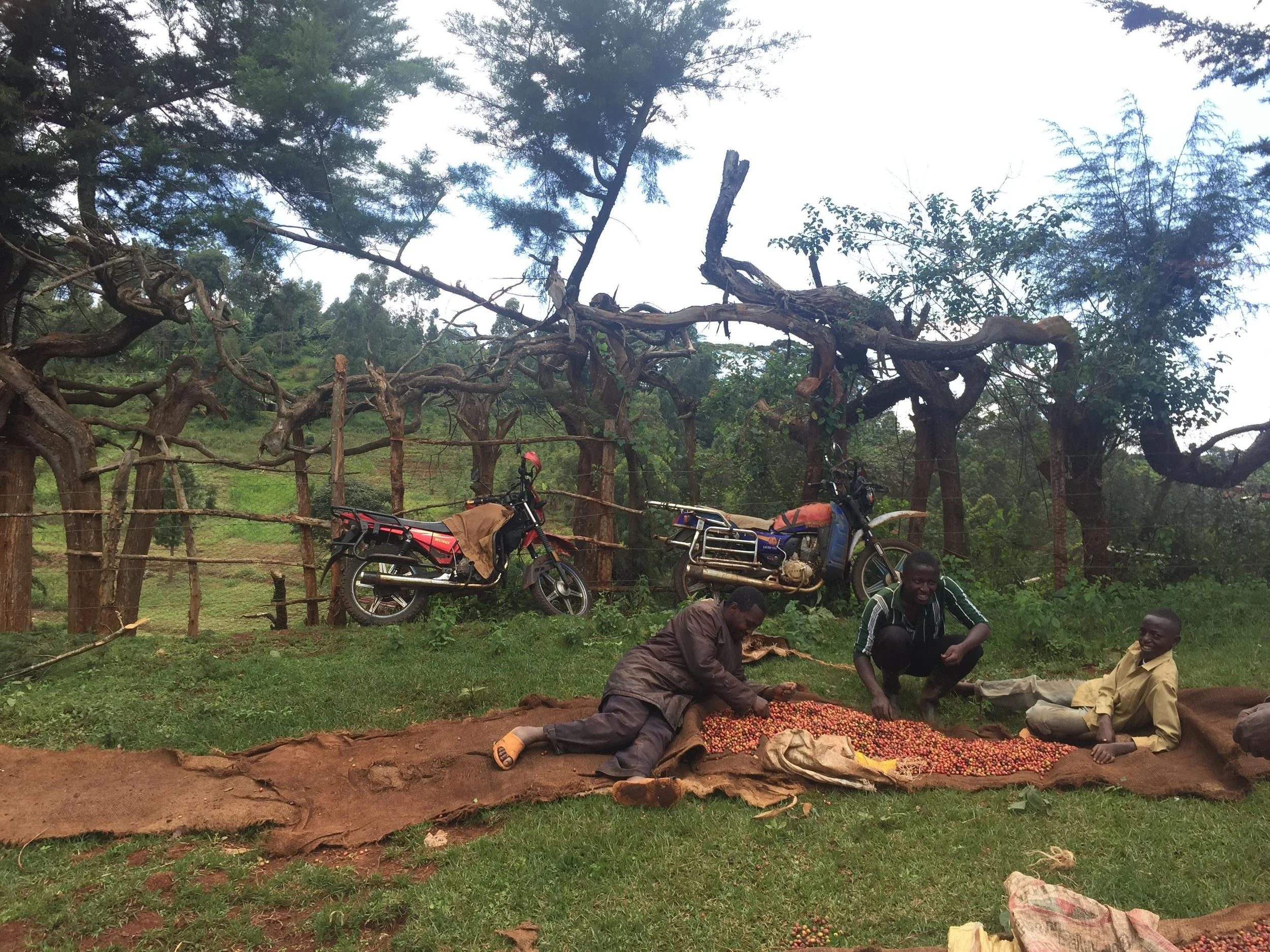
PB Gatomboya
COUNTRY: Kenya
FARM/COOP/STATION: Gatomboya factory
VARIETAL: SL-28, SL-34, Ruiru 11, Batian
PROCESSING: Washed
ALTITUDE: 1770 masl
OWNER: 700 smallholder farmers
REGION: Nyeri
Bright citrus and herbal notes with raisin-like dried fruit. Long, tea-like finish and great fruit–herbal balance.
ABOUT THIS COFFEE
The Gatomboya factory is located in Konyu, Nyeri, within the Mathira division, at an elevation of 1770 metres above sea level. Established in 1987 under the Mathira FCS, it became part of Barichu FCS in 1996. The factory processes cherries from about 700 smallholders, each averaging 0.4 hectares.
The name "Gatomboya," a Kikuyu word meaning "swamp," refers to the area's swampy terrain, ideal for cultivating arrowroots. Farmers primarily grow SL 28 and SL 34 coffee varieties on rich volcanic soils, alongside other crops like tea, maize, and bananas. Shade trees such as Gravellea, Macadamia, and Eucalyptus are also planted.
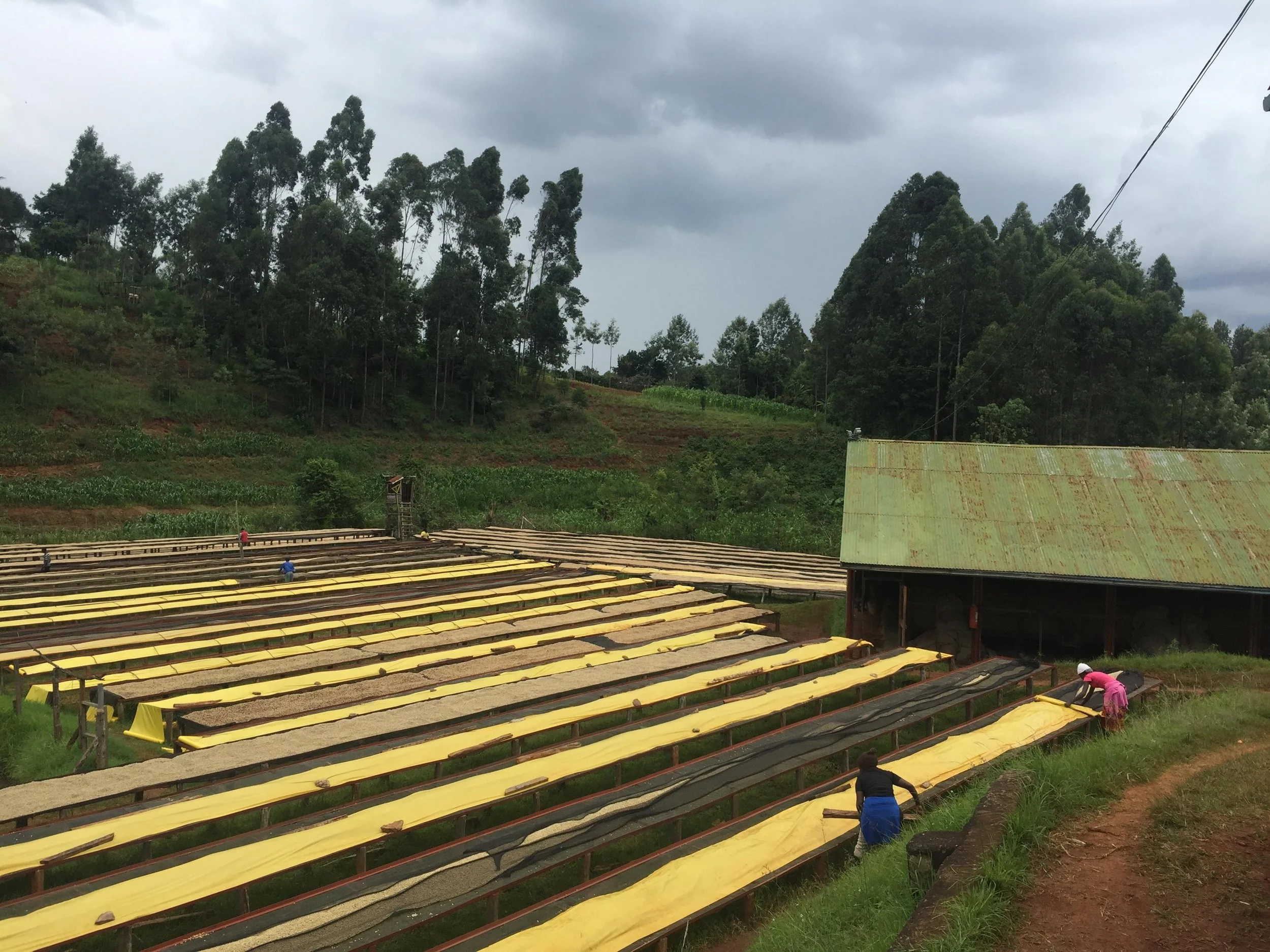
HARVEST AND PROCESS
Harvest
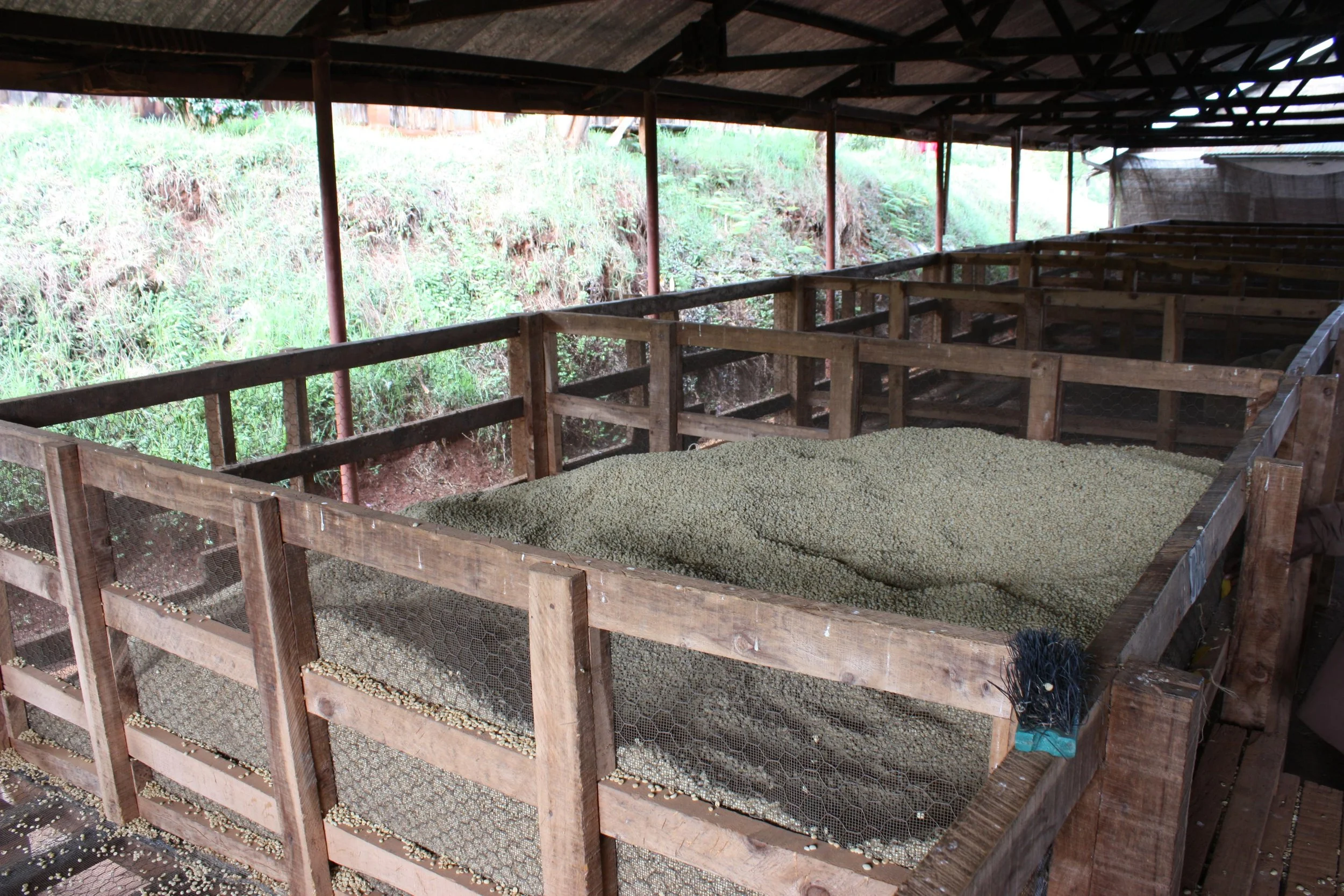
Cherries are handpicked during the main harvest season from October to January. The water source for processing these coffees is the Kirigu River, with water being recirculated and six soak pits used for wastewater management. The cherries are sun-dried on African raised beds.
The annual average rainfall in the area is 1500 mm. The temperatures are mainly between 14 and 25 Celcius.
Processing
Farmers sort their cherries by ripeness before they go into production. They are then placed directly in the hopper that is connected to the pulping machine. The coffee flows from the hopper down to the pulper, and the pulper removes the skin and pulp (usually an Agaarde disc pulping machine). The machine is designed to conduct grading of high and low quality (1st and 2nd). Grade 1 and 2 are fermented separately, while Grade 3 is considered to be of lower quality.
The coffee is fermented for 16-24 hours under closed shade. After fermentation, the coffee is washed and graded again in channels, so that the cherries of lower quality (with lower density) will float. They are removed, leaving the denser, higher quality beans to be separated as higher-grade lots. The cherries are then soaked under clean water from the Gatomboya stream for approximately 16-18 hours.
The coffee is sun-dried for up to 21 days on African drying beds, and is covered in plastic during midday and at night.
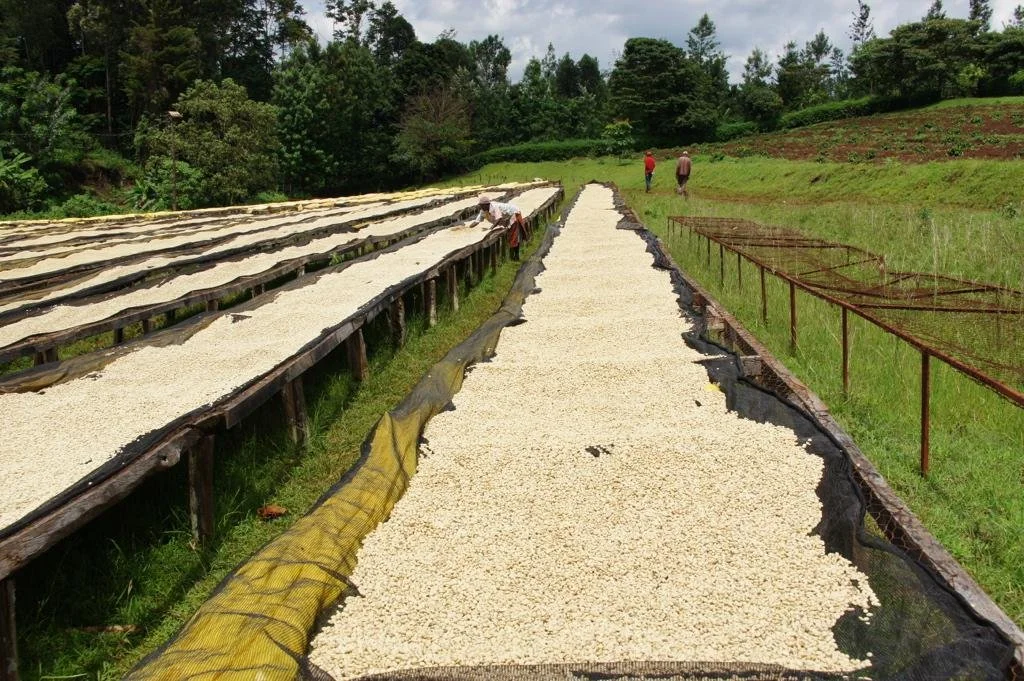
IMPACT
The Gatomboya factory provides its members with access to credit for school fees, farm inputs, and emergencies. Its primary goal is to share information with farmers about crop management and other essential agricultural practices for coffee cultivation.
Additionally, the factory manager receives training every two years.
COFFEE IN KENYA
Despite sharing over 865 kilometers of border with Ethiopia, the birthplace of coffee, coffee had to circumnavigate the world before it set roots in Kenya. While the earliest credible reports place coffee in Ethiopia around 850 C.E., coffee was not first planted in Kenya until 1893 when French missionaries planted trees in Bura in the Taita Hills.
Under the rule of the British Empire coffee production geared for export expanded. Large, privately owned coffee growing estates were established and most harvests went to England in parchment, where it was sold to roasters prior to milling. Roasters often blended the bright flavors of Kenya with more chocolatey South American coffees.
Though large estates grew in hectarage and value, indigenous Kenyans did not benefit. In fact, European settlers took direct action to exclude indigenous people from growing coffee themselves.
In order to decrease competition, make labor accessible and inexpensive and continue the increase of demand for high-quality coffee, the Coffee Board was created to make regulations on coffee production and marketing. The Nairobi Coffee Exchange (NCE) (which continues to this day) was established in Nairobi to leave more of the value of green coffee at origin.
The Coffee Board tightly controlled licensing for coffee growing and processing. While the laws put in place did not explicitly state that indigenous people could not grow coffee, large estate owners made it functionally impossible for indigenous farmers to attain coffee growing licenses until the 1950s.
These laws protected the interests of the large landowners. Not only could more cultivation drive down the price of Kenyan coffee, but large farmers feared that if smallholder and indigenous farmers had their own coffee farms to tend, they would not work as paid laborers on settlers’ farms.
SL-28 and SL-34 are well-known Kenyan coffee varieties. They were bred by Scott Agricultural Laboratories (SAL). SAL was founded in 1903 by the Kenyan Colonial government to function as a research institution studying agricultural products.
SL-28 and SL-34 quickly became the varieties of choice for most growers. Their deep root structures helped them acquire water in the dry environments present throughout much of Kenyan, even without irrigation. These varieties also had higher yields than the traditional French Bourbon rootstock and were considered somewhat more disease resistant.
Though both SL varieties spread across Kenya extremely quickly, the release of Ruiru-11 in 1985 by the Kenya Coffee Research Institute (CRI) brought a new kid to the block. Many farmers planted the new Ruiru-11 variety because it was far more resistant to Coffee Berry Disease (CBD), a fungal disease attacking ripening coffee cherry, and Coffee Leaf Rust (CLR), a fungal disease that targets the leaves of coffee trees. It could also be planted at a higher density than the SL varieties, allowing farmers to maximize yields on small plots of land.
One downside to Ruiru-11 was that its shallower root structure made is more susceptible to drought and required more fertilizer. Farmers found that that by grafting Ruiru-11 to SL variety trees, they could have the best of both worlds. Trees where Ruiru-11 was grafted onto an SL variety plant had deeper root structures for drought-times (thanks to the SL variety) and higher immunity to disease and larger yields (thanks to the Ruiru-11).
Other farmers are experimenting with Batian, as well, a relatively new variety introduced by Coffee Research Institute (CRI) in 2010. Batian is named after the highest peak on Mt. Kenya and is resistant to both CBD and CLR. The variety has the added benefit of early maturity and begins bearing fruit after only two years. Some challenges (such as vegetative structure) have prevented it from becoming widespread so far, but its popularity is certainly growing.
While most farms in Kenya still have the traditional SL varieties, most also have Ruiru-11 and, increasingly, Batian. Most farms are far too small to be able to handle lot separation by variety. This means that most lots coming out of Kenya—whether single estate or smallholder group—are a blend of SL, Ruiru-11 and (sometimes) Batian.

Check out more coffees in our store:

Luke 14
Las Palmas
COUNTRY: Colombia
FARM/COOP/STATION: Las Palmas
VARIETAL: Striped Bourbon
PROCESSING: Anaerobic Natural
ALTITUDE: 1,650 masl
OWNER: Efren Echeverry
SUBREGION/TOWN: Palestina
REGION: Huila
FLAVOUR NOTES: Funky pineapple, red grape, bittersweet chocolate, cranberry
ABOUT THE FARMER
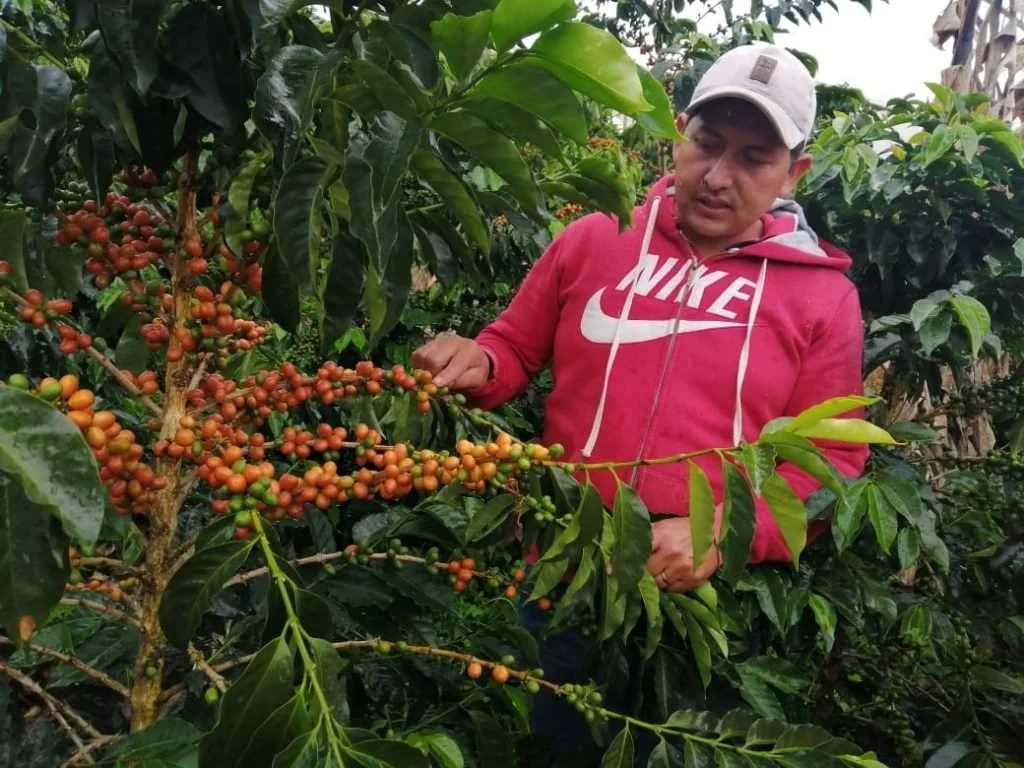
Efren Echeverry is a third-generation coffee producer and current steward of Las Palmas, a family-owned farm located in Sinai, Palestina, Huila. Established 20 years ago, the farm sits at 1,650 masl and spans 7 hectares dedicated to coffee, with 5,000 trees planted.
Alongside coffee, Efren and his family grow plantain, yuca, and garden crops, taking full advantage of the area’s excellent geographic and climatic conditions.
Since taking over management four years ago, Efren has introduced meaningful changes aimed at enhancing quality, such as planting new varieties and refining post-harvest processes. For Efren and his family, Las Palmas is more than a farm; it’s a legacy and their primary source of livelihood. Today, it supports nine employees, including two permanent workers and seven seasonal pickers during harvest.
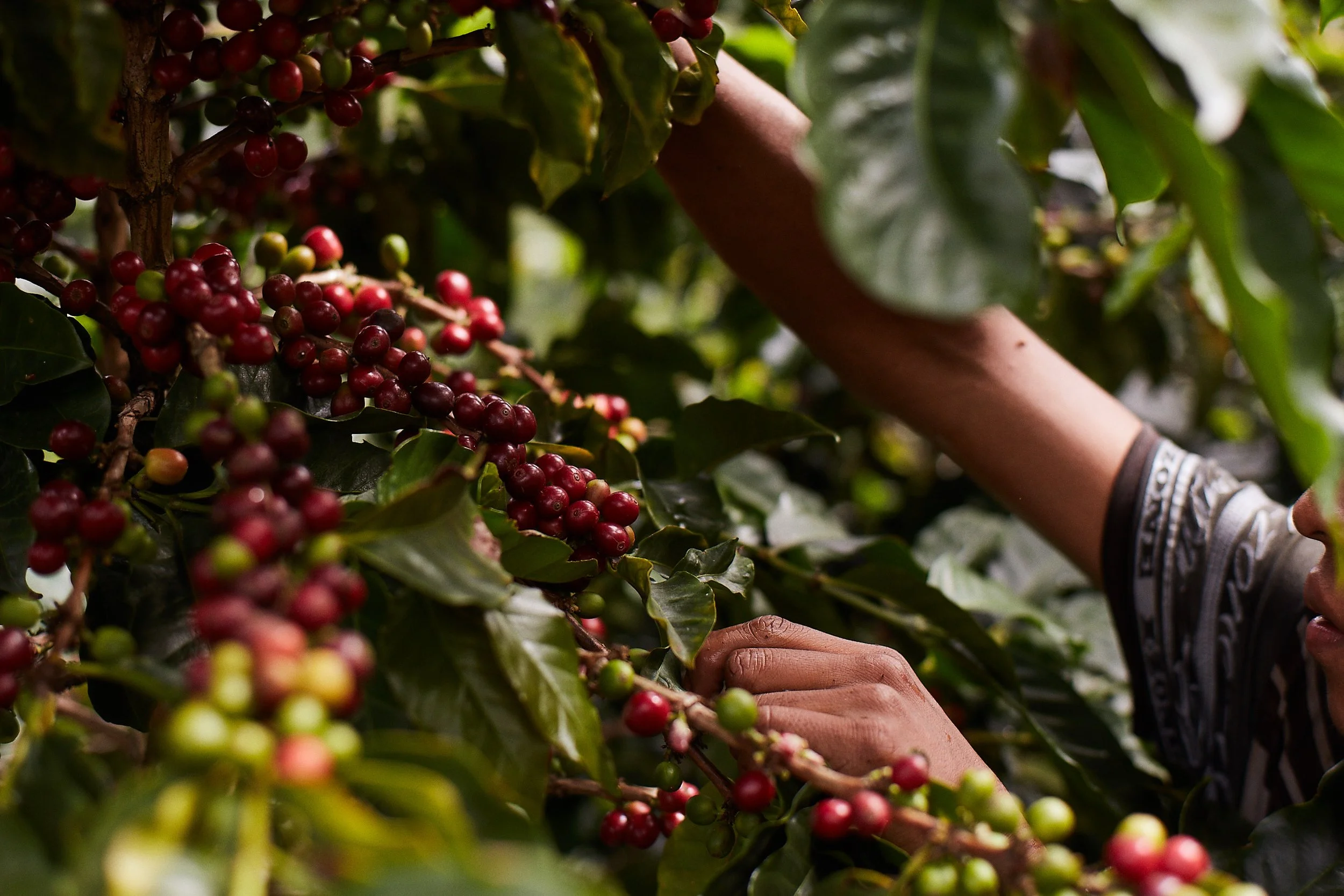
The main harvest runs from October to December, with exports taking place between May and July. Every cherry is handpicked at peak ripeness, floated to remove defects, and processed with care to ensure consistency and excellence.
HARVEST AND PROCESS
Cherries were selectively handpicked and then floated in tinas. Cherries are then anaerobically fermented for 120 hours in sealed tanks. After fermentation, cherries are dried under marquesinas (covered drying structures) for 20 to 30 days, depending on weather conditions.
Cuatro Vientos
Cuatro Vientos is a family-owned business, offering microlots and regional blends. Founded in 2018, the company was named after the first farm owned by the Gonzalez family, and therefore, holds a special meaning for them. Yonatan Gonzalez, the company’s General Manager, grew up on that farm, and is a third-generation producer with a background in logistics. His father used to commercialise coffee, as a classic, Colombian parchment buyer.
The company operates in different parts of Huila, which gives them access to coffee for 6 months per year. They have 3 purchasing points, located in each region they work in: Acevedo, Santa Maria, and Algeciras. They do not own a private drying mill, and therefore use infrastructure located in Acevedo.
The Area
Huila, along with Narino, is one of the main areas in Colombia where we can find characteristic, diverse and distinctive flavour profiles in coffee. Our partners from Cuatro Vientos work in Northern Huila (Santa Maria & Algeciras), as well as Southern Huila (Acevedo).
COFFEE IN COLOMBIA
Although coffee production in Colombia did not become a large commercial industry until the 19th century, it is likely that coffee was introduced to Colombia about a century earlier by Jesuit priests.
Once commercial production started, it spread quickly. The first commercial coffee plantations were established in the northeast, near the border with Venezuela. Today, coffee is widespread and grown commercially in 20 of Colombia’s 32 Departments.
Historically, Colombia’s most renowned coffee-growing region has been the Eje Cafetero (Coffee Axis), also known as the ‘Coffee Triangle’. This region includes the departments of Caldas, Quindío and Risaralda. With a combined total area of 13,873 km² (5356 mi²), the region covers about 1.2% of the Colombian territory and composes 15% of the total land planted under coffee in the country. The region has also been declared a UNESCO World Heritage site.
While the Eje Cafetero is still a coffee-producing powerhouse, coffee production in Colombia now extends far beyond this zone. In recent years, the departments of Huila, Tolima, Cauca and Nariño have become sought after and well-known coffee-growing regions. Today, they are the largest producers of coffee in Colombia by volume.
Today, there are an estimated 540,000 coffee producers in the country; around 95% of these are smallholder farmers with landholdings that are under 5 hectares. These farmers collectively contribute around 16% of the country’s annual agricultural GDP.
Colombia boasts a wide range of microclimates and geographic conditions that produce the unique flavors so loved in Colombian coffees. While there are many sub-regions and progressively smaller geographical designations — all the way down to individual farms — broadly speaking, coffees in Colombia can be separated into three major regions whose climate, soils and altitudes affect tastes.
Coffees grown in the north (Magdalena, Santander and Norte de Santander) are usually planted at lower altitudes where temperatures are higher. As such, these coffees tend to have deeper, earthier tastes with a medium acidity, more body and notes of nuts and chocolate.
Coffees coming from the central regions (Caldas, Quindío, Risaralda, North of Valle, Antioquia, Cundinamarca and North of Tolima) are celebrated for their overall balance and their fruity, herbal notes. Flavor variations highlight the specific characteristics of each micro-region.
The southern regions (Cauca, Nariño, Huila and South of Tolima) are prized for producing smooth coffees with high sweetness and citrus notes. They are also known for their medium body and more pronounced acidity.
Another distinguishing feature of Colombian coffee production is the mitaca crop – a second harvest that occurs roughly 6 months after the main crop in most regions. The mitaca crop is a result of moist ocean air rising from both the Pacific and the Caribbean, and the north-to-south orientation of the central cordilleras (mountain ranges).
Colombia’s wide range of climates also means that harvest times can vary significantly. Due to these varying harvest times — and the mitaca crop — fresh crop Colombian coffee is available nearly year-round.
Colombia’s coffee industry has been incredibly successful at building a brand that continues to help increase interest and demand for Colombian coffee. Beyond simply increasing demand, the industry’s branding made advertising history. Their iconic coffee farmer, Juan Valdez and his donkey, Conchita, were extremely recognizable.
Juan was initially created in 1958 for Colombia’s Federación Nacional de Cafeteros (FNC) (the Federation of Colombian Coffee Growers) and his visage graces the FNC logo – along with countless of bags of Colombian coffee – to this day.
The story of Juan Valdez is just one example of the ways FNC has been a strong force in creating continuity for the reputation of Colombian coffee. Since its creation in 1927, the FNC has represented the interests of Colombia’s coffee growers. Their continued presence is almost unique in the coffee world and is, in part, one of the reasons that Colombia is such a successful coffee-producing country.
Though originally a non-profit organization, today the FNC is collectively owned and controlled by approximately 540,000 producers across Colombia. In addition to cooking up genius marketing icons, the FNC works to ensure adequate infrastructure for growers, provides technical support and funds research. Their research division, Cenicafé (founded in 1938), is renowned for its focus on developing new genetic varieties and conducting research on improved farming practices.
The FNC also seeks price stabilization and ensures minimum pricing for Colombia’s coffee farmers. Despite this, labor shortages are a growing problem in the country, as young people move out of rural coffee-growing areas into the city. This situation is the ‘new normal’ for Colombian producers and the high cost of labor is one that is a risk for many and for the industry as a whole.

Check out more coffees in our store:

Luke 13 (Gjest)
SCANDINAVIAN ALPS
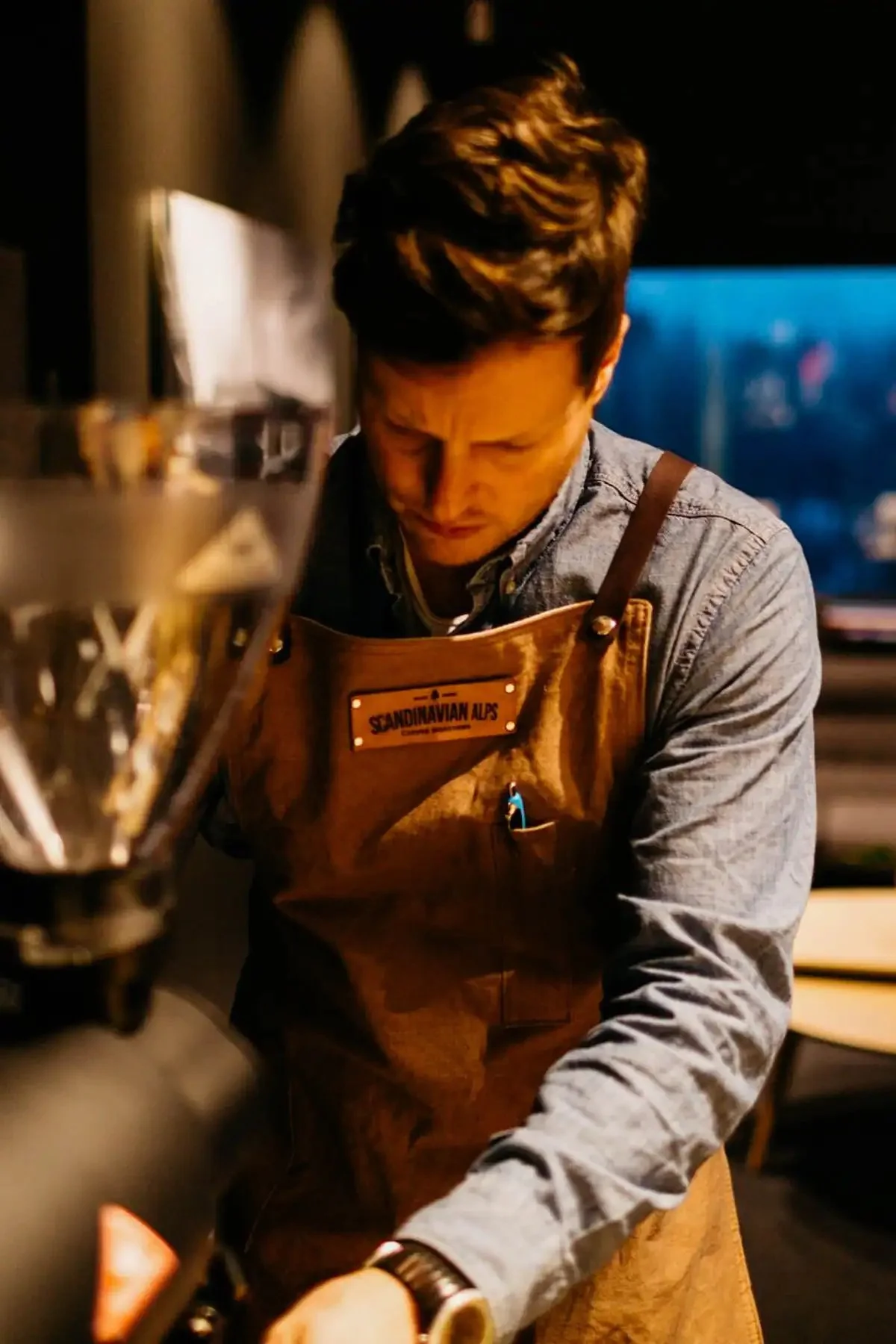
This project started because we have always been passionate about skiing and coffee. The main source of our inspiration came from our late grandfather who helped introduce us to skiing in the Alps and amazing coffee in his home city of Vienna, Austria. Today we have combined these two passions to make great artisanal coffee in one of the most beautiful places in the world, Hemsedal, Norway, "The Scandinavian Alps".
Adrian Seligman
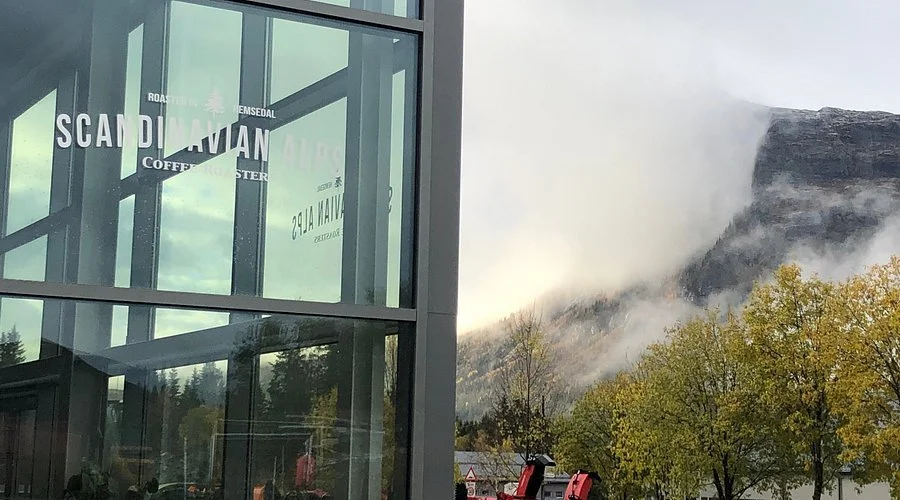
We truly believe your surroundings help shape who you are, and who you want to become in life. We want to share our love for coffee and the outdoors, to help inspire others in their surroundings.
The goal is to seek out the finest specialty sustainable coffees from around the world, hand roast them with great attention and care to bring you a truly unique coffee experience every time.
Get the coffee here: https://www.scandinavianalpscoffee.com
Instagram: @scandinavianapls2.0
René Méndez
COUNTRY: Guatemala
FARM/COOP/STATION: Finca Jolimex
VARIETIES: Caturra
PROCESSING: Washed
ALTITUDE: 1550 MASL
OWNER: René Méndez
SUBREGION/TOWN: San Pedro Necta,
REGION: Huehuetenango
HARVEST MONTHS: September–April
FLAVOUR PROFILE: Cooked plum, cooked apple, and brown sugar with mild toffee flavours. Mellow juicy malic acidity and clean fruit-like sweetness.
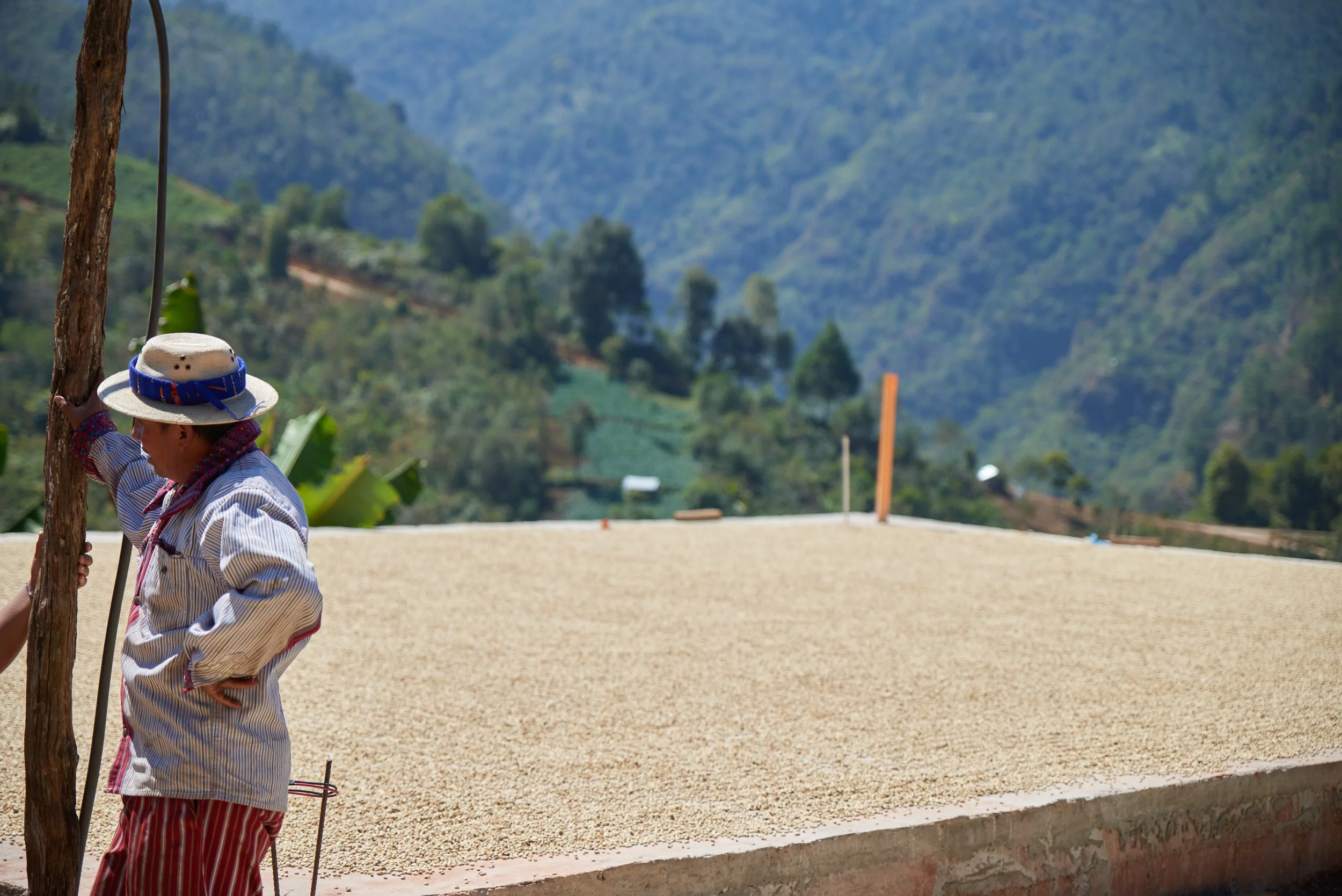
ABOUT THIS COFFEE
René Méndez owns Fince Jolimex in Huehuetenango. THis 1.3-hectare farm is fully planted with around 9,800 coffee trees consisting of Bourbon and Caturra. The coffee is picked and fermented for 36-48 hours before drying on patios for 6-8 days.
Caturra
A naturally occurring dwarf mutation of Bourbon that was discovered in Minas Gerais, Brazil (1915–1918) and later selected for cultivation (1937).
COFFEE IN GUATEMALA
Huehuetenango is located in Western Guatemala bordering Mexico. It is extremely diverse and known for producing some of the best coffees in Latin America due to its climate, altitude, water sources, and traditional varieties. A range of offerings come out of Huehuetenango, including chocolatey volume offerings and fruit-forward microlots.
A large percentage of Guatemala’s population, and therefore also the coffee sector, identify with one of more than 20 officially recognized indigenous groups. Most farmers are smallholders who are either working independently of one another, loosely associated by proximity and cultural ties, or formally affiliated in cooperative associations.
In 1960, coffee growers developed their own union, which has since become the national coffee institute Anacafé (Asosiación Nacional del Café), which is a research center, marketing agent, and financial organization that provides loans and offers support to growers throughout the various regions.
Starting in 2012 and lasting for several years, an outbreak of coffee-leaf rust proved a tremendous obstacle to coffee production in the country, reducing yields by as much as 25%, and causing the government to declare a state of emergency. Farmers attempted a combination of chemical and organic treatments, intensely targeted pruning, reduction of shade plants, and replacing susceptible varieties like Bourbon, Caturra, and Catuai with more leaf-rust-resistant ones. Anacafé has been working closely with World Coffee Research on variety trials and research that will hopefully result in future protection and prevention of similar outbreaks, as well as provide more productive harvests for the smallholder farmers.

Check out more coffees in our store:

Luke 12
KonkurRanse:
Del dine bilder og videoer av Langøras adventskalender på TikTok, Instagram og Facebook under #langørakaffe og @langorakaffe .
Vi trekker tre vinnere som får 6 måneders kaffeabonnement på nyåret.
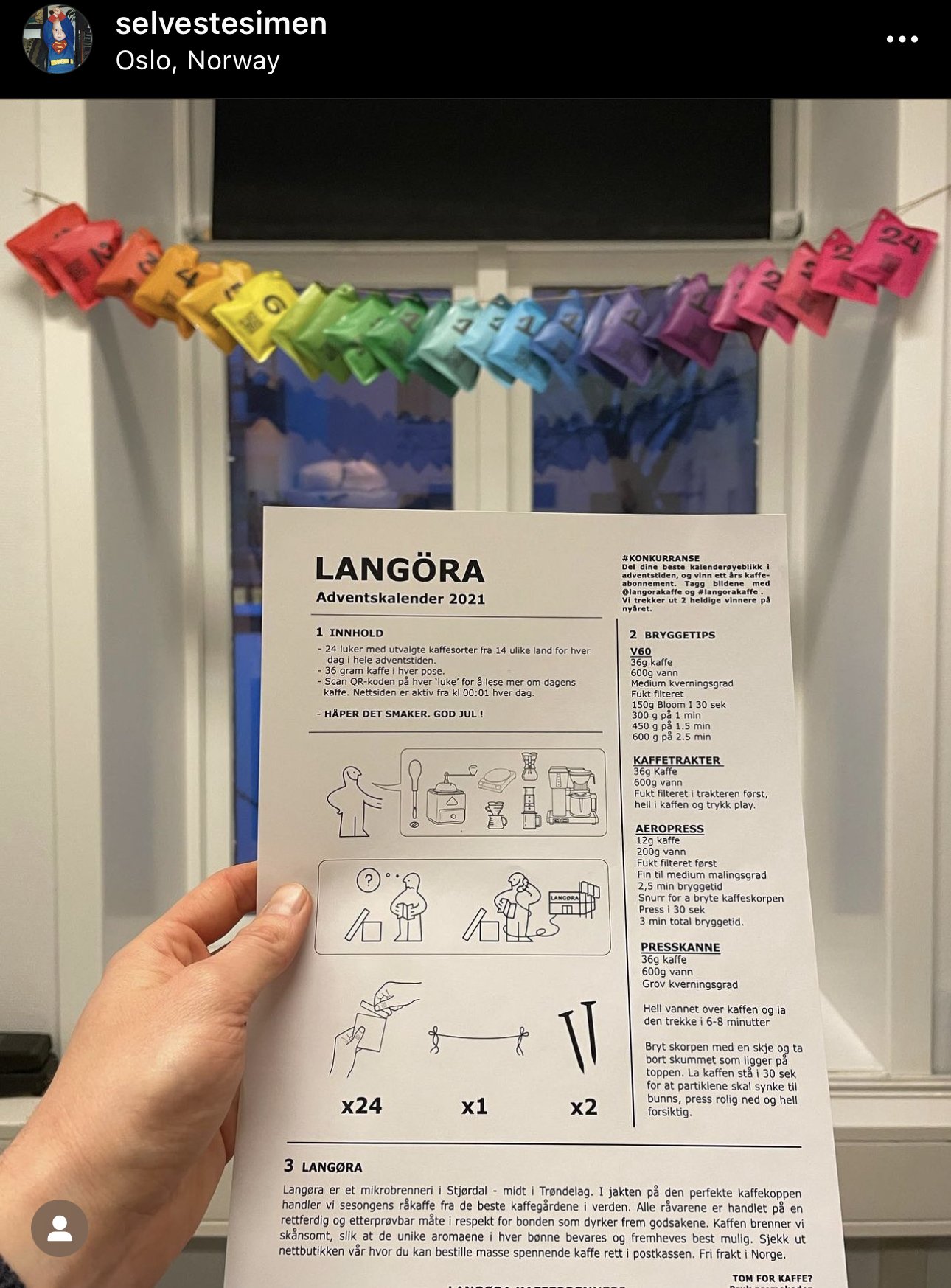





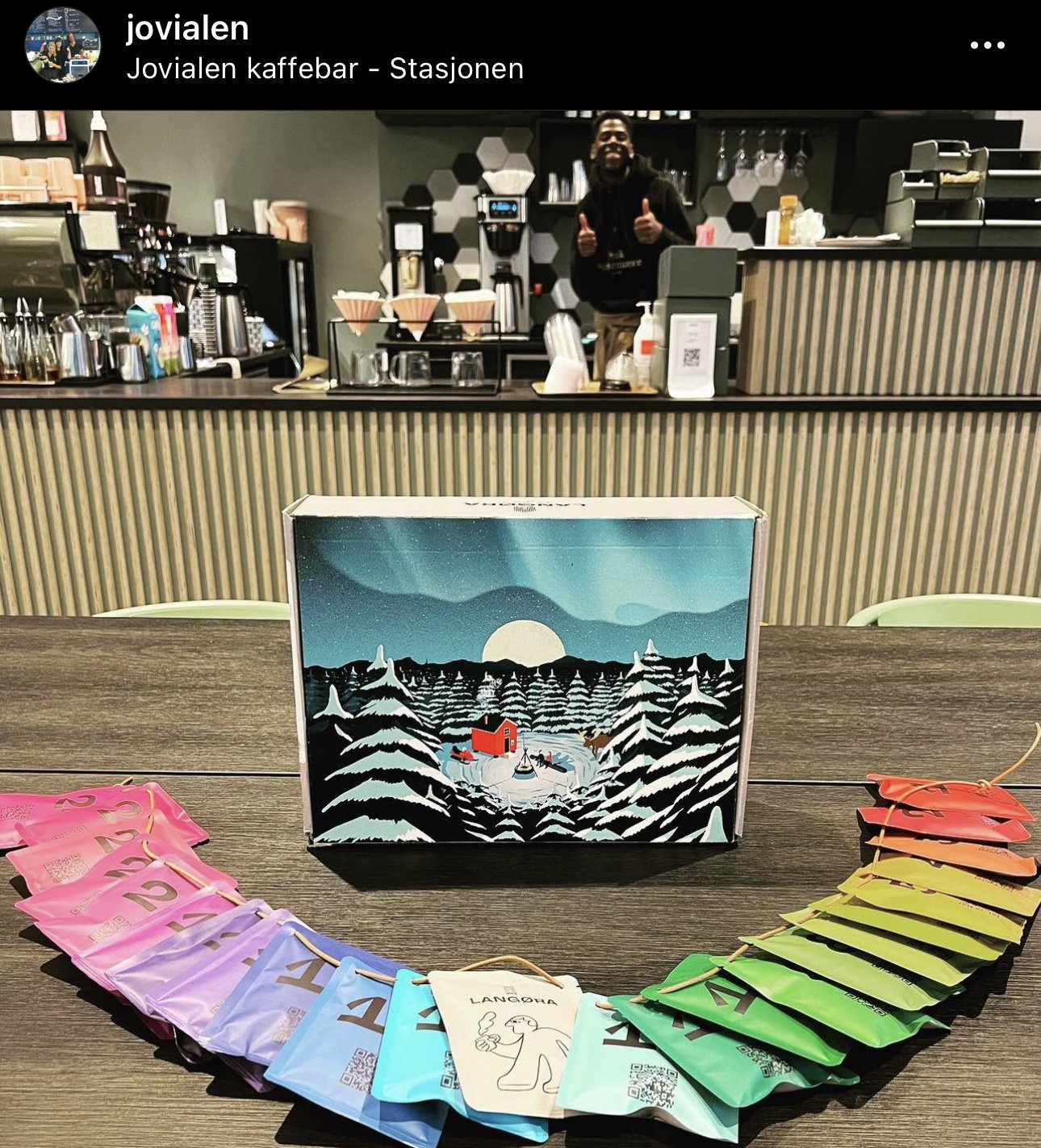
(ved å delta i konkurransen godtar du at vi kan bruke bildene i markedsføring)
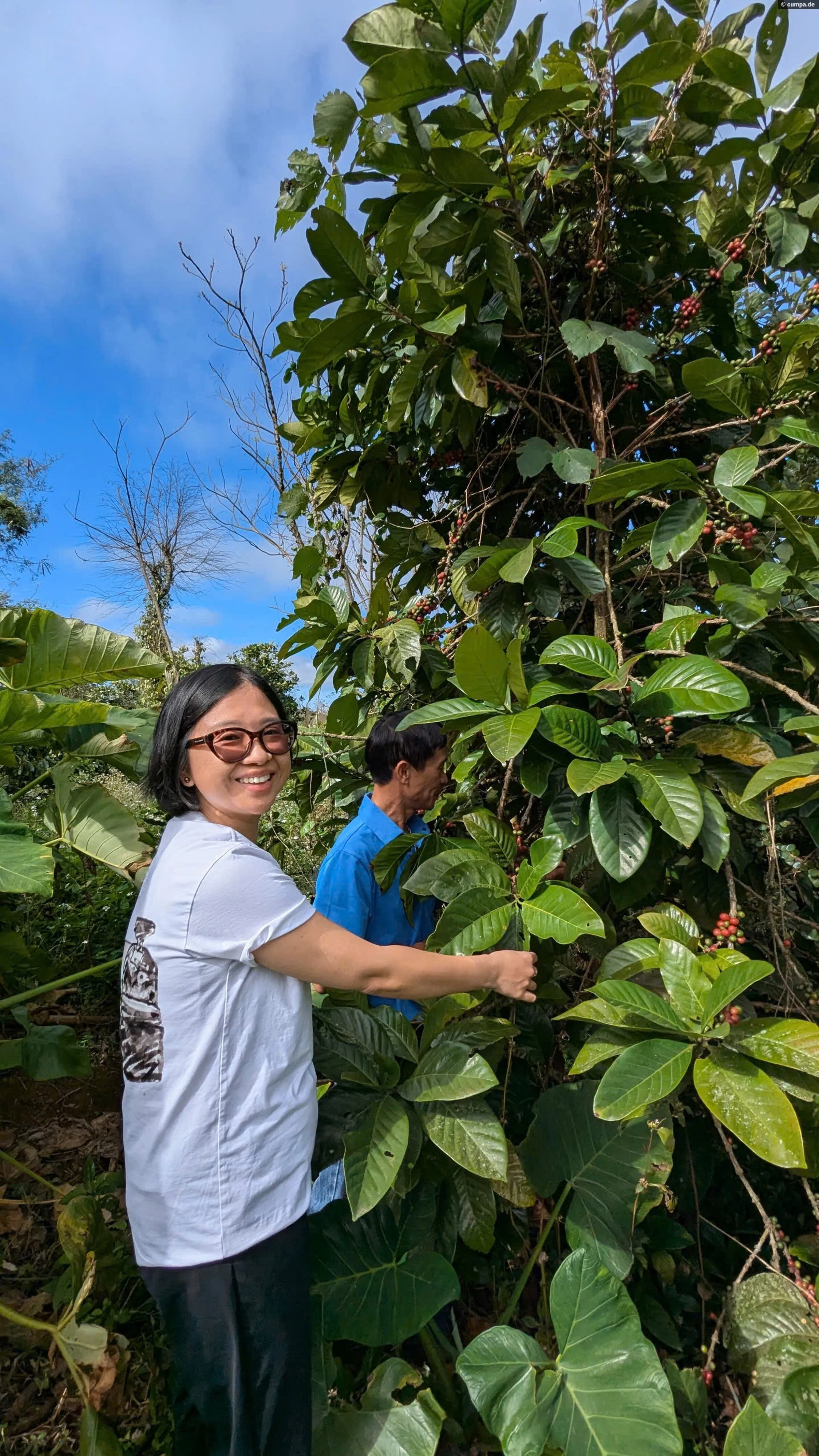
Lộc Rừng
COUNTRY: Vietnam
VARIETAL: Liberica / Excelsa
PROCESSING: anaerobic / natural
ALTITUDE: 600 m.a.s.l.
PRODUCER: 96B
SUBREGION/TOWN: Quang Tri
REGION: Saigon
HARVEST MONTHS: Apr. 2025 - May 2025
FLAVOUR NOTES: Very distinctive with an umami-like quality, black cherry candy, vanilla, ripe strawberries, roses, a little bit like diesel but in a pleasant way?
ABOUT THIS COFFEE
Coffea Liberica, discovered in 1872 in Sierra Leone and described before Canephora (Robusta), represents less than 1% of the global coffee market but stands out for its exceptional complexity. Native to Liberia and now grown mainly in Malaysia, the Philippines, and parts of Africa and Latin America, Liberica produces large trees reaching up to 15 meters with broad leaves and oversized cherries. It contains the highest sugar content of all coffee species, resulting in naturally sweet, full-bodied cups with aromas ranging from fruity and floral (jackfruit, mango, banana) to lactic and creamy (mascarpone, cream). The beans are yellowish to light green and, when lightly roasted, reveal notes of caramel, vanilla, and apple. Even small additions of Liberica—around 5%—can significantly enhance the sweetness and mouthfeel of blends.
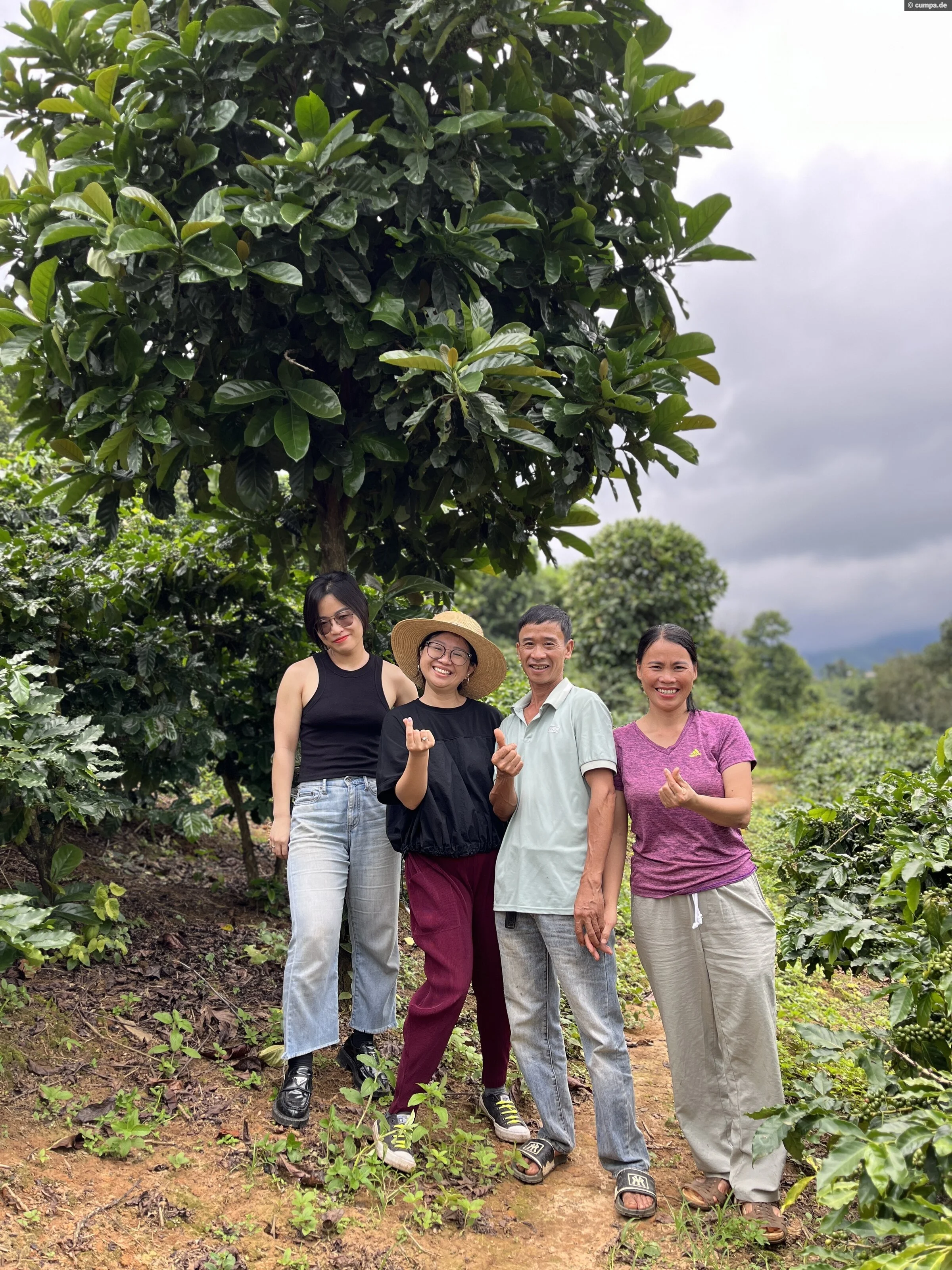
Cultivation and Harvest
This anaerobically processed natural is, according to recent findings, a farm blend of Coffea liberica and Coffea dewevrei (Excelsa). The cherries undergo dry fermentation for 120 hours in airtight PE bags and are then dried for 30 days on shaded raised beds.
Liberica trees require more space (about 5×5 m) and produce relatively low yields, needing around 10 kg of cherries to make 1 kg of green coffee. Despite this, they offer strong agricultural advantages: high resistance to nematodes and complete immunity to coffee rust (Hemileia vastatrix). These traits make Liberica an ideal rootstock for weaker varieties, contributing to notable hybrids such as India’s celebrated S. 795, valued for its sweetness and body. In cultivation, the species has a unique ecological role due to its sugar-rich cherries, which attract the coffee borer beetle (broca). Farmers have long used Liberica trees as natural pest traps—earning them nicknames like “Broca Hotel” or “sacrifice tree.” Today, limited harvesting occurs mainly on small estates, such as Badra and Palthope in India, where renewed interest aims to revive and study the species.
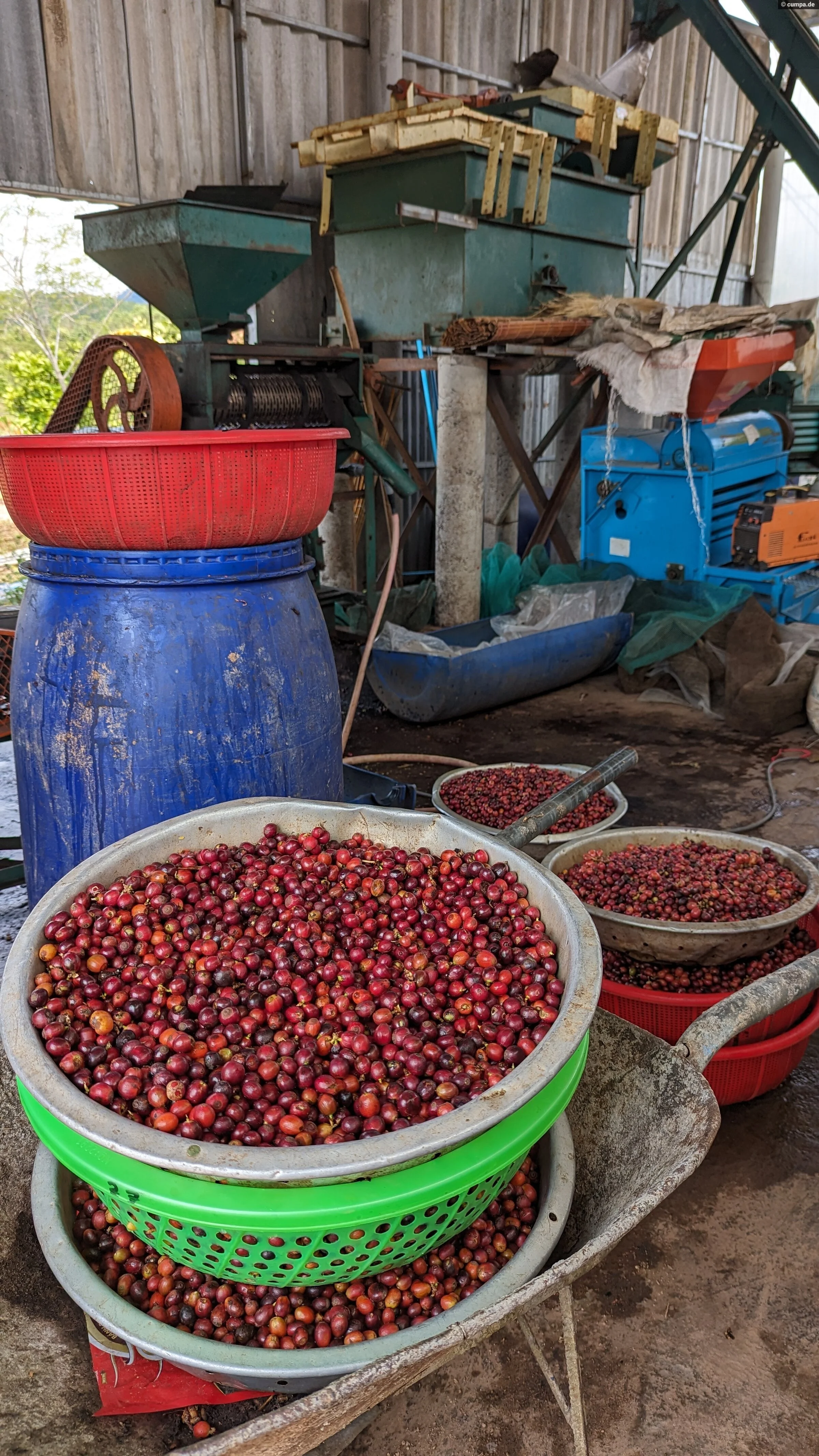
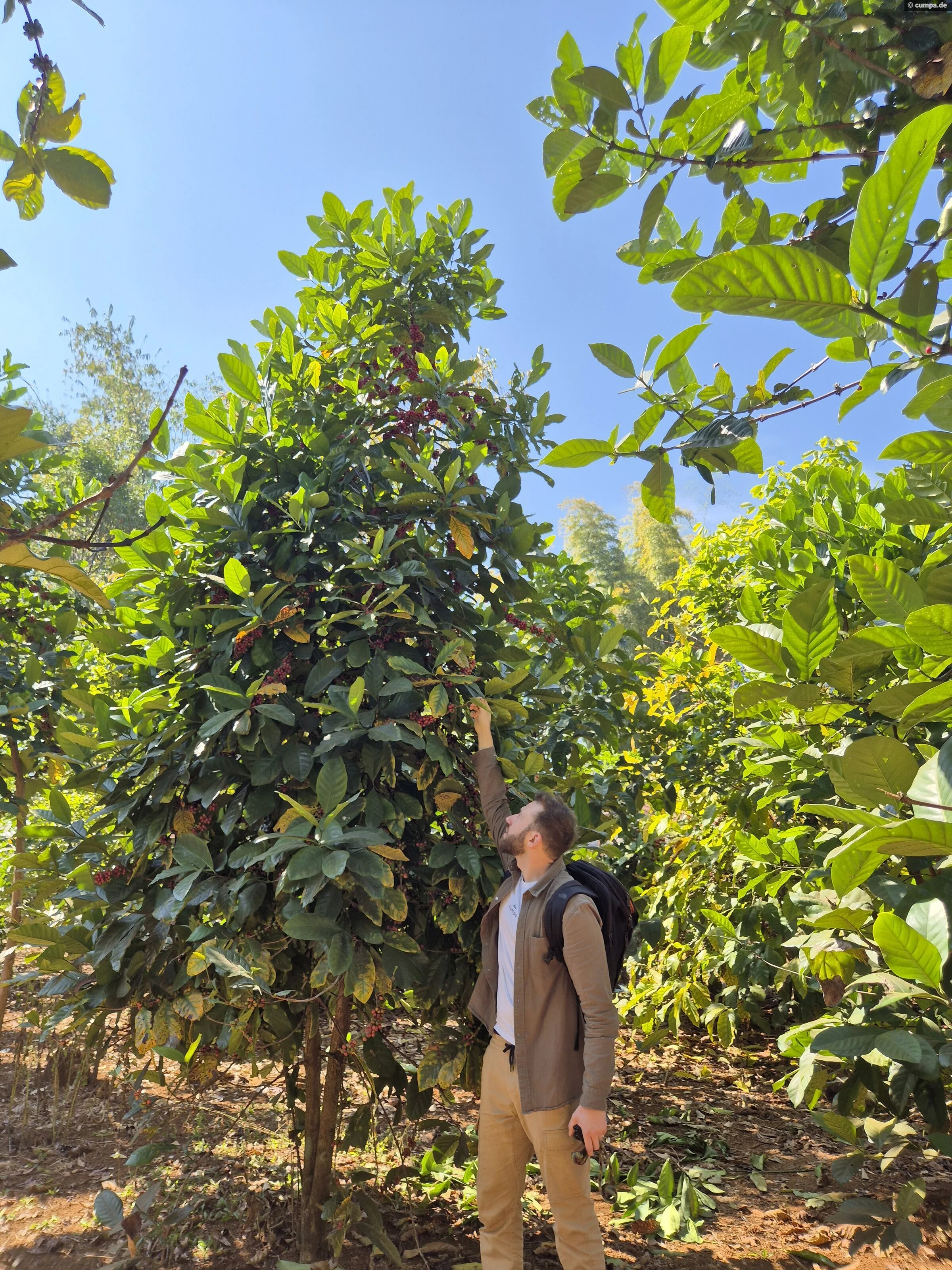
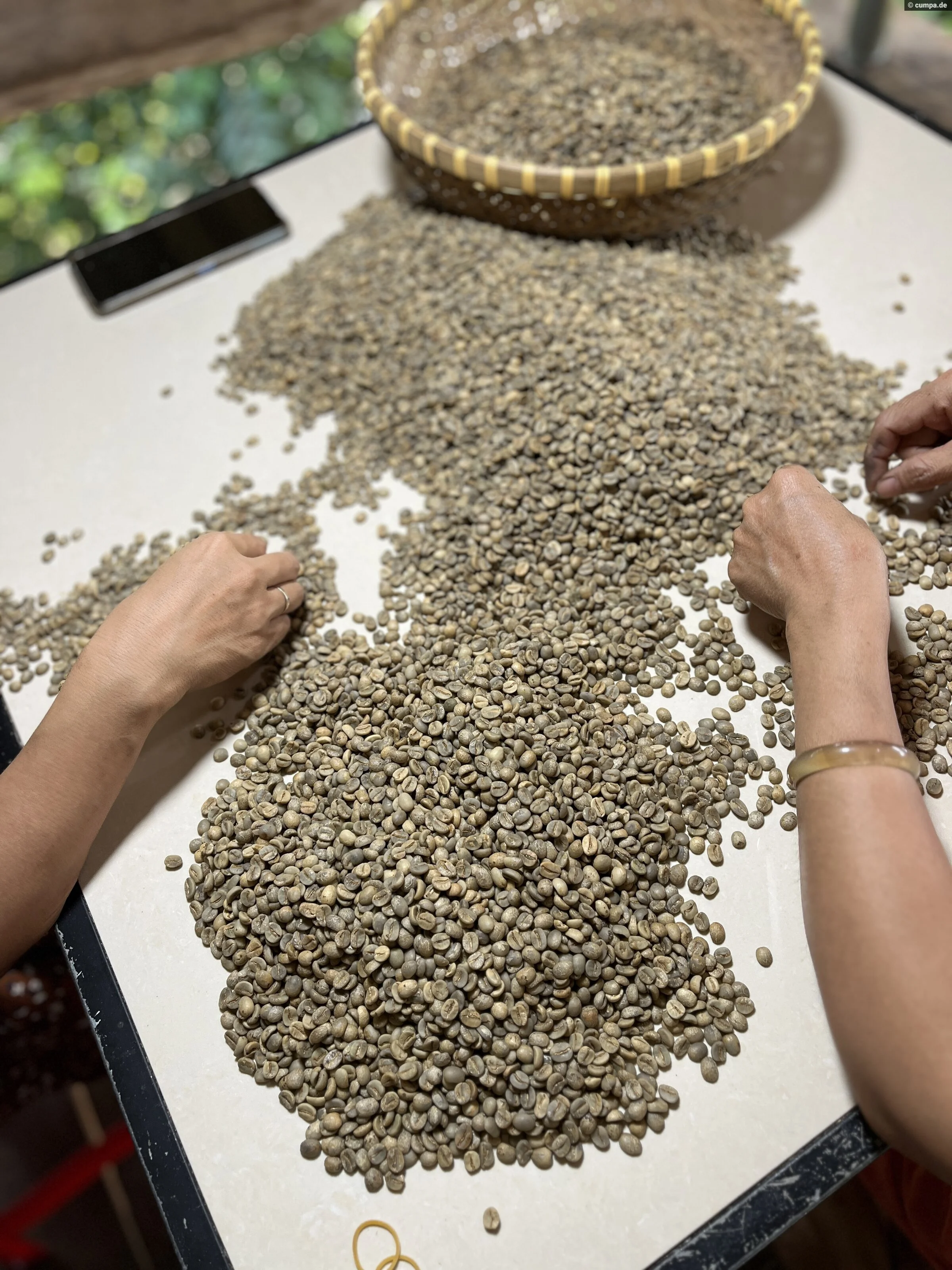
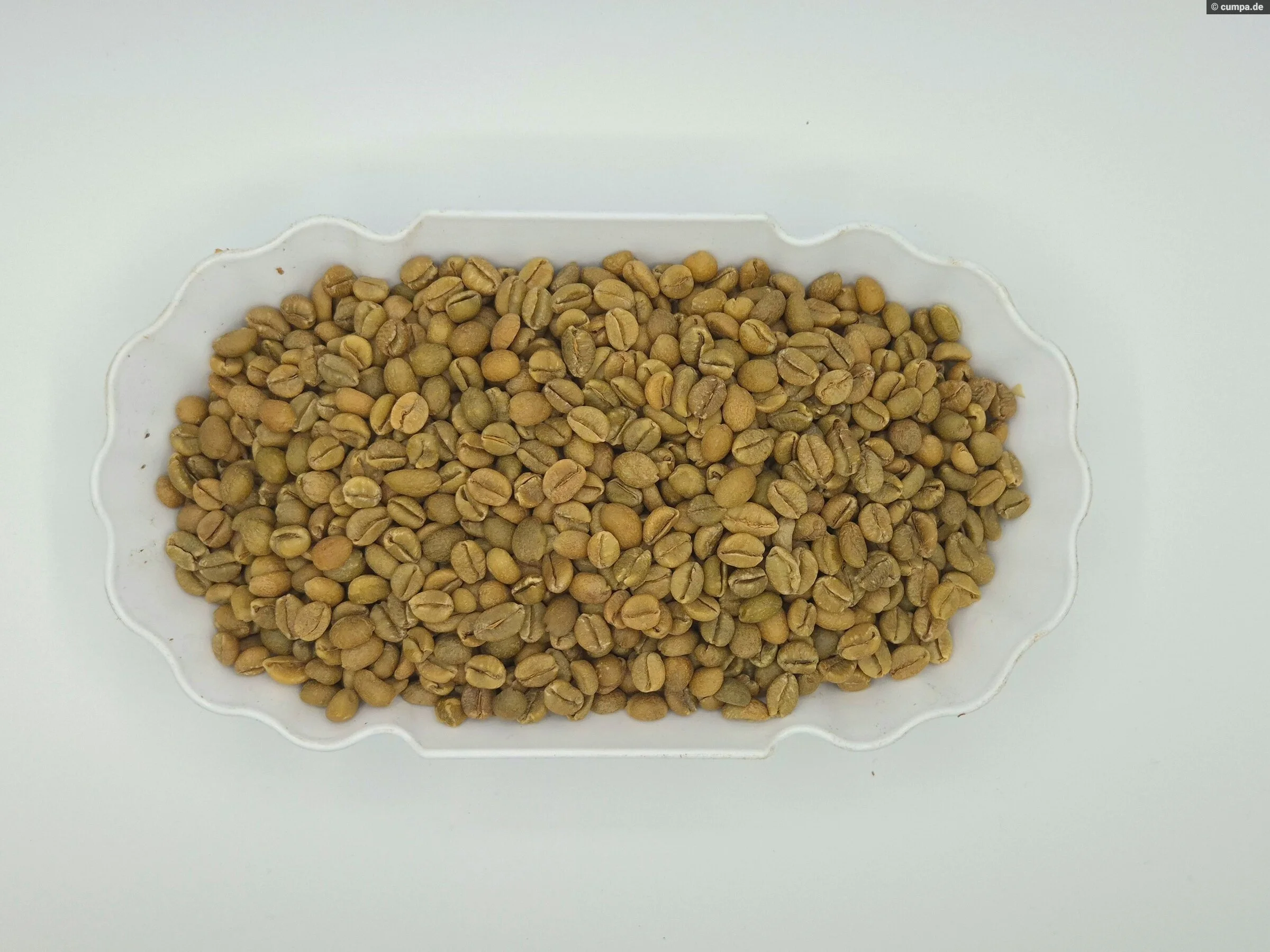
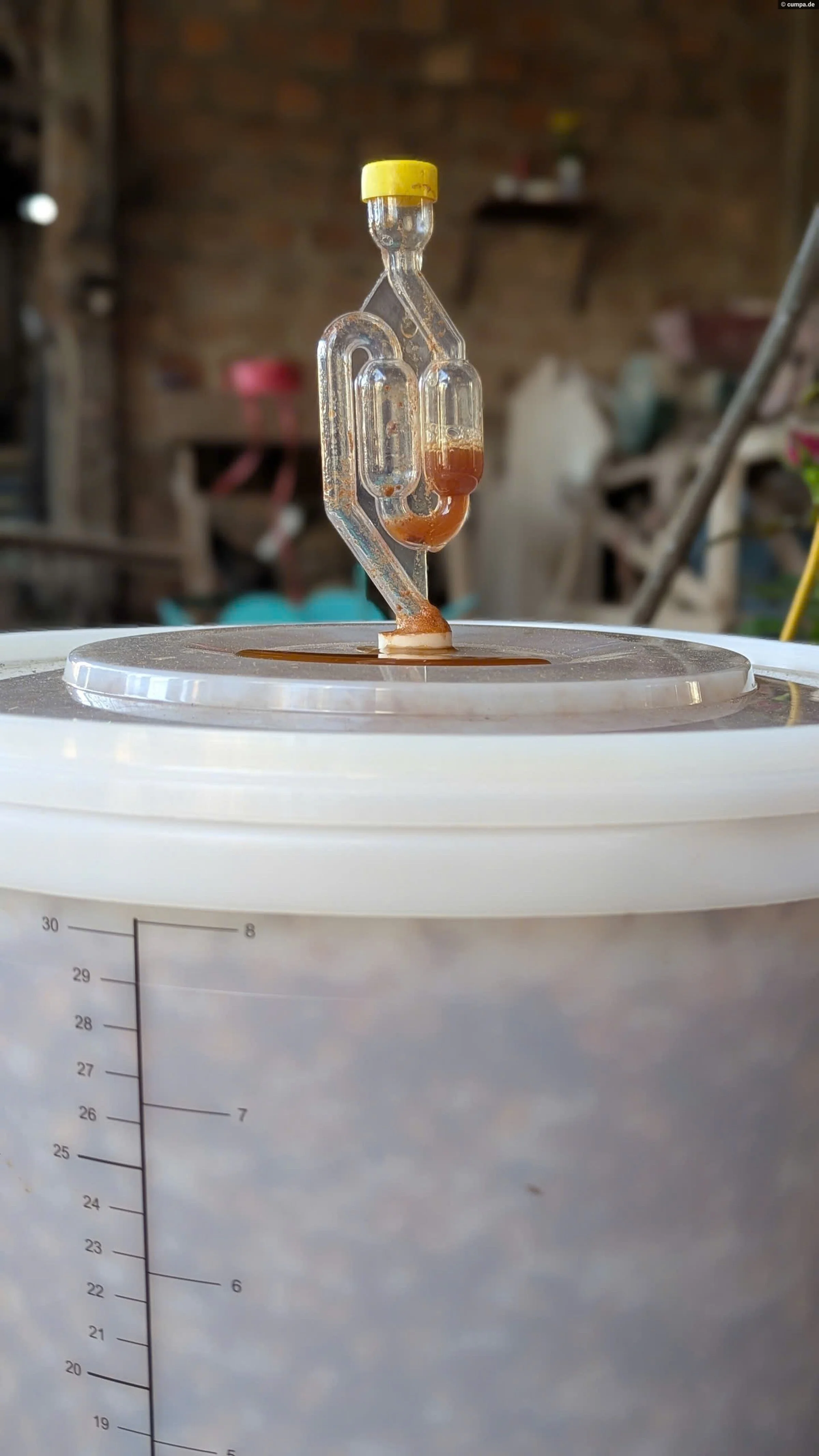
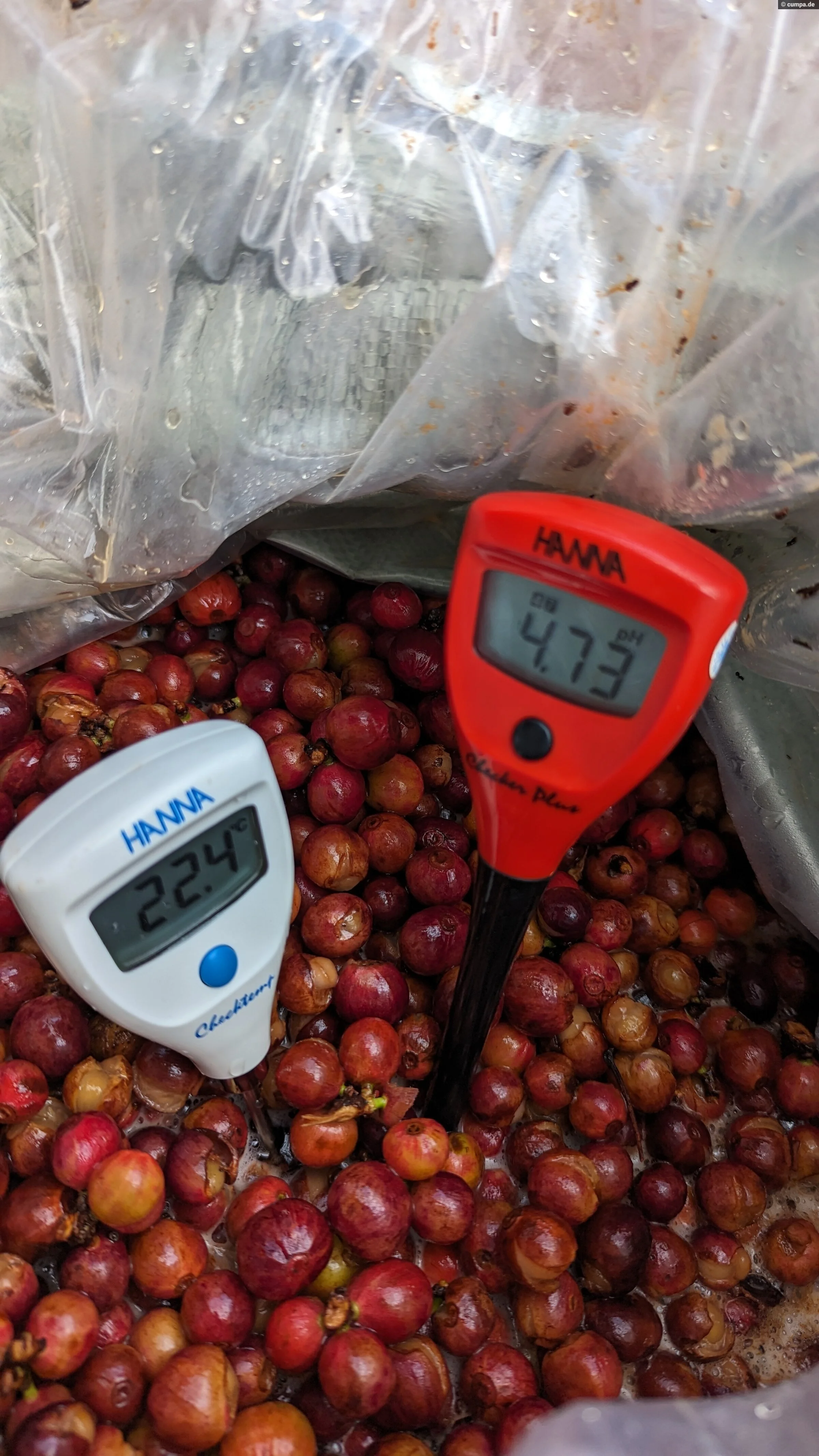
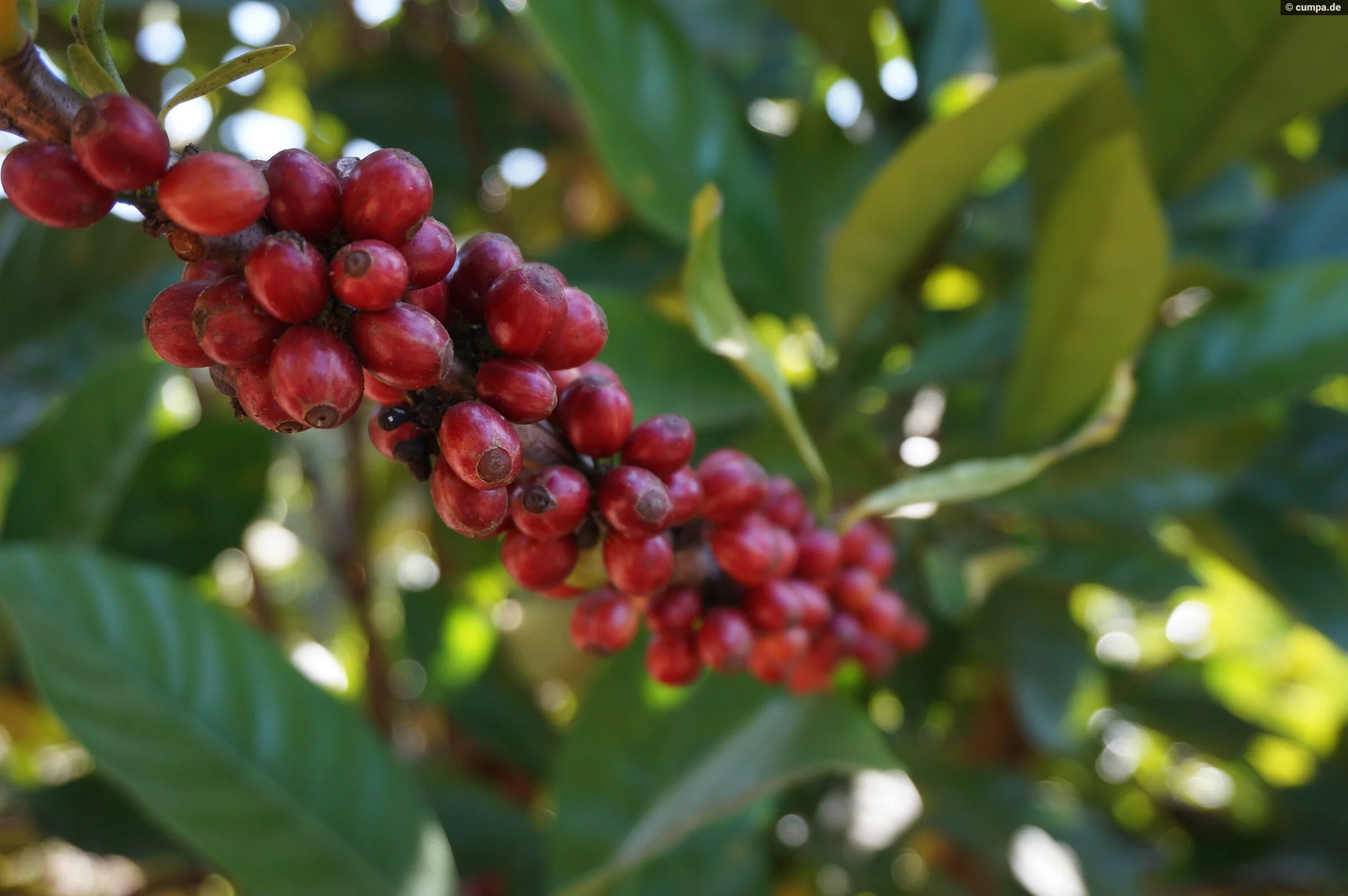
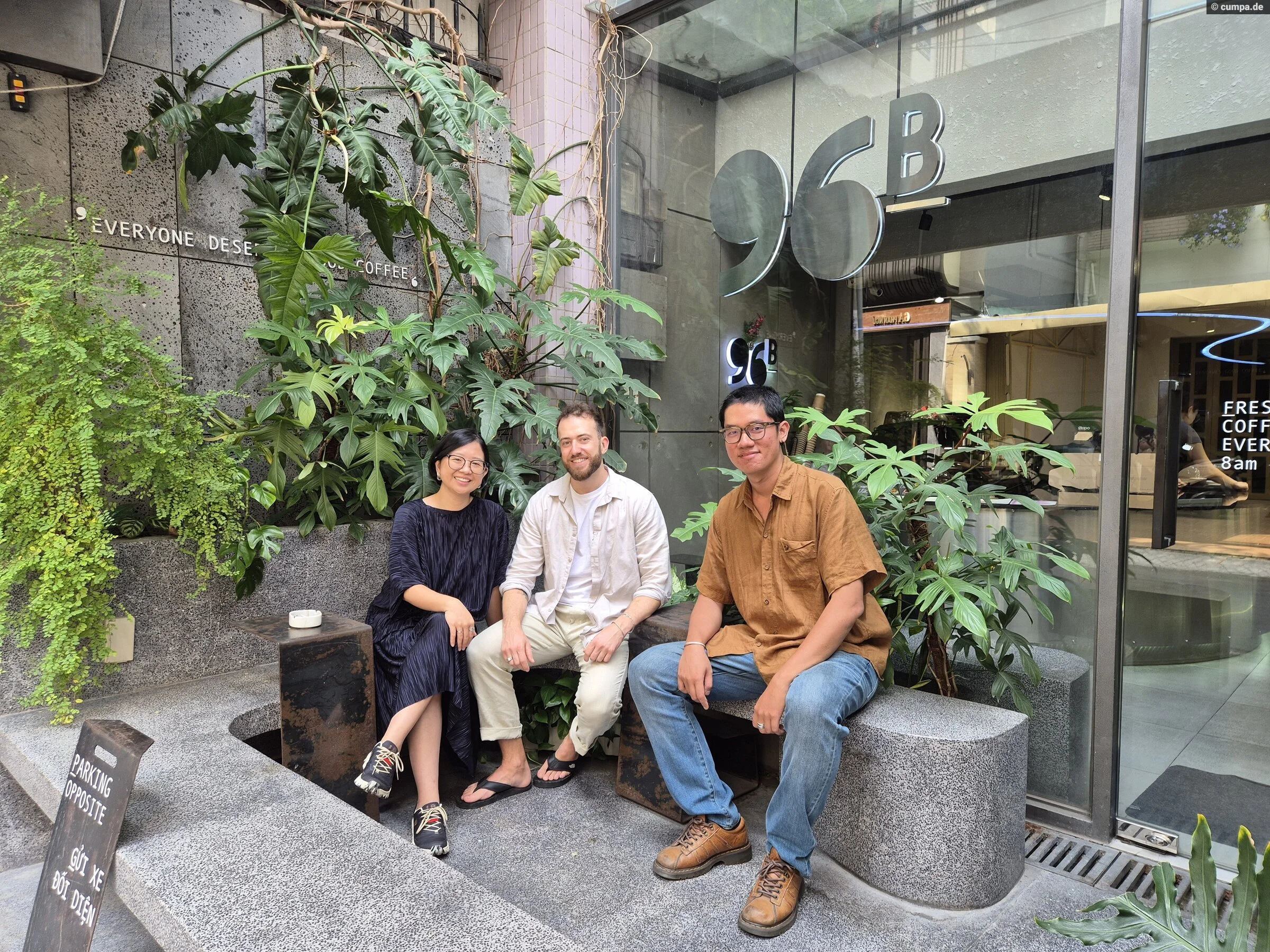
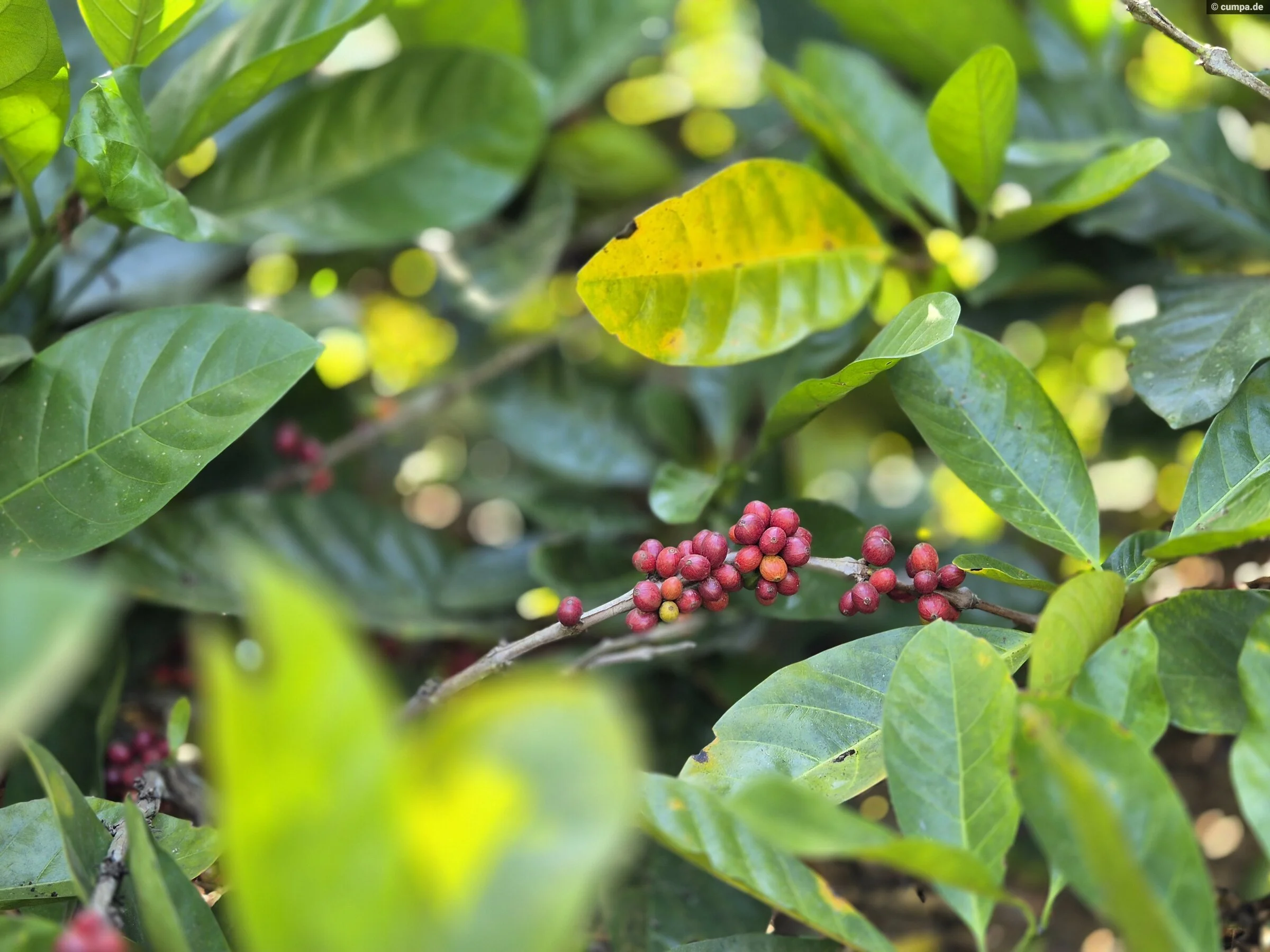
COFFEE IN VIETNAM
PLACE IN WORLD PRODUCTION: #2
AVERAGE ANNUAL PRODUCTION:
30,850,000 (in 60kg bags)
COMMON ARABICA VARIETIES:
Catimor, with some Typica & Bourbon
KEY REGIONS:
Central Highlands (Lam Dong province) | North Vietnam (Son La, Dien Bien provinces)
HARVEST MONTHS:
Central Highlands: November - January | North Vietnam: October - January
Vietnam has a long, complex cultural history. There is evidence that early humans settled in the region at least 500,000 years ago, and the first Vietnamese states occurred nearly 5,000 years ago.
In the modern era, Vietnam was occupied by French troops during their first attack on Danang in 1858. Following this, as in so many other colonized countries, coffee came to Vietnam on the ships of French missionaries. The missionaries trialed different regions across Vietnam before determining that the Central Highlands were the best place to cultivate coffee. Interestingly enough, the first coffee planted in Vietnam was Arabica, not the Robusta that is so widely grown there today.
Robusta did not arrive in Vietnam until nearly 30 years later when, in 1908, the French brought Robusta, along with another variety, Excelsa, to the Central Highlands. Even after the arrival of Robusta, Vietnam did not immediately become the Robusta-producing giant that we know it to be today. The area under coffee cultivation continued to grow slowly.
In the 20th century, Vietnam suffered two decades of horrific violence and destruction (1955-1975) that left the country suffering for many years after the war had ceased. The Đổi Mới (Vietnamese for “Renovation”) reforms were launched by the government in 1986 in an effort to boost the country’s economy and world-wide standing. , These reforms broke from Vietnam’s previously insular politics. Importantly, the let Vietnam enter the global market and allowed private enterprise. They also allowed privatization of land, which presented an opportunity for increased agricultural productivity. The government also focused resources on investing in the coffee industry with the intention of making it a key cash crop. They initiated state-funded farms and encouraged households to grow coffee on their own lands. Unsurprisingly, production has grown astronomically since the introduction of the reforms.
Another area of focus has been continued investment in research. A number of research institutions across Vietnam have focused on creating new hybrids and improving grafting techniques. As a result, farmers have access to a wide range of Robusta varieties to help them maintain healthy and disease-resistant rootstock.Today, with a total production of about 30 million bags, around 95% of coffee grown in Vietnam is Robusta. Vietnam has the highest yields globally with an output of 2.8 tons of coffee per hectares. This is a full ton higher than the second-highest yield of 1.4 tons per hectare in Brazil.
While Vietnam is 13th in global Arabica production volumes, when Robusta production is included, Vietnam ranks second in the world for total coffee volume. Only Brazil has a higher production volume.
Privately run farms compose 95% of coffee farms in Vietnam today. Estimates suggest that about 85% of total production area is cultivated by households. Of the area farmed by households, 63%—or approximately 650,000 families—are smallholders with less than one hectare. The remaining 5% are state-run but that number is gradually shrinking as the land is redistributed to small farmers.
Natural processing is the most common method, where cherry is typically sundried on plastic tarps. In the past, little attention was given to quality differentiation during post-harvest activities. This, however, is changing rapidly.
From the beginning of the Đổi Mới reforms to around the end of the International Coffee Agreement in 1989, the government purchased all coffee grown in Vietnam at set prices. Since all coffee received the same price, there was little incentive to improve cup quality or cultivate the more-difficult-to-grow Arabica.
Today, the growth of the specialty coffee industry, combined with low prices for commercial coffee, has sparked farmers’ interest in growing higher quality Robusta coffee and venturing into Arabica cultivation.
The main variety planted in Vietnam is Catimor, a hybrid of Caturra and Timor (itself an Arabica-Robusta hybrid). While Catimor boasts high yields and high disease-resistance, it’s not typically prized for its cup quality. So, many producers are turning to other varieties to produce more dynamic and higher-paying coffees.
Producers are also focusing on improving their selection and processing techniques. This focus on improvement begins at harvest time. Farmers and their workers have begun to employ more selective harvesting techniques, and better post-harvest quality controls are increasingly being implemented.
Other producers are venturing into experimental processing to increase harvest quality and, ultimately, sale price. Some producers are focusing on yeast or enzyme fermentations, others are using anaerobic fermentation. At this point, most of this experimentation is used on microlots. In the future, more farmers may turn to processing most or all of their harvest using advanced or experimental processes to help increase sale prices.

NB! VI STENGER NETTBUTIKKEN 17. DESEMBER. BESTILLINGER SOM KOMMER INN ETTER 17.12 BLIR IKKE SENDT UT FØR PÅ NYÅRET. GOD JUL!
Check out more coffees in our store:

Luke 11
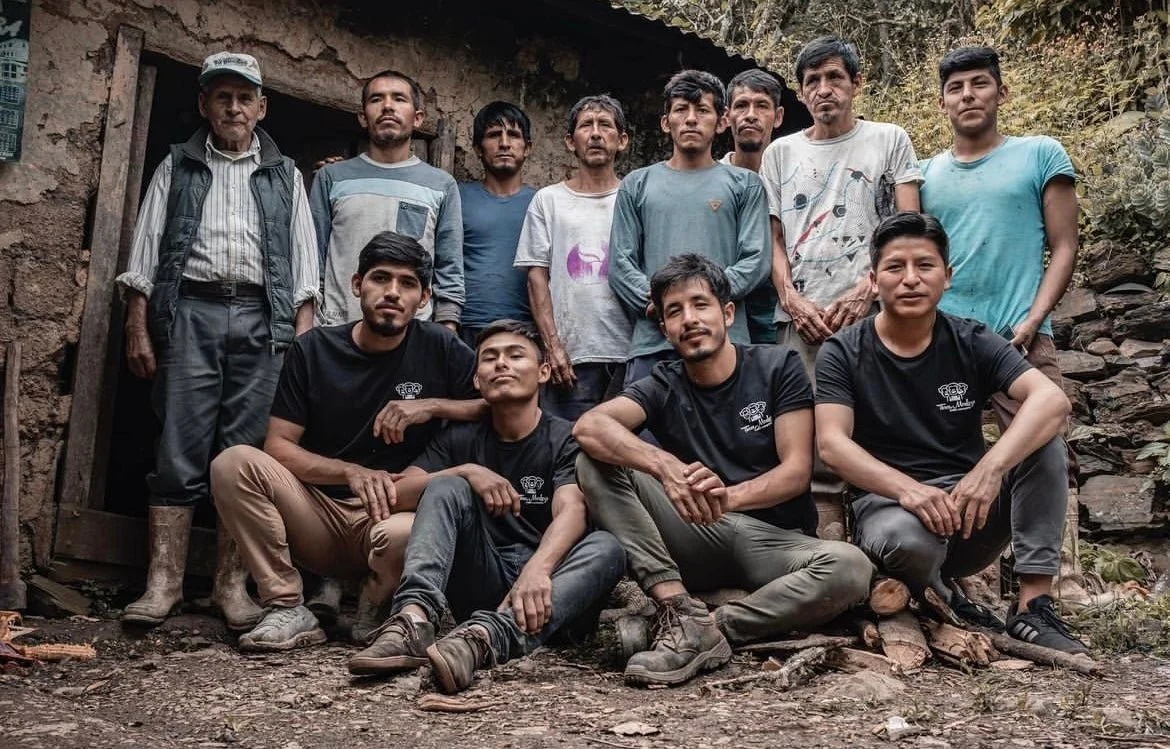
La Margarita
COUNTRY: Peru
FARM/COOP/STATION: Finca La Margarita
VARIETAL: Red Bourbon
PROCESSING: Fully washed
ALTITUDE: 1,750 to 2,050 meters above sea level
PRODUCER: Ronald Melgarejo
REGION: Cusco
FLAVOUR NOTES: Almond, blackberries, dried stonefruit, green apple, baking spices, white flowers
ABOUT THIS COFFEE
Ronald and his wife have been cultivating coffee for more than 20 years at Finca La Margarita. Their 3-hectare farm has sustained their livelihoods and helped them educate their children.
They grow mainly Bourbon and Typica at their 1,750 to 2,050 meters above sea level farm. They have also started growing Geisha and Mundo Novo.
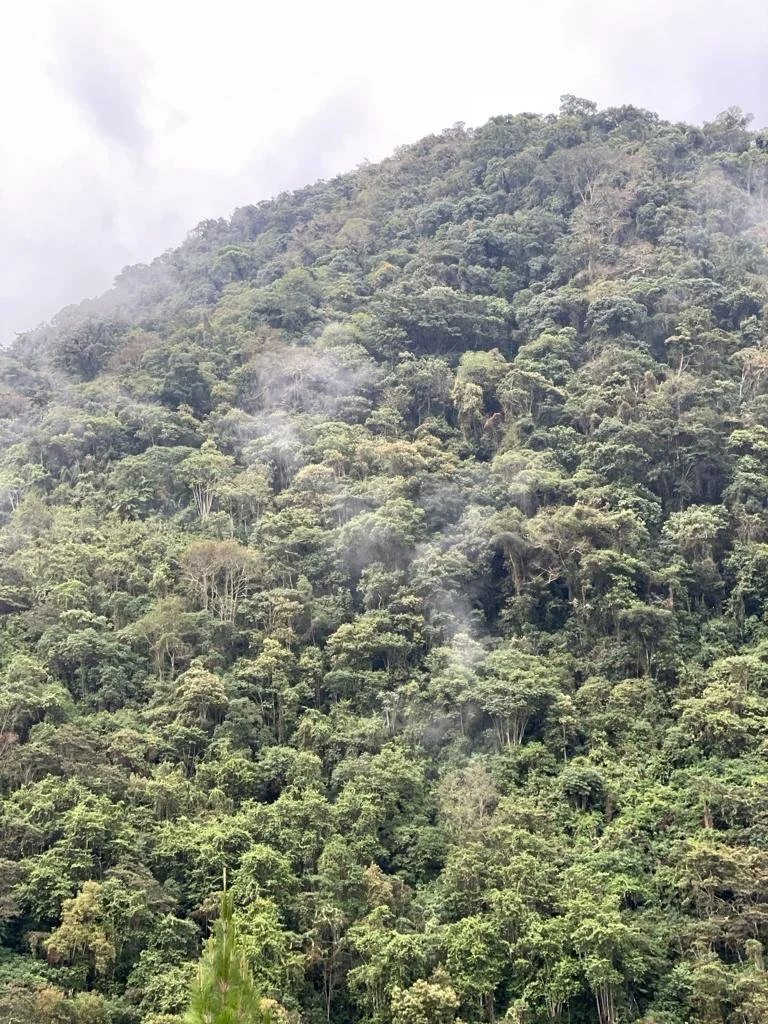
HARVEST AND PROCESS
Ronald and his wife selectively handpick ripe, red cherry and process it on their farm. They pulp cherry and ferments it anaerobically in plastic tanks for 3 days. Following fermentation, he washes parchment in clean water and lays it to dry on raised beds. He rakes parchment frequently to ensure even drying. It takes approximately 14 days for parchment to dry.
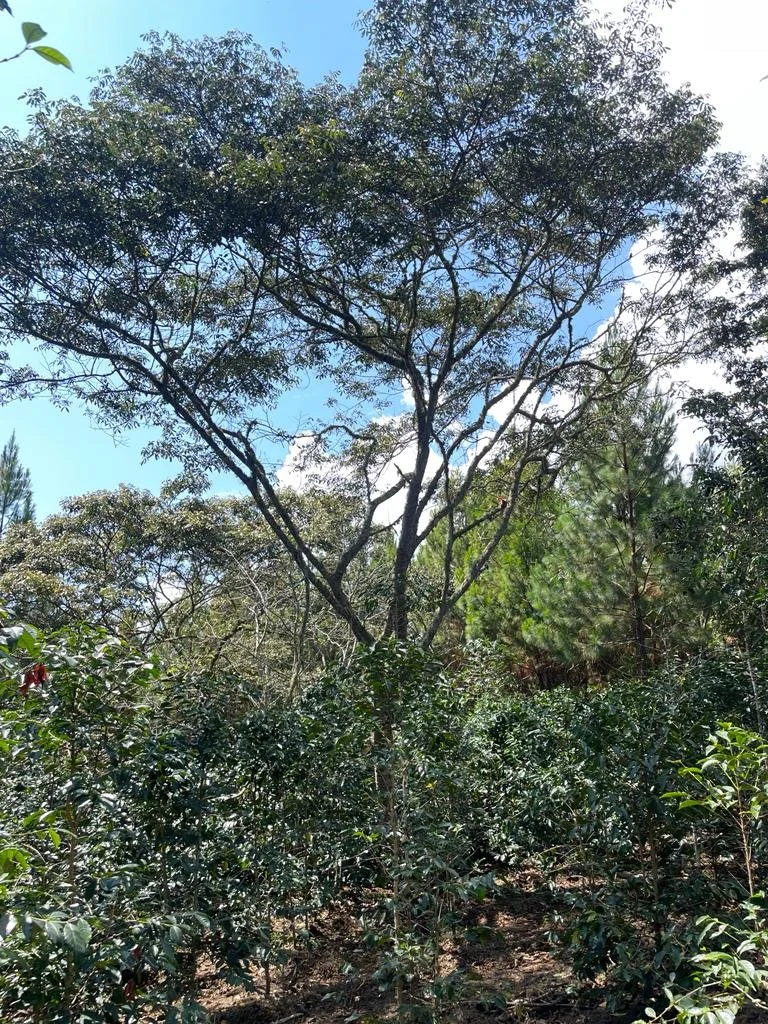
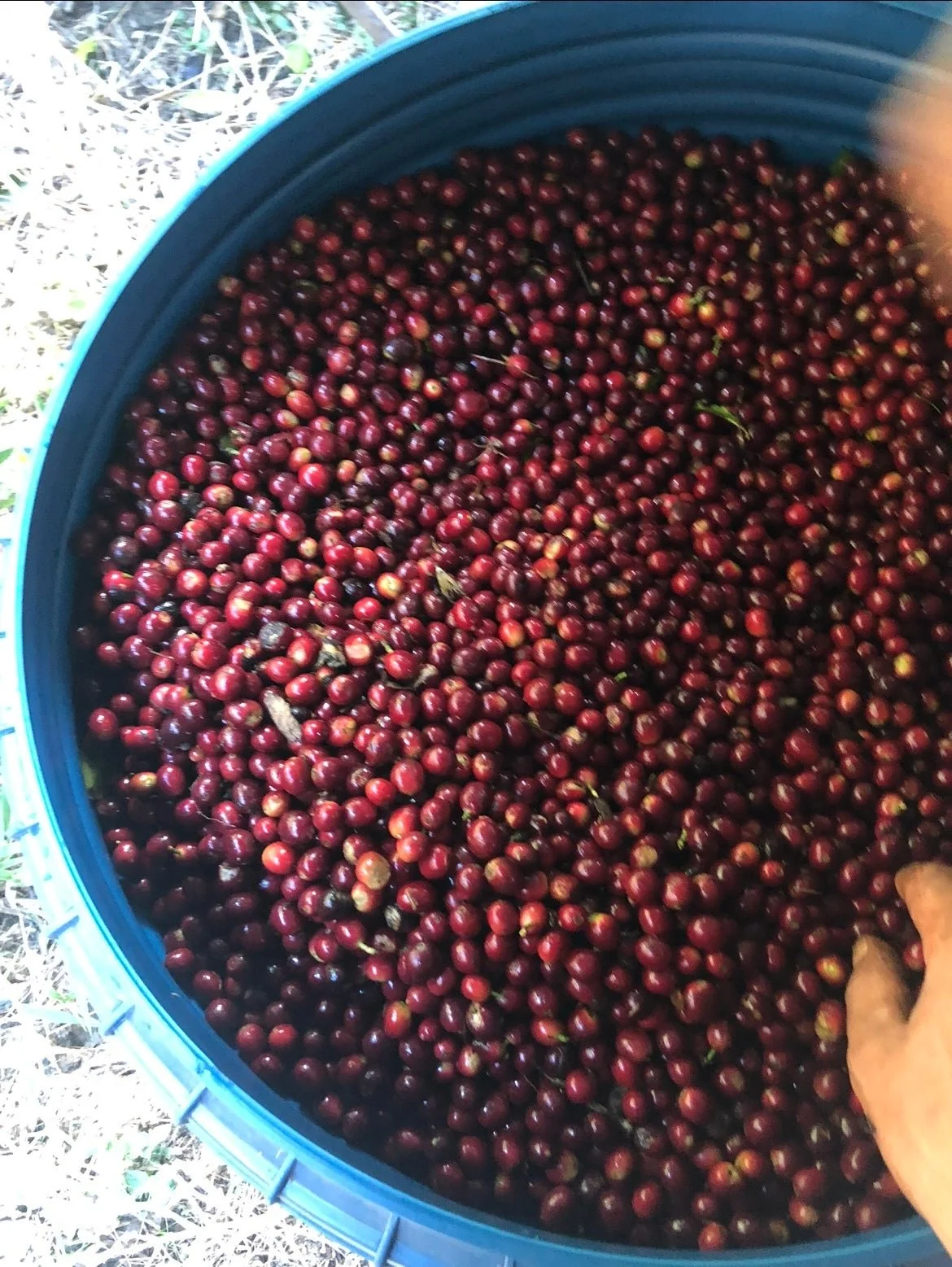
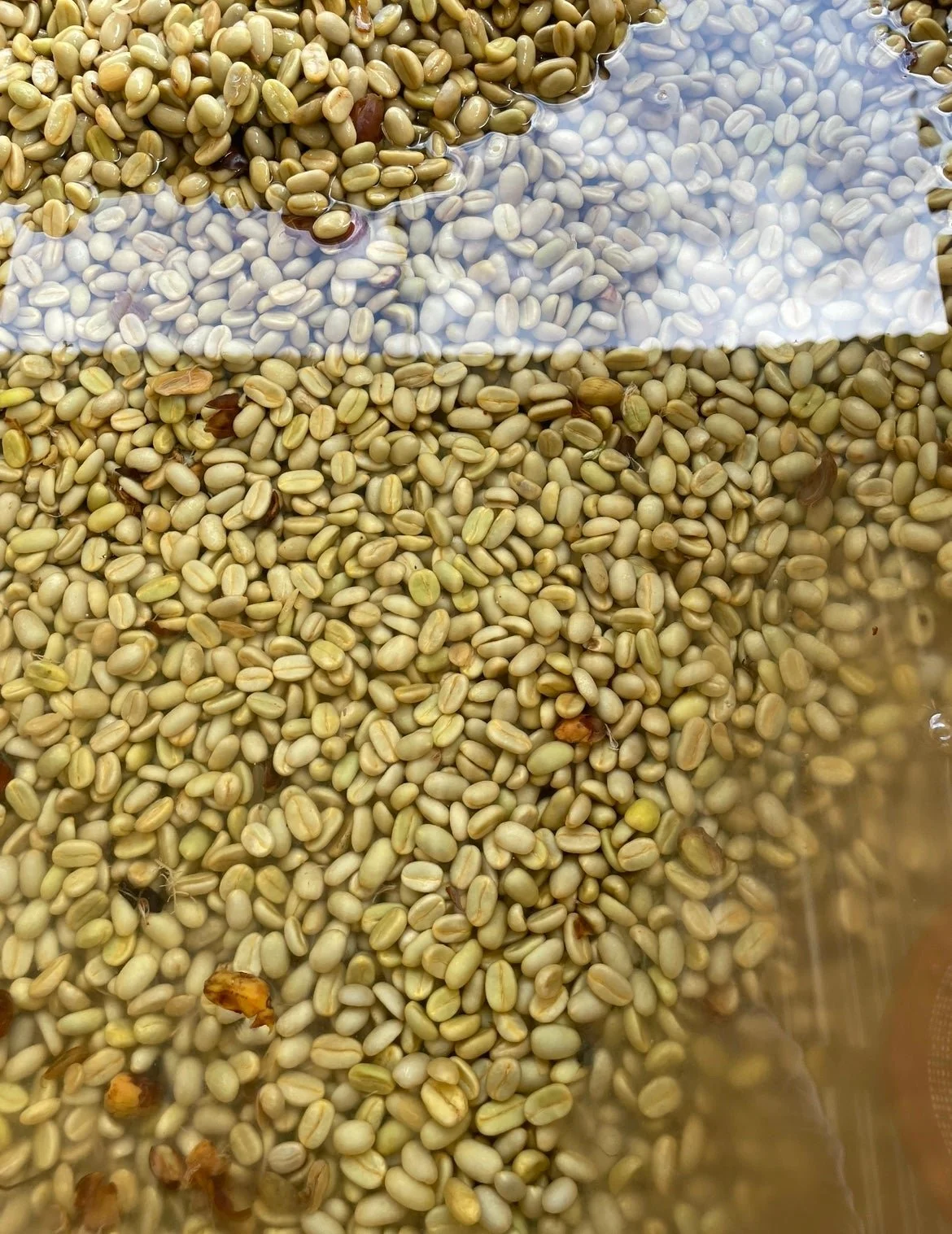
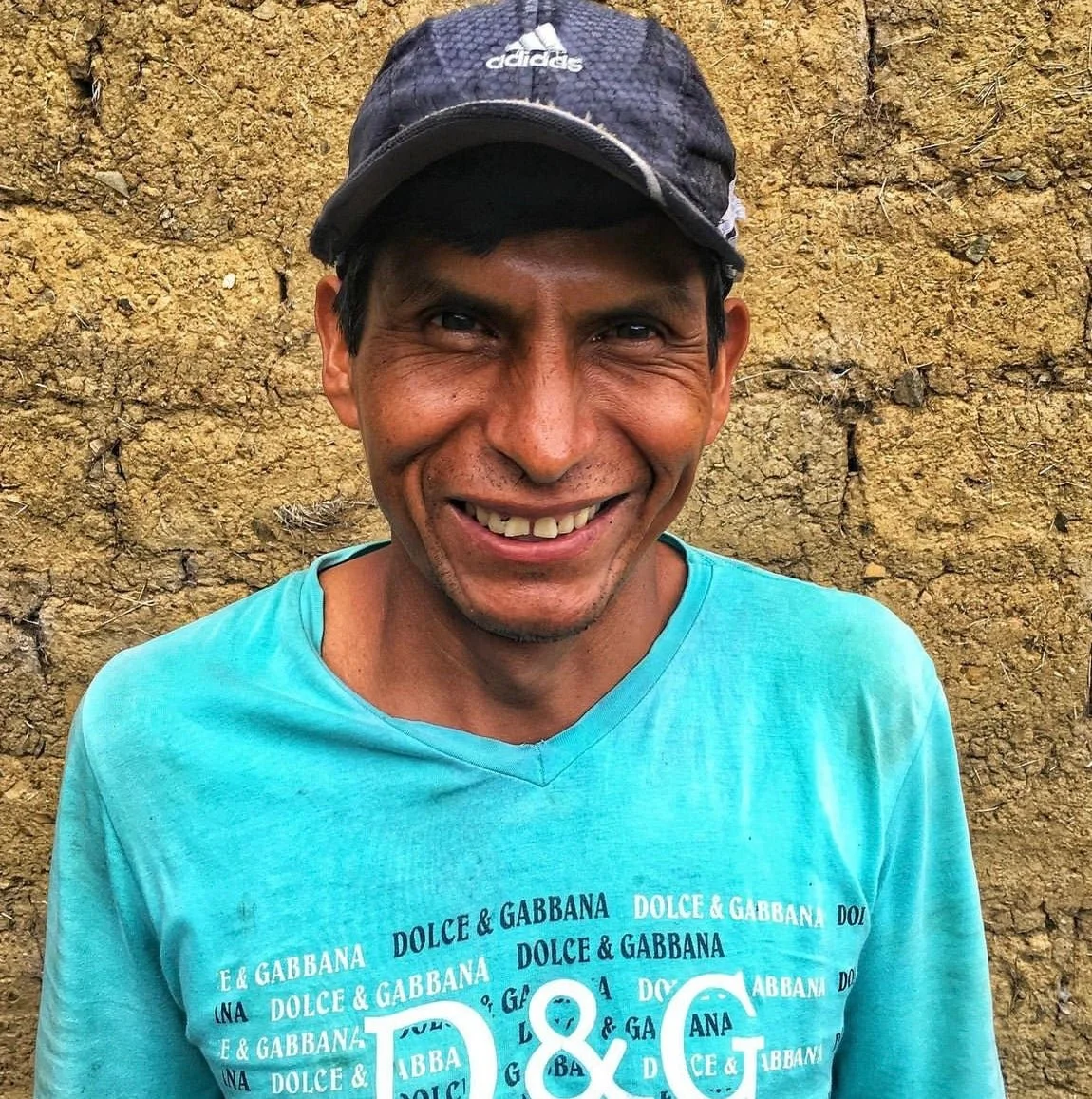
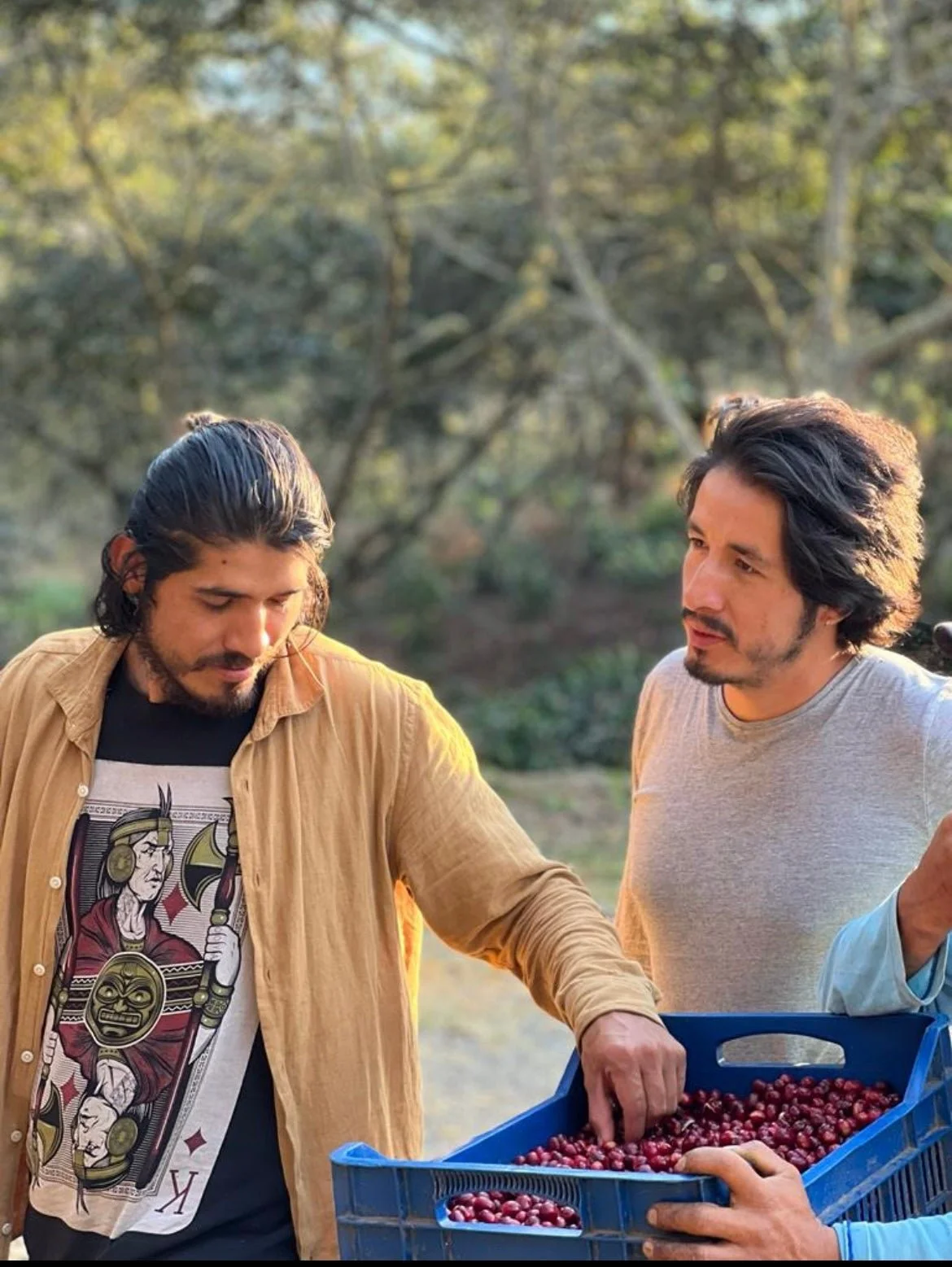

COFFEE IN PERU
Peru holds exceptional promise as a producer of high-quality coffees. The country is the largest exporter of organic Arabica coffee globally. With extremely high altitudes and fertile soils, the country’s smallholder farmers also produce some stunning specialty coffees.
Though coffee arrived in Peru in the 1700s, very little coffee was exported until the late 1800s. Until that point, most coffee produced in Peru was consumed locally. When coffee leaf rust hit Indonesia in the late 1800s, a country central to European coffee imports at the time, Europeans began searching elsewhere for their fix. Peru was a perfect option.
Between the late 1800s and the first World War, European interests invested significant resources into coffee production in Peru. However, with the advent of the two World Wars, England and other European powers became weakened and took a less colonialist perspective. When the British and other European land owners left, their land was purchased by the government and redistributed to locals. The Peruvian government repurchased the 2 million hectares previously granted to England and distributed the lands to thousands of local farmers. Many of these farmers later grew coffee on the lands they received.
Today, Peruvian coffee growers are overwhelmingly small scale. Farmers in Peru usually process their coffee on their own farms. Most coffee is Fully washed. Cherry is usually pulped, fermented and dried in the sun on raised beds or drying sheds. Drying greenhouses and parabolic beds are becoming more common as farmers pivot towards specialty markets.
After drying, coffee will then be sold in parchment to the cooperative. Producers who are not members of a cooperative will usually sell to a middleman.
The remoteness of farms combined with their small size means that producers need either middlemen or cooperatives to help get their coffee to market. Cooperative membership protects farmers greatly from exploitation and can make a huge difference to income from coffee. Nonetheless, currently only around 15-25% of smallholder farmers have joined a coop group.

Check out more coffees in our store:

Luke 10
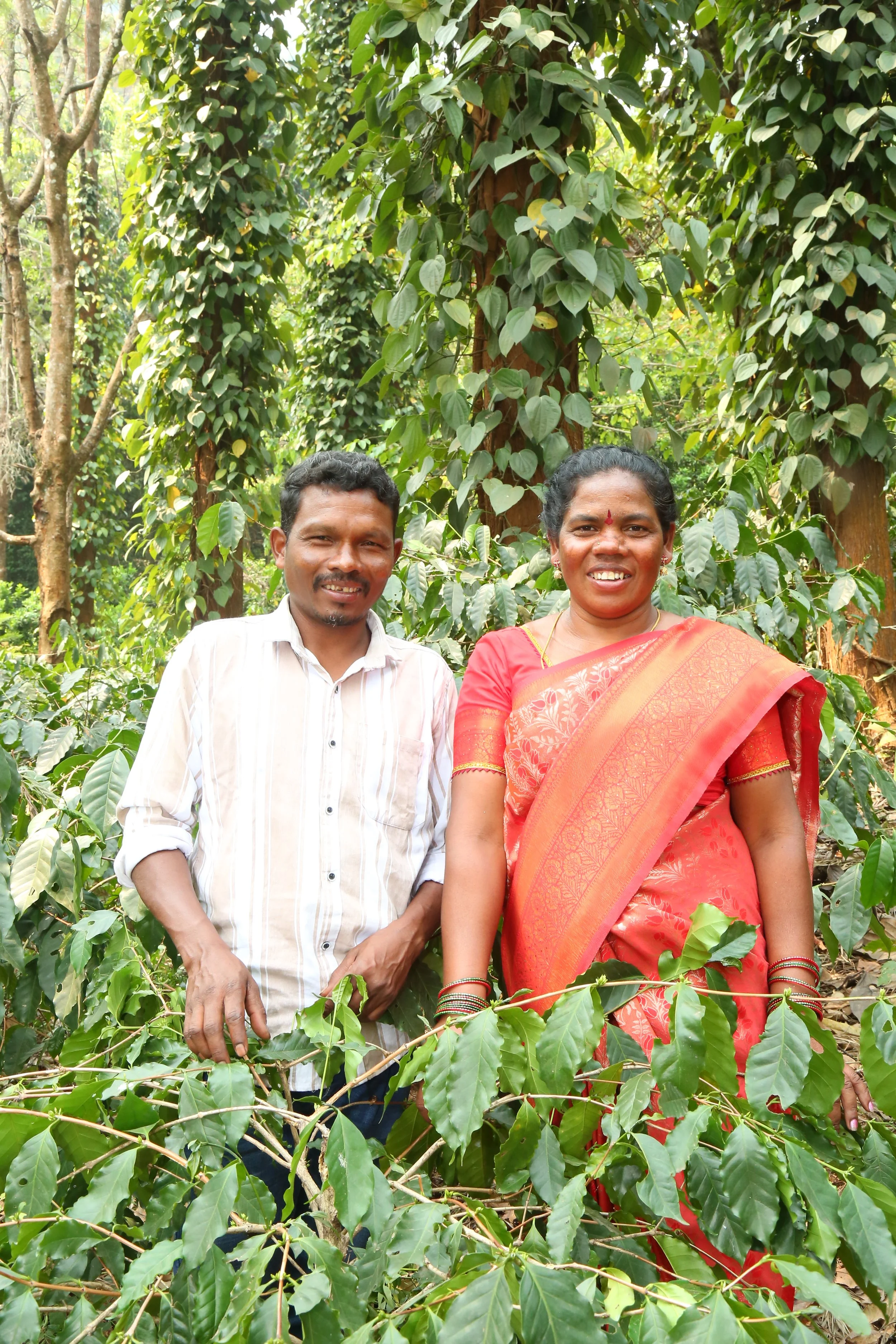
Korra Mathyaraju
COUNTRY: India
VARIETAL: S9
PROCESSING: Natural
ALTITUDE: 925 meters above sea level
PRODUCER: Korra Mathyaraju
REGION: Araku
FLAVOUR NOTES: Red berries, winegums, sweet orange, black tea, pleasant yoghurt-like acidity, slightly alcoholic aftertaste
ABOUT THIS COFFEE
Seventeen years ago, Korra Mathyaraju and his wife began cultivating coffee on five acres of land. Like many smallholder farmers in the region, they were trapped in a cycle of exploitation by middlemen who dictated prices while pocketing most of the profits. The couple watched helplessly as their dreams of prosperity slipped further away. Partnering with Naandi six years ago brought in a significant shift. The quality of their produce improved, and Naandi's grade-specific allocation of fair prices adequately reflected the value of their efforts on the ground. The profits enabled this farmer couple to invest in their children's education, meet daily household needs, and most importantly, reinvest in their farm's future. "The grade-specific prices and transparent procurement system gave us the freedom we never thought was possible," the couple shares contently.
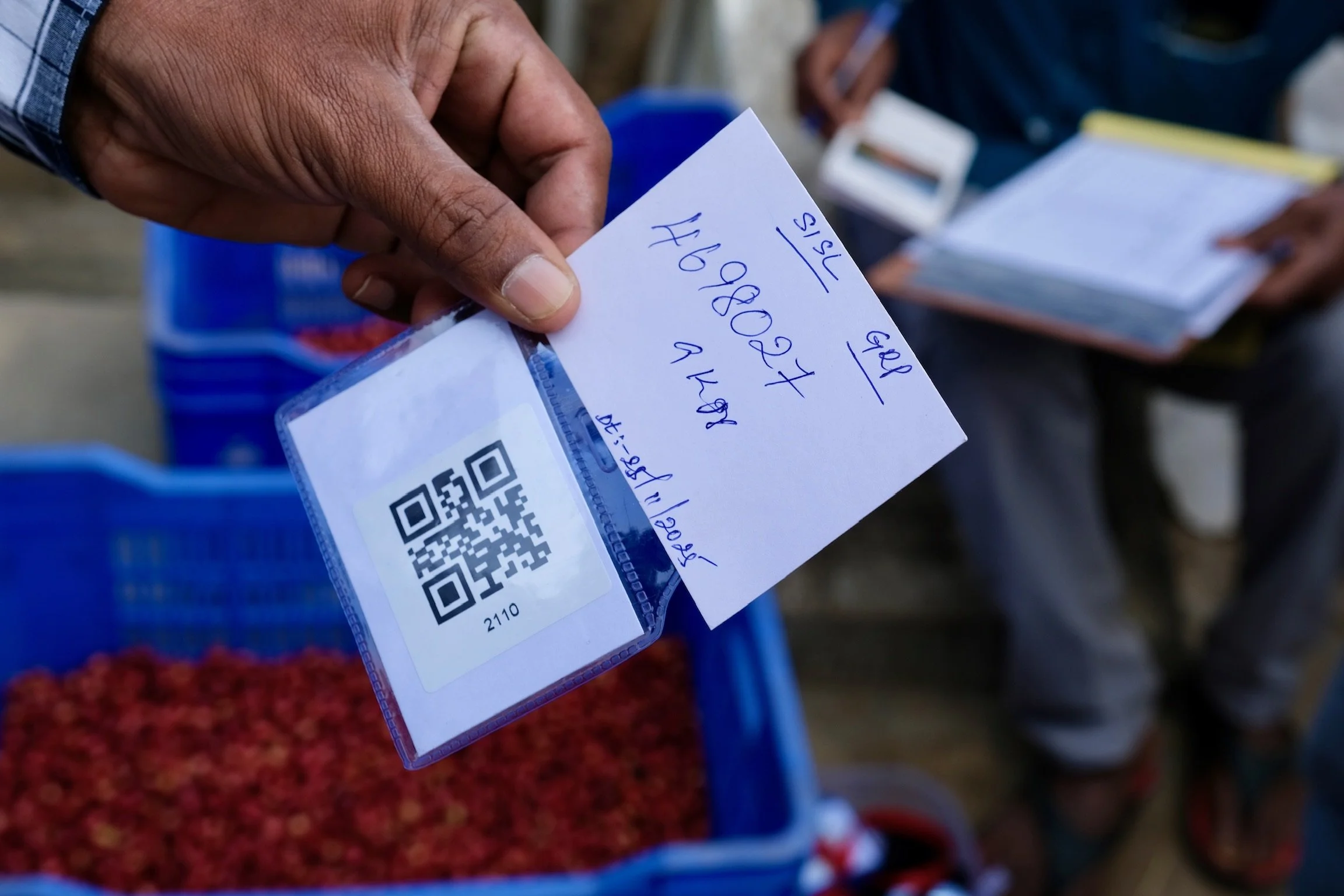
PROCESSING
Each day during harvest, the red trucks make their rounds through the valley, collecting freshly picked cherries from smallholder clusters.
Only fully ripe cherries — uniform in size, color, and Brix — are accepted at the collection points. Farmers are trained to pick selectively, often over multiple passes per tree, a practice uncommon in commodity coffee but now standard under SAMTFMACS guidelines. At the processing unit, cherries undergo floatation sorting in clean water tanks. Floaters (underripes, insect-damaged, or overfermented cherries) are removed immediately to ensure only top-grade fruit enters the pulping or fermentation stage.
2. Depending on the lot’s intended profile, cherries are either processed as:
- Fully washed
- Honey
- Natural
For washed coffees, cherries are pulped within hours of delivery using eco-pulpers that minimize water consumption. The mucilage-coated parchment is then fermented in concrete or tiled tanks for 12–24 hours, depending on temperature and altitude. Afterfermentation, parchment is thoroughly washed in clean spring water to remove all mucilage before drying. For honey process lots, Vinod’s team controls mucilage retention — typically 50–70% — and extends drying time for enhanced sweetness and body. Natural lots are carefully laid out whole, with cherries undergoing anaerobic rest periods before drying. Vinod Kumar’s philosophy is simple yet profound: “Process should never overpower the bean — it should reveal its origin.” He and his team maintain strict process documentation, enabling continuous refinement. Data on temperature, pH, moisture, and sensory evaluation is recorded digitally for every lot.
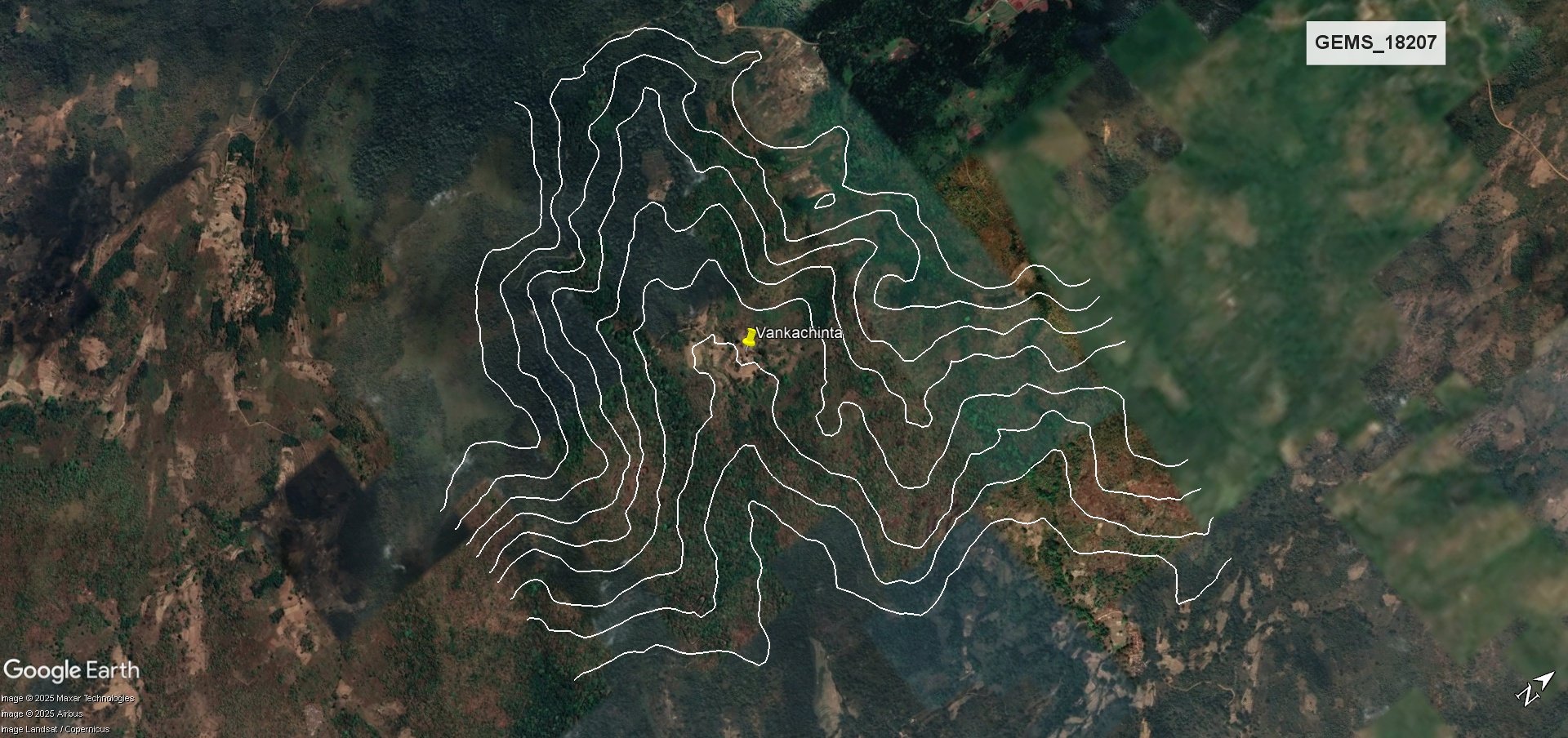
COFFEE IN INDIA
Coffee arrived in India in the 1600s during the height of the Mughal Empire. The 17th century was a time of affluence and expansion for the empire. At the time, the Mughals were responsible for nearly a quarter of global economic and industrial production. In fact, this prodigious economic expansion made India the richest country in the world in 1700.
Throughout India, and much of Mughal territory, Islam was the predominate religion. Islam played a significant role in spreading coffee throughout the world, as Sufi Muslims were some of the first widespread users of the beverage. Sufis found that a drink composed of ground green coffee beans and boiling water helped them to stay awake and focus during nighttime prayers. Later, traders from the Arabian Peninsula, where coffee first became a popular, widespread drink, spread coffee throughout the Middle East and then into Western Europe.
Islam was a driving force that helped bring coffee to India. A Muslim man named Baba Budan journeyed to Mecca, a holy city for Muslims. In Mecca, where coffeehouses and the drink itself were overwhelmingly popular, Baba Budan discovered the delights and benefits of coffee. Unable to leave behind this great pleasure, Baba Budan defied the decrees that made it illegal to leave Arabia with viable coffee seeds and smuggled seven coffee beans back to India. He then planted the seeds in the Chandragiri hills of Karnataka, India.
The Dutch, who had a trading presence in India during Baba Budan’s time, helped spread coffee cultivation across the country. However, it was the rapacity of the British, and their intention to export more coffee to Europe, that spread coffee cultivation across India.
British colonists established the first Indian coffee plantations in the 1840s. At that point, most coffee plants were Arabica. However, less than 20 years later, coffee leaf rust (CLR) spread to India from Indonesia and Sri Lanka, where the disease had first become epidemic. Once CLR arrived in India, it wreaked havoc on the Arabica plants. Many farms quickly switched to Robusta or Arabica-Robusta hybrids, which are both more resistant to CLR.
In 1942, the twin specters of CLR ravaging crops and World War II affecting the supply chain led the Indian parliament to pass the Coffee Market Expansion Act. The Act established the Coffee Board of India (CBI), which oversaw regulation for the coffee industry. The hope was that CBI would regulate the price and supply of coffee throughout India and increase profits for people all along the supply chain.
Arabica beans from India were initially sold on the European market as “Mysore” coffee. However, the turmoil of WWII cut India off from European sales. This break, which also fueled the passage of the Coffee Market Expansion Act of 1942, caused public awareness or desire for the “Mysore” brand to diminish. By the time trade lines were reestablished, the name “Mysore” no longer held the weight it once did and the term was used much more sparingly than before. Today, Indian coffee is largely marketed as “from India”.
The government liberalized the Indian coffee industry in 1995 in an attempt to increase profits for farmers during a major market crash, at which time the CBI lost much of its power. Nonetheless, coffee remains an important agricultural product in the country, and high-quality coffee production (and consumption) is on the rise.
Between 70 and 99% of all coffee in India is grown on plots of land smaller than 10 hectares. The majority of production is still centered on the traditional growing regions in Karnataka, Kerala and Tamil Nadu in the south. As recently at 2014/2015, 90% of coffee produced in India was still coming from these three states.
However, coffee cultivation is now slowly spreading across Northern areas. Coffee is increasingly grown in Andra Pradesh and Odisha in the Eastern Ghats and in the northeastern ‘Seven Sister’ states of Assam, Manipur, Meghalaya, Mizoram, Tripura, Nagaland and Arunachal Pradesh.
Coffee farms are typically situated between 700 and 1,200 meters above sea level. Most coffee cultivation is ‘traditional’ and two-tier shade canopies are mixed with leguminous, nitrogen-fixing trees. In this method, it is very common for coffee trees to be intercropped with spices (like vanilla or pepper) and fruit trees.
After harvest, which is most often done by hand by family members or hired laborers, cherry is usually processed as Natural or Fully washed. Most farms dry coffee on patios or tables, though some of the larger estates also have mechanical dryers.
Today, approximately 30% of coffee production is consumed internally. The other 70% is prepared for export.
India is particularly well known for Monsoon Malabar, a unique coffee that was extremely popular in Europe from the eighteenth to early-twentieth centuries. The flavors of Monsoon Malabar were originally unintentional and were simply a byproduct of transporting green coffee beans to Europe.
Before the advent of modern technology, the journey from India to Europe took approximately 6 months. The coffee, which sat in the hull of the ship, would absorb moisture from the sea and the humid winds, which led the beans to swell to a larger size and turn a pale brown color. The taste of the coffee became smoother, softer and fuller.
Monsoon Malabar coffee was the result of the trip from India to Europe. From the establishment of coffee supply lines to the early or mid-twentieth century, all Indian coffee consumed in Europe was Monsoon Malabar. There was no other profitable way to get coffee to Europe from India. Due to its ubiquity, these coffees were typically marketed as “Mysore” the well-known name in Britain that was associated with India at the time.
Monsoon Malabar only received its current name when, though shipping technology advanced and allowed the control of moisture in hulls, this coffee was still so desired that producers invented a way to recreate the conditions of this particular coffee using special setups. The humidity and moisture necessary for the process comes from the passage of the annual monsoon winds, hence the name: Monsoon(ed) Malabar.
Domestic consumption in India is expanding rapidly. Rising incomes have sent the youth of a growing middle and upper class into urban centers across the world for both education and work. These affluent youth are in turn consuming more and more coffee, which functions simultaneously as an aid to productivity, a status marker and a linchpin for socializing and courting.
This change is reflected in the numbers. Between 2010 and 2019, total coffee consumption, measured through total revenue from roasted coffee, more than doubled. Since then, consumption in India has continued to increase by about 5 to 6 percent annually.
And consumption will only continue to grow. The middle class in India was estimated to be about 50 million people in 2011. Models predict that the number of middle-class Indians will swell to 547 million people (nearly 41% of the population) by 2025. And, as the middle class grows, more people will also continue to adopt coffee drinking habits and, simultaneously, increase national coffee demand and consumption.

Check out more coffees in our store:

Luke 9
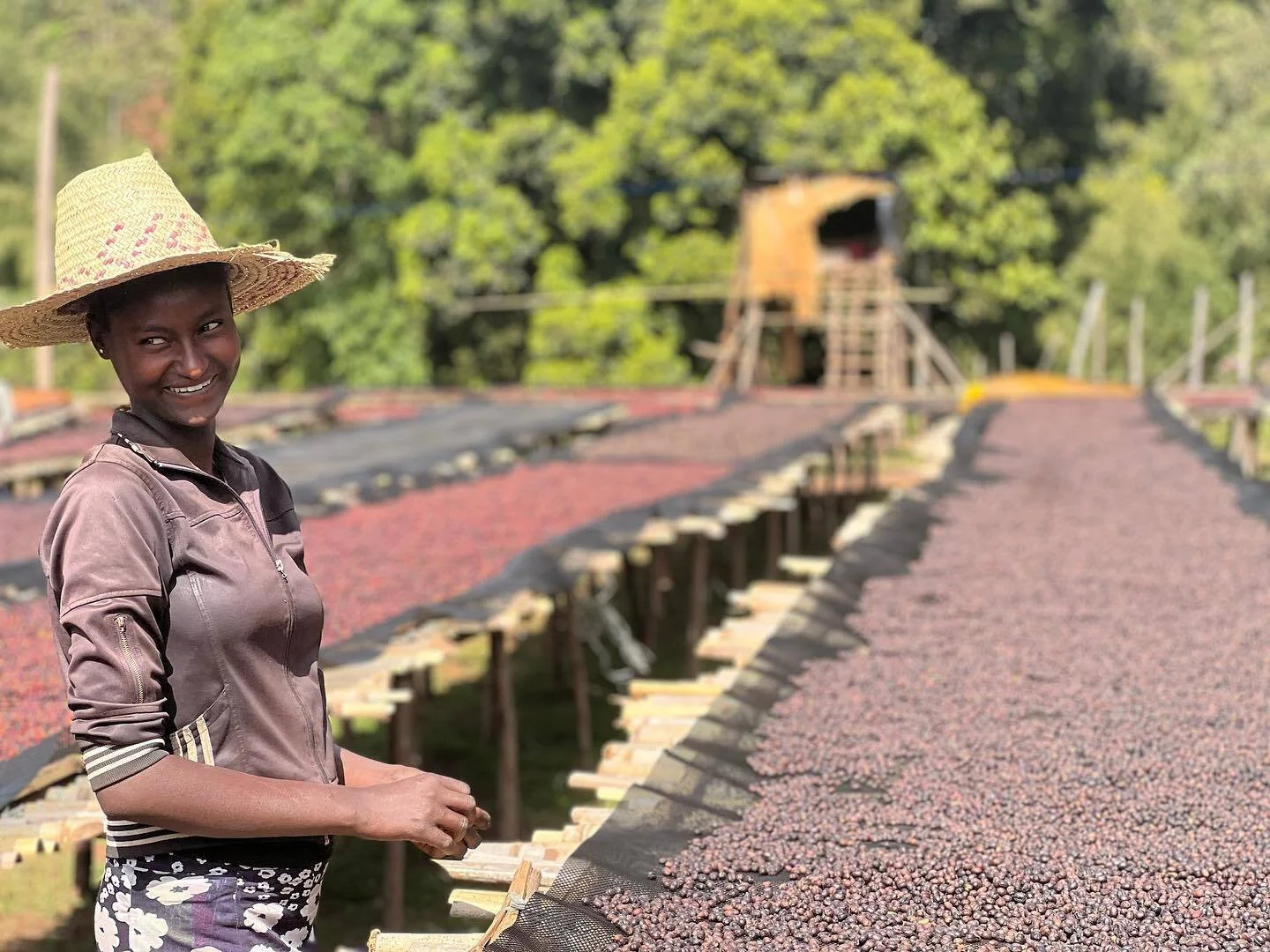
Ayla Bombe
COUNTRY: Ethiopia
FARM/COOP/STATION: Ayla Washing Station
VARIETAL: Heirloom
PROCESSING: Anaerobic natural
ALTITUDE: 1950-2150 m.a.s.l.
OWNER: Mr Faysel A. Yonis
REGION: Sidamo
FLAVOUR NOTES: Mixed berry jam, purple flowers, black tea, bright tropical/raspberry acidity
ABOUT THIS COFFEE
Ayla is one of 20 washing stations owned and run by Testi Coffee, a family business founded by Faysel Yonis that aims to support and grow with the farming communities that produce their coffee. With this in mind, Testi established their Project Direct program, which focuses on directly supporting coffee-farming families in tangible and positive ways. Through Project Direct, Testi has now built two primary schools and helped communities located near their more remote washing stations access clean water and electricity.
Around 700 producers deliver their freshly picked coffee cherries to the Ayla washing station at harvest time. The majority of these producers farm organically on small plots of land (around 2–5 hectares in size). These farms sit at an average elevation of 1950–2150 metres above sea level. The high altitude, combined with the area’s cool temperatures, causes the coffee cherries to ripen slowly, ultimately leading to denser beans and a sweet and complex cup profile.
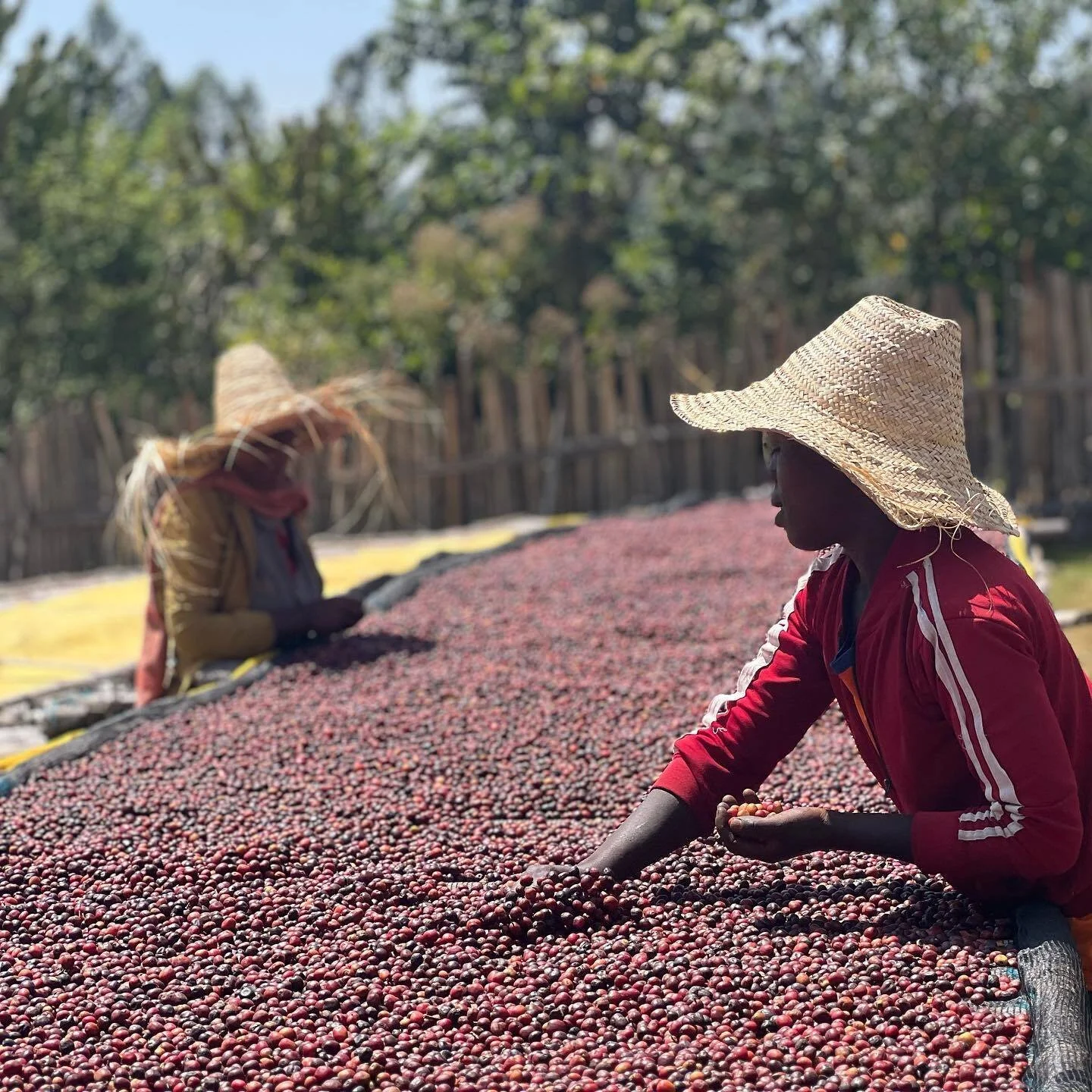
HARVEST AND PROCESS
After picking the cherries go through a floating process. Defective, overripe and underripe cherries float to the surface and are skimmed off.
The ripe cherries are placed in a barrel and sealed, creating an anoxic environment. A stopper filled with water is placed in a small hole, forming a one-way water barrier that prevents oxygen from entering the tank, while allowing fermentation-produced CO2 to escape.
To keep the temperature constant between 15 and 18°C, the barrels are placed in water baths. It is here where the intensely fruity and complex flavors develop during the 120-hour fermentation. Microbes convert the cherries' glucose and fructose into acids, ethanol and CO2 until the final pH of 3.8 is reached.
The biggest advantage of this technique: Faysel can control the two most critical aspects of fermentation: temperature and duration.
After 48 hours the barrels are opened and the cherries are quickly dried in direct sunlight to reduce the moisture level below 35%. Then they dry for another 30 days under shade nets on raised beds until they reach a final moisture content of 12%.
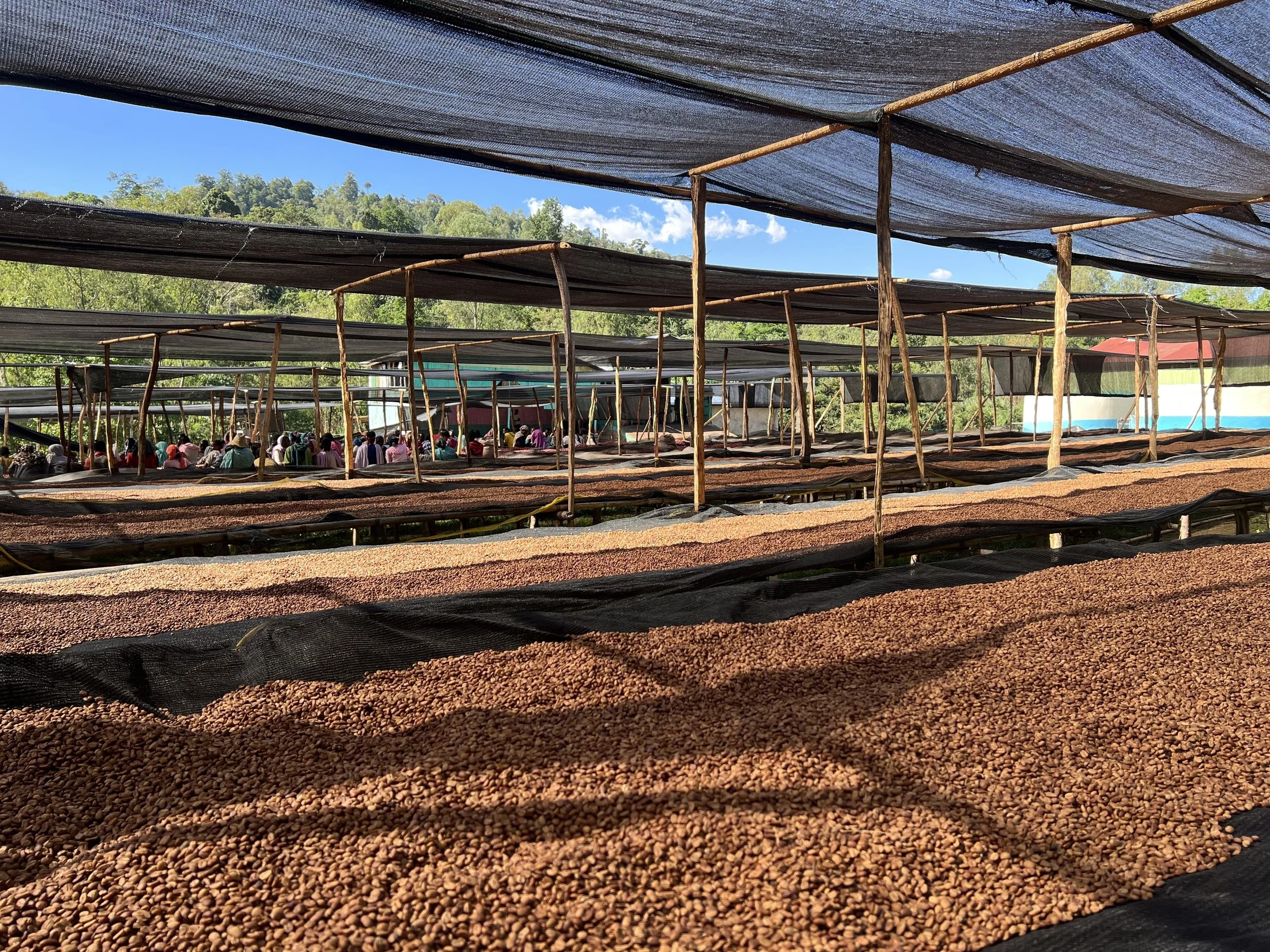
ABOUT THE SIDAMO COFFEE REGION
Historically, Sidamo refers to a wide geographical region encompassing much of central-south Ethiopia, that is well known for producing exceptional natural and washed coffees. The region is located in Ethiopia’s South East Coffee Zone, and includes renowned coffee-producing localities such as Yirgacheffe, Kochere, West Arsi, Bensa and Guji. Sidamo extends across the states of Oromia and the Southern Nations, Nationalities, and People’s Region (SNNPR), two of eleven ethnically-based regional states of Ethiopia. After a 2019 Referendum, some of the territories that fall under the the Sidamo coffee region have separated from the SNNPR and become the autonomous Sidamo regional state.
Coffees that are grown and processed in Sidamo showcase an extremely diverse range of flavour profiles, and are noted for their intensely fruit-forward, tea-like, floral and complex character that is sought after worldwide. It is widely accepted that the coffee species, Arabica, originated in the lush forests of southern forests of Ethiopia and hence growing conditions in this area are perfectly suited for producing exquisite coffees.
ABOUT TESTI COFFEE
Testi Trading PLC is a family-owned company embedded at the origin to supply the specialty coffee industry with high-quality coffee beans. Mr. Faysel together with his family established Testi Trading PLC in 2009. The name ‘Testi’ means joy or Happiness in the Harrari language (it is also the name of Faysel’s middle son).
Testi coffee is focusing on quality and long-term relationships, as well as maximizing the potential of Ethiopian Coffee. Their focus is to work with their supply chain of smallholder farms to improve their livelihoods and living conditions. Testi coffee independently own 3 farms and twenty washing stations in all specialty coffee growing regions.

Check out more coffees in our store:

Luke 8 (Gjest)
Hakone

Hakone Coffee Roasters is a modern café concept rooted in Oslo’s vibrant coffee scene. Founded in 2024, they now have several locations scattered around Oslo.
Though they don’t roast all their coffee in-house, Hakone offers a selection from different roasters, and they also roast their own limited-edition blends using a ROEST P3000 roaster.

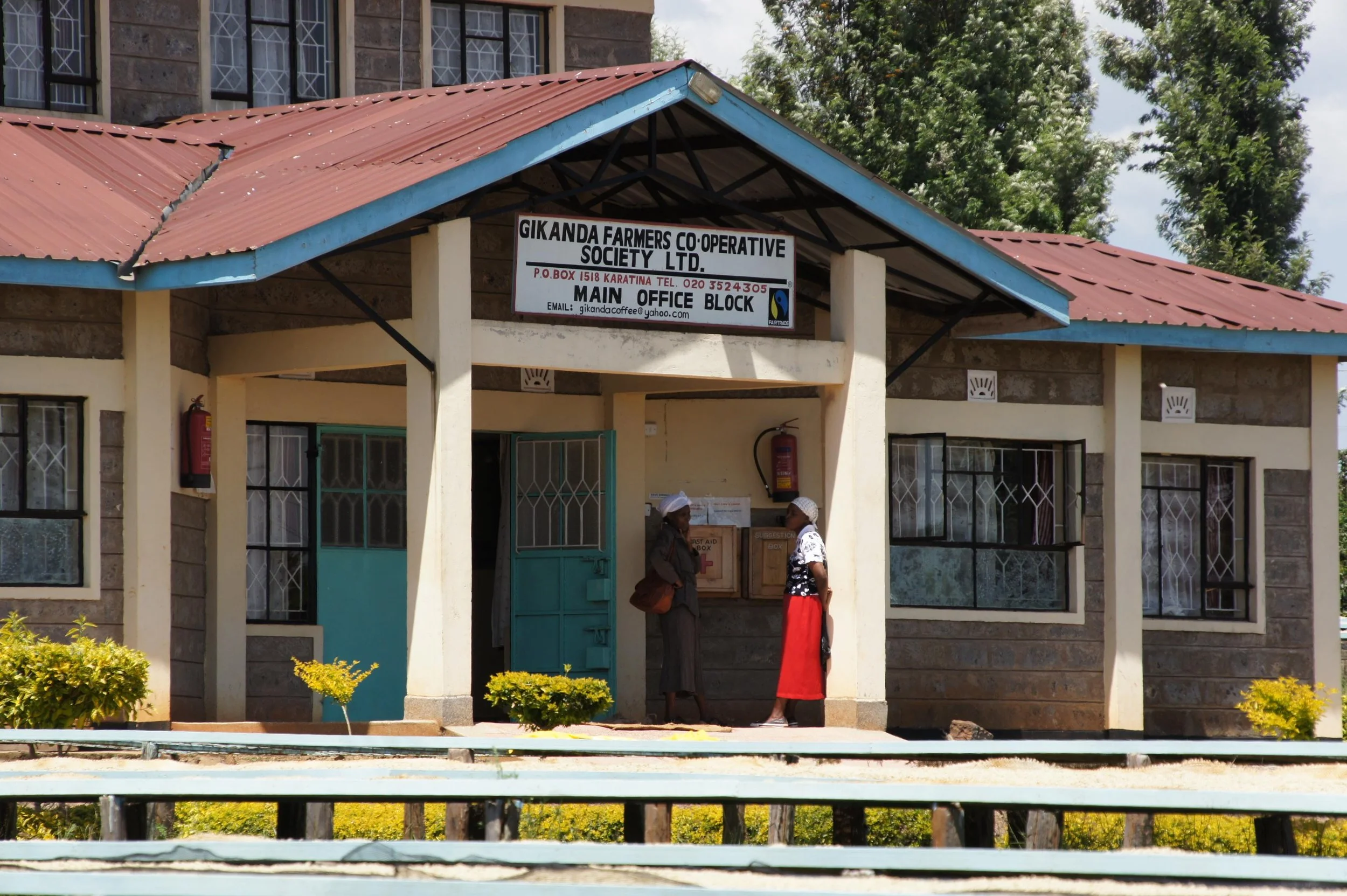
AA Gichathaini
COUNTRY: Kenya
FARM/COOP/STATION: Gichatha-ini Factory
VARIETAL: SL-28, SL-34, Ruiru 11, Batian
PROCESSING: Washed
ALTITUDE: 1700-1900 m.a.s.l.
OWNER: Gikanda Farmers Cooperative Society
REGION: Nyeri
FARM SIZE: 1 Hectares
FLAVOUR NOTES: Complex and bright. Deep and syrupy with dark fruit, molasses, blackcurrant, and pink guava.
HARVEST AND PROCESS
The description that follows is pretty standard for Kenya and will apply to most of the coffees across the different wet mills and cooperatives. One outturn consists of many days of cherry delivery. The qualities can vary as even within one outturn things will vary from day to day and between picking and collections.
Much depends on the weather and capacity of fermentation tanks and drying space at any given time. Dates are not entirely accurate but they are pretty much in control and are able to adapt to the current situation and condition. It is fascinating that despite the sometimes lax approach to monitoring, they deliver world class coffees
The farmers from the community harvest and pick cherries in their gardens and transport the coffee to the factory for delivery and payment. The factory pays a small advance at delivery. The remaining payment will come after the coffee is sold.
Process: Cherries are hand sorted for unripes and over ripes by the farmers before they go into production.
Pulping: A 3-Disc Agaarde pulping machine removes the skin and pulp. The coffees are graded by density into three grades by the pulper. Grade 1 and 2 go separately to fermentation. Grade 3 is considered a low grade.
Fermentation: The coffee is dry fermented for 18-36 hours in concrete tanks under a roof that provides shade for better temperature control during fermentation.
Washing/Grading: After fermentation the coffees are washed and again graded by density in washing channels. They are sometimes soaked in clean water overnight.
Drying: Sun-dried 12 to 20 days on African drying beds. Time depends on weather conditions. Coffees are covered under plastic during midday and at night.
Harvest: In this area the flowering period is usually between February and March, following this the trees will be ready for harvest from October to December.
Soil: Mainly Nitisol, red volcanic soil. Nitisols occur in highlands and on volcanic steep slopes and have developed from volcanic rocks. Nitisol generally has better chemical and physical properties than other tropical soils.
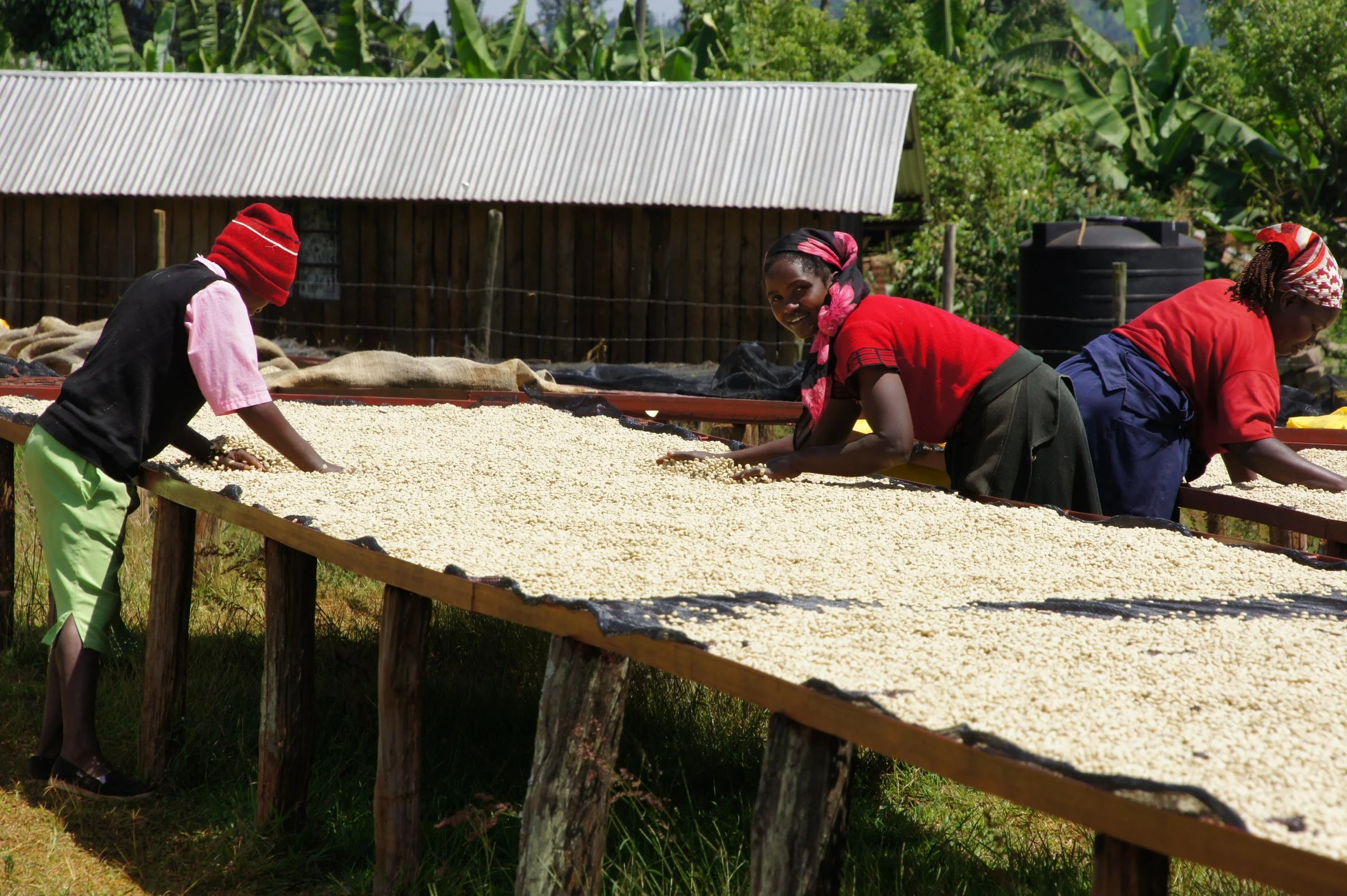
IMPACT
We collaborate with partners engaged in specialty coffee and initiatives aimed at farm sustainability, fair pricing, and quality bonuses for farmers. Our main emphasis lies in fostering long-term relationships with Farmer Cooperative Societies (FCS), ensuring consistent sourcing from the same producers annually. However, we also remain open to acquiring exceptional coffees from new producers or washing stations if they stand out during cupping evaluations.
The traditional auction system in Kenya is very transparent, with everything clearly separated into small lots and different grades. Farmers know exactly what portion of the sales price goes back to the cooperative society after processing costs. Some cooperative societies and factories are able to pay back up to 90% of the sales price after deducting marketing and preparation costs.

COFFEE IN KENYA
Despite sharing over 865 kilometers of border with Ethiopia, the birthplace of coffee, coffee had to circumnavigate the world before it set roots in Kenya. While the earliest credible reports place coffee in Ethiopia around 850 C.E., coffee was not first planted in Kenya until 1893 when French missionaries planted trees in Bura in the Taita Hills.
Under the rule of the British Empire coffee production geared for export expanded. Large, privately owned coffee growing estates were established and most harvests went to England in parchment, where it was sold to roasters prior to milling. Roasters often blended the bright flavors of Kenya with more chocolatey South American coffees.
Though large estates grew in hectarage and value, indigenous Kenyans did not benefit. In fact, European settlers took direct action to exclude indigenous people from growing coffee themselves.
In order to decrease competition, make labor accessible and inexpensive and continue the increase of demand for high-quality coffee, the Coffee Board was created to make regulations on coffee production and marketing. The Nairobi Coffee Exchange (NCE) (which continues to this day) was established in Nairobi to leave more of the value of green coffee at origin.
The Coffee Board tightly controlled licensing for coffee growing and processing. While the laws put in place did not explicitly state that indigenous people could not grow coffee, large estate owners made it functionally impossible for indigenous farmers to attain coffee growing licenses until the 1950s.
These laws protected the interests of the large landowners. Not only could more cultivation drive down the price of Kenyan coffee, but large farmers feared that if smallholder and indigenous farmers had their own coffee farms to tend, they would not work as paid laborers on settlers’ farms.
SL-28 and SL-34 are well-known Kenyan coffee varieties. They were bred by Scott Agricultural Laboratories (SAL). SAL was founded in 1903 by the Kenyan Colonial government to function as a research institution studying agricultural products.
SL-28 and SL-34 quickly became the varieties of choice for most growers. Their deep root structures helped them acquire water in the dry environments present throughout much of Kenyan, even without irrigation. These varieties also had higher yields than the traditional French Bourbon rootstock and were considered somewhat more disease resistant.
Though both SL varieties spread across Kenya extremely quickly, the release of Ruiru-11 in 1985 by the Kenya Coffee Research Institute (CRI) brought a new kid to the block. Many farmers planted the new Ruiru-11 variety because it was far more resistant to Coffee Berry Disease (CBD), a fungal disease attacking ripening coffee cherry, and Coffee Leaf Rust (CLR), a fungal disease that targets the leaves of coffee trees. It could also be planted at a higher density than the SL varieties, allowing farmers to maximize yields on small plots of land.
One downside to Ruiru-11 was that its shallower root structure made is more susceptible to drought and required more fertilizer. Farmers found that that by grafting Ruiru-11 to SL variety trees, they could have the best of both worlds. Trees where Ruiru-11 was grafted onto an SL variety plant had deeper root structures for drought-times (thanks to the SL variety) and higher immunity to disease and larger yields (thanks to the Ruiru-11).
Other farmers are experimenting with Batian, as well, a relatively new variety introduced by Coffee Research Institute (CRI) in 2010. Batian is named after the highest peak on Mt. Kenya and is resistant to both CBD and CLR. The variety has the added benefit of early maturity and begins bearing fruit after only two years. Some challenges (such as vegetative structure) have prevented it from becoming widespread so far, but its popularity is certainly growing.
While most farms in Kenya still have the traditional SL varieties, most also have Ruiru-11 and, increasingly, Batian. Most farms are far too small to be able to handle lot separation by variety. This means that most lots coming out of Kenya—whether single estate or smallholder group—are a blend of SL, Ruiru-11 and (sometimes) Batian.

Check out more coffees in our store:

Luke 7
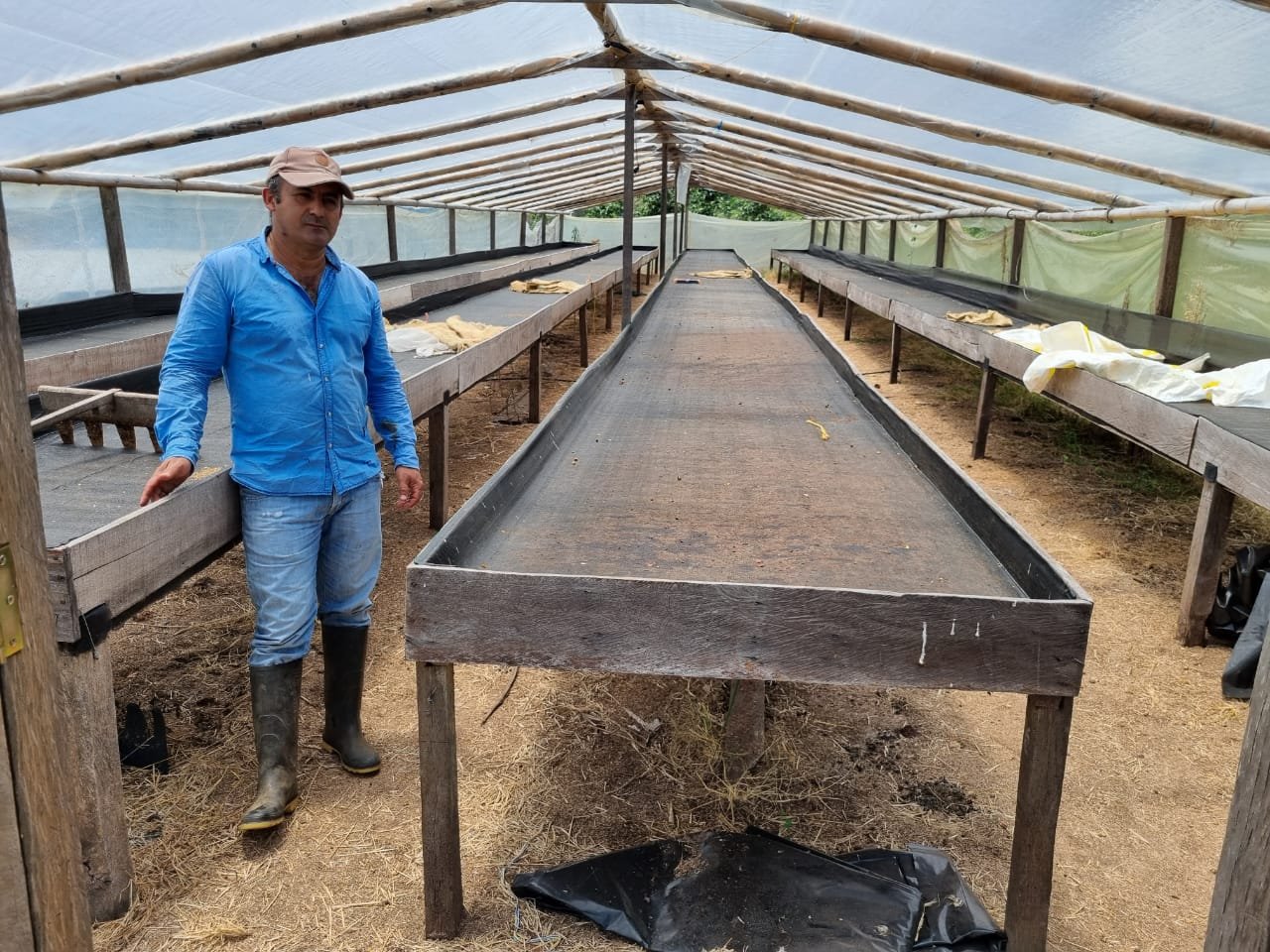
Recreo Caturron
COUNTRY: Colombia
FARM/COOP/STATION: Finca El Recreo
VARIETAL: Caturron
PROCESSING: Natural
ALTITUDE: 1,550 meters above sea level
OWNER: Alirio Rodriguez
SUBREGION/TOWN: La Estrella, Acevedo
REGION: Huila
FLAVOUR NOTES: Cherries, mango, caramel
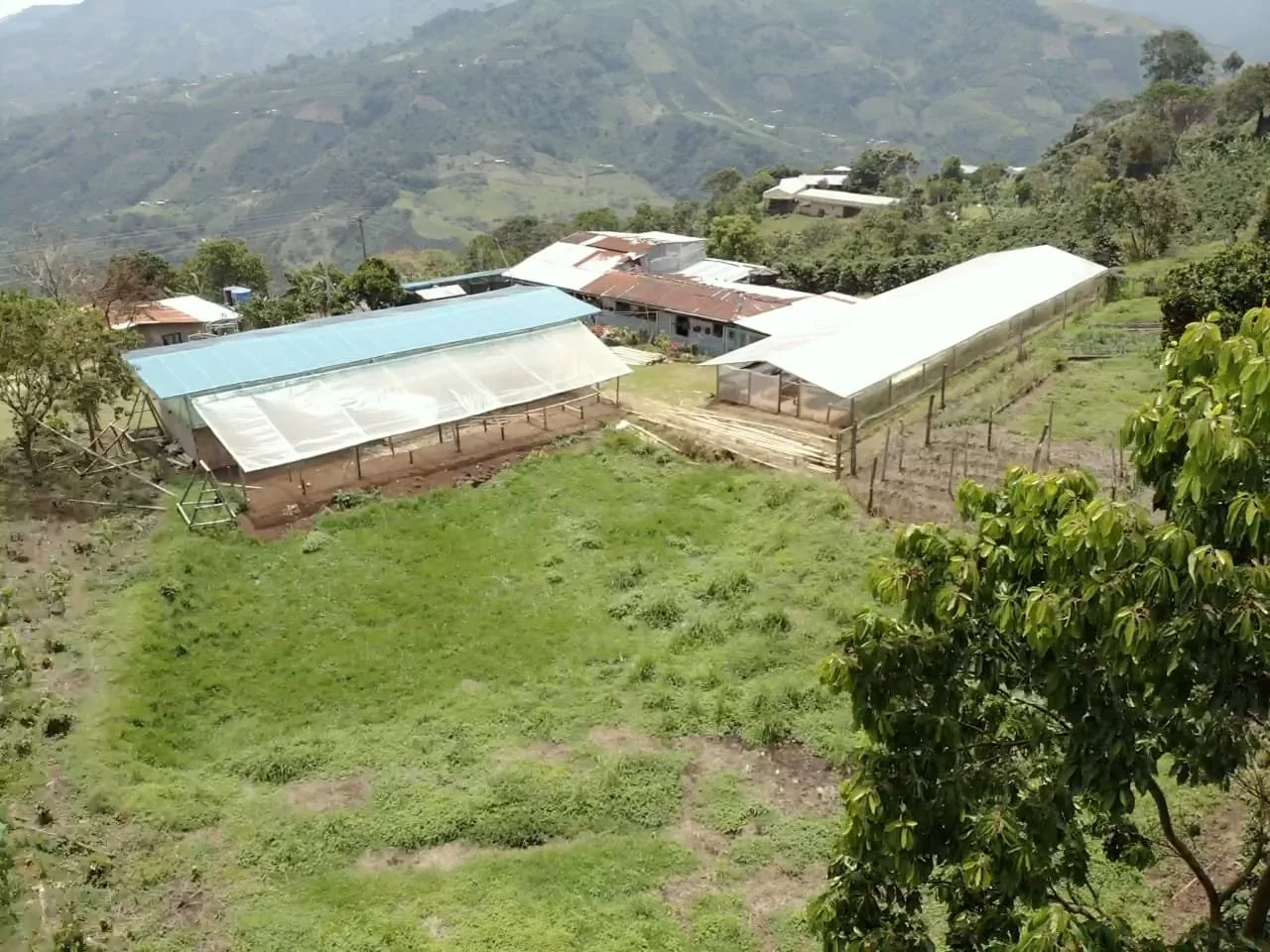
ABOUT THIS COFFEE
Alirio Rodriguez has been producing coffee for more than 30 years. He’s a third-generation coffee producer and, at the age of 15, he bought his farm, Finca El Recreo. Today, he is focused on achieving high coffee quality and sustainable prices. He is joined by two of his adult children who work with him on the farm.
Alirio transitioned to specialty coffee in 2018. He made the switch because of the low prices of commercial coffee and the desire to improve and expand his coffee production.
The Caturron variety is a relatively new variety from Acevedo, Colombia that's virtually unknown outside of that region. Its exact genetic lineage is currently unknown, but the variety is fast becoming recognized for its distinctive flavor and large cherry. Caturron is also resistant to coffee leaf rust and has relatively high yields.
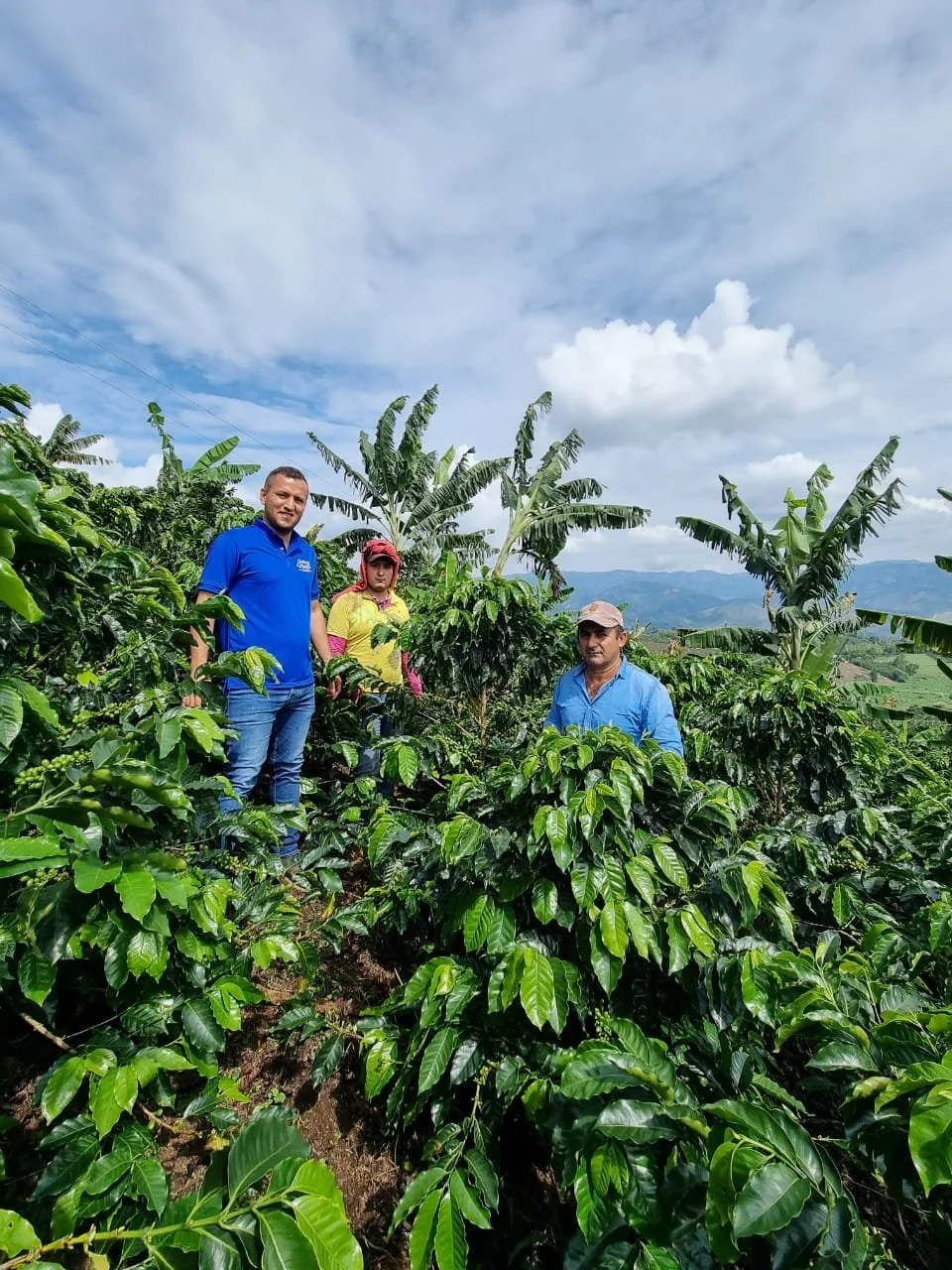
CULTIVATION
One of the biggest challenges Alirio faces is climate change and its effect on flowering and harvest. He’s also struggling with the high costs of inputs. As he strives to improve coffee quality, he’s planning to invest in a large mechanical dryer that would make drying more consistent and controllable.
Once ripe, red cherry is harvested, Alirio lays cherry on raised beds to dry. Cherry is raked frequently to ensure even drying.
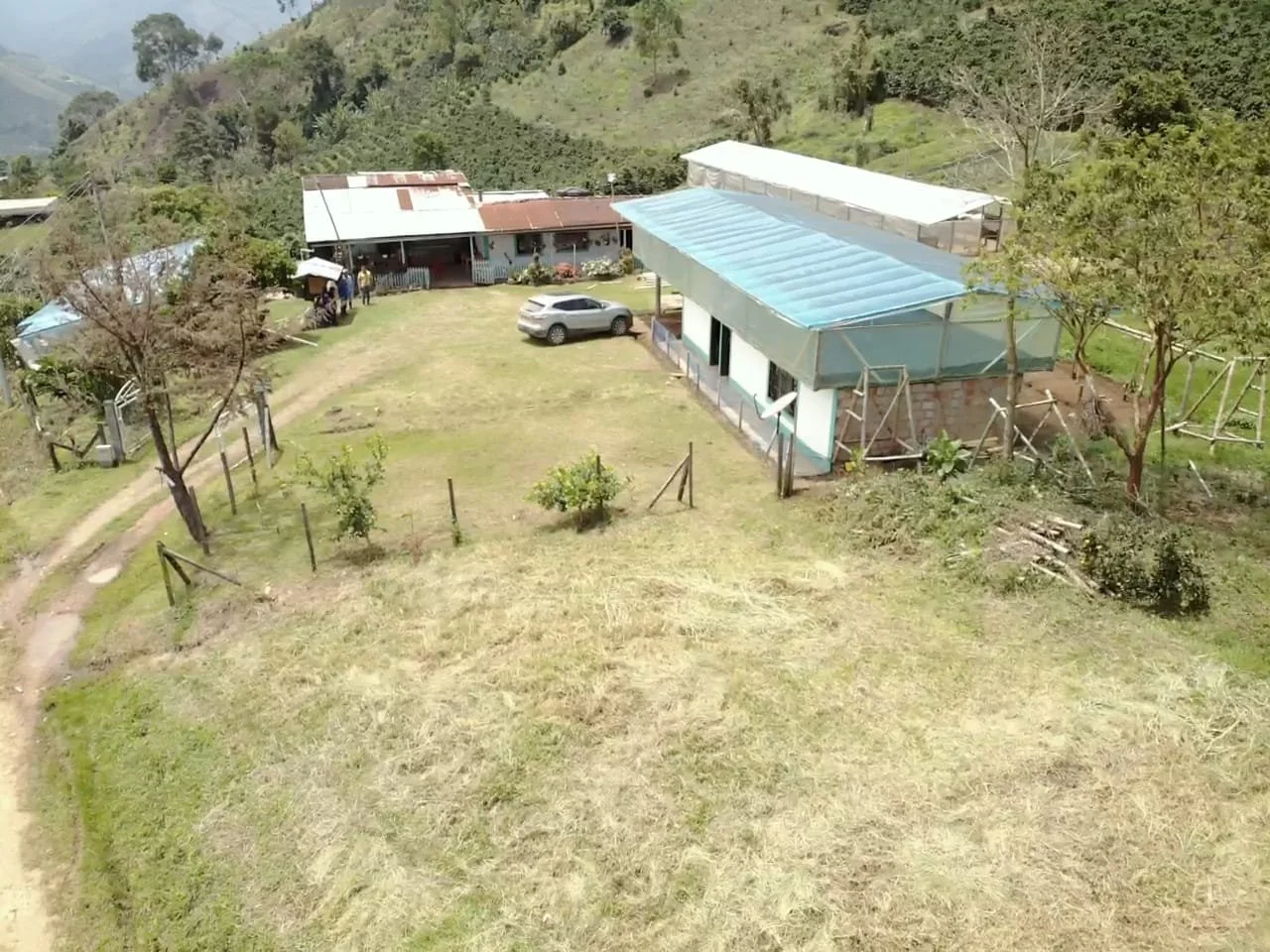
CATURRON
Caturron is one among several new varieties in Huila, Colombia. "Rumor has it that there was an experimental research farm near Acevedo, Huila," explains Juan Andres Gutierrez, Specialty Supply Chain Coordinator for Sucafina Colombia. "When the project was abandoned, the plants stayed behind." Now, several new varieties have been selected and spread across Huila that aren't found anywhere else. Caturron, which translates into "big Caturra" is one of these mysterious varieties. It's unclear whether Caturron is genetically distinct from all other known varieties since it hasn't been officially sequenced yet. But to the farmers of Huila, the unique features and flavors of these varieties are worthy of attention and many farmers are propagating these varieties and processing them in distinct lots. We're glad to have such unique and delicious varieties on offer!
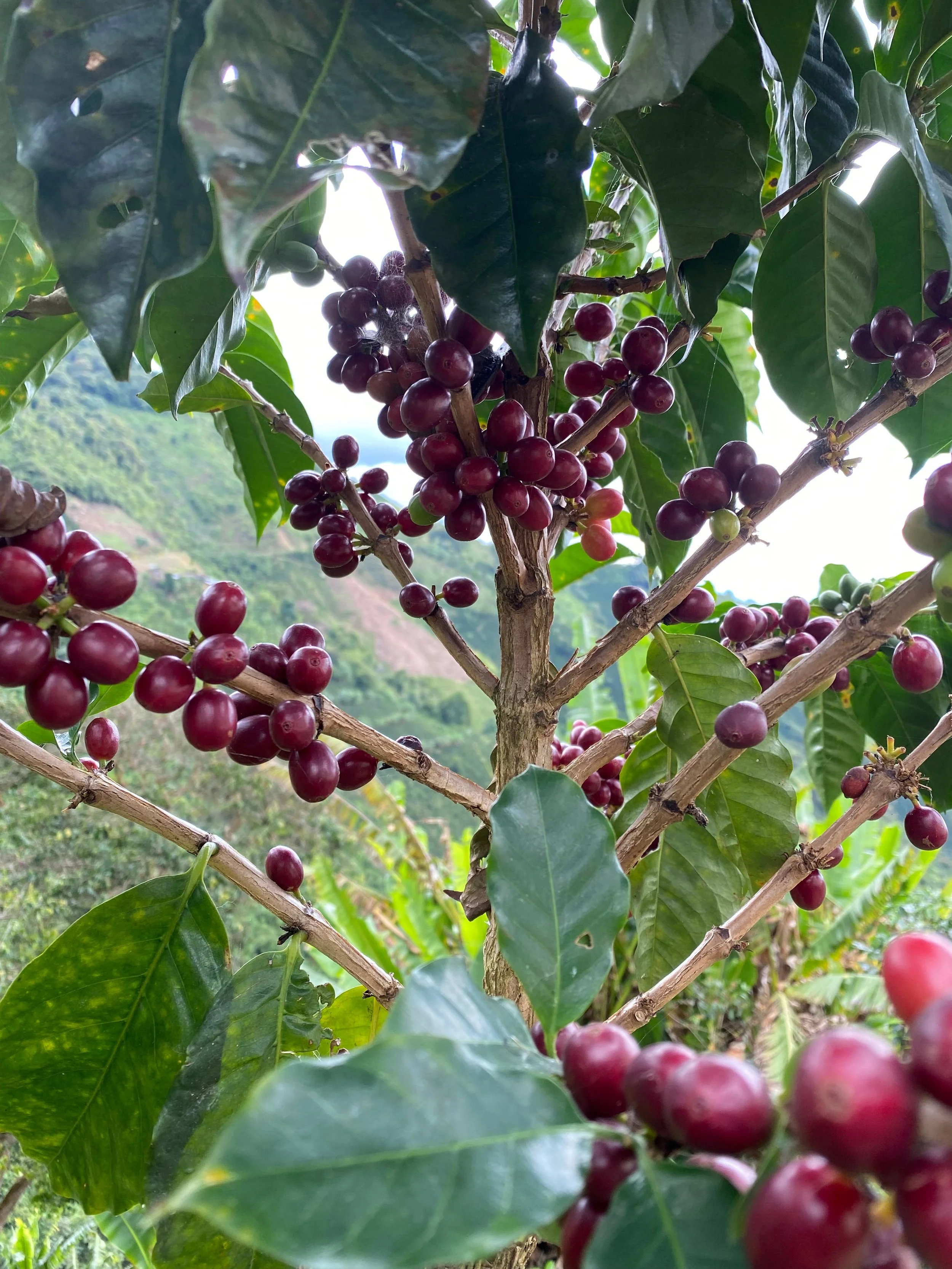
ABOUT HUILA
The Huila region is one of the most well-known coffee growing areas of Colombia. The Department of Huila has a population of 1.125 million and is located in the southwest of the country. The capital of the department is Neiva, a city of about 380,000.
Along with Cauca and Nariño, Huila is one the three departments where the Colombian Massif is located. A massif is a group of mountain ranges and the Colombian Massif, which is known locally as Nudo de Almaguer, provides up to 70% of safe drinking and agricultural water for the Colombian population.
The Magdalena River, Colombia’s largest river, runs through the region, providing plenty of water for coffee farming and generating (directly and indirectly) up to 86% of Colombia's GDP. The mountain range also features the fertile volcanic soil so typical to the Andean Mountains.
COFFEE IN COLOMBIA
Colombia has been producing and exporting coffee renowned for their full body, bright acidity and rich aftertaste, since the early 19th century.
Colombia boasts a wide range of climates and geographic conditions that, in turn, produce their own unique flavors in coffee. This also means that harvest times can vary quite a bit. In fact, between all its different regions, Colombia produces fresh crop nearly all year round.
The increasing focus on the specialty industry is changing the way traders and farmers do business. It is becoming more common for farmers to isolate the highest quality beans in their lots to market separately. These higher-quality lots are often sold under specific brands or stories.
Besides its wide variety of cup profiles, Colombia has quickly expanded its certification options over the past 10 years. The most common certifications available are Fairtrade, Rainforest Alliance, UTZ and Organic.

Check out more coffees in our store:

Luke 6 (Gjest)

Austrått Kaffebrenneri is a relatively small and agile roastery with high capacity to deliver a broad range of origins, processing methods, and varieties of coffee. My approach to coffee is very scientific. Measure always. My coffees are roasted on a Loring 70 or a Loring 15. Roast profiles are being developed using a Røst L100 sample roaster.
The reason why choosing this coffee, co-fermented Juanilama is to challenge myself on new processing methods and varieties. But most important is showing the diverse range offered by skilled producers of speciality coffee.
I hope you will enjoy it as much as I enjoyed roasting it.
God jul 😊
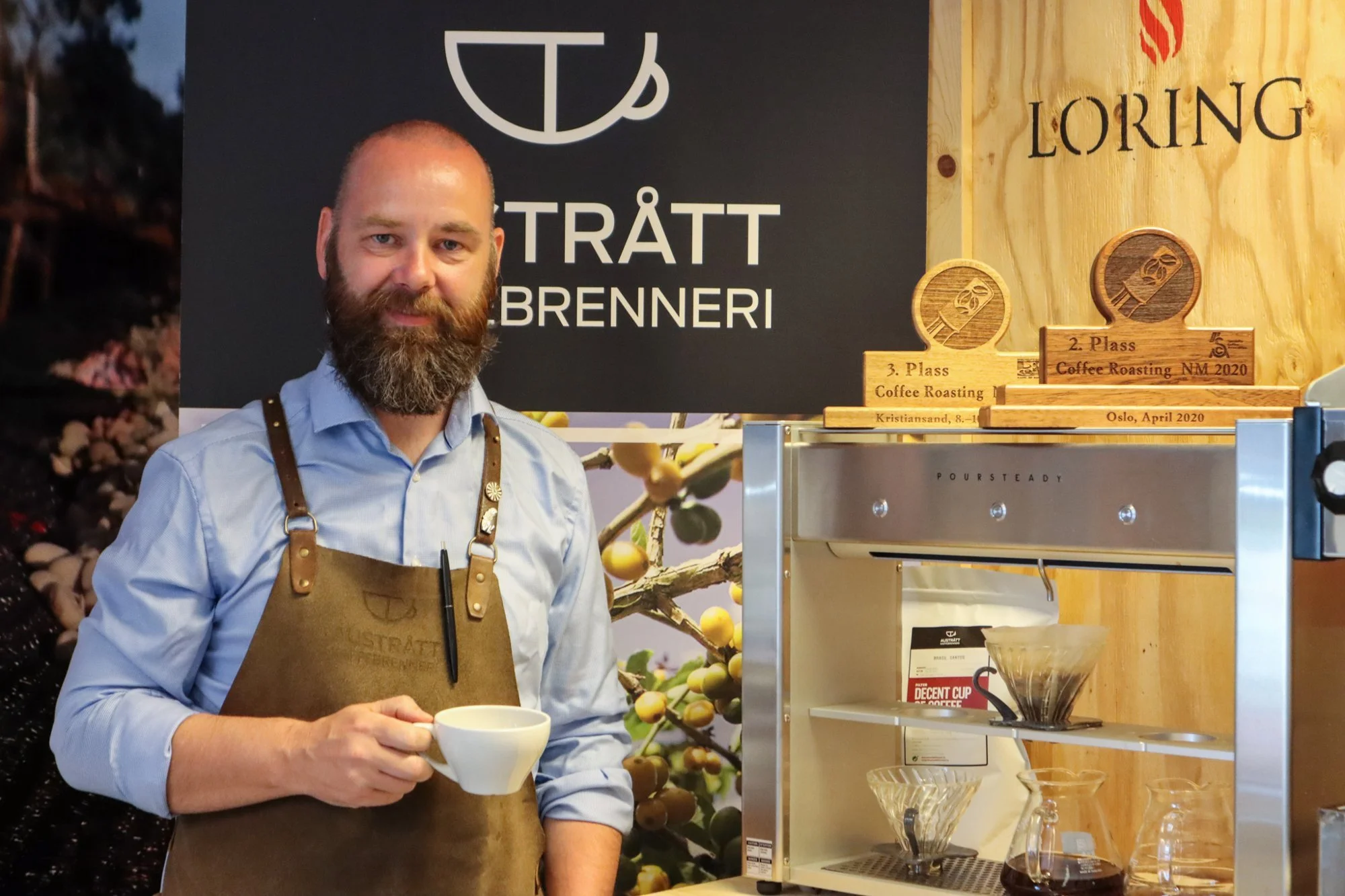
Aquiares Estate
COUNTRY: Costa Rica
FARM/COOP/STATION: Aquiares estate
VARIETAL: Centroamericano
PROCESSING: Co-fermented with Juanilama
ALTITUDE: 1200 meters
OWNER:Diego Robelo
REGION: Turrialba
FLAVOUR NOTES: Dark chocolate, green grape, peanuts, grapefruit, hints of bubblegum and fruit candy.
ABOUT THIS COFFEE
The name Aquiares means “land between rivers” in the Huetar indigenous language, and Aquiares Estate is commonly referred to as “Aquiares Coffee and Community.” It is the largest farm in Costa Rica and home to 1,800 people. Although the farm was founded in 1890, Alfonso Robelo is the man responsible for its transformation a century later. Alfonso arrived in Costa Rica in the 1980’s seeking refuge from the civil war in Nicaragua, where he was politically active. When politics soured into violence, he fled the country to keep his family and himself safe after receiving several threats against his life. Once in Costa Rica, Alfonso began building the Aquiares community on the enchanting slopes of the Turrialba volcano, a lush area of forests, rivers, fauna, and bright flora.
Alfredo challenged the status quo, transforming the relationship between landowner and farm workers. He brought a visionary approach to Aquiares, a farm suffering from low prices and instability. Aquiares had more than 200 employee homes on the farm, but because none owned their home, there was great insecurity in the workforce. Alfonso saw this as an opportunity to strengthen the company by having people feel pride in the coffee they produce. He evolved the farm into a small town where workers purchased their own homes. Today, Aquiares remains a model of sustainable agriculture.
Nowadays Alfonso’s son, Diego, manages the farm. Under his lead, the farm has taken a fresh approach to specialty coffee and exploring the farm’s potential. Through excellent agricultural management, embracing new varieties, and experimenting with processing, Aquiares has become a trailblazer among specialty coffee producers in Costa Rica and all of Central America.
Aquiares focuses on carbon neutrality and measures its greenhouse gas emissions to calculate its carbon emissions against its offsets. An agent verified under the International Panel on Climate Change verifies these calculations and Aquiares’ carbon measurement and emissions reduction are part of Costa Rica’s Nationally Appropriate Mitigation Action. In addition to capturing carbon, the farm’s protected biological corridors have long ensured the wellbeing of local animals and plants. Aquiares also welcomes researchers from around the world to conduct agricultural and environmental studies on their land. Projects have included investigating the benefits of agroforestry on soil health and observing the diverse bird and wildlife species that thrive in an agroecological environment.
Aquiares is an example of innovation and perseverance whose benefits extend beyond the farm and workers and serve as a model for sustainable, equitable production for the broader coffee industry. The lots selected by Ally Coffee from Aquiares represent our shared commitment to sustainability, equity, and innovation.
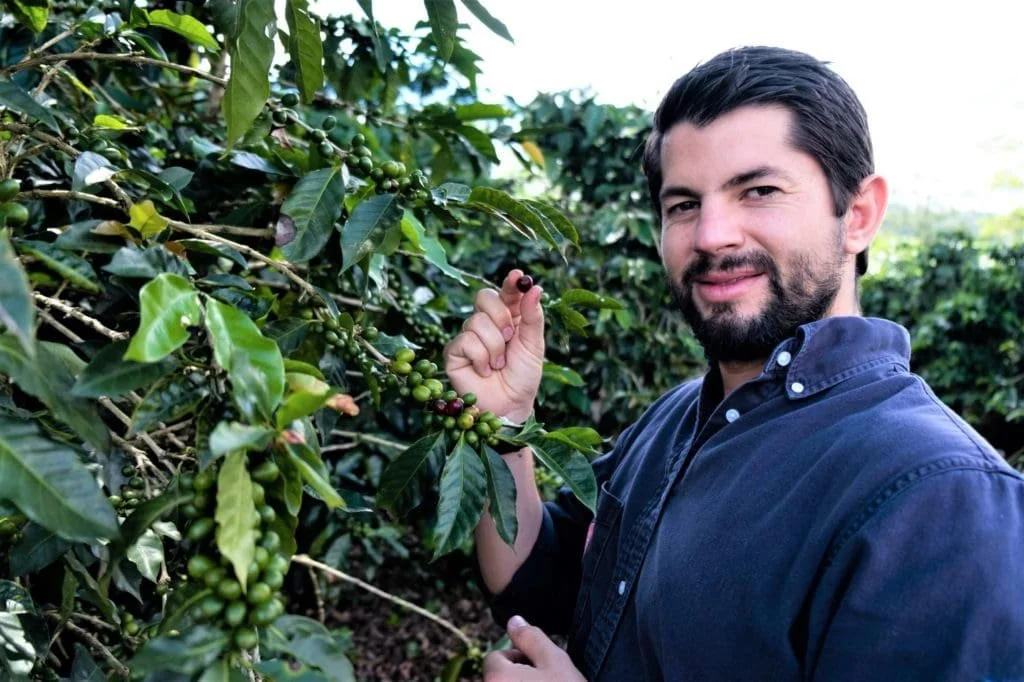
REGION
Turrialba
The region of Turrialba is Costa Rica’s hidden coffee gem. The city of Turrialba is a modest agricultural town in the Province of Cartago, and the coffee farms spread throughout the Canton of Turrialba, from smallholder plots to the country’s largest estates, produce coffees with a range of cup profiles and interesting genetic legacies.
Turrialba is home to CATIE, the Center for Tropical Agricultural Research and Education, one of Central America’s premier crop research and development sites as well as one of Latin America’s largest living coffee tree variety collections. Along with other research institutions, CATIE helped produce many of the hybrid and selected coffee varieties now common in Costa Rica and neighboring countries.
The Turrialba Volcano is still active today—it began erupting more consistently starting in 2014—and the region’s volcanic soil is rich with nutrients. The area’s farmers grow vegetables and sugarcane as well as coffee, and landowners in the lower area raise beef cattle. Turrialba’s productive land supplies much of Costa Rica’s domestic needs and coffee prepared for export passes through the area’s private mills, which are more common here than the cooperatives organized in other cantons.

COFFEE IN COSTA RICA
PLACE IN WORLD PRODUCTION: #14
AVERAGE ANNUAL PRODUCTION:
1,230,000 (in 60kg bags)
COMMON ARABICA VARIETIES:
Typica, Caturra, Catuai, Villa Sarchi, Bourbon, Geisha,
KEY REGIONS:
Tarrazú | Central Valley | Western Valley | Tres Rios | Brunca | Guanacaste | Orosi | Turrialba
HARVEST MONTHS:
October - March
Coffee has been a central part of the Costa Rican experience since the country’s independence from Spain in 1821. At that time, the new government led a campaign to distribute free coffee seeds to citizens in order to promote coffee production as a cash crop. Costa Rica was soon exporting green coffee beans all over Central and South America.
Just two decades later, in 1843, Costa Rica sent its first shipment of green coffee beans to England. By 1860, Costa Rica was also supplying coffee to the United States. Coffee played such a big role in Costa Rican production that coffee was Costa Rica’s only export for the years starting from independence until 1890.Costa Rican coffee farmers experience significant barriers to production. Production costs in the country tend to be very high in comparison to neighboring countries. The persistent growth of the tourist industry, combined with the influx of foreign businesses bringing more money into Costa Rica, has created inflation. While inflation and the rising quality of life have had many positive benefits for Costa Ricans, rural areas have struggled to keep up with increasing land and input prices and the associated higher labor costs. As a result, Costa Rican coffee tends to be on the expensive side.
Especially because costs are higher, Costa Rican coffee producers must find other ways to stand out from all the other producing countries in the Americas. Luckily for the specialty coffee industry, Costa Rica has had great success becoming a frontrunner in quality specialty coffees and processing methods.
In areas like Tarrazú, where conditions are ideal for coffee growing, competition is even higher. In such areas, the competitive atmosphere leads many producers to invest in private micro mills, growing exotic varieties and alternative processing.
The focus Costa Rican farmers place on increased coffee quality is beneficial to both themselves and the specialty industry as whole. An atmosphere that encourages experimentation and innovation can breed any number of new or better varieties, growing techniques, processing methods, storage protocols and more.

Check out more coffees in our store:

Luke 5
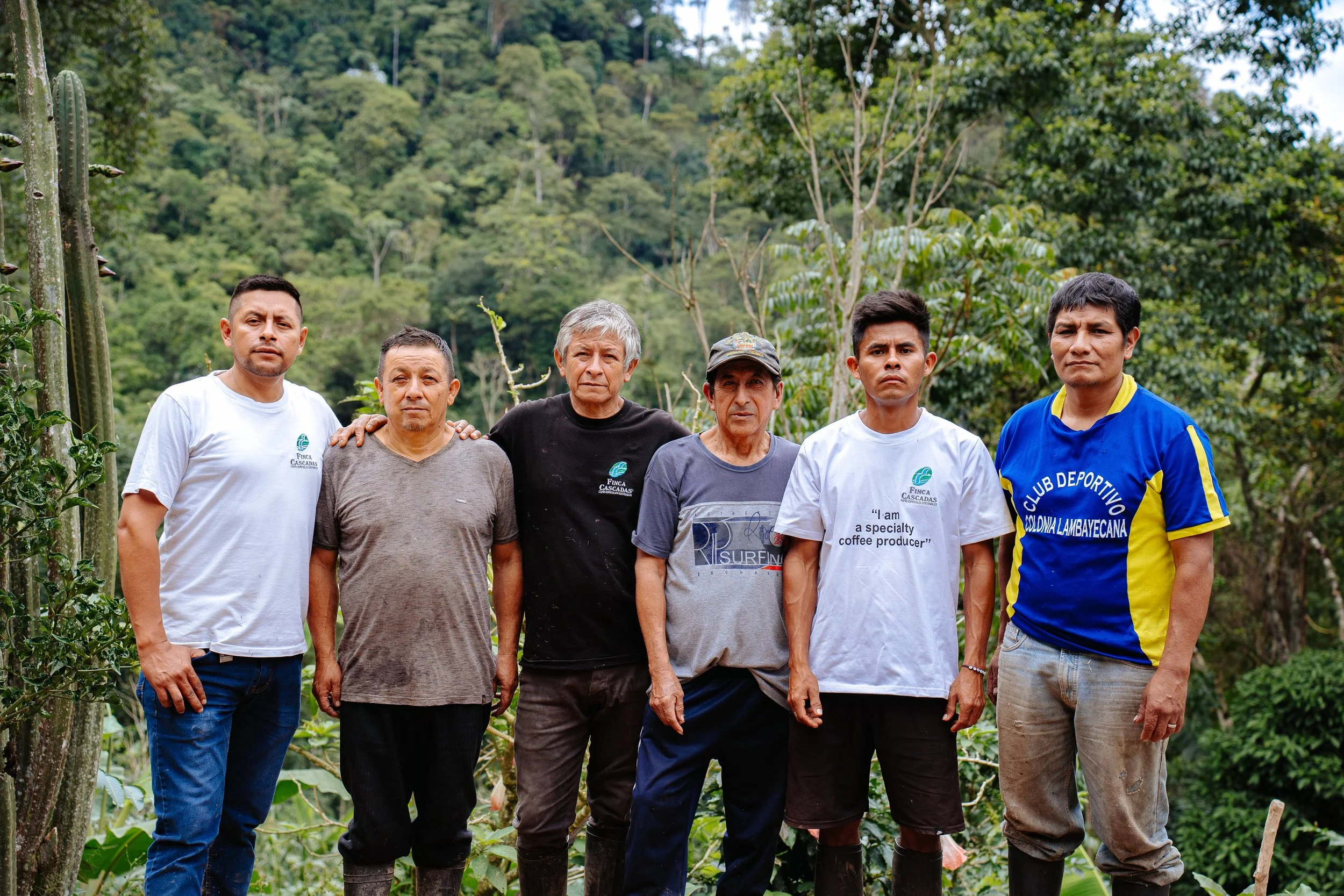
Misterio de La Piramide
COUNTRY: Peru
FARM/COOP/STATION: Finca Cascadas de Cueva
VARIETAL: Bourbon / Borbón / Catimor / Caturra / Pache / Tipica
PROCESSING: Anaerobic / experimental
ALTITUDE: 1520 m.a.s.l.
OWNER : Don Martin & Jimmy Rojas
REGION: Moyobamba
FLAVOUR NOTES: Pear, rosehip, white peach, cocoa nibs, raspberry
We met Jimmy a few years ago and have stayed in touch since then. When he heard that we were using his coffee in our calendar he wanted to tell you about his farm in his own words:
“My grandparents were the first coffee growers, but they lived in the mountains in the Cajamarca region. My father is the second generation of coffee growers in the family. My father emigrated from the mountains to the jungle in 1993, settling on these lands. Since then, he has dedicated himself to producing coffee, first in the traditional way with washed coffees, and since 2018, we began experimenting with post-harvest processes, sticking with anaerobic fermentations because they give us better results in the cup. Since then, we have been working to improve our facilities and processing modules in order to guarantee a quality, consistent, and replicable product.”
A greeting from The farmers
ABOUT THIS FARM
The family finca, named after the waterfall, has been a model project in the region since at least 2018. The family buys coffee cherries from neighbors* and processes them here in a centralized way. All are invited to come and talk with Gover, who is happy to share his extensive knowledge.
Gover’s view of coffee farming is unique and aligns with permaculture values. As you walk around the finca, it feels like a Garden of Eden. You see dozens of plant and animal species, all of which Gover knows. The humus layer is a good 30cm thick, which is why your feet sink into the loose soil with every step.
“The farm is located in the hamlet of Nuevo Lambayeque, in the district of Jepelacio, Moyobamba province, San Martin Region, Peru. The farm is located at an altitude of 1,520 meters above sea level. The coffee is anaerobically processed, and the varieties are a mix of Tipica, Caturra, Pache, Rosé Bourbon, Marsellesa, and Catimor.”
“The one in the black polo shirt is my father, his name is Martin Rojas”

THE COFFEE
This coffee comes from the mysterious Finca La Piramide, where Don Martin produces amidst ancient ruins and jungle. Our relationship goes back to 2016. Before Don Martin visits us in Germany in July 2025, we’re launching another microlot from him. Since he began experimenting with various coffee kombuchas, his coffees have become even fruitier and juicier.
The secret in the process of this lot is anaerobic fermentation using different kombuchas made from fermented coffee juice. After successful fermentation, the parchment was washed and then gently dried on shaded beds. This results in a complex process that’s not easy to define. We think “anaerobic kombucha fermentation washed” describes it fairly accurately. However, it sounds more exotic than what you’ll actually taste in the cup. In the microlot “Misterio de La Piramide,” we find lots of ripe fruit, subtle floral notes, and a creamy texture. Cheers!
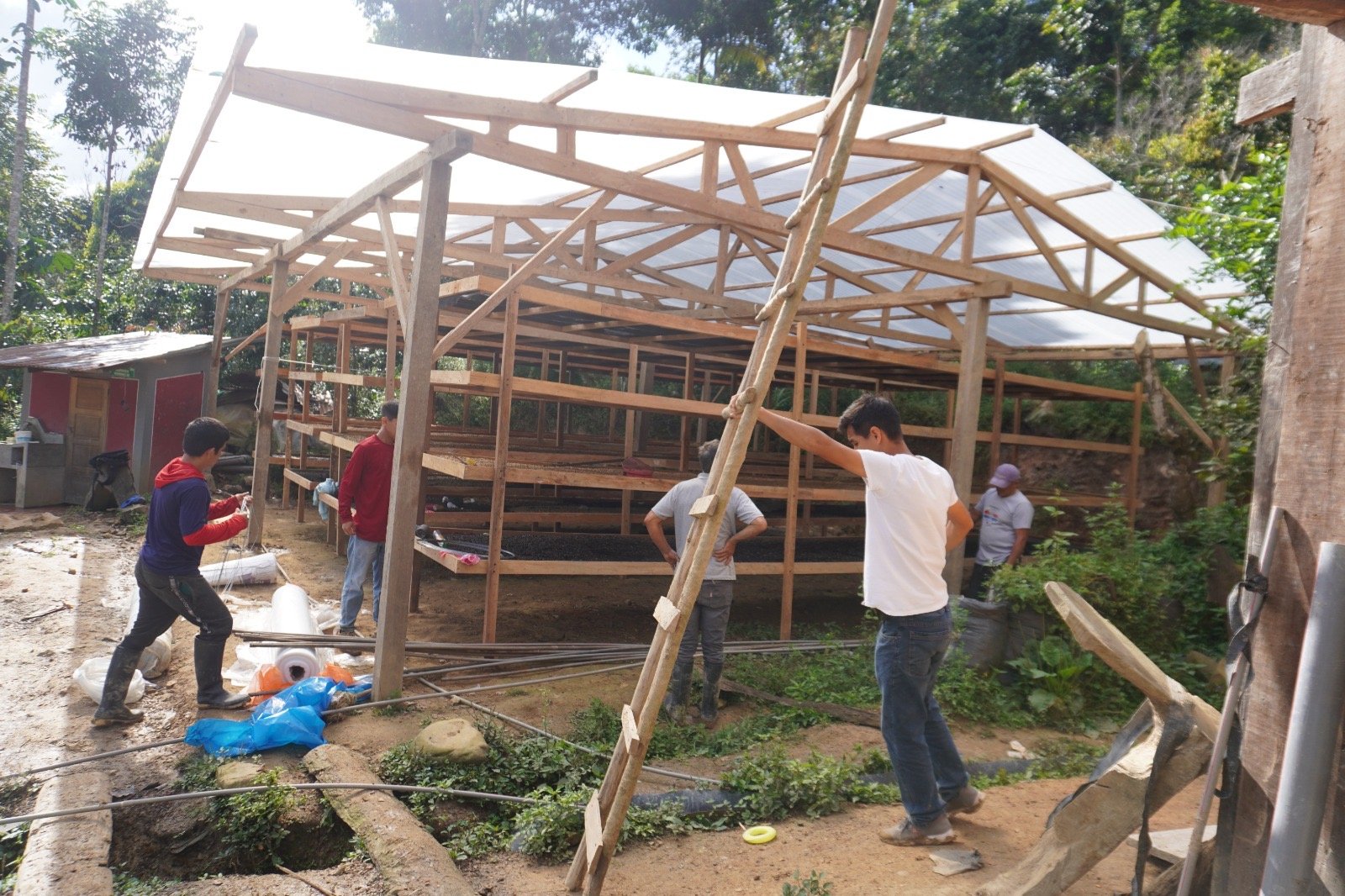
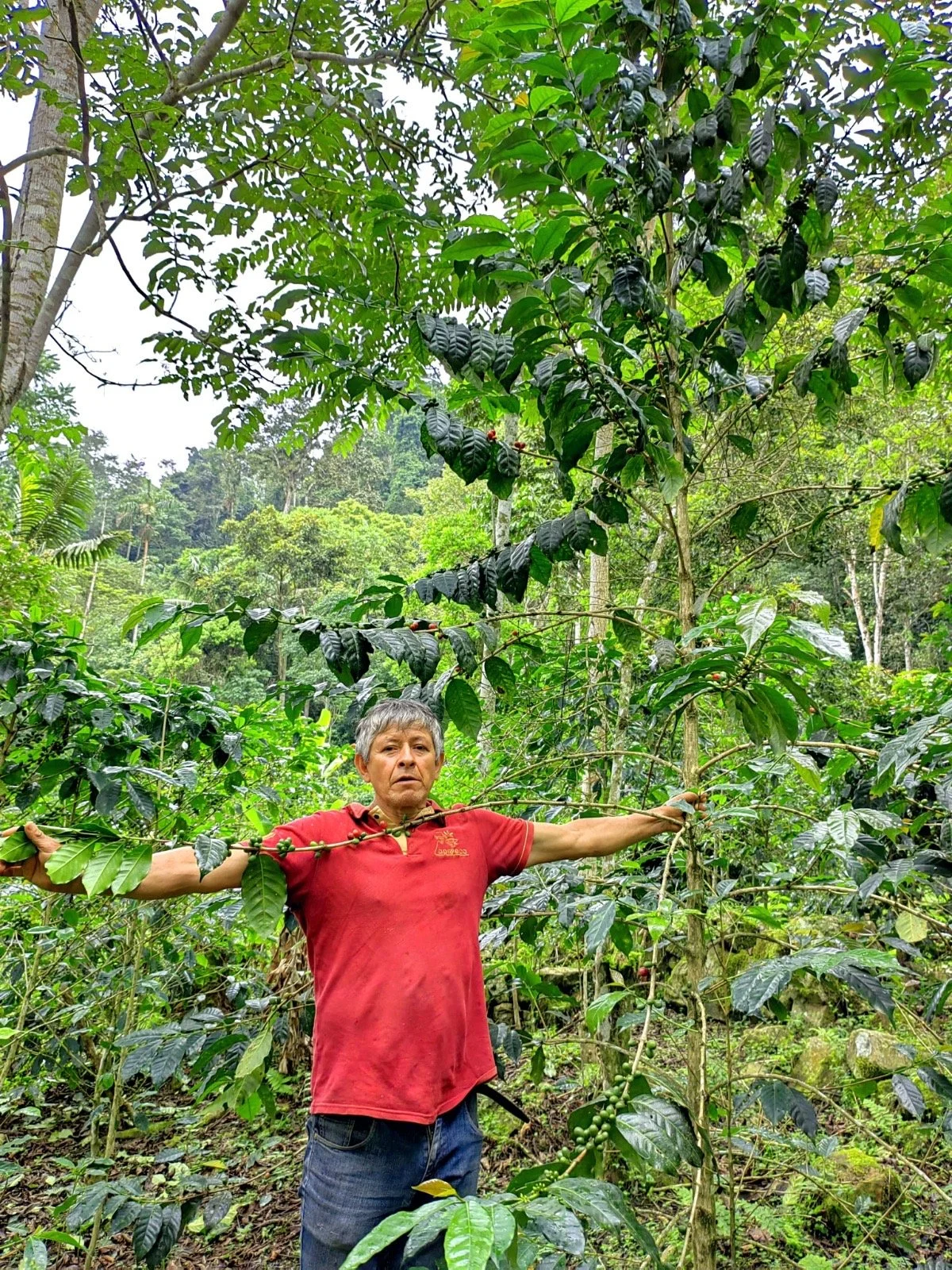
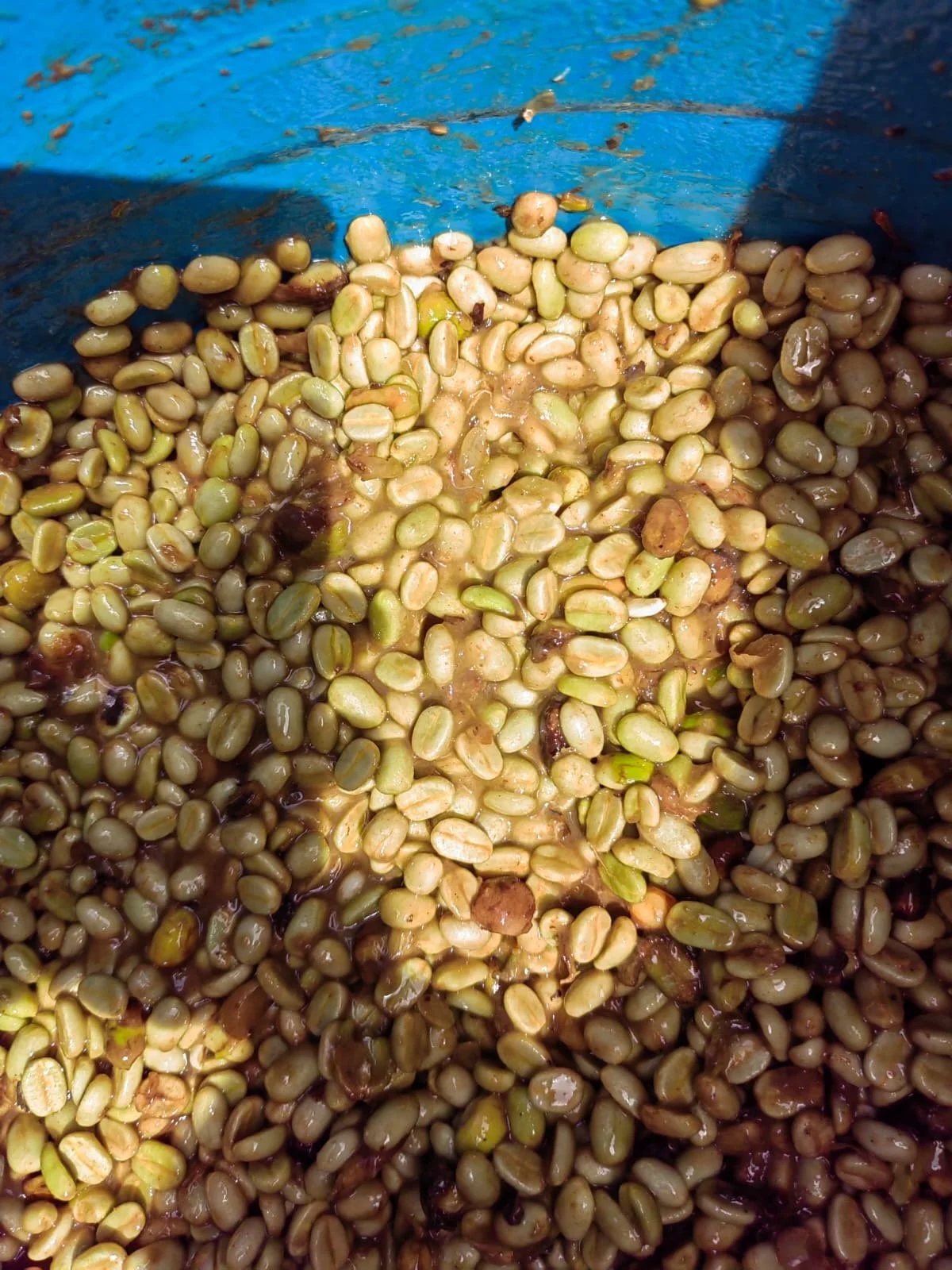
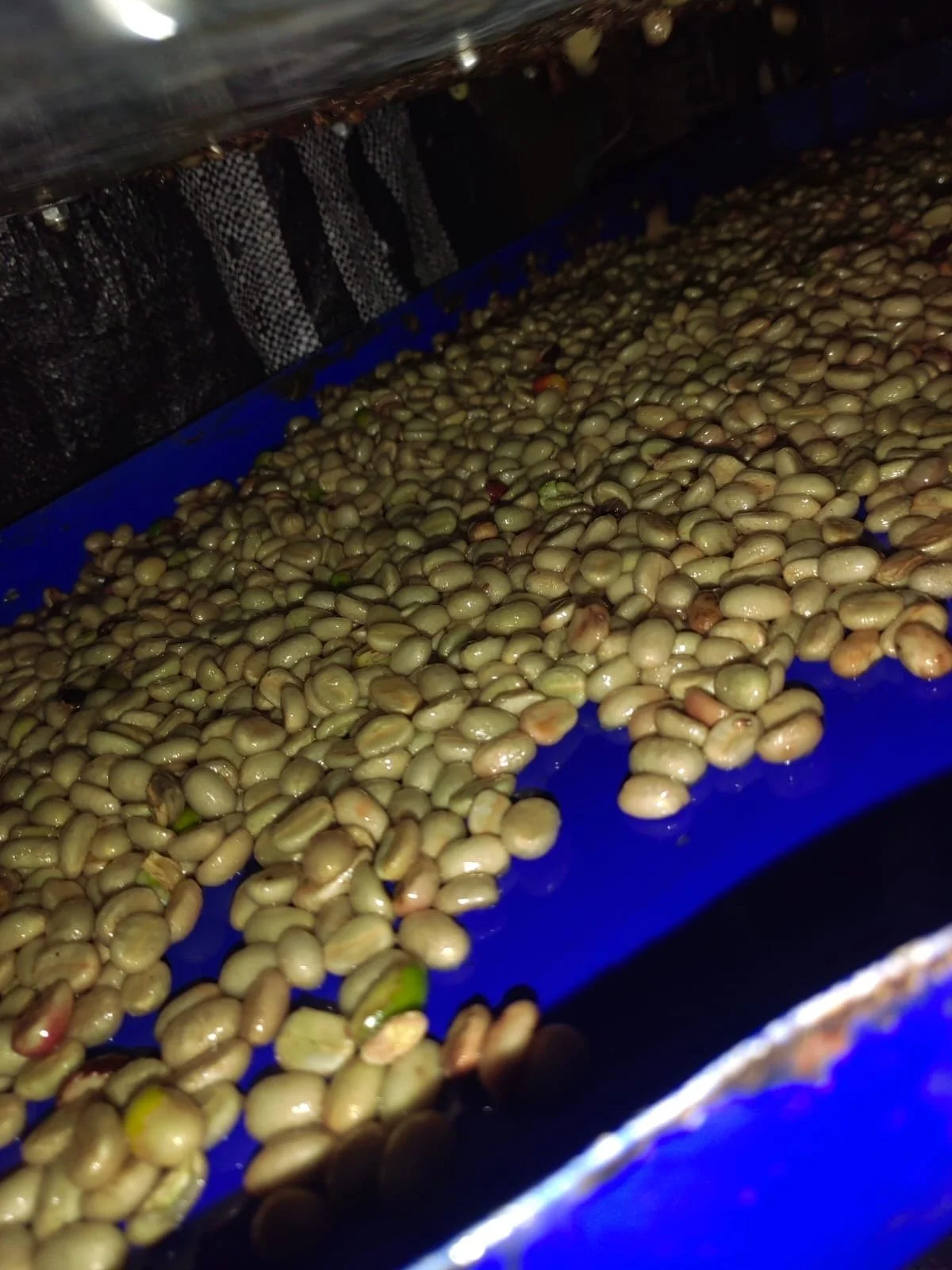
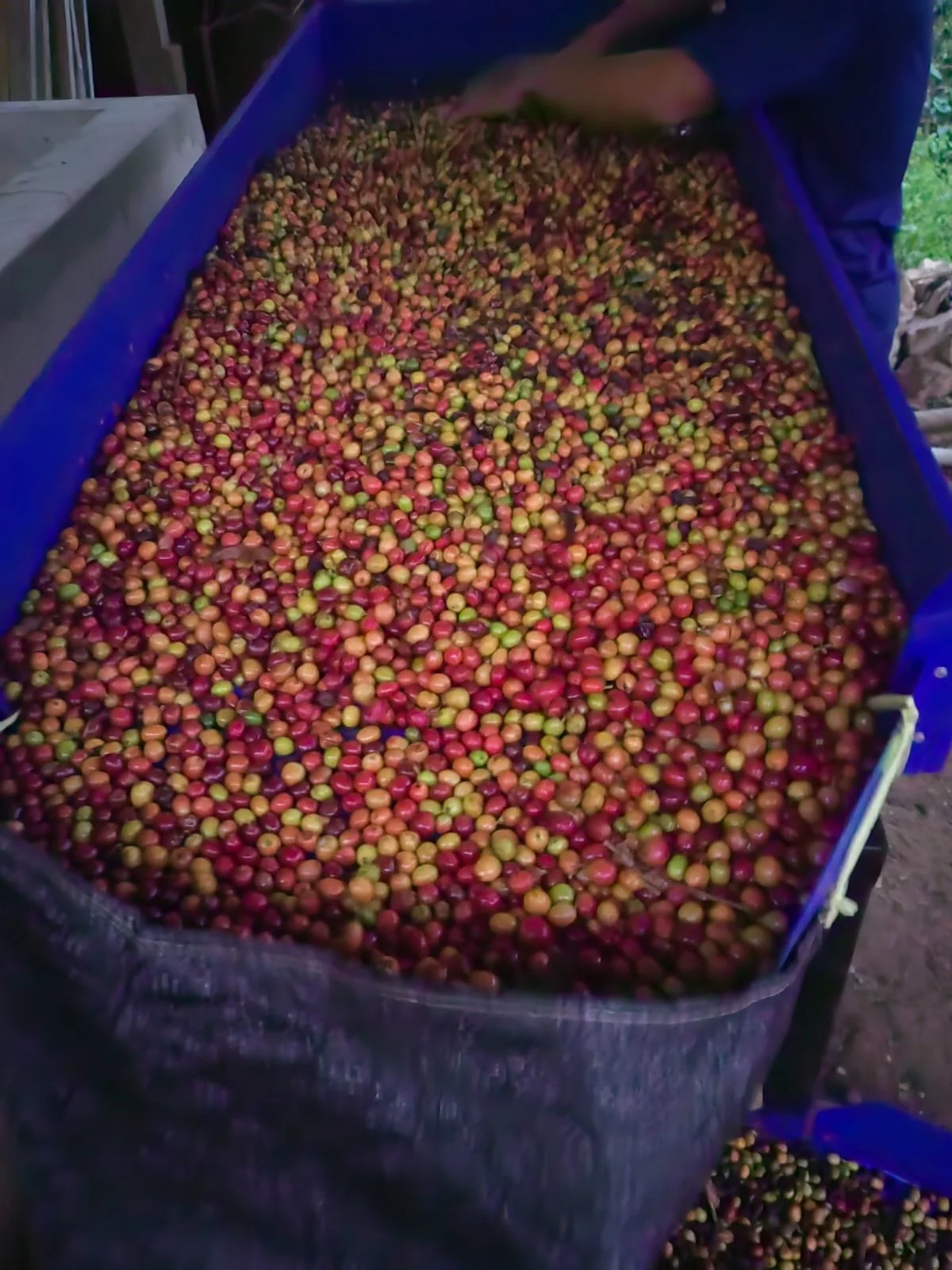
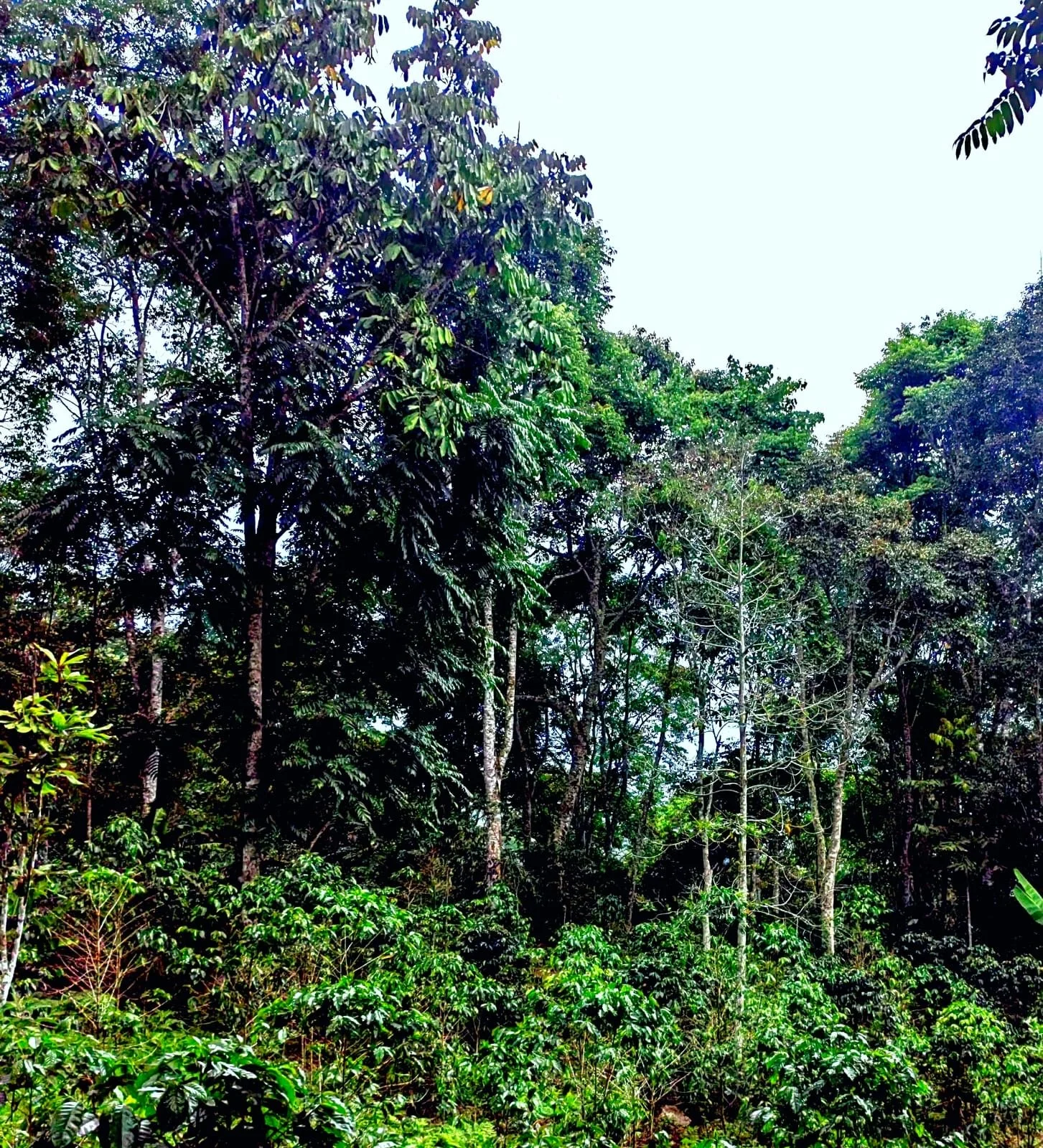
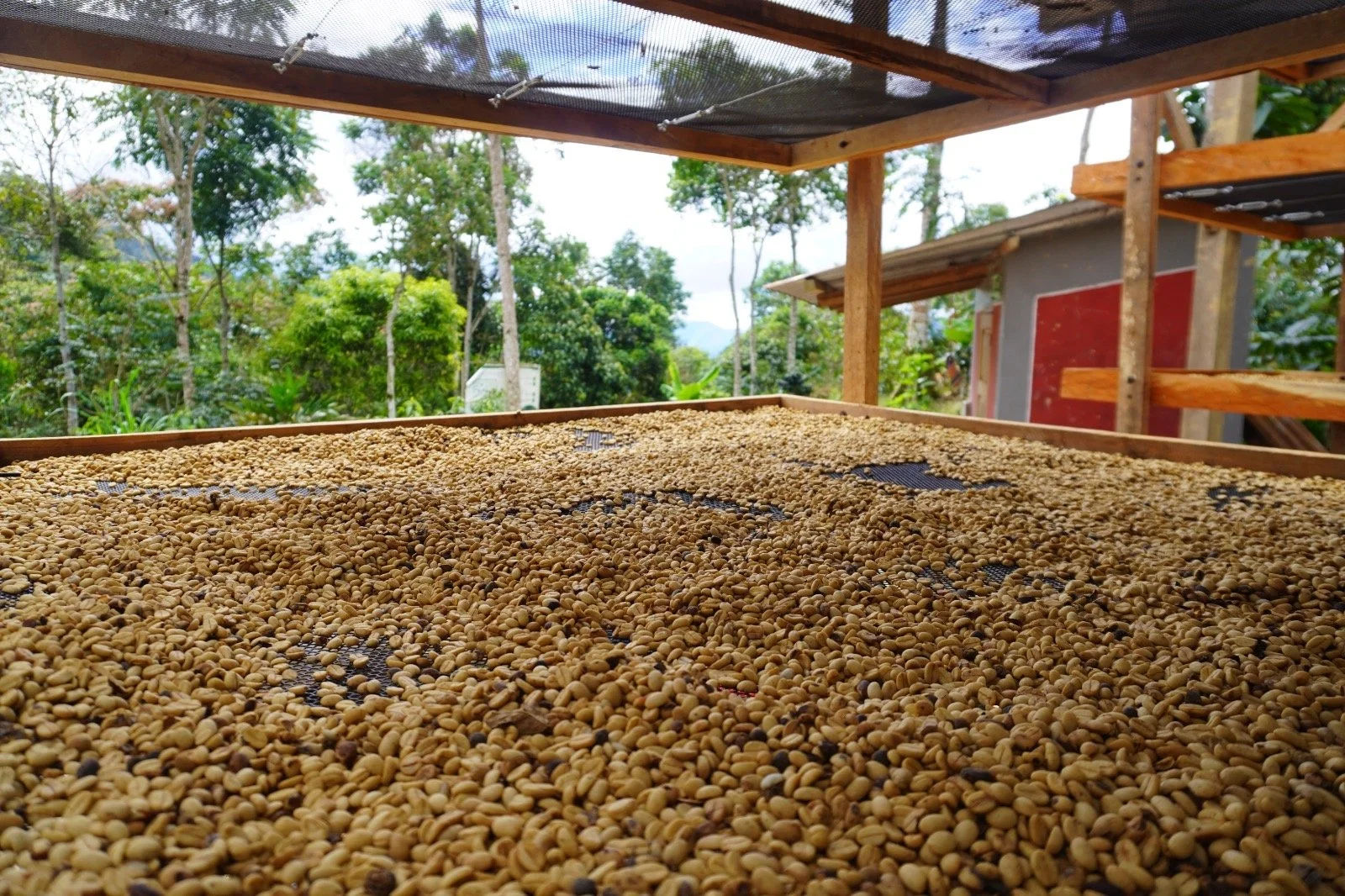
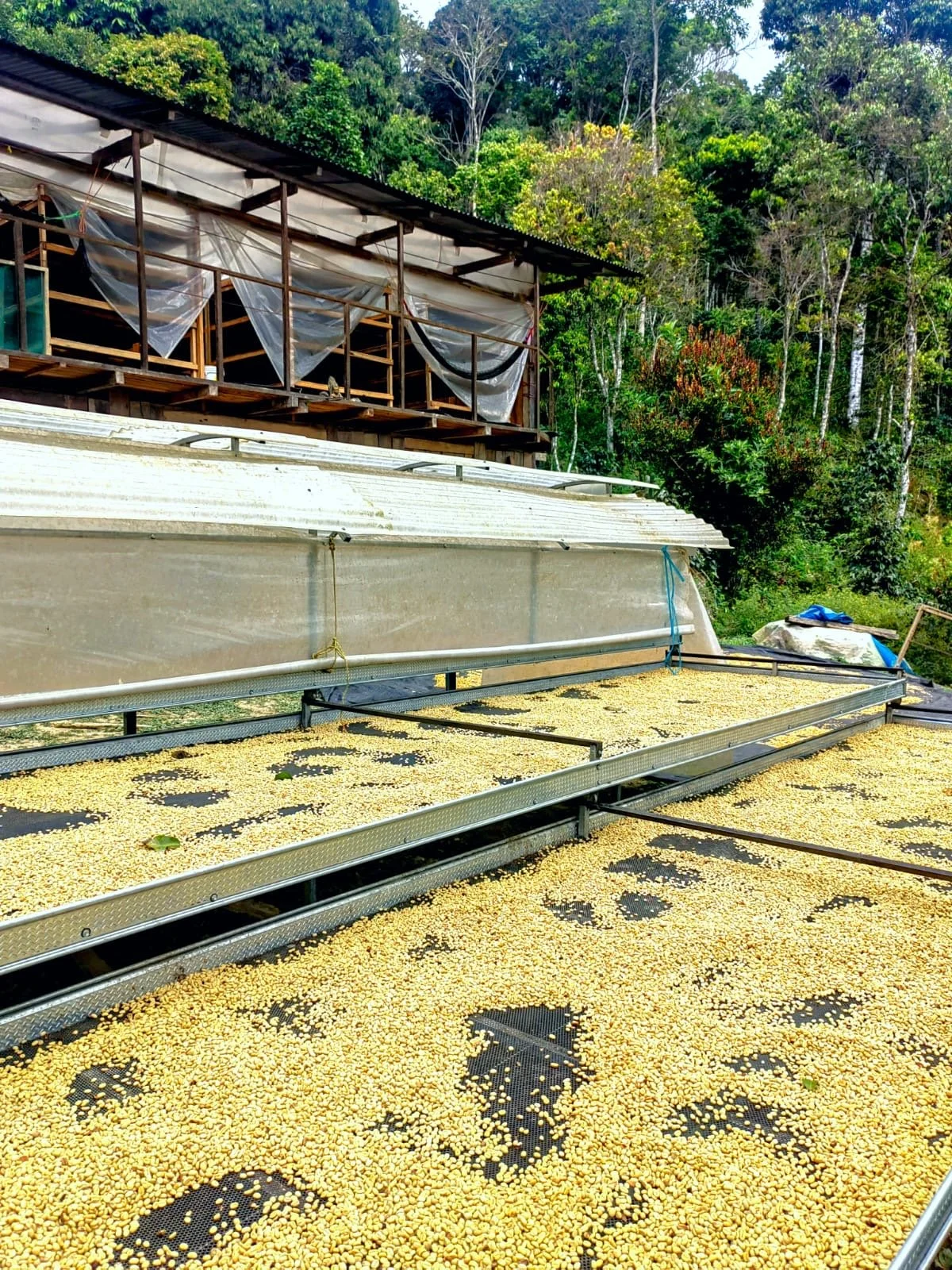
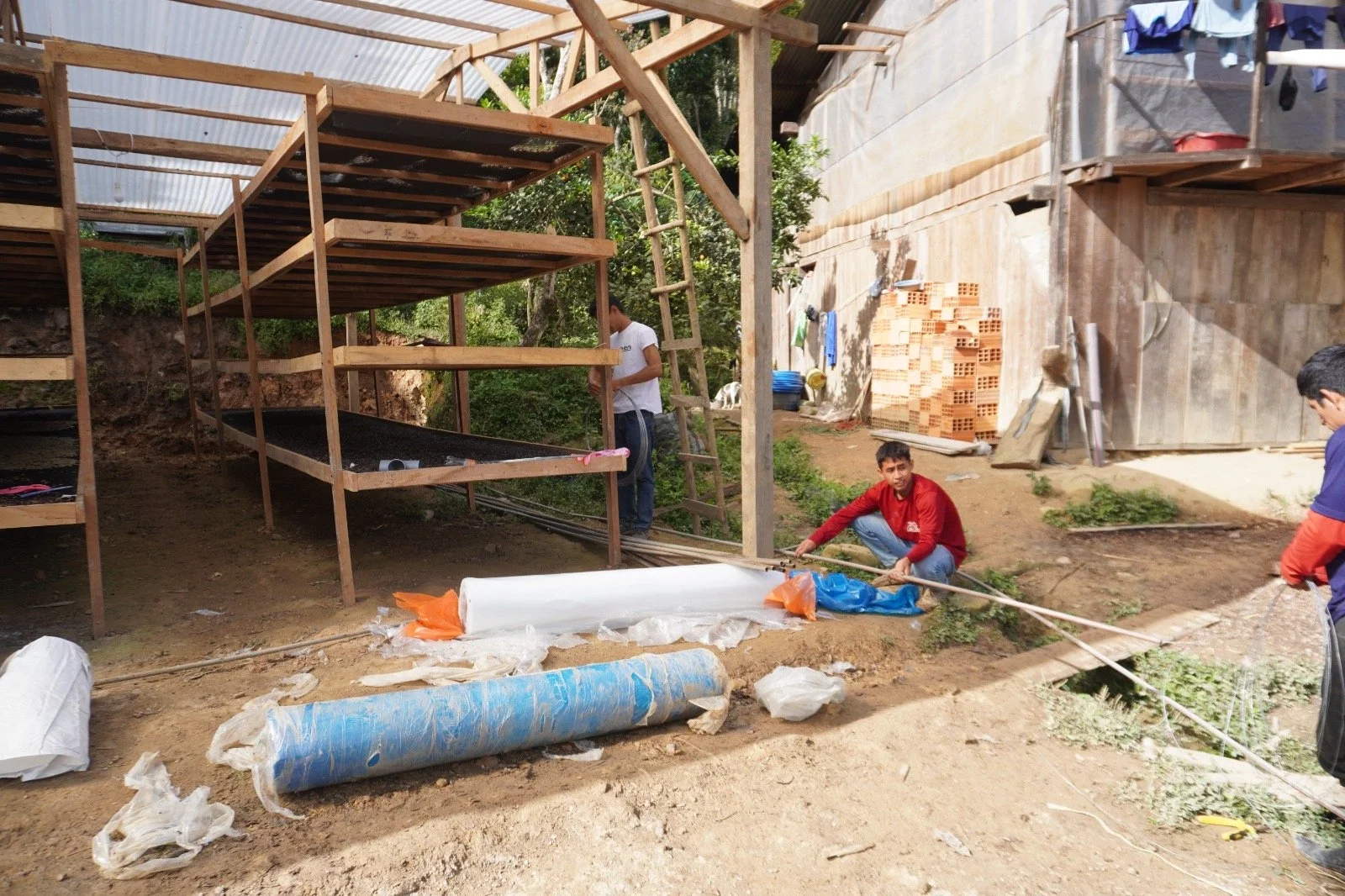
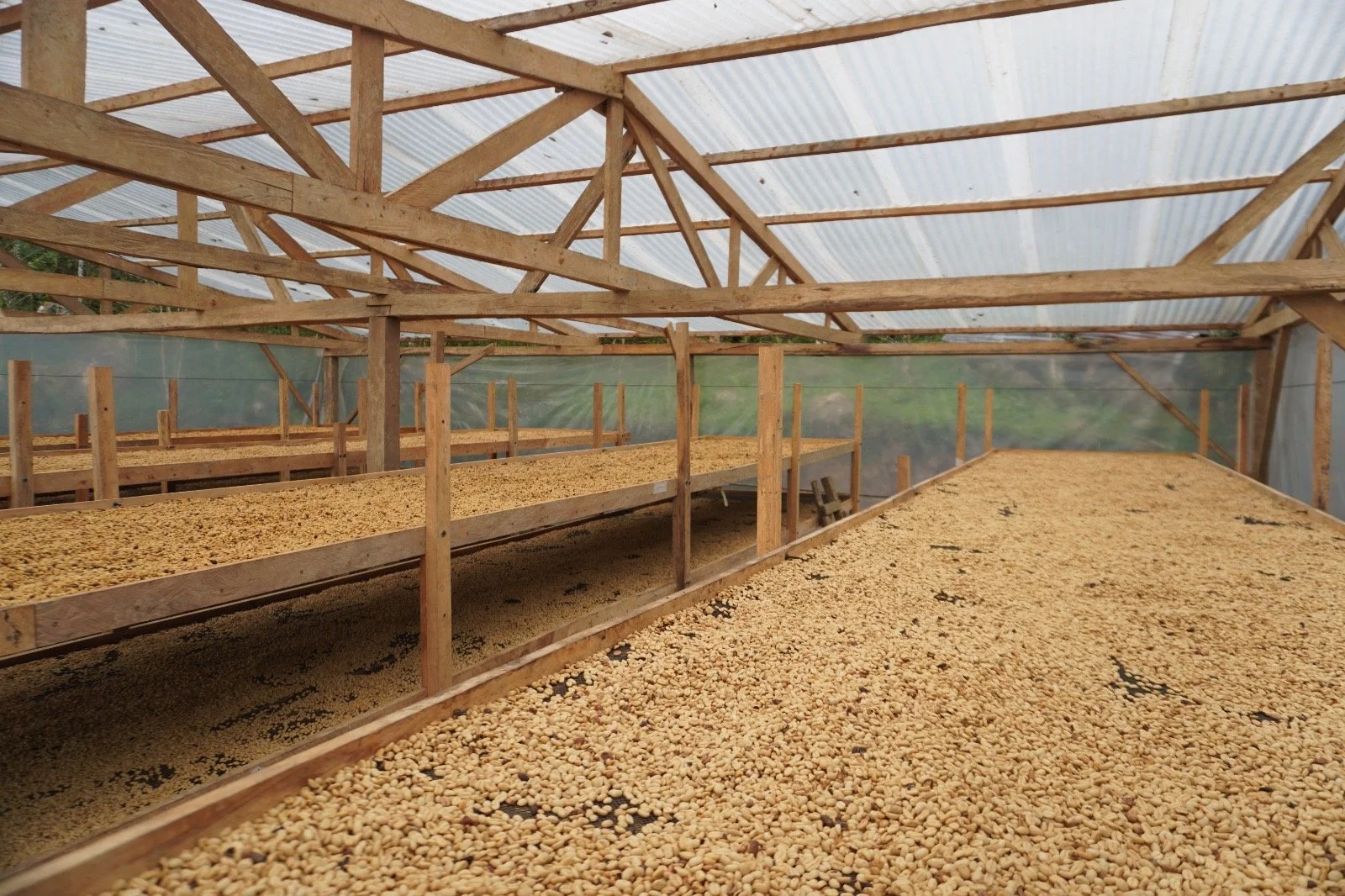
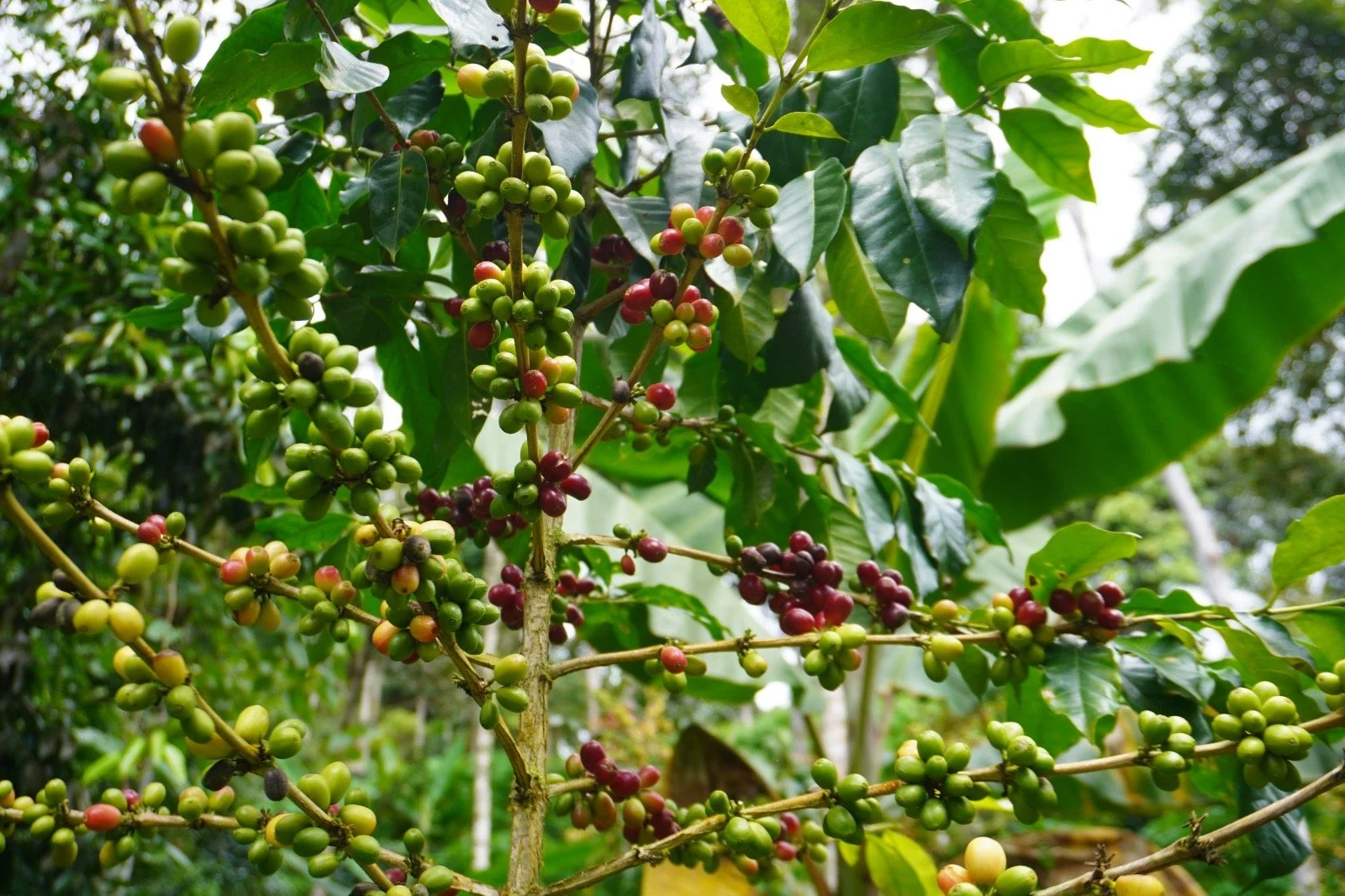
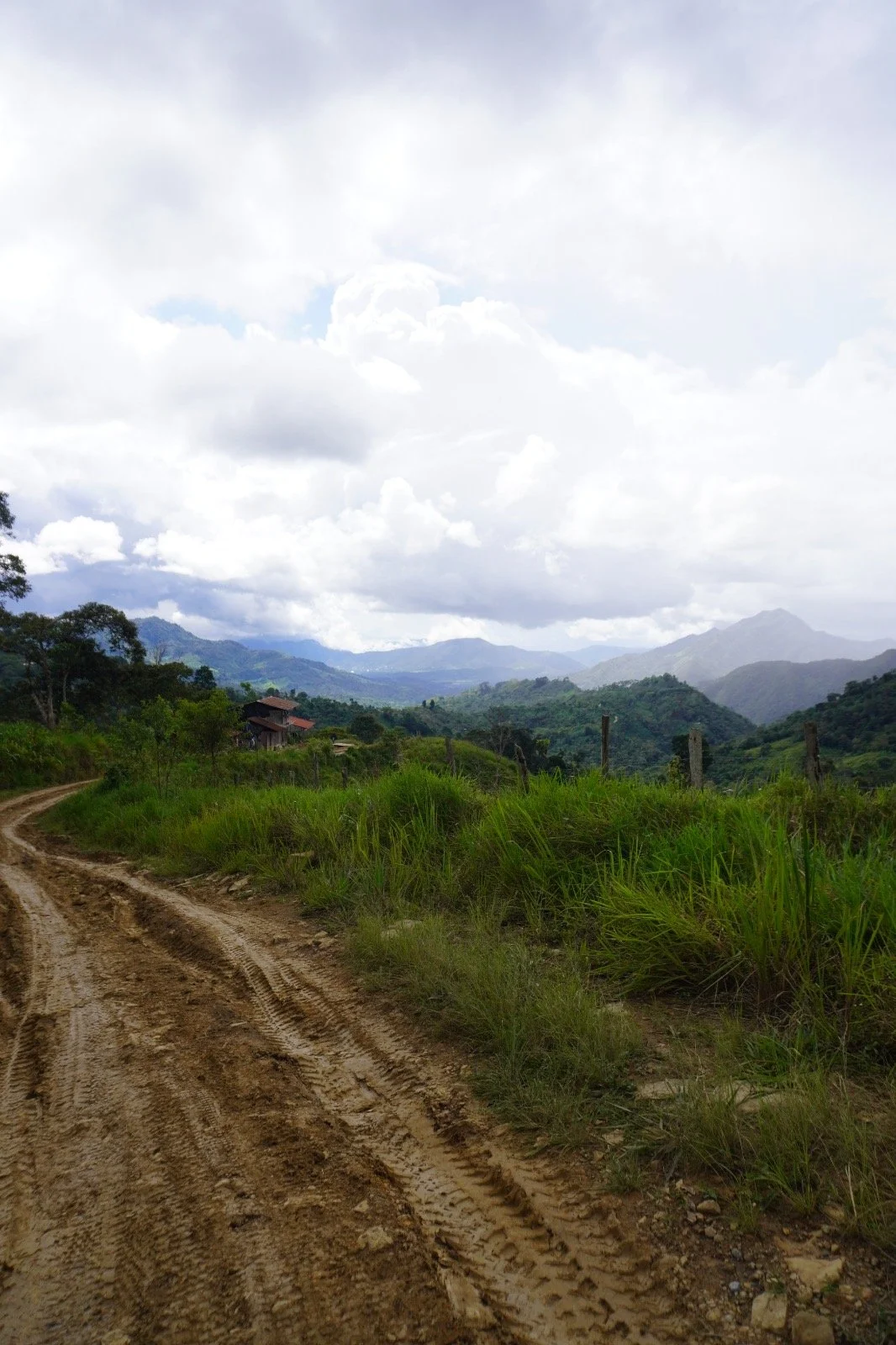
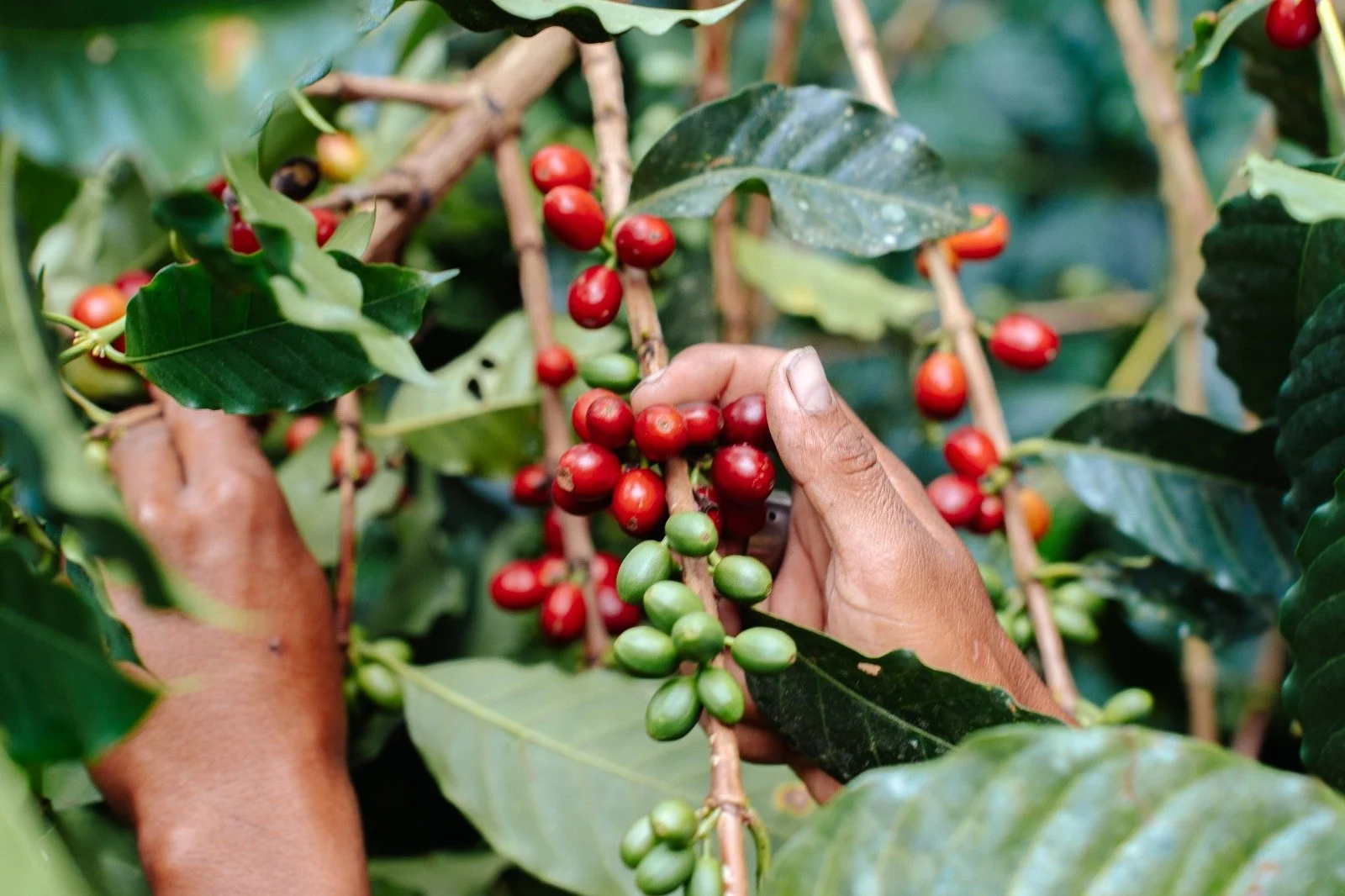
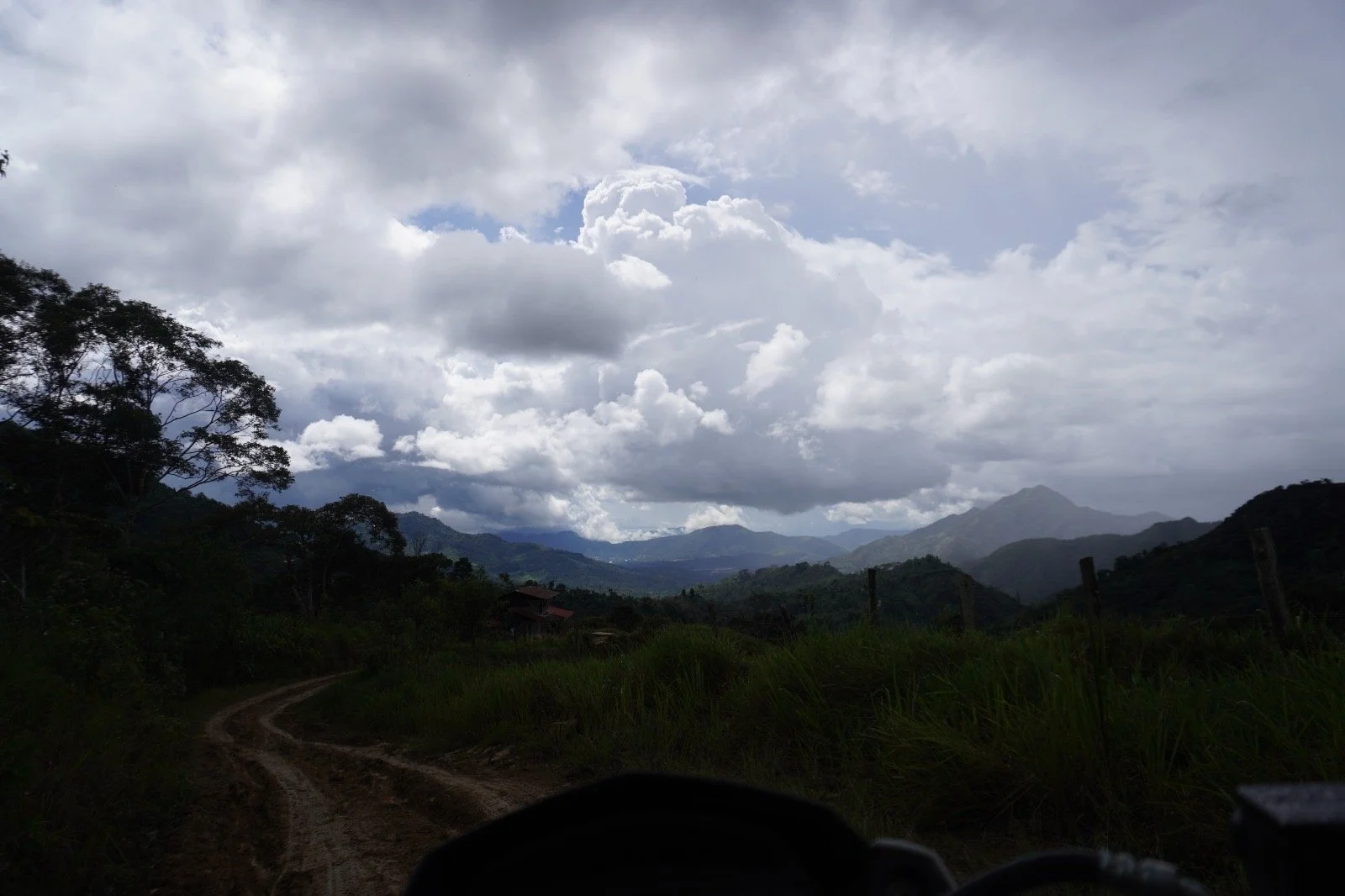
Everything from one source
The culture of Peruvian coffee production has historically evolved in such a way that most coffee farmers today cultivate their coffee themselves, harvesting it by hand, depulping it on the spot, fermenting it and drying it. The dry parchment is easier to transport to the buying points, which are located in the next village or town, as the case may be. The journey is arduous and often can only be accomplished by mules. Motor vehicles cannot manage the unpaved, muddy and stony, steep roads.
» Hide
Jimmy Rojas was the managing director of the Aproeco cooperative in Moyobamba for many years and tells us that the transport price from the finca to the cooperative is proportionately more expensive per kilogram of green coffee than the transport price of green coffee from Peru to Germany. But Peru is changing. Infrastructure is seen by the government as the key to better competitiveness and quality of life, which can help especially the most vulnerable part of the population.
A region in transition
The Cueva family migrated from the mountains of Cajamarca to the mountain rainforest of Moyobamba in the 1990s. There were many reasons: Escape from the terror and violence in the mountains, the disappearing natural resources in the wake of mining, and the positive incentives from politics to settle in the rainforest. In San Martin State, nearly 400,000 hectares of forest fell between 2001 and 2015 to make way for migrant populations and their supplies. Like most others, the Cuevas planted coffee to support their livelihoods.
» Hide
With the new pioneers, a new mixed culture emerged, combining mountain characteristics with rainforest traditions. The process of urban development of the settlements continues to this day. There is still a lack of basic services such as water, sewage, education, electricity and sanitary facilities. In the green paradise, people suffer from malnutrition and contaminated water. The isolated communities, often only accessible on foot, are self-governed to ensure a certain degree of democracy and security in the jungle.
The Cueva Castañeda family settled in Carrizales, at the far end of the Gera River valley above Moyobamba. Initially, they grew ordinary coffee, with little knowledge, little control, and at low selling prices. When several family members joined the Aproeco cooperative in the late 2010s, much changed. With technical assistance in cultivation and processing, higher prices could be achieved. With additional help from Qoffee Qulture e.V., the family built advanced drying beds for complex fermentation and drying processes. Gover Cueva began working for the cooperative, first in the warehouse, then in technical assistance, and finally as quality manager. All of the cooperative’s coffees are couped by Gover.
COFFEE IN PERU
Peru holds exceptional promise as a producer of high-quality coffees. The country is the largest exporter of organic Arabica coffee globally. With extremely high altitudes and fertile soils, the country’s smallholder farmers also produce some stunning specialty coffees.
Though coffee arrived in Peru in the 1700s, very little coffee was exported until the late 1800s. Until that point, most coffee produced in Peru was consumed locally. When coffee leaf rust hit Indonesia in the late 1800s, a country central to European coffee imports at the time, Europeans began searching elsewhere for their fix. Peru was a perfect option.
Between the late 1800s and the first World War, European interests invested significant resources into coffee production in Peru. However, with the advent of the two World Wars, England and other European powers became weakened and took a less colonialist perspective. When the British and other European land owners left, their land was purchased by the government and redistributed to locals. The Peruvian government repurchased the 2 million hectares previously granted to England and distributed the lands to thousands of local farmers. Many of these farmers later grew coffee on the lands they received.
Today, Peruvian coffee growers are overwhelmingly small scale. Farmers in Peru usually process their coffee on their own farms. Most coffee is Fully washed. Cherry is usually pulped, fermented and dried in the sun on raised beds or drying sheds. Drying greenhouses and parabolic beds are becoming more common as farmers pivot towards specialty markets.
After drying, coffee will then be sold in parchment to the cooperative. Producers who are not members of a cooperative will usually sell to a middleman.
The remoteness of farms combined with their small size means that producers need either middlemen or cooperatives to help get their coffee to market. Cooperative membership protects farmers greatly from exploitation and can make a huge difference to income from coffee. Nonetheless, currently only around 15-25% of smallholder farmers have joined a coop group.
